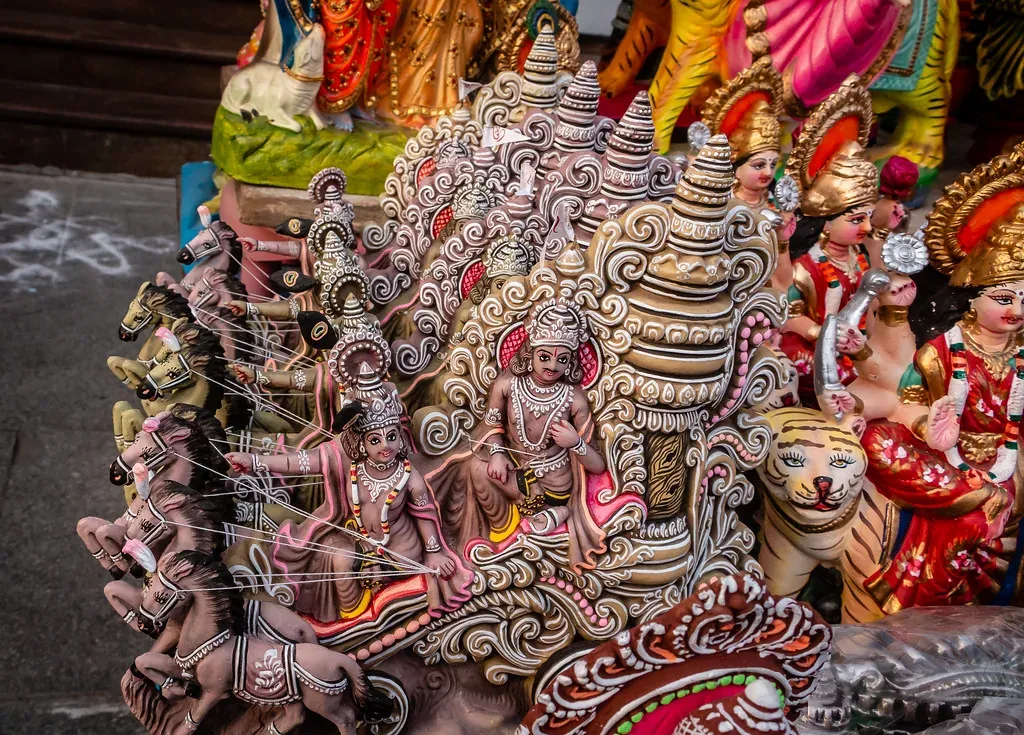
अर्जुन उवाचसंन्यासस्य महाबाहो तत्त्वमिच्छामि वेदितुम्त्यागस्य च हृषीकेश पृथक्केशिनिषूदन ॥
अर्जुन ने कहा: हे महाबाहो, हे हृषीकेश, हे केशी राक्षस को मारने वाले, मैं संन्यास का सच्चा स्वरूप जानना चाहता हूँ, और त्याग का भी, यह दोनों अलग-अलग क्या हैं।
Arjuna said: Mighty-armed one, Hrishikesha, slayer of the demon Keshi, I want to understand the real meaning of renunciation, and of letting go, and how the two differ from each other.
Word meanings and reflectionश्रीभगवानुवाचकाम्यानां कर्मणां न्यासं संन्यासं कवयो विदुःसर्वकर्मफलत्यागं प्राहुस्त्यागं विचक्षणाः ॥
श्रीभगवान बोले: जो कर्म किसी इच्छा से जुड़े होते हैं, उनके छोड़ देने को ज्ञानी लोग संन्यास कहते हैं। और सब कर्मों के फल को छोड़ देने को समझदार लोग त्याग कहते हैं।
The Lord said: Wise people call it sannyasa when actions driven by desire are set aside. Discerning people call it tyaga when the fruit of every action is given up.
Word meanings and reflectionत्याज्यं दोषवदित्येके कर्म प्राहुर्मनीषिणःयज्ञदानतपःकर्म न त्याज्यमिति चापरे ॥
कुछ विद्वान कहते हैं कि कर्म दोष जैसा है, इसलिए छोड़ देना चाहिए। दूसरे कहते हैं कि यज्ञ, दान और तप के कर्म नहीं छोड़ने चाहिए।
Some thinkers say all action is a kind of fault and should be abandoned. Others say that acts of sacrifice, giving and austerity must not be abandoned.
Word meanings and reflectionनिश्चयं शृणु मे तत्र त्यागे भरतसत्तमत्यागो हि पुरुषव्याघ्र त्रिविधः संप्रकीर्तितः ॥
हे भरतश्रेष्ठ, इस त्याग के बारे में मेरा निर्णय सुनो। हे पुरुषों में सिंह, त्याग तीन प्रकार का बताया गया है।
Hear my firm conclusion on this matter of letting go, best of the Bharatas. Tiger among men, relinquishment has been described as threefold.
Word meanings and reflectionयज्ञदानतपःकर्म न त्याज्यं कार्यमेव तत्यज्ञो दानं तपश्चैव पावनानि मनीषिणाम् ॥
यज्ञ, दान और तप के कर्म छोड़ने योग्य नहीं हैं, उन्हें करना ही चाहिए। यज्ञ, दान और तप, ये तीनों समझदार लोगों को शुद्ध करने वाले हैं।
Works of offering, charity and self-discipline are not to be dropped; they should be done. Offering, charity and discipline of this kind purify the thoughtful.
Word meanings and reflectionएतान्यपि तु कर्माणि सङ्गं त्यक्त्वा फलानि चकर्तव्यानीति मे पार्थ निश्चितं मतमुत्तमम् ॥
हे पार्थ, ये कर्म भी आसक्ति और फल की चाह छोड़कर करने चाहिए। यही मेरा पक्का और सबसे अच्छा मत है।
Even these works should be done after dropping attachment and the craving for their results, Partha. That is my settled and highest view.
Word meanings and reflectionनियतस्य तु संन्यासः कर्मणो नोपपद्यतेमोहात्तस्य परित्यागस्तामसः परिकीर्तितः ॥
जो कर्म करना कर्तव्य के रूप में तय है, उसे छोड़ देना उचित नहीं। मोह के कारण उसे छोड़ना तामसी त्याग कहा गया है।
Giving up an appointed duty is not proper. Dropping it out of confusion is called tamasic renunciation.
Word meanings and reflectionदुःखमित्येव यत्कर्म कायक्लेशभयात्त्यजेत्स कृत्वा राजसं त्यागं नैव त्यागफलं लभेत् ॥
जो कोई कर्म को केवल दुख देने वाला मानकर शरीर के कष्ट के डर से छोड़ देता है, वह यह राजसी त्याग करके भी त्याग का फल नहीं पाता।
One who drops a duty because it is painful, afraid of bodily strain, performs a rajasic renunciation and still never receives the fruit of renouncing.
Word meanings and reflectionकार्यमित्येव यत्कर्म नियतं क्रियतेऽर्जुनसङ्गं त्यक्त्वा फलं चैव स त्यागः सात्त्विको मतः ॥
हे अर्जुन, जो नियत कर्म केवल यह समझकर किया जाता है कि यह करना ही चाहिए, और जिसमें आसक्ति तथा फल की चाह छोड़ दी जाती है, वही त्याग सात्त्विक माना गया है।
When a prescribed duty is done simply because it ought to be done, with attachment and the wish for reward both dropped, that renunciation is held to be sattvic.
Word meanings and reflectionन द्वेष्ट्यकुशलं कर्म कुशले नानुषज्जतेत्यागी सत्त्वसमाविष्टो मेधावी छिन्नसंशयः ॥
ऐसा त्यागी, जो सत्त्व से भरा, बुद्धिमान और संशयों से मुक्त है, अप्रिय कर्म से द्वेष नहीं करता और प्रिय कर्म में नहीं चिपकता।
The one who has truly let go, steeped in clarity, wise, with doubts cut away, neither hates a disagreeable task nor clings to a pleasant one.
Word meanings and reflectionन हि देहभृता शक्यं त्यक्तुं कर्माण्यशेषतःयस्तु कर्मफलत्यागी स त्यागीत्यभिधीयते ॥
जिसने शरीर धारण किया है, उसके लिए सब कर्मों को पूरी तरह छोड़ पाना संभव नहीं। इसलिए जो कर्मों के फल को छोड़ता है, वही सच्चा त्यागी कहलाता है।
A being who carries a body cannot give up actions entirely. So the one who lets go of the fruit of action is the one rightly called a renouncer.
Word meanings and reflectionअनिष्टमिष्टं मिश्रं च त्रिविधं कर्मणः फलम्भवत्यत्यागिनां प्रेत्य न तु संन्यासिनां क्वचित् ॥
जो फल की आशा नहीं छोड़ते, उन्हें मरने के बाद कर्म के तीन तरह के फल मिलते हैं: अनचाहा, मनचाहा और मिला-जुला। परन्तु संन्यासियों को कभी नहीं मिलते।
For those who do not let go, action bears three kinds of fruit after death: unwelcome, welcome and mixed. For those who have truly renounced, there is none, ever.
Word meanings and reflectionपञ्चैतानि महाबाहो कारणानि निबोध मेसांख्ये कृतान्ते प्रोक्तानि सिद्धये सर्वकर्मणाम् ॥
हे महाबाहो, सब कर्मों की सिद्धि के ये पाँच कारण मुझसे समझो, जो सांख्य के सिद्धान्त में कहे गए हैं।
Learn from me, mighty-armed one, these five causes for the accomplishment of every action, as they are stated in the Sankhya doctrine, the final word on the matter.
Word meanings and reflectionअधिष्ठानं तथा कर्ता करणं च पृथग्विधम्विविधाश्च पृथक्चेष्टा दैवं चैवात्र पञ्चमम् ॥
वे पाँच ये हैं: कर्म का आधार यानी शरीर, कर्ता, अलग-अलग प्रकार के साधन, अनेक प्रकार की चेष्टाएँ, और पाँचवाँ दैव।
The seat of action, the doer, the many kinds of instruments, the various separate efforts, and fifth, the unseen factor, fate or the divine.
Word meanings and reflectionशरीरवाङ्मनोभिर्यत्कर्म प्रारभते नरःन्याय्यं वा विपरीतं वा पञ्चैते तस्य हेतवः ॥
मनुष्य शरीर, वाणी और मन से जो भी कर्म शुरू करता है, चाहे वह उचित हो या उलटा, उसके ये पाँच ही कारण होते हैं।
Whatever act a person begins with body, speech or mind, whether right or wrong, these five are its causes.
Word meanings and reflectionतत्रैवं सति कर्तारमात्मानं केवलं तु यःपश्यत्यकृतबुद्धित्वान्न स पश्यति दुर्मतिः ॥
ऐसा होते हुए भी जो अशुद्ध बुद्धि के कारण केवल अपने आप को ही कर्ता समझता है, वह मूर्ख ठीक नहीं देखता।
This being so, the person who sees only himself as the doer, his understanding being unripe, does not see rightly; he is dull of mind.
Word meanings and reflectionयस्य नाहंकृतो भावो बुद्धिर्यस्य न लिप्यतेहत्वापि स इमाँल्लोकान्न हन्ति न निबध्यते ॥
जिसके भीतर मैं कर्ता हूँ ऐसा भाव नहीं है, और जिसकी बुद्धि लिप्त नहीं होती, वह इन लोगों को मारकर भी न मारता है, न बँधता है।
One who has no sense of 'I am the doer', and whose mind is not stained, does not slay and is not bound, even though he strikes down these people.
Word meanings and reflectionज्ञानं ज्ञेयं परिज्ञाता त्रिविधा कर्मचोदनाकरणं कर्म कर्तेति त्रिविधः कर्मसंग्रहः ॥
ज्ञान, ज्ञेय और जानने वाला, ये तीन कर्म की प्रेरणा हैं। और साधन, कर्म और कर्ता, ये तीन कर्म का आधार हैं।
Knowledge, the thing to be known and the knower form the threefold urge to act. The instrument, the deed and the doer form the frame in which the act itself takes place.
Word meanings and reflectionज्ञानं कर्म च कर्ता च त्रिधैव गुणभेदतःप्रोच्यते गुणसंख्याने यथावच्छृणु तान्यपि ॥
गुणों के भेद से ज्ञान, कर्म और कर्ता, ये तीन-तीन प्रकार के ही कहे गए हैं। गुणों की गिनती करने वाले शास्त्र में जैसा है, वैसा इन्हें भी सुनो।
Knowledge, action and the doer are each said to be of three kinds, according to the qualities. Listen now, exactly as laid out in the teaching that counts the gunas.
Word meanings and reflectionसर्वभूतेषु येनैकं भावमव्ययमीक्षतेअविभक्तं विभक्तेषु तज्ज्ञानं विद्धि सात्त्विकम् ॥
जिस ज्ञान से मनुष्य सब प्राणियों में एक ही अविनाशी भाव को देखता है, जो बँटे हुए रूपों में भी बँटा नहीं है, उस ज्ञान को सात्त्विक जानो।
Know that knowledge to be sattvic by which one sees a single imperishable reality in all beings, undivided within the divided.
Word meanings and reflectionपृथक्त्वेन तु यज्ज्ञानं नानाभावान्पृथग्विधान्वेत्ति सर्वेषु भूतेषु तज्ज्ञानं विद्धि राजसम् ॥
जो ज्ञान सब प्राणियों में अलग-अलग भेद के कारण भिन्न-भिन्न भावों को अलग-अलग ही जानता है, उस ज्ञान को राजसिक समझो।
The knowledge that sees, in all creatures, only separateness, a scatter of distinct natures each standing apart, is to be understood as rajasic.
Word meanings and reflectionयत्तु कृत्स्नवदेकस्मिन्कार्ये सक्तमहैतुकम्अतत्त्वार्थवदल्पं च तत्तामसमुदाहृतम् ॥
जो ज्ञान एक छोटे से काम में ही ऐसे चिपक जाए मानो वही सब कुछ हो, जिसका कोई कारण नहीं, जिसमें सच्चा अर्थ नहीं और जो तुच्छ है, उसे तामसिक कहा गया है।
The outlook that clings to one small thing as though it were the whole, without reason, without grasp of the truth, and narrow, is described as tamasic.
Word meanings and reflectionनियतं सङ्गरहितमरागद्वेषतः कृतम्अफलप्रेप्सुना कर्म यत्तत्सात्त्विकमुच्यते ॥
जो नियत कर्म आसक्ति के बिना, राग और द्वेष के बिना, और फल की इच्छा न रखने वाले व्यक्ति द्वारा किया जाए, वह सात्त्विक कहा जाता है।
An appointed action carried out free of attachment, without liking or loathing, by one who wants no reward, is called sattvic.
Word meanings and reflectionयत्तु कामेप्सुना कर्म साहङ्कारेण वा पुनःक्रियते बहुलायासं तद्राजसमुदाहृतम् ॥
परन्तु जो कर्म भोग की चाह वाले व्यक्ति द्वारा, या अहंकार के साथ, बड़े परिश्रम से किया जाता है, उसे राजसिक कहा गया है।
But the action done by someone hungry for enjoyment, or with a swollen sense of self, at the cost of great strain, is called rajasic.
Word meanings and reflectionअनुबन्धं क्षयं हिंसामनपेक्ष्य च पौरुषम्मोहादारभ्यते कर्म यत्तत्तामसमुच्यते ॥
जो कर्म परिणाम, हानि, हिंसा और अपनी सामर्थ्य का विचार किए बिना, केवल मोह में शुरू कर दिया जाता है, उसे तामसिक कहते हैं।
An undertaking begun in a daze, with no thought for consequences, loss, harm or one's own capacity, is called tamasic.
Word meanings and reflectionमुक्तसङ्गोऽनहंवादी धृत्युत्साहसमन्वितःसिद्ध्यसिद्ध्योर्निर्विकारः कर्ता सात्त्विक उच्यते ॥
जो कर्ता आसक्ति से मुक्त है, मैं-मैं नहीं करता, धैर्य और उत्साह से भरा है, और सफलता या असफलता में विचलित नहीं होता, वह सात्त्विक कहलाता है।
The doer who is free of attachment, does not boast, is full of steadiness and zeal, and stays unshaken whether he succeeds or fails, is called sattvic.
Word meanings and reflectionरागी कर्मफलप्रेप्सुर्लुब्धो हिंसात्मकोऽशुचिःहर्षशोकान्वितः कर्ता राजसः परिकीर्तितः ॥
जो कर्ता रागी है, कर्म के फल को चाहता है, लोभी है, दूसरों को पीड़ा देने वाला है, अशुद्ध है और हर्ष तथा शोक से घिरा रहता है, वह राजसिक कहा गया है।
The doer who is passionate, craves the results of his work, is greedy, harsh, impure in his means, and tossed between joy and grief, is declared rajasic.
Word meanings and reflectionअयुक्तः प्राकृतः स्तब्धः शठो नैष्कृतिकोऽलसःविषादी दीर्घसूत्री च कर्ता तामस उच्यते ॥
जो कर्ता असंयमी, गँवार, अकड़ू, कपटी, दूसरों का अपमान करने वाला, आलसी, उदास रहने वाला और हर काम को टालने वाला है, वह तामसिक कहा जाता है।
The doer who is undisciplined, coarse, stubborn, deceitful, spiteful, lazy, gloomy and forever putting things off is called tamasic.
Word meanings and reflectionबुद्धेर्भेदं धृतेश्चैव गुणतस्त्रिविधं शृणुप्रोच्यमानमशेषेण पृथक्त्वेन धनञ्जय ॥
हे धनंजय, गुणों के अनुसार बुद्धि और धृति के भी तीन भेद अब पूरे और अलग-अलग बताए जा रहे हैं, उन्हें सुनो।
Now hear, Dhananjaya, the threefold division of understanding and of resolve as well, according to the gunas, set out in full and one by one.
Word meanings and reflectionप्रवृत्तिं च निवृत्तिं च कार्याकार्ये भयाभयेबन्धं मोक्षं च या वेत्ति बुद्धिः सा पार्थ सात्त्विकी ॥
हे पार्थ, जो बुद्धि प्रवृत्ति और निवृत्ति को, करने और न करने योग्य को, भय और अभय को, तथा बन्धन और मोक्ष को ठीक-ठीक जानती है, वह सात्त्विकी है।
The understanding that knows when to engage and when to withdraw, what should and should not be done, what to fear and what not to fear, what binds and what frees, is sattvic, Partha.
Word meanings and reflectionयया धर्ममधर्मं च कार्यं चाकार्यमेव चअयथावत्प्रजानाति बुद्धिः सा पार्थ राजसी ॥
हे पार्थ, जिस बुद्धि से मनुष्य धर्म और अधर्म को, तथा करने और न करने योग्य को, ठीक-ठीक नहीं पहचानता, वह राजसी बुद्धि है।
The understanding by which one grasps right and wrong, and what to do and what to avoid, only crookedly and never quite as they are, is rajasic, Partha.
Word meanings and reflectionअधर्मं धर्ममिति या मन्यते तमसाऽऽवृतासर्वार्थान्विपरीतांश्च बुद्धिः सा पार्थ तामसी ॥
हे पार्थ, जो बुद्धि अँधेरे से ढकी हुई अधर्म को धर्म मानती है, और सब वस्तुओं को उलटा देखती है, वह तामसी बुद्धि है।
The understanding wrapped in darkness, which takes wrong for right and sees every matter upside down, is tamasic, Partha.
Word meanings and reflectionधृत्या यया धारयते मनःप्राणेन्द्रियक्रियाःयोगेनाव्यभिचारिण्या धृतिः सा पार्थ सात्त्विकी ॥
हे पार्थ, जिस अटूट योग-धारणा से मनुष्य मन, प्राण और इन्द्रियों की क्रियाओं को थामे रखता है, वह धृति सात्त्विकी है।
The resolve by which a person holds the workings of mind, breath and senses steady through unwavering yoga is the sattvic kind of resolve, Partha.
Word meanings and reflectionयया तु धर्मकामार्थान् धृत्या धारयतेऽर्जुनप्रसङ्गेन फलाकाङ्क्षी धृतिः सा पार्थ राजसी ॥
हे अर्जुन, जिस धृति से मनुष्य आसक्ति के साथ धर्म, काम और अर्थ को थामे रखता है और हर एक से फल चाहता है, वह राजसी धृति है।
The resolve by which one holds on to duty, pleasure and wealth, clinging to each and hoping for returns from it, is rajasic, Arjuna.
Word meanings and reflectionयया स्वप्नं भयं शोकं विषादं मदमेव चन विमुञ्चति दुर्मेधा धृतिः सा पार्थ तामसी ॥
हे पार्थ, जिस धृति से मूर्ख मनुष्य नींद, भय, शोक, विषाद और घमंड को नहीं छोड़ता, वह तामसी धृति है।
The stubbornness by which a dull-minded person refuses to let go of sleep, fear, grief, despondency and pride is the tamasic kind of holding, Partha.
Word meanings and reflectionसुखं त्विदानीं त्रिविधं शृणु मे भरतर्षभअभ्यासाद्रमते यत्र दुःखान्तं च निगच्छति ॥
हे भरतश्रेष्ठ, अब तुम मुझसे तीन प्रकार के सुख के बारे में सुनो, जिसमें अभ्यास से मनुष्य रम जाता है और जिससे दुख का अन्त पा लेता है।
Now hear from me about happiness, which also comes in three kinds, bull of the Bharatas: the kind in which one comes to delight through practice, and by which one reaches the end of sorrow.
Word meanings and reflectionयत्तदग्रे विषमिव परिणामेऽमृतोपमम्तत्सुखं सात्त्विकं प्रोक्तमात्मबुद्धिप्रसादजम् ॥
जो सुख आरम्भ में विष जैसा लगता है, पर परिणाम में अमृत जैसा होता है, और जो अपनी बुद्धि की निर्मलता से उपजता है, उसे सात्त्विक कहा गया है।
The joy that tastes like poison at first but like nectar in the end, born of a mind that has become clear and quiet about itself, is called sattvic.
Word meanings and reflectionविषयेन्द्रियसंयोगाद्यत्तदग्रेऽमृतोपमम्परिणामे विषमिव तत्सुखं राजसं स्मृतम् ॥
जो सुख विषयों और इन्द्रियों के मेल से होता है, आरम्भ में अमृत जैसा लगता है पर परिणाम में विष जैसा, उसे राजसिक माना गया है।
The pleasure that arises when the senses meet their objects, sweet as nectar at the start and poisonous in the result, is held to be rajasic.
Word meanings and reflectionयदग्रे चानुबन्धे च सुखं मोहनमात्मनःनिद्रालस्यप्रमादोत्थं तत्तामसमुदाहृतम् ॥
जो सुख आरम्भ में भी और अन्त में भी आत्मा को मोहित करता है, और नींद, आलस्य तथा लापरवाही से उपजता है, उसे तामसिक कहा गया है।
The happiness that numbs the self from start to finish, springing from sleep, sloth and carelessness, is called tamasic.
Word meanings and reflectionन तदस्ति पृथिव्यां वा दिवि देवेषु वा पुनःसत्त्वं प्रकृतिजैर्मुक्तं यदेभिः स्यात्त्रिभिर्गुणैः ॥
पृथ्वी पर, या स्वर्ग में देवताओं के बीच भी, ऐसा कोई प्राणी नहीं जो प्रकृति से उपजे इन तीनों गुणों से मुक्त हो।
There is no being on earth, nor among the gods in heaven, that is free from these three qualities born of nature.
Word meanings and reflectionब्राह्मणक्षत्रियविशां शूद्राणां च परंतपकर्माणि प्रविभक्तानि स्वभावप्रभवैर्गुणैः ॥
हे परंतप, ब्राह्मणों, क्षत्रियों, वैश्यों और शूद्रों के कर्म उनके स्वभाव से उत्पन्न गुणों के अनुसार बाँटे गए हैं।
The duties of the brahmanas, kshatriyas, vaishyas and shudras, scorcher of foes, are divided according to the qualities that arise from each one's own nature.
Word meanings and reflectionशमो दमस्तपः शौचं क्षान्तिरार्जवमेव चज्ञानं विज्ञानमास्तिक्यं ब्रह्मकर्म स्वभावजम् ॥
मन की शान्ति, इन्द्रियों पर संयम, तप, पवित्रता, क्षमा, सीधापन, ज्ञान, अनुभव और परलोक में आस्था, ये ब्राह्मण के स्वभाव से उपजे कर्म हैं।
Calm, self-mastery, discipline, purity, patience, straightness, knowledge, lived understanding and faith in the unseen: these are the work of the brahmana, born of his nature.
Word meanings and reflectionशौर्यं तेजो धृतिर्दाक्ष्यं युद्धे चाप्यपलायनम्दानमीश्वरभावश्च क्षात्रं कर्म स्वभावजम् ॥
वीरता, तेज, धैर्य, कुशलता, युद्ध में पीछे न हटना, दान देना और शासन करने की क्षमता, ये क्षत्रिय के स्वभाव से उपजे कर्म हैं।
Courage, radiance, steadiness, skill, not fleeing in battle, generosity and the bearing of a leader are the kshatriya's work, born of his nature.
Word meanings and reflectionकृषिगौरक्ष्यवाणिज्यं वैश्यकर्म स्वभावजम्परिचर्यात्मकं कर्म शूद्रस्यापि स्वभावजम् ॥
खेती, गायों की रक्षा और व्यापार, ये वैश्य के स्वभाव से उपजे कर्म हैं। और सेवा करना शूद्र का स्वभाव से उपजा कर्म है।
Farming, tending cattle and trade are the work of the vaishya, born of his nature. Work that consists of service is likewise the shudra's, born of nature.
Word meanings and reflectionस्वे स्वे कर्मण्यभिरतः संसिद्धिं लभते नरःस्वकर्मनिरतः सिद्धिं यथा विन्दति तच्छृणु ॥
अपने-अपने कर्म में लगा हुआ मनुष्य पूर्ण सिद्धि पा लेता है। अपने कर्म में लगा रहकर वह कैसे सिद्धि पाता है, यह सुनो।
A person devoted to his own proper work reaches perfection. Hear how that devotion brings it about.
Word meanings and reflectionयतः प्रवृत्तिर्भूतानां येन सर्वमिदं ततम्स्वकर्मणा तमभ्यर्च्य सिद्धिं विन्दति मानवः ॥
जिससे सब प्राणियों की प्रवृत्ति होती है और जिससे यह सारा जगत फैला हुआ है, उसकी अपने कर्म से पूजा करके मनुष्य सिद्धि पाता है।
By worshipping, through his own work, that from which all beings have their movement and by which all this world is pervaded, a person finds fulfilment.
Word meanings and reflectionश्रेयान्स्वधर्मो विगुणः परधर्मात्स्वनुष्ठितात्स्वभावनियतं कर्म कुर्वन्नाप्नोति किल्बिषम् ॥
दूसरे का धर्म अच्छी तरह निभाया जाए, तब भी अपना धर्म, चाहे उसमें कमी हो, श्रेष्ठ है। स्वभाव से नियत कर्म करने वाला मनुष्य पाप को नहीं पाता।
One's own duty, even if flawed, is better than another's duty done well. Doing the work fixed by his own nature, a person incurs no stain.
Word meanings and reflectionसहजं कर्म कौन्तेय सदोषमपि न त्यजेत्सर्वारम्भा हि दोषेण धूमेनाग्निरिवावृताः ॥
हे कौन्तेय, सहज कर्म दोष वाला हो तब भी उसे नहीं छोड़ना चाहिए। क्योंकि सभी आरम्भ दोष से ऐसे ढके हैं जैसे आग धुएँ से।
Do not abandon the work you were born to, Kaunteya, even if it has a fault in it. For every undertaking is wrapped in some defect, as fire is wrapped in smoke.
Word meanings and reflectionअसक्तबुद्धिः सर्वत्र जितात्मा विगतस्पृहःनैष्कर्म्यसिद्धिं परमां संन्यासेनाधिगच्छति ॥
जिसकी बुद्धि कहीं आसक्त नहीं है, जिसने अपने मन को जीत लिया और जो इच्छाओं से मुक्त है, वह संन्यास द्वारा कर्मबन्धन से परे की परम सिद्धि पाता है।
One whose mind clings to nothing anywhere, who has mastered himself and has no hankering, reaches through renunciation the supreme perfection of freedom from the bonds of action.
Word meanings and reflectionसिद्धिं प्राप्तो यथा ब्रह्म तथाप्नोति निबोध मेसमासेनैव कौन्तेय निष्ठा ज्ञानस्य या परा ॥
हे कौन्तेय, सिद्धि पा लेने वाला मनुष्य ब्रह्म को कैसे प्राप्त करता है, यह मुझसे संक्षेप में समझो। यही ज्ञान की परम निष्ठा है।
Learn from me briefly, Kaunteya, how one who has reached such perfection also reaches Brahman. That is the highest settling-point of knowledge.
Word meanings and reflectionबुद्ध्या विशुद्धया युक्तो धृत्याऽऽत्मानं नियम्य चशब्दादीन् विषयांस्त्यक्त्वा रागद्वेषौ व्युदस्य च ॥
शुद्ध बुद्धि से युक्त होकर, धैर्य से स्वयं को संयम में रखकर, शब्द आदि विषयों को छोड़कर, और राग तथा द्वेष को दूर हटाकर,
Joined to a purified understanding, holding the self in check with steady resolve, leaving behind sound and the other objects of the senses, and setting aside liking and loathing,
Word meanings and reflectionविविक्तसेवी लघ्वाशी यतवाक्कायमानसःध्यानयोगपरो नित्यं वैराग्यं समुपाश्रितः ॥
एकान्त में रहने वाला, थोड़ा खाने वाला, वाणी, शरीर और मन को वश में रखने वाला, सदा ध्यानयोग में लगा हुआ और वैराग्य का आश्रय लेने वाला,
living in quiet places, eating lightly, with speech, body and mind restrained, always given to meditation and resting on dispassion,
Word meanings and reflectionअहङ्कारं बलं दर्पं कामं क्रोधं परिग्रहम्विमुच्य निर्ममः शान्तो ब्रह्मभूयाय कल्पते ॥
अहंकार, बल, घमंड, कामना, क्रोध और संग्रह को छोड़कर, ममता से रहित और शान्त होकर, वह ब्रह्म के साथ एक होने के योग्य बन जाता है।
Having let go of ego, force, pride, desire, anger and hoarding, free of the sense of 'mine' and at peace, he becomes fit to merge in Brahman.
Word meanings and reflectionब्रह्मभूतः प्रसन्नात्मा न शोचति न काङ्क्षतिसमः सर्वेषु भूतेषु मद्भक्तिं लभते पराम् ॥
ब्रह्म में स्थित, प्रसन्न मन वाला वह न किसी बात का शोक करता है, न कुछ चाहता है। सब प्राणियों में समान भाव रखकर वह मेरी परम भक्ति को पाता है।
Abiding in Brahman, his mind serene, he neither grieves nor craves. Seeing all beings alike, he comes to the highest devotion to me.
Word meanings and reflectionभक्त्या मामभिजानाति यावान्यश्चास्मि तत्त्वतःततो मां तत्त्वतो ज्ञात्वा विशते तदनन्तरम् ॥
भक्ति से वह मुझे जान लेता है कि मैं कितना व्यापक हूँ और वास्तव में कौन हूँ। फिर मुझे सच में जानकर उसी के बाद मुझमें प्रवेश कर जाता है।
Through devotion he comes to know me, how vast I am and who I truly am. Then, having known me as I really am, he enters into me at once.
Word meanings and reflectionसर्वकर्माण्यपि सदा कुर्वाणो मद्व्यपाश्रयःमत्प्रसादादवाप्नोति शाश्वतं पदमव्ययम् ॥
मेरा आश्रय लेकर वह सदा सब कर्म करता हुआ भी मेरी कृपा से शाश्वत, अविनाशी पद को पा लेता है।
Even while doing every kind of work at all times, one who takes refuge in me attains, by my grace, the eternal and unchanging abode.
Word meanings and reflectionचेतसा सर्वकर्माणि मयि संन्यस्य मत्परःबुद्धियोगमुपाश्रित्य मच्चित्तः सततं भव ॥
मन से सब कर्म मुझे अर्पित करके, मुझे ही परम लक्ष्य मानकर, बुद्धियोग का सहारा लो और निरन्तर मुझमें चित्त लगाए रहो।
Offer all your actions to me in thought, hold me as your highest aim, rest on the yoga of understanding, and keep your mind on me always.
Word meanings and reflectionमच्चित्तः सर्वदुर्गाणि मत्प्रसादात्तरिष्यसिअथ चेत्त्वमहङ्कारान्न श्रोष्यसि विनङ्क्ष्यसि ॥
मुझमें चित्त लगाकर तुम मेरी कृपा से सब कठिनाइयों को पार कर जाओगे। परन्तु यदि अहंकार के कारण तुमने न सुना, तो नष्ट हो जाओगे।
With your mind on me, you will cross all difficulties by my grace. But if, out of ego, you refuse to listen, you will be lost.
Word meanings and reflectionयदहङ्कारमाश्रित्य न योत्स्य इति मन्यसेमिथ्यैष व्यवसायस्ते प्रकृतिस्त्वां नियोक्ष्यति ॥
अहंकार का सहारा लेकर तुम जो सोच रहे हो कि मैं युद्ध नहीं करूँगा, तुम्हारा यह निश्चय झूठा है। प्रकृति तुम्हें स्वयं इसमें लगा देगी।
If, leaning on ego, you think 'I will not fight', your resolve is false. Your own nature will press you into it.
Word meanings and reflectionस्वभावजेन कौन्तेय निबद्धः स्वेन कर्मणाकर्तुं नेच्छसि यन्मोहात्करिष्यस्यवशोऽपि तत् ॥
हे कौन्तेय, अपने स्वभाव से उत्पन्न अपने ही कर्म से बँधे हुए तुम मोह के कारण जिसे करना नहीं चाहते, उसे विवश होकर भी करोगे।
Bound by your own work, which springs from your own nature, Kaunteya, you will do even what you now refuse to do from confusion, helpless to prevent it.
Word meanings and reflectionईश्वरः सर्वभूतानां हृद्देशेऽर्जुन तिष्ठतिभ्रामयन्सर्वभूतानि यन्त्रारूढानि मायया ॥
हे अर्जुन, ईश्वर सब प्राणियों के हृदय में रहता है, और अपनी माया से सब प्राणियों को ऐसे घुमाता है मानो वे किसी यन्त्र पर चढ़े हों।
The Lord dwells in the heart of every being, Arjuna, and by his power of maya he turns all of them round as though they were mounted on a wheel.
Word meanings and reflectionतमेव शरणं गच्छ सर्वभावेन भारततत्प्रसादात्परां शान्तिं स्थानं प्राप्स्यसि शाश्वतम् ॥
हे भारत, पूरे भाव से उसी की शरण में जाओ। उसकी कृपा से तुम परम शान्ति और शाश्वत स्थान को पाओगे।
Go to him alone for refuge, Bharata, with your whole being. By his grace you will reach deep peace and a lasting home.
Word meanings and reflectionइति ते ज्ञानमाख्यातं गुह्याद्गुह्यतरं मयाविमृश्यैतदशेषेण यथेच्छसि तथा कुरु ॥
इस प्रकार मैंने तुम्हें वह ज्ञान बता दिया जो गुप्त से भी गुप्त है। इसे पूरी तरह सोच-विचार कर, फिर जैसा चाहो वैसा करो।
So I have told you this knowledge, more secret than any secret. Think it over fully, and then do as you choose.
Word meanings and reflectionसर्वगुह्यतमं भूयः शृणु मे परमं वचःइष्टोऽसि मे दृढमिति ततो वक्ष्यामि ते हितम् ॥
सबसे अधिक गोपनीय मेरे परम वचन को फिर से सुनो। तुम मुझे बहुत प्रिय हो, इसलिए मैं तुम्हारे हित की बात कहूँगा।
Hear once more my supreme word, the most secret of all. You are dearly loved by me, and so I will tell you what is good for you.
Word meanings and reflectionमन्मना भव मद्भक्तो मद्याजी मां नमस्कुरुमामेवैष्यसि सत्यं ते प्रतिजाने प्रियोऽसि मे ॥
मुझमें मन लगाओ, मेरे भक्त बनो, मेरे लिए यज्ञ करो और मुझे प्रणाम करो। तुम मुझे ही पाओगे, यह मैं सत्य कहता हूँ, क्योंकि तुम मुझे प्रिय हो।
Fix your mind on me, be devoted to me, make your offerings to me, and bow low. You will come to me alone. I promise you this truly, for you are dear to me.
Word meanings and reflectionसर्वधर्मान्परित्यज्य मामेकं शरणं व्रजअहं त्वा सर्वपापेभ्यो मोक्षयिष्यामि मा शुचः ॥
सब धर्मों को छोड़कर केवल मेरी शरण में आ जाओ। मैं तुम्हें सब पापों से मुक्त कर दूँगा, चिन्ता मत करो।
Letting go of all other duties, come to me alone for refuge. I will free you from every sin. Do not grieve.
Word meanings and reflectionइदं ते नातपस्काय नाभक्ताय कदाचनन चाशुश्रूषवे वाच्यं न च मां योऽभ्यसूयति ॥
यह बात तपस्या न करने वाले को, भक्ति न रखने वाले को, सुनने की इच्छा न रखने वाले को, और मुझसे द्वेष करने वाले को कभी नहीं कहनी चाहिए।
This should never be told to one who lacks discipline, to one without devotion, to one who does not wish to listen, or to one who resents me.
Word meanings and reflectionय इमं परमं गुह्यं मद्भक्तेष्वभिधास्यतिभक्तिं मयि परां कृत्वा मामेवैष्यत्यसंशयः ॥
जो मेरे भक्तों के बीच इस परम गोपनीय ज्ञान को कहेगा, वह मुझमें परम भक्ति रखकर निश्चय ही मुझे पा लेगा।
Whoever explains this supreme secret among my devotees, holding the highest love for me, will come to me without a doubt.
Word meanings and reflectionन च तस्मान्मनुष्येषु कश्चिन्मे प्रियकृत्तमःभविता न च मे तस्मादन्यः प्रियतरो भुवि ॥
मनुष्यों में उससे बढ़कर मेरा प्रिय कार्य करने वाला कोई नहीं होगा, और पृथ्वी पर उससे बढ़कर मेरा प्रिय भी कोई दूसरा नहीं होगा।
Among men none does a dearer service to me than he, and on this earth no other will be more beloved by me.
Word meanings and reflectionअध्येष्यते च य इमं धर्म्यं संवादमावयोःज्ञानयज्ञेन तेनाहमिष्टः स्यामिति मे मतिः ॥
जो हम दोनों के इस धर्ममय संवाद का अध्ययन करेगा, उसके द्वारा मैं ज्ञानयज्ञ से पूजित हो जाऊँगा, ऐसा मेरा मत है।
And whoever studies this sacred conversation between the two of us will, by that offering of knowledge, have worshipped me. So I hold.
Word meanings and reflectionश्रद्धावाननसूयश्च शृणुयादपि यो नरःसोऽपि मुक्तः शुभाँल्लोकान्प्राप्नुयात्पुण्यकर्मणाम् ॥
जो मनुष्य श्रद्धा रखकर और दोष ढूँढे बिना केवल इसे सुन भी लेगा, वह भी मुक्त होकर पुण्य करने वालों के शुभ लोकों को पाएगा।
Even the person who only listens to this, with faith and without fault-finding, will be freed and will reach the bright worlds of those who have done good.
Word meanings and reflectionकच्चिदेतच्छ्रुतं पार्थ त्वयैकाग्रेण चेतसाकच्चिदज्ञानसंमोहः प्रनष्टस्ते धनञ्जय ॥
हे पार्थ, क्या तुमने इसे एकाग्र मन से सुना? हे धनंजय, क्या तुम्हारा अज्ञान से उपजा मोह नष्ट हुआ?
Did you hear this with a single-pointed mind, Partha? Has the bewilderment born of ignorance been dispelled, Dhananjaya?
Word meanings and reflectionअर्जुन उवाचनष्टो मोहः स्मृतिर्लब्धा त्वत्प्रसादान्मयाच्युतस्थितोऽस्मि गतसन्देहः करिष्ये वचनं तव ॥
अर्जुन ने कहा: हे अच्युत, आपकी कृपा से मेरा मोह नष्ट हो गया और मुझे अपनी स्मृति मिल गई। अब मैं संशयरहित होकर स्थिर खड़ा हूँ, आपकी आज्ञा का पालन करूँगा।
Arjuna said: My confusion is gone, Achyuta, and by your grace I have my memory back. I stand firm, free of doubt. I will do as you say.
Word meanings and reflectionसञ्जय उवाचइत्यहं वासुदेवस्य पार्थस्य च महात्मनःसंवादमिममश्रौषमद्भुतं रोमहर्षणम् ॥
संजय बोले: इस प्रकार मैंने वासुदेव और महात्मा पार्थ का यह अद्भुत संवाद सुना, जो रोमांच पैदा करने वाला है।
Sanjaya said: Thus I heard this wondrous dialogue between Vasudeva and the great-souled Partha, a conversation that makes the hair stand on end.
Word meanings and reflectionव्यासप्रसादाच्छ्रुतवानेतद्गुह्यमहं परम्योगं योगेश्वरात्कृष्णात्साक्षात्कथयतः स्वयम् ॥
व्यास की कृपा से मैंने यह परम गोपनीय योग स्वयं योगेश्वर कृष्ण के मुख से साक्षात् कहते हुए सुना।
By the grace of Vyasa I heard this supreme secret of yoga, spoken directly by Krishna himself, the lord of yoga.
Word meanings and reflectionराजन्संस्मृत्य संस्मृत्य संवादमिममद्भुतम्केशवार्जुनयोः पुण्यं हृष्यामि च मुहुर्मुहुः ॥
हे राजन्, केशव और अर्जुन के इस अद्भुत और पवित्र संवाद को बार-बार याद करके मैं बार-बार आनन्दित होता हूँ।
O King, remembering again and again this wondrous and holy conversation of Keshava and Arjuna, I rejoice over and over.
Word meanings and reflectionतच्च संस्मृत्य संस्मृत्य रूपमत्यद्भुतं हरेःविस्मयो मे महान् राजन् हृष्यामि च पुनः पुनः ॥
हे राजन्, हरि के उस अत्यन्त अद्भुत रूप को बार-बार याद करके मुझे बड़ा विस्मय होता है, और मैं फिर-फिर आनन्दित होता हूँ।
And remembering again and again that most astonishing form of Hari, great is my wonder, O King, and I rejoice anew each time.
Word meanings and reflectionयत्र योगेश्वरः कृष्णो यत्र पार्थो धनुर्धरःतत्र श्रीर्विजयो भूतिर्ध्रुवा नीतिर्मतिर्मम ॥
जहाँ योगेश्वर कृष्ण हैं और जहाँ धनुषधारी अर्जुन हैं, वहीं श्री, विजय, ऐश्वर्य और स्थिर नीति है, यह मेरा मत है।
Where Krishna, lord of yoga, is, and where Arjuna the archer is, there I believe lie prosperity, victory, abundance and steady right conduct.
Word meanings and reflection