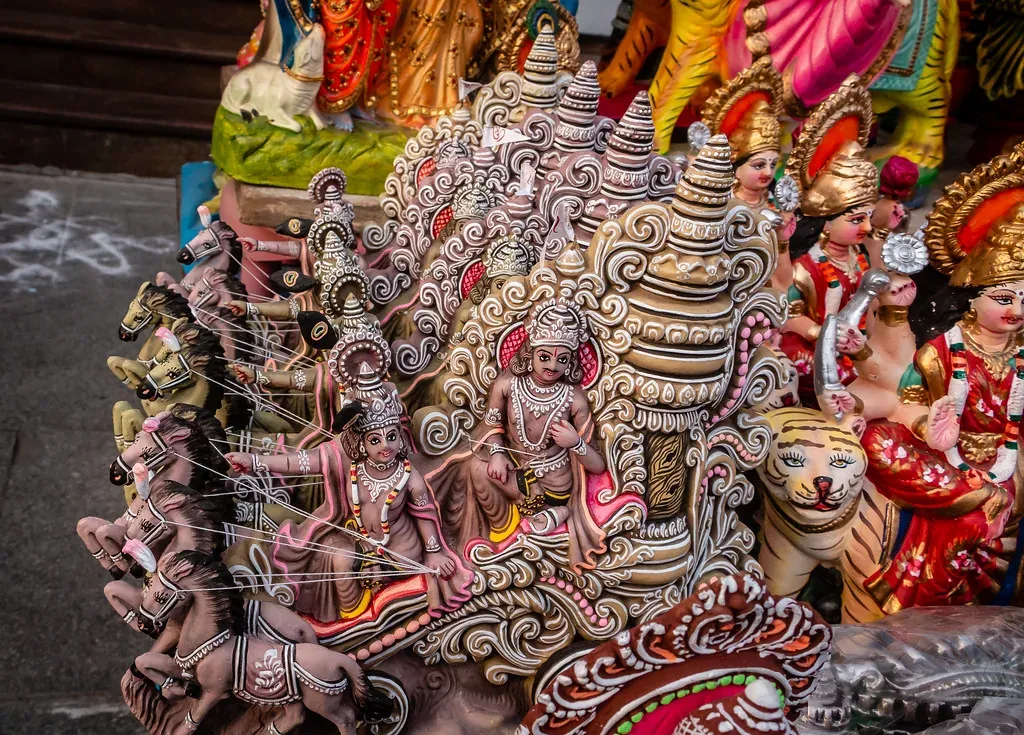
श्रीभगवानुवाचअनाश्रितः कर्मफलं कार्यं कर्म करोति यःस संन्यासी च योगी च न निरग्निर्न चाक्रियः ॥
श्रीकृष्ण बोले: जो व्यक्ति कर्म के फल का सहारा लिए बिना वही काम करता है जो करना उचित है, वही संन्यासी है और वही योगी भी। केवल आग जलाना छोड़ देने वाला, या कोई काम न करने वाला, ऐसा नहीं कहलाता।
The Lord said: One who does the work that ought to be done without leaning on its fruit is both a renouncer and a yogi. It is not the person who has merely given up the sacred fire, or who has stopped doing things.
Word meanings and reflectionयं संन्यासमिति प्राहुर्योगं तं विद्धि पाण्डवन ह्यसंन्यस्तसङ्कल्पो योगी भवति कश्चन ॥
जिसे लोग संन्यास कहते हैं, उसी को योग जानो, अर्जुन। क्योंकि जिसने मन के संकल्पों को नहीं छोड़ा, वह कोई भी योगी नहीं बन पाता।
What people call renunciation, know that to be yoga, son of Pandu. For no one becomes a yogi who has not let go of the plans and wishes spinning in the mind.
Word meanings and reflectionआरुरुक्षोर्मुनेर्योगं कर्म कारणमुच्यतेयोगारूढस्य तस्यैव शमः कारणमुच्यते ॥
जो मुनि योग पर चढ़ना चाहता है, उसके लिए कर्म साधन कहा गया है। और जब वही योग में स्थित हो जाए, तब उसके लिए शांति साधन कही गई है।
For a sage who wishes to climb up into yoga, action is named as the means. For that same person, once he has reached the top, stillness becomes the instrument.
Word meanings and reflectionयदा हि नेन्द्रियार्थेषु न कर्मस्वनुषज्जतेसर्वसङ्कल्पसंन्यासी योगारूढस्तदोच्यते ॥
जब मनुष्य न इन्द्रियों के विषयों में और न कर्मों में आसक्त होता है, और सब संकल्प छोड़ चुका होता है, तब उसे योग में आरूढ़ कहा जाता है।
When a person is no longer stuck to the objects of the senses nor to his actions, and has dropped every inner scheme, he is then called one who has climbed into yoga.
Word meanings and reflectionउद्धरेदात्मनाऽऽत्मानं नात्मानमवसादयेत्आत्मैव ह्यात्मनो बन्धुरात्मैव रिपुरात्मनः ॥
मनुष्य अपने आप से अपना उद्धार करे, अपने को गिरने न दे। क्योंकि आप ही अपना मित्र है और आप ही अपना शत्रु भी।
Let a person lift himself by his own self, and not let himself sink. Only the self befriends the self, and only the self can be its enemy as well.
Word meanings and reflectionबन्धुरात्माऽऽत्मनस्तस्य येनात्मैवात्मना जितःअनात्मनस्तु शत्रुत्वे वर्तेतात्मैव शत्रुवत् ॥
जिसने अपने आप को जीत लिया है, उसके लिए उसका आत्मा मित्र है। पर जिसने अपने को नहीं जीता, उसके लिए वही अपना आप शत्रु की तरह बर्ताव करता है।
Whoever has mastered himself finds his own self a friend. Whoever has not will find that very self behaves like an enemy.
Word meanings and reflectionजितात्मनः प्रशान्तस्य परमात्मा समाहितःशीतोष्णसुखदुःखेषु तथा मानापमानयोः ॥
जिसने अपने को जीत लिया और जो शांत हो गया, उसका परमात्मा सदा उसके भीतर सम स्थित रहता है, सर्दी और गर्मी में, सुख और दुःख में, तथा मान और अपमान में भी।
For one who has mastered himself and become peaceful, the Supreme Self stands steady within, in cold and heat, in pleasure and pain, and likewise in honour and dishonour.
Word meanings and reflectionज्ञानविज्ञानतृप्तात्मा कूटस्थो विजितेन्द्रियःयुक्त इत्युच्यते योगी समलोष्टाश्मकाञ्चनः ॥
जिसका मन ज्ञान और अनुभव से तृप्त है, जो अटल है और इन्द्रियों को जीत चुका है, वह योगी युक्त कहा जाता है। उसके लिए मिट्टी का ढेला, पत्थर और सोना एक समान हैं।
The yogi whose heart is content with knowledge and with lived realisation, who stands unmoved and has his senses in hand, is called steady. To him a clod of earth, a stone and gold look alike.
Word meanings and reflectionसुहृन्मित्रार्युदासीनमध्यस्थद्वेष्यबन्धुषुसाधुष्वपि च पापेषु समबुद्धिर्विशिष्यते ॥
जो सुहृद, मित्र, शत्रु, तटस्थ, मध्यस्थ, द्वेष करने वाले और संबंधियों में, तथा सज्जनों और पापियों में भी समान बुद्धि रखता है, वह सबसे श्रेष्ठ है।
The one who holds an even mind toward well-wishers, friends, enemies, bystanders, go-betweens, the hateful and the related, and toward the good as well as the wrongdoers, stands out as the best.
Word meanings and reflectionयोगी युञ्जीत सततमात्मानं रहसि स्थितःएकाकी यतचित्तात्मा निराशीरपरिग्रहः ॥
योगी मन को सदा परमात्मा में लगाए। वह एकांत में अकेला रहे, मन और शरीर को वश में रखे, किसी आशा से मुक्त और बिना संग्रह के।
Let the yogi keep joining his mind to the Self, always, staying in a secluded place, alone, with mind and body held in check, free of craving and owning nothing he clings to.
Word meanings and reflectionशुचौ देशे प्रतिष्ठाप्य स्थिरमासनमात्मनःनात्युच्छ्रितं नातिनीचं चैलाजिनकुशोत्तरम् ॥
शुद्ध स्थान में अपने लिए स्थिर आसन जमाकर, जो न बहुत ऊँचा हो न बहुत नीचा, और जिस पर कुशा, मृगछाला और वस्त्र बिछे हों।
In a clean spot, he should set up a firm seat for himself, not too high and not too low, covered with kusha grass, then a deerskin, and then cloth.
Word meanings and reflectionतत्रैकाग्रं मनः कृत्वा यतचित्तेन्द्रियक्रियःउपविश्यासने युञ्ज्याद्योगमात्मविशुद्धये ॥
वहाँ उस आसन पर बैठकर मन को एकाग्र करे, चित्त और इन्द्रियों की क्रियाओं को वश में रखे, और अंतःकरण की शुद्धि के लिए योग का अभ्यास करे।
Seated there, making the mind one-pointed and holding in check the activity of thought and senses, he should practise yoga for the purification of the self.
Word meanings and reflectionसमं कायशिरोग्रीवं धारयन्नचलं स्थिरःसंप्रेक्ष्य नासिकाग्रं स्वं दिशश्चानवलोकयन् ॥
शरीर, सिर और गर्दन को सीधा और अचल रखकर, स्थिर होकर, अपनी नाक के अगले भाग को देखते हुए और दूसरी दिशाओं में न देखते हुए।
Holding body, head and neck straight and unmoving, staying steady, gazing toward the tip of his own nose and not looking about in other directions.
Word meanings and reflectionप्रशान्तात्मा विगतभीर्ब्रह्मचारिव्रते स्थितःमनः संयम्य मच्चित्तो युक्त आसीत मत्परः ॥
शांत मन वाला, निर्भय, ब्रह्मचर्य के व्रत में टिका हुआ, मन को रोककर मुझमें चित्त लगाए, वह योगी मुझे ही परम मानकर बैठे।
Peaceful in mind, fearless, firm in the vow of discipline, restraining the mind and thinking of Me, the yogi should sit with Me as his highest aim.
Word meanings and reflectionयुञ्जन्नेवं सदाऽऽत्मानं योगी नियतमानसःशान्तिं निर्वाणपरमां मत्संस्थामधिगच्छति ॥
इस प्रकार सदा मन को जोड़ता हुआ, संयत मन वाला योगी मुझमें स्थित उस परम शांति को पाता है जो निर्वाण में पूर्ण होती है।
Joining the mind to the Self in this way again and again, the yogi of controlled mind reaches the peace that culminates in liberation, which rests in Me.
Word meanings and reflectionनात्यश्नतस्तु योगोऽस्ति न चैकान्तमनश्नतःन चातिस्वप्नशीलस्य जाग्रतो नैव चार्जुन ॥
अर्जुन, यह योग न तो बहुत खाने वाले का सिद्ध होता है, न बिलकुल न खाने वाले का। न बहुत सोने वाले का, और न केवल जागते रहने वाले का।
Yoga does not belong to the glutton, Arjuna, nor to the person who fasts totally. It is not won by the heavy sleeper either, nor by someone who refuses sleep altogether.
Word meanings and reflectionयुक्ताहारविहारस्य युक्तचेष्टस्य कर्मसुयुक्तस्वप्नावबोधस्य योगो भवति दुःखहा ॥
जिसका खान-पान और विहार नपा-तुला है, जिसकी कर्मों में चेष्टा संतुलित है, और जिसका सोना-जागना ठीक मात्रा में है, उसके लिए योग दुःख मिटाने वाला हो जाता है।
For one whose eating and moving about are measured, whose effort in work is balanced, and whose sleeping and waking are in proportion, yoga becomes the destroyer of sorrow.
Word meanings and reflectionयदा विनियतं चित्तमात्मन्येवावतिष्ठतेनिःस्पृहः सर्वकामेभ्यो युक्त इत्युच्यते तदा ॥
जब भली-भाँति रोका हुआ चित्त केवल आत्मा में ही टिक जाता है और मनुष्य सब कामनाओं से निस्पृह हो जाता है, तब वह युक्त कहा जाता है।
When the well-restrained mind rests in the Self alone, and the person has no craving for any desire, he is then said to be steady in yoga.
Word meanings and reflectionयथा दीपो निवातस्थो नेङ्गते सोपमा स्मृतायोगिनो यतचित्तस्य युञ्जतो योगमात्मनः ॥
जैसे हवा रहित स्थान में रखा दीपक नहीं हिलता, ऐसी उपमा उस योगी के लिए दी गई है जिसने चित्त जीत लिया और जो आत्मा के योग का अभ्यास कर रहा है।
As a lamp placed where no wind blows does not flicker, so is the comparison remembered for the yogi of controlled mind who practises union with the Self.
Word meanings and reflectionयत्रोपरमते चित्तं निरुद्धं योगसेवयायत्र चैवात्मनाऽऽत्मानं पश्यन्नात्मनि तुष्यति ॥
जहाँ योग के अभ्यास से रुका हुआ चित्त शांत हो जाता है, और जहाँ आत्मा से आत्मा को देखता हुआ मनुष्य अपने भीतर ही संतुष्ट रहता है।
Where the mind, held back by the practice of yoga, falls quiet, and where, beholding the Self through the self, a person finds contentment in himself alone.
Word meanings and reflectionसुखमात्यन्तिकं यत्तद्बुद्धिग्राह्यमतीन्द्रियम्वेत्ति यत्र न चैवायं स्थितश्चलति तत्त्वतः ॥
जो अनंत सुख केवल बुद्धि से ग्रहण होने योग्य है और इन्द्रियों से परे है, उसे वह जान लेता है, और जहाँ स्थित होकर वह सत्य से कभी नहीं डिगता।
That boundless happiness, which only the intellect can grasp and which lies beyond the senses, he comes to know, and established there he never swerves from the reality.
Word meanings and reflectionयं लब्ध्वा चापरं लाभं मन्यते नाधिकं ततःयस्मिन्स्थितो न दुःखेन गुरुणापि विचाल्यते ॥
जिसे पाकर वह उससे बड़ा कोई और लाभ नहीं मानता, और जिसमें टिका हुआ वह भारी दुःख से भी विचलित नहीं होता।
Having gained it, he thinks no other gain greater than that, and standing in it he is not shaken even by a heavy sorrow.
Word meanings and reflectionतं विद्याद् दुःखसंयोगवियोगं योगसंज्ञितम्स निश्चयेन योक्तव्यो योगोऽनिर्विण्णचेतसा ॥
उसे दुःख के संयोग से वियोग जानो, जिसका नाम योग है। इस योग का दृढ़ निश्चय से और बिना ऊबे हुए मन से अभ्यास करना चाहिए।
Know that to be called yoga: the severing of the contact with sorrow. That yoga is to be practised with resolve and with a heart that refuses to tire.
Word meanings and reflectionसङ्कल्पप्रभवान्कामांस्त्यक्त्वा सर्वानशेषतःमनसैवेन्द्रियग्रामं विनियम्य समन्ततः ॥
संकल्प से उत्पन्न होने वाली सब कामनाओं को बिना कुछ छोड़े त्यागकर, और मन से ही इन्द्रियों के समूह को चारों ओर से रोककर।
Giving up completely all the desires born of mental resolve, and drawing in the whole crowd of the senses from every side by the mind alone.
Word meanings and reflectionशनैः शनैरुपरमेद् बुद्ध्या धृतिगृहीतयाआत्मसंस्थं मनः कृत्वा न किञ्चिदपि चिन्तयेत् ॥
धीरज से सँभाली हुई बुद्धि के द्वारा धीरे-धीरे शांत होता जाए। मन को आत्मा में स्थित करके फिर कुछ भी न सोचे।
Little by little let him come to rest, with an intellect held by steadiness. Having set the mind in the Self, let him think of nothing at all.
Word meanings and reflectionयतो यतो निश्चरति मनश्चञ्चलमस्थिरम्ततस्ततो नियम्यैतदात्मन्येव वशं नयेत् ॥
चंचल और अस्थिर मन जिस-जिस कारण से भटककर बाहर जाता है, उस-उस से उसे रोककर आत्मा के ही वश में ले आए।
Wherever the restless, unsteady mind wanders off, from each such place let him rein it in and bring it back under the control of the Self.
Word meanings and reflectionप्रशान्तमनसं ह्येनं योगिनं सुखमुत्तमम्उपैति शान्तरजसं ब्रह्मभूतमकल्मषम् ॥
जिसका मन पूर्ण शांत है, जिसका रजोगुण शांत हो गया है, जो पापरहित है और ब्रह्मरूप हो गया है, ऐसे योगी को उत्तम सुख अपने आप मिलता है।
Supreme happiness comes to this yogi whose mind is wholly calm, whose restlessness has settled, who is free of stain and has become one with Brahman.
Word meanings and reflectionयुञ्जन्नेवं सदाऽऽत्मानं योगी विगतकल्मषःसुखेन ब्रह्मसंस्पर्शमत्यन्तं सुखमश्नुते ॥
इस प्रकार सदा आत्मा को जोड़ता हुआ पापरहित योगी सरलता से ब्रह्म के स्पर्श का अनंत सुख भोगता है।
Thus joining himself continually, the yogi free from stain easily enjoys the endless bliss of contact with Brahman.
Word meanings and reflectionसर्वभूतस्थमात्मानं सर्वभूतानि चात्मनिईक्षते योगयुक्तात्मा सर्वत्र समदर्शनः ॥
योग में लगे मन वाला, सब जगह समान दृष्टि रखने वाला मनुष्य अपने आप को सब प्राणियों में स्थित देखता है, और सब प्राणियों को अपने आप में।
One whose mind is steeped in yoga, who looks on everything with an equal eye, sees himself abiding in all beings and all beings in himself.
Word meanings and reflectionयो मां पश्यति सर्वत्र सर्वं च मयि पश्यतितस्याहं न प्रणश्यामि स च मे न प्रणश्यति ॥
जो मुझे सब जगह देखता है और सब कुछ मुझमें देखता है, उसके लिए मैं कभी लुप्त नहीं होता, और वह भी मुझसे कभी लुप्त नहीं होता।
Whoever sees Me everywhere and sees everything in Me, for him I am never lost, and he is never lost to Me.
Word meanings and reflectionसर्वभूतस्थितं यो मां भजत्येकत्वमास्थितःसर्वथा वर्तमानोऽपि स योगी मयि वर्तते ॥
जो एकत्व में स्थित होकर सब प्राणियों में स्थित मुझे भजता है, वह योगी सब प्रकार से बर्तता हुआ भी मुझमें ही बर्तता है।
The yogi who, anchored in oneness, worships Me dwelling in all beings, lives in Me no matter how he conducts his daily life.
Word meanings and reflectionआत्मौपम्येन सर्वत्र समं पश्यति योऽर्जुनसुखं वा यदि वा दुःखं स योगी परमो मतः ॥
अर्जुन, जो अपने समान सब जगह सबको देखता है, चाहे सुख हो या दुःख, वह योगी परम माना गया है।
Arjuna, the yogi who looks on all everywhere as he would on himself, whether in joy or in pain, is considered the highest.
Word meanings and reflectionअर्जुन उवाचयोऽयं योगस्त्वया प्रोक्तः साम्येन मधुसूदनएतस्याहं न पश्यामि चञ्चलत्वात् स्थितिं स्थिराम् ॥
अर्जुन ने कहा: हे मधुसूदन, समता वाला यह जो योग आपने बताया, मन की चंचलता के कारण मैं इसकी स्थिर स्थिति नहीं देख पाता।
Arjuna said: This yoga of evenness that you have described, Madhusudana, I do not see how it can stay firmly in place, because the mind is so restless.
Word meanings and reflectionचञ्चलं हि मनः कृष्ण प्रमाथि बलवद्दृढम्तस्याहं निग्रहं मन्ये वायोरिव सुदुष्करम् ॥
हे कृष्ण, मन निश्चय ही चंचल, मथ डालने वाला, बलवान और हठी है। इसे रोकना मुझे वायु को रोकने जितना कठिन लगता है।
Krishna, the mind is truly restless, turbulent, strong and obstinate. To hold it back seems to me as hard as holding the wind.
Word meanings and reflectionश्रीभगवानुवाचअसंशयं महाबाहो मनो दुर्निग्रहं चलंअभ्यासेन तु कौन्तेय वैराग्येण च गृह्यते ॥
श्रीकृष्ण बोले: महाबाहो, इसमें संदेह नहीं कि मन को रोकना कठिन है और वह चलायमान है। फिर भी हे कौन्तेय, अभ्यास और वैराग्य से वह वश में आ जाता है।
The Lord said: Without doubt, mighty-armed, the mind is hard to curb and it wavers. Yet by practice and by detachment, son of Kunti, it can be brought under hold.
Word meanings and reflectionअसंयतात्मना योगो दुष्प्राप इति मे मतिःवश्यात्मना तु यतता शक्योऽवाप्तुमुपायतः ॥
जिसका मन वश में नहीं है, उसके लिए योग पाना कठिन है, यह मेरा मत है। परंतु जिसका मन वश में है और जो प्रयत्न करता है, वह उचित उपाय से इसे पा सकता है।
Yoga is hard to reach for one who has not tamed himself, that is my view. But the one who is self-governed and keeps trying can win it by the right means.
Word meanings and reflectionअर्जुन उवाचअयतिः श्रद्धयोपेतो योगाच्चलितमानसःअप्राप्य योगसंसिद्धिं कां गतिं कृष्ण गच्छति ॥
अर्जुन ने कहा: हे कृष्ण, जो श्रद्धा से युक्त है पर प्रयत्न में ढीला है, जिसका मन योग से डिग गया और जो सिद्धि नहीं पा सका, वह किस गति को जाता है?
Arjuna said: Krishna, one who has faith but little control, whose mind slipped away from yoga before reaching perfection, what end does he come to?
Word meanings and reflectionकच्चिन्नोभयविभ्रष्टश्छिन्नाभ्रमिव नश्यतिअप्रतिष्ठो महाबाहो विमूढो ब्रह्मणः पथि ॥
हे महाबाहो, क्या वह दोनों ओर से भ्रष्ट होकर बिखरे बादल की तरह नष्ट तो नहीं हो जाता, बिना आधार के और ब्रह्म के मार्ग में भटका हुआ?
Does he not perish like a torn cloud, Mighty-armed, fallen from both, with no ground to stand on, bewildered on the road to Brahman?
Word meanings and reflectionएतन्मे संशयं कृष्ण छेत्तुमर्हस्यशेषतःत्वदन्यः संशयस्यास्य छेत्ता न ह्युपपद्यते ॥
हे कृष्ण, मेरे इस संशय को आप पूरी तरह मिटा सकते हैं। आपके सिवा इस संशय का दूसरा काटने वाला मिल ही नहीं सकता।
Krishna, you are able to cut this doubt of mine away completely; there can be no one other than you to cut it.
Word meanings and reflectionश्रीभगवानुवाचपार्थ नैवेह नामुत्र विनाशस्तस्य विद्यतेनहि कल्याणकृत्कश्चिद्दुर्गतिं तात गच्छति ॥
श्रीकृष्ण बोले: हे पार्थ, उसका न इस लोक में विनाश होता है और न परलोक में। क्योंकि हे तात, कल्याण का काम करने वाला कोई भी दुर्गति को नहीं जाता।
The Lord said: Partha, for him there is no destruction here, nor in the world beyond. No one who does good, my dear, ever comes to a bad end.
Word meanings and reflectionप्राप्य पुण्यकृतां लोकानुषित्वा शाश्वतीः समाःशुचीनां श्रीमतां गेहे योगभ्रष्टोऽभिजायते ॥
योग से गिरा हुआ पुण्यात्मा, पुण्य करने वालों के लोकों को पाकर और वहाँ बहुत वर्षों तक रहकर, फिर पवित्र और समृद्ध लोगों के घर में जन्म लेता है।
The one who slipped from yoga reaches the worlds of the righteous, lives there for many years, and then is born in the house of the pure and the prosperous.
Word meanings and reflectionअथवा योगिनामेव कुले भवति धीमताम्एतद्धि दुर्लभतरं लोके जन्म यदीदृशम् ॥
अथवा वह बुद्धिमान योगियों के ही कुल में जन्म लेता है। इस प्रकार का जन्म संसार में निश्चय ही अत्यंत दुर्लभ है।
Or else he is born into the very lineage of wise yogis. A birth of this kind is far harder to find in the world.
Word meanings and reflectionतत्र तं बुद्धिसंयोगं लभते पौर्वदेहिकम्यतते च ततो भूयः संसिद्धौ कुरुनन्दन ॥
वहाँ वह पूर्वजन्म की बुद्धि के संयोग को पा लेता है, और हे कुरुनन्दन, फिर वह सिद्धि के लिए पहले से भी अधिक प्रयत्न करता है।
There he regains the understanding he had built in the earlier life, and, delight of the Kurus, he strives once more toward perfection with even greater effort.
Word meanings and reflectionपूर्वाभ्यासेन तेनैव ह्रियते ह्यवशोऽपि सःजिज्ञासुरपि योगस्य शब्दब्रह्मातिवर्तते ॥
वह पूर्व अभ्यास के कारण ही, चाहे विवश हो, अपने आप खिंच जाता है। योग को जानने की इच्छा रखने वाला भी वेदों के शब्दब्रह्म को पार कर जाता है।
By that very earlier practice he is carried along, even when helpless. Even one who only wishes to know yoga rises above the words of the scriptures.
Word meanings and reflectionप्रयत्नाद्यतमानस्तु योगी संशुद्धकिल्बिषःअनेकजन्मसंसिद्धस्ततो याति परां गतिम् ॥
परंतु प्रयत्नपूर्वक लगा हुआ योगी, पापों से शुद्ध होकर और अनेक जन्मों में सिद्ध होकर, तब परम गति को पहुँचता है।
But the yogi who works with full effort, cleansed of his faults and ripened over many births, then reaches the highest end.
Word meanings and reflectionतपस्विभ्योऽधिको योगी ज्ञानिभ्योऽपि मतोऽधिकःकर्मिभ्यश्चाधिको योगी तस्माद्योगी भवार्जुन ॥
योगी तपस्वियों से श्रेष्ठ है, ज्ञानियों से भी श्रेष्ठ माना गया है, और कर्मकांडियों से भी श्रेष्ठ है। इसलिए अर्जुन, तू योगी बन।
The yogi outranks the practisers of austerity, is thought higher even than the learned, and is above the performers of ritual. Therefore be a yogi, Arjuna.
Word meanings and reflectionयोगिनामपि सर्वेषां मद्गतेनान्तरात्मनाश्रद्धावान्भजते यो मां स मे युक्ततमो मतः ॥
सब योगियों में भी, जो श्रद्धावान मुझमें लगे हुए अंतःकरण से मुझे भजता है, वह मेरे मत में सबसे अधिक युक्त है।
Of all the yogis, the one who with faith worships Me, his inner self absorbed in Me, is in My view the most completely joined.
Word meanings and reflection