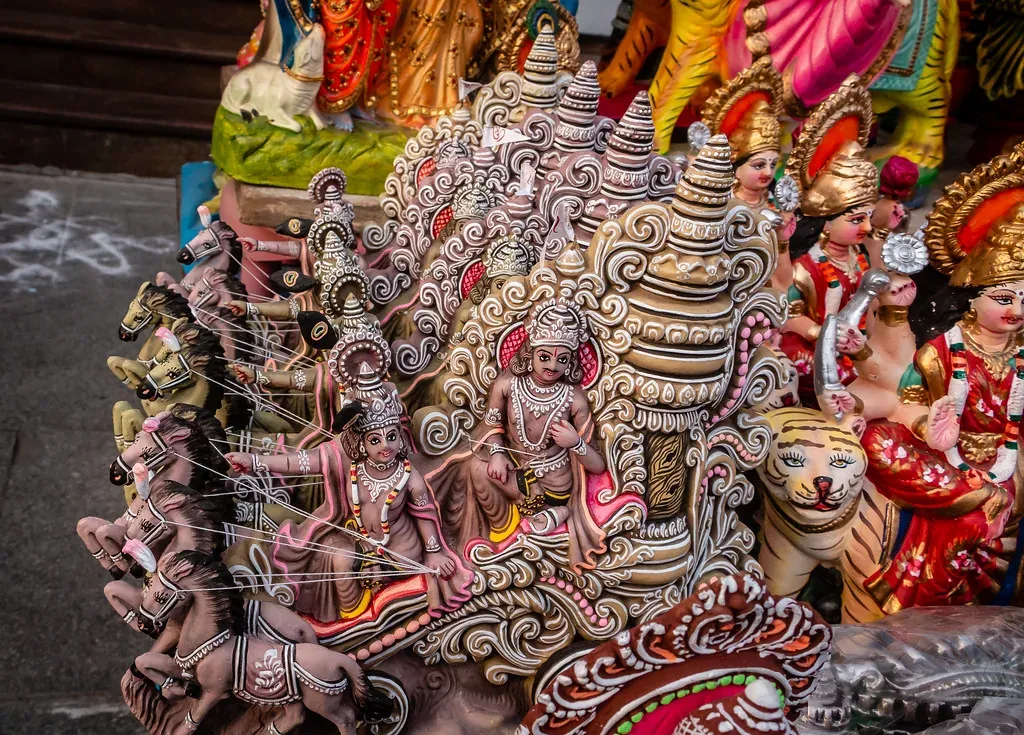
अर्जुन उवाचसंन्यासं कर्मणां कृष्ण पुनर्योगं च शंससियच्छ्रेय एतयोरेकं तन्मे ब्रूहि सुनिश्चितम् ॥
अर्जुन ने कहा: हे कृष्ण, आप कर्मों के त्याग की प्रशंसा करते हैं और फिर कर्मयोग की भी। इन दोनों में जो एक निश्चित रूप से श्रेष्ठ हो, वही मुझे बताइए।
Arjuna said: Krishna, you praise giving up action, and then you praise yoga through action as well. Of these two, tell me for certain the one that is better.
Word meanings and reflectionश्रीभगवानुवाचसंन्यासः कर्मयोगश्च निःश्रेयसकरावुभौतयोस्तु कर्मसंन्यासात्कर्मयोगो विशिष्यते ॥
श्रीकृष्ण बोले: कर्मों का त्याग और कर्मयोग, दोनों ही कल्याण करने वाले हैं। पर इन दोनों में कर्म के त्याग से कर्मयोग अधिक श्रेष्ठ है।
The Lord said: Renunciation of action and yoga through action both lead to the highest good. But of the two, yoga through action is the better one.
Word meanings and reflectionज्ञेयः स नित्यसंन्यासी यो न द्वेष्टि न काङ्क्षतिनिर्द्वन्द्वो हि महाबाहो सुखं बन्धात्प्रमुच्यते ॥
जो न किसी से द्वेष करता है और न कुछ चाहता है, उसे सदा का संन्यासी समझो। हे महाबाहो, जो सुख-दुख के जोड़ों से मुक्त है, वह आसानी से बंधन से छूट जाता है।
Know as a true renunciant the one who neither hates nor craves. Free of the pairs of opposites, mighty-armed Arjuna, he slips out of bondage with ease.
Word meanings and reflectionसांख्ययोगौ पृथग्बालाः प्रवदन्ति न पण्डिताःएकमप्यास्थितः सम्यगुभयोर्विन्दते फलम् ॥
अधकचरी समझ वाले लोग ही ज्ञानमार्ग और कर्मयोग को अलग-अलग बताते हैं, पंडित नहीं। इनमें से किसी एक में भी ठीक से टिका हुआ मनुष्य दोनों का फल पा लेता है।
Only children, not the wise, speak of knowledge and of action as two separate things. One who is truly established in either obtains the fruit of both.
Word meanings and reflectionयत्सांख्यैः प्राप्यते स्थानं तद्योगैरपि गम्यतेएकं सांख्यं च योगं च यः पश्यति स पश्यति ॥
ज्ञानियों को जो स्थान मिलता है, वही कर्मयोगियों को भी मिलता है। जो ज्ञान और कर्मयोग को एक देखता है, वही सच में देखता है।
The place that the knowers reach is reached by those who work in yoga as well. The one who sees knowledge and action-yoga as one, he alone truly sees.
Word meanings and reflectionसंन्यासस्तु महाबाहो दुःखमाप्तुमयोगतःयोगयुक्तो मुनिर्ब्रह्म नचिरेणाधिगच्छति ॥
हे महाबाहो, बिना योग के कर्मों का त्याग केवल दुख ही देता है। योग से युक्त मुनि शीघ्र ही ब्रह्म को पा लेता है।
Renunciation without yoga, mighty-armed Arjuna, only brings sorrow. The sage who is steadied in yoga arrives at Brahman before long.
Word meanings and reflectionयोगयुक्तो विशुद्धात्मा विजितात्मा जितेन्द्रियःसर्वभूतात्मभूतात्मा कुर्वन्नपि न लिप्यते ॥
जो योग से युक्त है, जिसका मन शुद्ध है, जिसने स्वयं को और इंद्रियों को जीत लिया है, और जिसकी आत्मा सब प्राणियों की आत्मा से जुड़ी है, वह कर्म करता हुआ भी लिप्त नहीं होता।
One who is joined to yoga, pure in mind, master of self and senses, and who feels his own self to be the self of all beings, is not touched by what he does, even while acting.
Word meanings and reflectionनैव किंचित्करोमीति युक्तो मन्येत तत्त्ववित्पश्यञ्शृण्वन्स्पृशञ्जिघ्रन्नश्नन्गच्छन्स्वपञ्श्वसन् ॥
तत्त्व को जानने वाला योगी देखते, सुनते, छूते, सूँघते, खाते, चलते, सोते और साँस लेते हुए यही माने कि मैं कुछ भी नहीं कर रहा।
The yogi who knows the truth would think: I am not doing anything at all. Even while seeing, hearing, touching, smelling, eating, moving, sleeping and breathing.
Word meanings and reflectionप्रलपन्विसृजन्गृह्णन्नुन्मिषन्निमिषन्नपिइन्द्रियाणीन्द्रियार्थेषु वर्तन्त इति धारयन् ॥
बोलते, छोड़ते, पकड़ते, आँख खोलते और बंद करते हुए भी वह यही समझे कि इंद्रियाँ अपने विषयों में लगी हैं।
Speaking, letting go, grasping, opening and closing the eyes, he holds the thought that it is only the senses moving among their objects.
Word meanings and reflectionब्रह्मण्याधाय कर्माणि सङ्गं त्यक्त्वा करोति यःलिप्यते न स पापेन पद्मपत्रमिवाम्भसा ॥
जो फल की आसक्ति छोड़कर, कर्मों को ब्रह्म में समर्पित करके काम करता है, उसे पाप वैसे नहीं छूता, जैसे कमल के पत्ते को जल नहीं छूता।
One who acts, offering the work to Brahman and letting go of attachment, stays clear of wrong, just as a lotus leaf is not touched by water.
Word meanings and reflectionकायेन मनसा बुद्ध्या केवलैरिन्द्रियैरपियोगिनः कर्म कुर्वन्ति सङ्गं त्यक्त्वाऽऽत्मशुद्धये ॥
योगी लोग आसक्ति छोड़कर अपने अंतःकरण की शुद्धि के लिए शरीर, मन, बुद्धि और केवल इंद्रियों से भी कर्म करते हैं।
Yogis act with the body, the mind, the intellect, and even with the senses alone, setting attachment aside, for the cleansing of the self.
Word meanings and reflectionयुक्तः कर्मफलं त्यक्त्वा शान्तिमाप्नोति नैष्ठिकीम्अयुक्तः कामकारेण फले सक्तो निबध्यते ॥
योग में लगा हुआ मनुष्य कर्मफल छोड़कर स्थिर शांति पाता है। जो योग से युक्त नहीं है, वह इच्छा के वश में होकर फल से जुड़ा रहता है और बँध जाता है।
The steadied person, letting go of the fruit of action, attains lasting peace. The unsteady one, driven by desire and tied to the result, remains bound.
Word meanings and reflectionसर्वकर्माणि मनसा संन्यस्यास्ते सुखं वशीनवद्वारे पुरे देही नैव कुर्वन्न कारयन् ॥
संयमी देहधारी सब कर्मों को मन से छोड़कर, न स्वयं कुछ करता हुआ और न कराता हुआ, नौ द्वारों वाले नगर में सुख से टिका रहता है।
The self-controlled embodied one, mentally laying down all actions, rests happily in the city of nine gates, neither doing nor causing anything to be done.
Word meanings and reflectionन कर्तृत्वं न कर्माणि लोकस्य सृजति प्रभुःन कर्मफलसंयोगं स्वभावस्तु प्रवर्तते ॥
परमेश्वर संसार के लोगों के लिए न कर्तापन रचता है, न कर्मों को, और न कर्म तथा फल का मेल। यह सब स्वभाव से ही चलता है।
The Lord does not create agency for people, nor their actions, nor the link between action and its result. It is nature, one's own makeup, that sets all this in motion.
Word meanings and reflectionनादत्ते कस्यचित्पापं न चैव सुकृतं विभुःअज्ञानेनावृतं ज्ञानं तेन मुह्यन्ति जन्तवः ॥
सर्वव्यापी परमात्मा न किसी के पाप को लेता है और न किसी के पुण्य को। ज्ञान अज्ञान से ढका हुआ है, इसी से सब प्राणी मोह में पड़ते हैं।
The all-pervading one takes on no one's wrong and no one's merit. Knowledge is covered over by ignorance, and so living beings are bewildered.
Word meanings and reflectionज्ञानेन तु तदज्ञानं येषां नाशितमात्मनःतेषामादित्यवज्ज्ञानं प्रकाशयति तत्परम् ॥
परंतु जिनका वह अज्ञान आत्मज्ञान से नष्ट हो गया है, उनका ज्ञान सूर्य के समान उस परम तत्त्व को प्रकाशित कर देता है।
But for those whose ignorance has been destroyed by knowledge of the self, that knowledge lights up the Supreme like the sun.
Word meanings and reflectionतद्बुद्धयस्तदात्मानस्तन्निष्ठास्तत्परायणाःगच्छन्त्यपुनरावृत्तिं ज्ञाननिर्धूतकल्मषाः ॥
जिनकी बुद्धि उसी में है, जिनकी आत्मा उसी में रमी है, जिनकी निष्ठा और शरण उसी में है, ज्ञान से पाप धुल जाने पर वे वहाँ पहुँचते हैं जहाँ से लौटना नहीं होता।
With their minds on that, their selves in that, their steadiness and refuge in that alone, and their faults washed off by knowledge, they go to the state from which there is no return.
Word meanings and reflectionविद्याविनयसंपन्ने ब्राह्मणे गवि हस्तिनिशुनि चैव श्वपाके च पण्डिताः समदर्शिनः ॥
विद्या और विनय से संपन्न ब्राह्मण में, गाय में, हाथी में, कुत्ते में और चांडाल में भी पंडित लोग एक ही दृष्टि से देखते हैं।
The wise see with the same eye a scholarly and humble brahmin, a cow, an elephant, a dog, and even an outcaste.
Word meanings and reflectionइहैव तैर्जितः सर्गो येषां साम्ये स्थितं मनःनिर्दोषं हि समं ब्रह्म तस्माद्ब्रह्मणि ते स्थिताः ॥
जिनका मन समता में टिका है, उन्होंने इसी जीवन में संसार को जीत लिया। ब्रह्म निर्दोष और सम है, इसलिए वे ब्रह्म में ही स्थित हैं।
Even here, in this life, creation is conquered by those whose minds rest in evenness. Brahman is flawless and even, and so they abide in Brahman.
Word meanings and reflectionन प्रहृष्येत्प्रियं प्राप्य नोद्विजेत्प्राप्य चाप्रियम्स्थिरबुद्धिरसम्मूढो ब्रह्मविद्ब्रह्मणि स्थितः ॥
वह प्रिय वस्तु पाकर फूले नहीं और अप्रिय पाकर घबराए नहीं। स्थिर बुद्धि वाला, मोह से रहित, ब्रह्म को जानने वाला मनुष्य ब्रह्म में टिका रहता है।
He should not be thrilled on getting what he likes, nor shaken on meeting what he dislikes. Steady in mind and free of confusion, the knower of Brahman stays in Brahman.
Word meanings and reflectionबाह्यस्पर्शेष्वसक्तात्मा विन्दत्यात्मनि यत्सुखम्स ब्रह्मयोगयुक्तात्मा सुखमक्षयमश्नुते ॥
जिसकी आत्मा बाहरी विषयों के स्पर्श में आसक्त नहीं है, वह अपने भीतर जो सुख पाता है, उसी को पाता है। ब्रह्म के योग में लगा वह मनुष्य कभी न घटने वाले सुख का अनुभव करता है।
With the self unattached to outer contacts, one finds a joy within oneself. Joined in yoga with Brahman, that person tastes a happiness which does not run out.
Word meanings and reflectionये हि संस्पर्शजा भोगा दुःखयोनय एव तेआद्यन्तवन्तः कौन्तेय न तेषु रमते बुधः ॥
इंद्रियों और विषयों के संपर्क से उपजने वाले जो भोग हैं, वे दुख के ही कारण हैं। हे कुंतीपुत्र, उनका आदि भी है और अंत भी, इसलिए समझदार उनमें रमता नहीं।
Pleasures born of contact between senses and their objects are really wombs of pain. They have a beginning and an end, Arjuna, so the discerning do not take delight in them.
Word meanings and reflectionशक्नोतीहैव यः सोढुं प्राक्शरीरविमोक्षणात्कामक्रोधोद्भवं वेगं स युक्तः स सुखी नरः ॥
जो मनुष्य शरीर छूटने से पहले इसी जीवन में काम और क्रोध से उठने वाले वेग को सह लेने में समर्थ है, वही योगी है और वही सुखी है।
The person who is able, right here and before the body is shed, to bear the surge that rises from desire and anger, is the yogi and the happy one.
Word meanings and reflectionयोऽन्तःसुखोऽन्तरारामस्तथान्तर्ज्योतिरेव यःस योगी ब्रह्मनिर्वाणं ब्रह्मभूतोऽधिगच्छति ॥
जिसका सुख भीतर है, जिसका आराम भीतर है, और जिसका प्रकाश भीतर ही है, वह योगी ब्रह्मरूप होकर ब्रह्म में लीन होने की स्थिति पाता है।
The yogi whose happiness is inward, whose rest is inward, and whose light is inward becomes one with Brahman and reaches the stillness of Brahman.
Word meanings and reflectionलभन्ते ब्रह्मनिर्वाणमृषयः क्षीणकल्मषाःछिन्नद्वैधा यतात्मानः सर्वभूतहिते रताः ॥
जिनके पाप क्षीण हो गए हैं, जिनके संशय कट गए हैं, जो संयमी हैं और सब प्राणियों की भलाई में लगे हैं, ऐसे ऋषि ब्रह्म में निर्वाण पाते हैं।
Sages whose faults have worn thin, whose doubts are cut, who are self-governed and who delight in the good of all beings, obtain the stillness of Brahman.
Word meanings and reflectionकामक्रोधवियुक्तानां यतीनां यतचेतसाम्अभितो ब्रह्मनिर्वाणं वर्तते विदितात्मनाम् ॥
काम और क्रोध से मुक्त, मन को वश में रखने वाले और आत्मा को जानने वाले साधुओं के लिए ब्रह्म का निर्वाण चारों ओर ही मौजूद है।
For ascetics free of desire and anger, with a disciplined mind and knowledge of the self, the stillness of Brahman lies all around them, near on every side.
Word meanings and reflectionस्पर्शान्कृत्वा बहिर्बाह्यांश्चक्षुश्चैवान्तरे भ्रुवोःप्राणापानौ समौ कृत्वा नासाभ्यन्तरचारिणौ ॥
बाहर के विषयों को बाहर ही छोड़कर, दृष्टि को दोनों भौंहों के बीच टिकाकर, और नाक के भीतर चलने वाले प्राण तथा अपान को समान करके,
Shutting outer contacts outside, fixing the gaze between the brows, and evening out the incoming and outgoing breath as they move within the nostrils,
Word meanings and reflectionयतेन्द्रियमनोबुद्धिर्मुनिर्मोक्षपरायणःविगतेच्छाभयक्रोधो यः सदा मुक्त एव सः ॥
जिसने इंद्रियों, मन और बुद्धि को वश में कर लिया है, जो मोक्ष में तत्पर है और जिसकी इच्छा, भय तथा क्रोध चले गए हैं, वह मुनि सदा के लिए मुक्त ही है।
The sage who has mastered senses, mind and intellect, who is set on liberation, and from whom wishing, fear and anger have gone, is free for good.
Word meanings and reflectionभोक्तारं यज्ञतपसां सर्वलोकमहेश्वरम्सुहृदं सर्वभूतानां ज्ञात्वा मां शान्तिमृच्छति ॥
जो मुझे यज्ञों और तपों का भोगने वाला, सब लोकों का महान ईश्वर और सब प्राणियों का मित्र जान लेता है, वह शांति को प्राप्त होता है।
Knowing me as the enjoyer of sacrifices and austerities, the great Lord of all the worlds, and the friend of every being, one comes to peace.
Word meanings and reflection