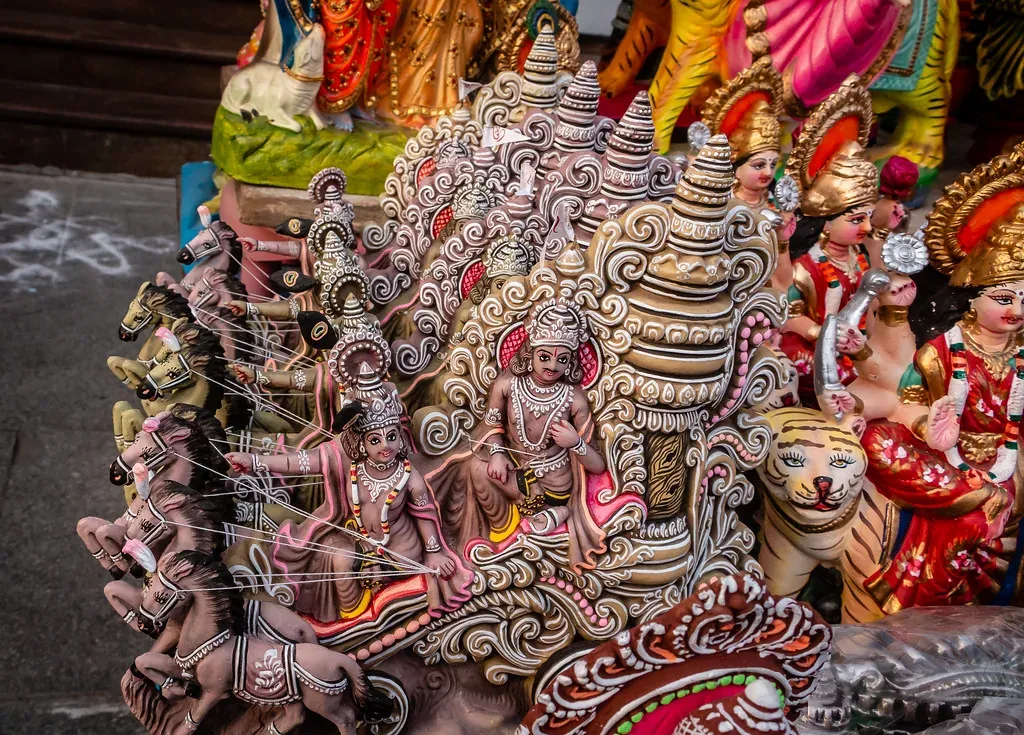
अर्जुन उवाचप्रकृतिं पुरुषं चैव क्षेत्रं क्षेत्रज्ञमेव चएतद्वेदितुमिच्छामि ज्ञानं ज्ञेयं च केशव ॥
अर्जुन ने कहा: हे केशव, मैं प्रकृति और पुरुष को, क्षेत्र और क्षेत्रज्ञ को, तथा ज्ञान और जानने योग्य को भी समझना चाहता हूँ।
Arjuna said: Keshava, I want to understand nature and the experiencer, the field and the one who knows the field, and also what knowledge is and what is worth knowing.
Word meanings and reflectionश्रीभगवानुवाचइदं शरीरं कौन्तेय क्षेत्रमित्यभिधीयतेएतद्यो वेत्ति तं प्राहुः क्षेत्रज्ञ इति तद्विदः ॥
श्रीभगवान् बोले: हे कुन्तीपुत्र, इस शरीर को क्षेत्र कहा जाता है। जो इसे जान लेता है, उसे इसके जानकार लोग क्षेत्रज्ञ कहते हैं।
The Lord said: Son of Kunti, this body is called the field. Those who understand such things call the one who knows it the knower of the field.
Word meanings and reflectionक्षेत्रज्ञं चापि मां विद्धि सर्वक्षेत्रेषु भारतक्षेत्रक्षेत्रज्ञयोर्ज्ञानं यत्तज्ज्ञानं मतं मम ॥
हे भारत, सब क्षेत्रों में मुझे ही क्षेत्रज्ञ समझो। क्षेत्र और क्षेत्रज्ञ का जो ज्ञान है, वही मेरे मत में सच्चा ज्ञान है।
Know me too as the knower in every field, Arjuna. The understanding of the field and its knower together is, in my view, what deserves to be called knowledge.
Word meanings and reflectionतत्क्षेत्रं यच्च यादृक् च यद्विकारि यतश्च यत्स च यो यत्प्रभावश्च तत्समासेन मे शृणु ॥
वह क्षेत्र क्या है, कैसा है, उसमें कौन से बदलाव होते हैं, वह किससे उपजा है, और वह जानने वाला कौन है तथा उसकी सामर्थ्य क्या है, यह सब संक्षेप में मुझसे सुनो।
Listen to me briefly: what the field is, what it is like, how it changes, where it comes from, and who the knower is and what his power is.
Word meanings and reflectionऋषिभिर्बहुधा गीतं छन्दोभिर्विविधैः पृथक्ब्रह्मसूत्रपदैश्चैव हेतुमद्भिर्विनिश्चितैः ॥
ऋषियों ने इसे अनेक प्रकार से गाया है, अलग अलग छन्दों में भी, और ब्रह्मसूत्र के तर्क से भरे, निश्चित पदों में भी।
Sages have sung of this in many ways, in separate verse forms of the Vedas, and also in the well-reasoned, clearly settled words of the Brahma Sutra.
Word meanings and reflectionमहाभूतान्यहङ्कारो बुद्धिरव्यक्तमेव चइन्द्रियाणि दशैकं च पञ्च चेन्द्रियगोचराः ॥
पाँच महाभूत, अहंकार, बुद्धि और अव्यक्त मूल प्रकृति, दस इन्द्रियाँ और एक मन, तथा इन्द्रियों के पाँच विषय।
The five great elements, the sense of I, intellect and the unmanifest source, the ten senses and the one mind, and the five fields of the senses.
Word meanings and reflectionइच्छा द्वेषः सुखं दुःखं सङ्घातश्चेतनाधृतिःएतत्क्षेत्रं समासेन सविकारमुदाहृतम् ॥
इच्छा, द्वेष, सुख, दुःख, शरीर का समूह, चेतना और धैर्य: इस प्रकार विकारों सहित क्षेत्र संक्षेप में कहा गया।
Desire, aversion, pleasure, pain, the body as a gathered whole, awareness and steadiness: this, with its changes, is the field as briefly described.
Word meanings and reflectionअमानित्वमदम्भित्वमहिंसा क्षान्तिरार्जवम्आचार्योपासनं शौचं स्थैर्यमात्मविनिग्रहः ॥
विनम्रता, दिखावा न करना, किसी को न सताना, क्षमा, सरलता, गुरु की सेवा, भीतर बाहर की शुद्धता, स्थिरता और अपने पर संयम।
Humility, freedom from show, non-harming, patience, straightness, serving a teacher, cleanliness, steadiness, and mastery over oneself.
Word meanings and reflectionइन्द्रियार्थेषु वैराग्यमनहङ्कार एव चजन्ममृत्युजराव्याधिदुःखदोषानुदर्शनम् ॥
इन्द्रियों के भोगों में वैराग्य, अहंकार का न होना, और जन्म, मृत्यु, बुढ़ापे, बीमारी तथा दुःख में छिपे दोष को बार बार देखते रहना।
Detachment from the pleasures the senses chase, no inflated ego, and a steady awareness of the pain and flaw that come with birth, death, old age and illness.
Word meanings and reflectionअसक्तिरनभिष्वङ्गः पुत्रदारगृहादिषुनित्यं च समचित्तत्वमिष्टानिष्टोपपत्तिषु ॥
पुत्र, पत्नी और घर आदि में चिपकाव और ममता का न होना, और मनचाहा या अनचाहा जो भी मिले उसमें सदा समान मन रहना।
No clinging or entanglement with children, spouse, home and the like, and a mind that stays level whether the wanted or the unwanted turns up.
Word meanings and reflectionमयि चानन्ययोगेन भक्तिरव्यभिचारिणीविविक्तदेशसेवित्वमरतिर्जनसंसदि ॥
मुझमें अनन्य योग से अटूट भक्ति, एकान्त स्थान में रहने की रुचि, और भीड़ भरी सभाओं में मन न लगना।
Unwavering devotion to me through single-minded practice, a liking for quiet places, and no taste for the crowd and its gatherings.
Word meanings and reflectionअध्यात्मज्ञाननित्यत्वं तत्त्वज्ञानार्थदर्शनम्एतज्ज्ञानमिति प्रोक्तमज्ञानं यदतोन्यथा ॥
आत्मा के विषय में ज्ञान में सदा टिके रहना, और तत्त्वज्ञान के उद्देश्य को देखते रहना: यह सब ज्ञान कहा गया है, और इसके विपरीत जो भी है वह अज्ञान है।
Constancy in knowing the self, and keeping in sight what the knowledge of truth is for: all this is called knowledge, and whatever differs from it is ignorance.
Word meanings and reflectionज्ञेयं यत्तत्प्रवक्ष्यामि यज्ज्ञात्वाऽमृतमश्नुतेअनादिमत्परं ब्रह्म न सत्तन्नासदुच्यते ॥
अब मैं वह बताऊँगा जो जानने योग्य है, जिसे जानकर अमरता का स्वाद मिलता है: वह अनादि परम ब्रह्म है, जिसे न सत् कहा जाता है न असत्।
Now I will tell what is to be known, by knowing which one tastes immortality: the supreme Brahman, without beginning, said to be neither being nor non-being.
Word meanings and reflectionसर्वतः पाणिपादं तत्सर्वतोऽक्षिशिरोमुखम्सर्वतः श्रुतिमल्लोके सर्वमावृत्य तिष्ठति ॥
उसके हाथ पैर सब ओर हैं, आँखें सिर और मुख सब ओर हैं, कान सब ओर हैं। वह संसार में सबको घेरकर स्थित है।
Its hands and feet are everywhere, its eyes, heads and mouths are everywhere, it hears everywhere. It stands pervading all that is in the world.
Word meanings and reflectionसर्वेन्द्रियगुणाभासं सर्वेन्द्रियविवर्जितम्असक्तं सर्वभृच्चैव निर्गुणं गुणभोक्तृ च ॥
वह सब इन्द्रियों के गुणों से प्रकाशित सा दिखता है, फिर भी सब इन्द्रियों से रहित है। वह अनासक्त है, फिर भी सबको धारण करता है। वह गुणों से परे है, फिर भी गुणों को भोगता है।
It seems to shine through the qualities of every sense, yet has no senses. It is unattached, yet holds up all things. It is free of the strands of nature, yet enjoys them.
Word meanings and reflectionबहिरन्तश्च भूतानामचरं चरमेव चसूक्ष्मत्वात्तदविज्ञेयं दूरस्थं चान्तिके च तत् ॥
वह प्राणियों के भीतर भी है और बाहर भी, स्थिर भी है और चलता भी। सूक्ष्म होने से वह समझ में नहीं आता। वह दूर भी है और पास भी।
It is within beings and outside them, unmoving and moving. Because it is so subtle it cannot be grasped. It is far away, and it is also near.
Word meanings and reflectionअविभक्तं च भूतेषु विभक्तमिव च स्थितम्भूतभर्तृ च तज्ज्ञेयं ग्रसिष्णु प्रभविष्णु च ॥
वह प्राणियों में बँटा हुआ नहीं है, फिर भी बँटा सा दिखता है। उसे जानो: वह सबका पालन करता है, सबको निगलता है और सबको जन्म भी देता है।
Undivided among beings, yet seeming to be divided. Know it as the one who sustains them, swallows them back, and brings them forth again.
Word meanings and reflectionज्योतिषामपि तज्ज्योतिस्तमसः परमुच्यतेज्ञानं ज्ञेयं ज्ञानगम्यं हृदि सर्वस्य विष्ठितम् ॥
वह प्रकाशों का भी प्रकाश है, अन्धकार से परे कहा गया है। वही ज्ञान है, वही जानने योग्य है, वही ज्ञान से पाया जाता है, और सबके हृदय में बसा है।
It is the light even of lights, said to be beyond darkness. It is knowledge, the thing to be known, and the goal reached by knowing, set firmly in the heart of everyone.
Word meanings and reflectionइति क्षेत्रं तथा ज्ञानं ज्ञेयं चोक्तं समासतःमद्भक्त एतद्विज्ञाय मद्भावायोपपद्यते ॥
इस प्रकार क्षेत्र, ज्ञान और जानने योग्य का संक्षेप में वर्णन हुआ। मेरा भक्त इसे समझकर मेरे भाव को प्राप्त हो जाता है।
So the field, knowledge, and the object of knowledge have been told in brief. My devotee who understands this becomes fit to share in my own nature.
Word meanings and reflectionप्रकृतिं पुरुषं चैव विद्ध्यनादी उभावपिविकारांश्च गुणांश्चैव विद्धि प्रकृतिसंभवान् ॥
प्रकृति और पुरुष, दोनों को अनादि जानो। और सब विकारों तथा गुणों को प्रकृति से उत्पन्न समझो।
Know that nature and the conscious self are both without beginning. And know that all the changes and all the qualities arise from nature.
Word meanings and reflectionकार्यकारणकर्तृत्वे हेतुः प्रकृतिरुच्यतेपुरुषः सुखदुःखानां भोक्तृत्वे हेतुरुच्यते ॥
कार्य और कारण को रचने में प्रकृति को कारण कहा गया है, और सुख दुःख के भोगने में पुरुष को कारण कहा जाता है।
Nature is named as the cause when effects and instruments are made; the conscious self is what answers for the feeling of pleasure and pain.
Word meanings and reflectionपुरुषः प्रकृतिस्थो हि भुङ्क्ते प्रकृतिजान्गुणान्कारणं गुणसङ्गोऽस्य सदसद्योनिजन्मसु ॥
प्रकृति में स्थित पुरुष ही प्रकृति से उपजे गुणों को भोगता है। अच्छी बुरी योनियों में जन्म लेने का कारण इसका गुणों से लगाव है।
The self placed in nature enjoys the qualities nature produces. Its clinging to those qualities is the reason it is born into good and bad wombs.
Word meanings and reflectionउपद्रष्टाऽनुमन्ता च भर्ता भोक्ता महेश्वरःपरमात्मेति चाप्युक्तो देहेऽस्मिन्पुरुषः परः ॥
इस देह में स्थित परम पुरुष साक्षी है, अनुमति देने वाला है, धारण करने वाला है, भोगने वाला है, महान ईश्वर है और परमात्मा भी कहा गया है।
The supreme person in this body is the witness, the one who permits, the supporter, the experiencer, the great lord, and is also spoken of as the supreme self.
Word meanings and reflectionय एवं वेत्ति पुरुषं प्रकृतिं च गुणैःसहसर्वथा वर्तमानोऽपि न स भूयोऽभिजायते ॥
जो इस प्रकार पुरुष को और गुणों सहित प्रकृति को जान लेता है, वह चाहे जैसा भी बर्ताव करता हो, फिर से जन्म नहीं लेता।
Whoever knows the self and nature together with its qualities in this way is not born again, however he may be living.
Word meanings and reflectionध्यानेनात्मनि पश्यन्ति केचिदात्मानमात्मनाअन्ये सांख्येन योगेन कर्मयोगेन चापरे ॥
कुछ लोग ध्यान से अपने भीतर अपने आप ही आत्मा को देखते हैं। कुछ सांख्ययोग से, और दूसरे कर्मयोग से।
Some see the self within themselves, by themselves, through meditation. Others get there by reasoning it out, and still others by the discipline of selfless work.
Word meanings and reflectionअन्ये त्वेवमजानन्तः श्रुत्वाऽन्येभ्य उपासतेतेऽपि चातितरन्त्येव मृत्युं श्रुतिपरायणाः ॥
कुछ दूसरे ऐसा न जानने वाले लोग औरों से सुनकर उपासना करते हैं। सुनने में लगे रहने वाले वे लोग भी निश्चय ही मृत्यु को पार कर जाते हैं।
Others, who do not know it directly, hear about it from teachers and then worship. Even those who rely wholly on what they have heard cross beyond death.
Word meanings and reflectionयावत्सञ्जायते किञ्चित्सत्त्वं स्थावरजङ्गमम्क्षेत्रक्षेत्रज्ञसंयोगात्तद्विद्धि भरतर्षभ ॥
हे भरतश्रेष्ठ, जो कुछ भी स्थावर या जंगम जीव उत्पन्न होता है, उसे क्षेत्र और क्षेत्रज्ञ के संयोग से उत्पन्न हुआ जानो।
Best of the Bharatas, whatever being comes into existence, standing or moving, know that it arises from the union of the field and its knower.
Word meanings and reflectionसमं सर्वेषु भूतेषु तिष्ठन्तं परमेश्वरम्विनश्यत्स्वविनश्यन्तं यः पश्यति स पश्यति ॥
जो सब प्राणियों में एक समान रहने वाले परमेश्वर को देखता है, जो सब नष्ट होते हुए में भी नष्ट न होने वाला है, वही सचमुच देखता है।
He truly sees who sees the supreme lord standing equally in all beings, the undying one within the things that die.
Word meanings and reflectionसमं पश्यन्हि सर्वत्र समवस्थितमीश्वरम्न हिनस्त्यात्मनाऽऽत्मानं ततो याति परां गतिम् ॥
क्योंकि सब जगह समान रूप से बसे ईश्वर को देखने वाला अपने आप को अपने ही हाथों नहीं मारता, और इसीलिए परम गति को पाता है।
One who sees the lord present alike everywhere does not destroy himself by his own hand, and so he goes to the highest end.
Word meanings and reflectionप्रकृत्यैव च कर्माणि क्रियमाणानि सर्वशःयः पश्यति तथाऽऽत्मानमकर्तारं स पश्यति ॥
जो देखता है कि सारे कर्म सब प्रकार से प्रकृति ही कर रही है, और आत्मा तो कर्ता नहीं है, वही सचमुच देखता है।
He truly sees who sees that all actions are done everywhere by nature alone, and that the self is not the doer.
Word meanings and reflectionयदा भूतपृथग्भावमेकस्थमनुपश्यतितत एव च विस्तारं ब्रह्म सम्पद्यते तदा ॥
जब मनुष्य प्राणियों के अलग अलग भावों को एक ही में टिका हुआ देखता है, और उसी एक से सबका फैलाव देखता है, तब वह ब्रह्म हो जाता है।
When a person sees the separate existence of beings resting in the one, and spreading out from that same one, then he becomes Brahman.
Word meanings and reflectionअनादित्वान्निर्गुणत्वात्परमात्मायमव्ययःशरीरस्थोऽपि कौन्तेय न करोति न लिप्यते ॥
हे कुन्तीपुत्र, यह परमात्मा अनादि और गुणों से रहित होने के कारण अविनाशी है। शरीर में रहते हुए भी न कुछ करता है और न लिप्त होता है।
Because it has no beginning and no qualities, this supreme self is imperishable. Though it lives in the body, it neither acts nor is stained, son of Kunti.
Word meanings and reflectionयथा सर्वगतं सौक्ष्म्यादाकाशं नोपलिप्यतेसर्वत्रावस्थितो देहे तथाऽऽत्मा नोपलिप्यते ॥
जैसे सर्वत्र फैला हुआ आकाश अपनी सूक्ष्मता के कारण किसी से लिप्त नहीं होता, वैसे ही देह में सब जगह स्थित आत्मा भी लिप्त नहीं होता।
As space, which reaches everywhere, is not stained by anything because of its fineness, so the self, present throughout the body, is not stained.
Word meanings and reflectionयथा प्रकाशयत्येकः कृत्स्नं लोकमिमं रविःक्षेत्रं क्षेत्री तथा कृत्स्नं प्रकाशयति भारत ॥
हे भारत, जैसे एक ही सूर्य इस सारे संसार को प्रकाशित करता है, वैसे ही क्षेत्र का स्वामी पूरे क्षेत्र को प्रकाशित करता है।
As one sun lights this whole world, Arjuna, so the lord of the field lights up the whole field.
Word meanings and reflectionक्षेत्रक्षेत्रज्ञयोरेवमन्तरं ज्ञानचक्षुषाभूतप्रकृतिमोक्षं च ये विदुर्यान्ति ते परम् ॥
जो इस प्रकार ज्ञान की आँख से क्षेत्र और क्षेत्रज्ञ के भेद को और प्राणियों की प्रकृति से मुक्ति को जानते हैं, वे परम को प्राप्त होते हैं।
Those who, with the eye of knowledge, understand the difference between the field and its knower, and the way beings are freed from nature, go to the supreme.
Word meanings and reflection