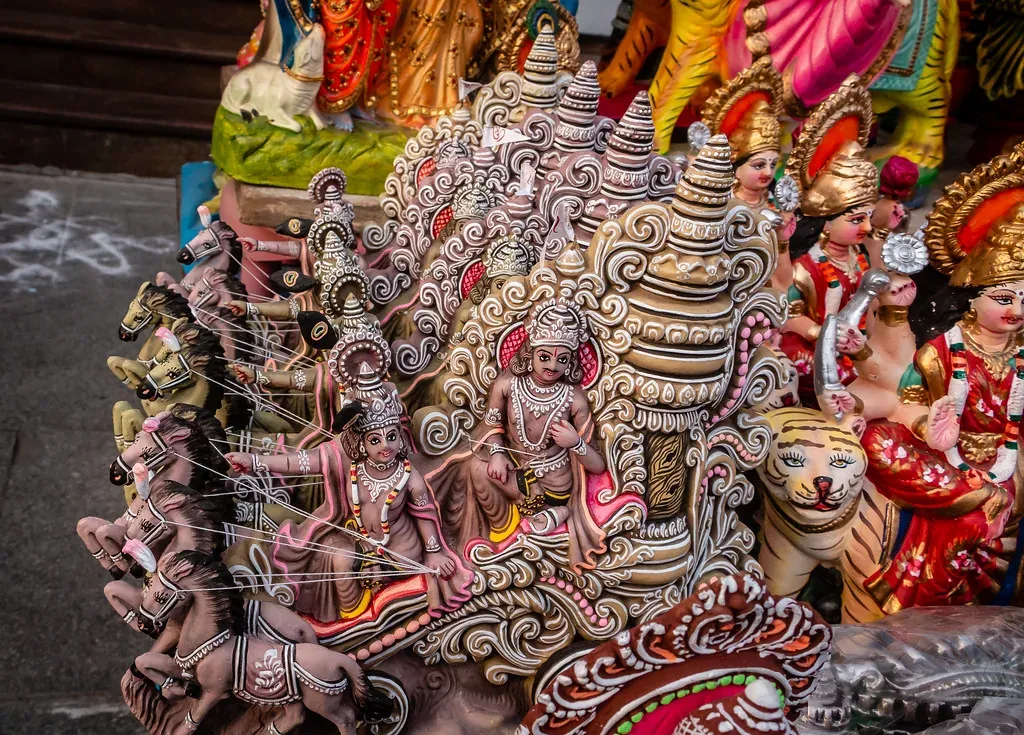
अर्जुन उवाचएवं सततयुक्ता ये भक्तास्त्वां पर्युपासतेयेचाप्यक्षरमव्यक्तं तेषां के योगवित्तमाः ॥
अर्जुन ने कहा: जो भक्त इस प्रकार निरंतर लगे रहकर आपकी उपासना करते हैं, और जो अविनाशी, अप्रकट तत्त्व की उपासना करते हैं, इन दोनों में योग को अच्छी तरह जानने वाला कौन श्रेष्ठ है?
Arjuna said: Some stay steadily devoted and worship you as a person, while others worship the imperishable, unmanifest reality. Which of these two knows yoga better?
Word meanings and reflectionश्रीभगवानुवाचमय्यावेश्य मनो ये मां नित्ययुक्ता उपासतेश्रद्धया परयोपेतास्ते मे युक्ततमा मताः ॥
श्रीभगवान बोले: जो मुझमें मन को टिकाकर, सदा जुड़े रहकर, परम श्रद्धा के साथ मेरी उपासना करते हैं, वे मेरे मत में सबसे अधिक योग में स्थित हैं।
The Lord said: Those who fix their mind on me, stay joined to me always, and worship with deep faith, I consider them the most firmly established in yoga.
Word meanings and reflectionये त्वक्षरमनिर्देश्यमव्यक्तं पर्युपासतेसर्वत्रगमचिन्त्यं च कूटस्थमचलं ध्रुवम् ॥
और जो अविनाशी, जिसे बताया नहीं जा सकता, अप्रकट, सर्वत्र फैले, सोच से परे, अपरिवर्तनशील, अचल और स्थिर तत्त्व की उपासना करते हैं,
But those who worship the imperishable, the indescribable, the unmanifest, that which is everywhere, beyond thought, unchanging, unmoving and fixed,
Word meanings and reflectionसंनियम्येन्द्रियग्रामं सर्वत्र समबुद्धयःते प्राप्नुवन्ति मामेव सर्वभूतहिते रताः ॥
इन्द्रियों के समूह को भली भाँति वश में करके, सब जगह समान दृष्टि रखते हुए, सभी प्राणियों के हित में लगे वे लोग भी मुझे ही पाते हैं।
Having fully restrained the whole company of the senses, seeing all alike everywhere and happy in the good of every creature, they too arrive at me alone.
Word meanings and reflectionक्लेशोऽधिकतरस्तेषामव्यक्तासक्तचेतसाम्अव्यक्ता हि गतिर्दुःखं देहवद्भिरवाप्यते ॥
जिनका चित्त अप्रकट में लगा है, उनके लिए कष्ट अधिक है, क्योंकि देह वाले जीवों के लिए अप्रकट की ओर का मार्ग दुःख के साथ ही पाया जाता है।
The strain is greater for those whose minds cling to the unmanifest, because that path is reached only with difficulty by those who still live in a body.
Word meanings and reflectionये तु सर्वाणि कर्माणि मयि संन्यस्य मत्पराःअनन्येनैव योगेन मां ध्यायन्त उपासते ॥
परंतु जो सब कर्म मुझे सौंपकर, मुझे ही परम लक्ष्य मानकर, अनन्य योग से मेरा ध्यान करते हुए उपासना करते हैं,
But those who lay all their actions in me, hold me as their highest aim, and worship me meditating with undivided attention,
Word meanings and reflectionतेषामहं समुद्धर्ता मृत्युसंसारसागरात्भवामि नचिरात्पार्थ मय्यावेशितचेतसाम् ॥
हे पार्थ, मुझमें चित्त लगाए हुए उन लोगों को मैं मृत्यु-रूप संसार के सागर से शीघ्र ही पार निकालने वाला बन जाता हूँ।
For those whose minds are absorbed in me, Partha, I become the one who lifts them out of the ocean of death and rebirth, and before long.
Word meanings and reflectionमय्येव मन आधत्स्व मयि बुद्धिं निवेशयनिवसिष्यसि मय्येव अत ऊर्ध्वं न संशयः ॥
मुझमें ही मन को रखो, मुझमें बुद्धि को लगाओ। इसके बाद तुम मुझमें ही रहोगे, इसमें कोई संदेह नहीं।
Rest your mind in me alone, and let your intellect settle in me. After that you will live in me, and of this there is no doubt.
Word meanings and reflectionअथ चित्तं समाधातुं न शक्नोषि मयि स्थिरम्अभ्यासयोगेन ततो मामिच्छाप्तुं धनञ्जय ॥
और यदि तुम अपने चित्त को मुझमें स्थिर रूप से टिका नहीं पाते, तो हे धनंजय, अभ्यास के योग से मुझे पाने की इच्छा करो।
And if you cannot hold your mind steadily on me, Dhananjaya, then try to reach me through the discipline of practice, repeating the effort again and again.
Word meanings and reflectionअभ्यासेऽप्यसमर्थोऽसि मत्कर्मपरमो भवमदर्थमपि कर्माणि कुर्वन् सिद्धिमवाप्स्यसि ॥
यदि अभ्यास में भी असमर्थ हो, तो मेरे लिए कर्म करने को ही अपना लक्ष्य बना लो। मेरे लिए कर्म करते हुए भी तुम सिद्धि पा जाओगे।
If even practice is beyond you, then make working for me your chief aim. Simply by doing your actions for my sake, you will reach fulfilment.
Word meanings and reflectionअथैतदप्यशक्तोऽसि कर्तुं मद्योगमाश्रितःसर्वकर्मफलत्यागं ततः कुरु यतात्मवान् ॥
और यदि इतना भी करने में असमर्थ हो, तो मेरे योग का सहारा लेकर, मन को वश में रखते हुए, सब कर्मों के फल का त्याग करो।
And if even this is too much for you, then take refuge in my discipline, hold yourself in check, and let go of the fruit of every action.
Word meanings and reflectionश्रेयो हि ज्ञानमभ्यासाज्ज्ञानाद्ध्यानं विशिष्यतेध्यानात्कर्मफलत्यागस्त्यागाच्छान्तिरनन्तरम् ॥
अभ्यास से ज्ञान श्रेष्ठ है, ज्ञान से ध्यान विशेष है, ध्यान से कर्मफल का त्याग बढ़कर है, और त्याग के बाद तुरंत शांति मिलती है।
Knowledge is better than rote practice, meditation is better than knowledge, giving up the fruit of action is better than meditation, and right after that giving-up comes peace.
Word meanings and reflectionअद्वेष्टा सर्वभूतानां मैत्रः करुण एव चनिर्ममो निरहङ्कारः समदुःखसुखः क्षमी ॥
जो किसी प्राणी से द्वेष नहीं रखता, सबका मित्र है और करुणावान भी है, जिसमें ममता और अहंकार नहीं है, जो सुख-दुःख में समान रहता और क्षमाशील है,
One who hates no creature, who is friendly and compassionate, free of the sense of mine and of ego, even in pain and pleasure, and forgiving,
Word meanings and reflectionसन्तुष्टः सततं योगी यतात्मा दृढनिश्चयःमय्यर्पितमनोबुद्धिर्यो मद्भक्तः स मे प्रियः ॥
जो सदा संतुष्ट है, संयमी योगी है, जिसका निश्चय दृढ़ है, और जिसने मन-बुद्धि मुझे अर्पित कर दी है, ऐसा मेरा भक्त मुझे प्रिय है।
Always content, self-controlled, firm in resolve, with mind and intellect offered to me: such a devotee of mine is dear to me.
Word meanings and reflectionयस्मान्नोद्विजते लोको लोकान्नोद्विजते च यःहर्षामर्षभयोद्वेगैर्मुक्तो यः स च मे प्रियः ॥
जिससे लोग घबराते नहीं और जो खुद लोगों से नहीं घबराता, और जो हर्ष, ईर्ष्या, भय और घबराहट से मुक्त है, वह भी मुझे प्रिय है।
The one who causes no distress to the world, and is not distressed by it, who is free from elation, envy, fear and agitation: he too is dear to me.
Word meanings and reflectionअनपेक्षः शुचिर्दक्ष उदासीनो गतव्यथःसर्वारम्भपरित्यागी यो मद्भक्तः स मे प्रियः ॥
जिसे कोई अपेक्षा नहीं, जो भीतर-बाहर शुद्ध, कुशल, तटस्थ और चिंता से मुक्त है, जो हर नई शुरुआत का अभिमान छोड़ चुका है, ऐसा मेरा भक्त मुझे प्रिय है।
Wanting nothing for himself, clean, capable, even-minded and free of worry, one who gives up the pride of starting every undertaking: such a devotee is dear to me.
Word meanings and reflectionयो न हृष्यति न द्वेष्टि न शोचति न काङ्क्षतिशुभाशुभपरित्यागी भक्तिमान्यः स मे प्रियः ॥
जो न खुशी से उछलता है, न द्वेष करता है, न शोक करता है, न कामना करता है, जो शुभ और अशुभ दोनों को छोड़ चुका है, वह भक्तिमान मनुष्य मुझे प्रिय है।
He who neither rejoices nor hates, neither grieves nor craves, and has let go of both the pleasant and the unpleasant, that man of devotion is dear to me.
Word meanings and reflectionसमः शत्रौ च मित्रे च तथा मानापमानयोःशीतोष्णसुखदुःखेषु समः सङ्गविवर्जितः ॥
जो शत्रु और मित्र के प्रति समान है, वैसे ही मान और अपमान में, सर्दी-गर्मी और सुख-दुःख में समान है, और आसक्ति से रहित है,
Equal toward foe and friend, and likewise in honour and disgrace, the same in cold and heat, pleasure and pain, and free from attachment,
Word meanings and reflectionतुल्यनिन्दास्तुतिर्मौनी सन्तुष्टो येनकेनचित्अनिकेतः स्थिरमतिर्भक्तिमान्मे प्रियो नरः ॥
जिसके लिए निंदा और स्तुति बराबर है, जो मौन है, जो जो भी मिल जाए उसी में संतुष्ट है, जिसका कोई निश्चित घर नहीं और जिसकी बुद्धि स्थिर है, ऐसा भक्तिमान मनुष्य मुझे प्रिय है।
To whom blame and praise are alike, who is quiet, content with whatever comes, without a fixed home, steady in mind, that devotee is dear to me.
Word meanings and reflectionये तु धर्म्यामृतमिदं यथोक्तं पर्युपासतेश्रद्दधाना मत्परमा भक्तास्तेऽतीव मे प्रियाः ॥
और जो श्रद्धा रखने वाले, मुझे परम मानने वाले भक्त इस ऊपर कहे हुए धर्ममय अमृत की उपासना करते हैं, वे मुझे अत्यंत प्रिय हैं।
And those devotees who, full of faith and holding me as their highest goal, drink this deathless wisdom of dharma exactly as it was spoken, are exceedingly dear to me.
Word meanings and reflection