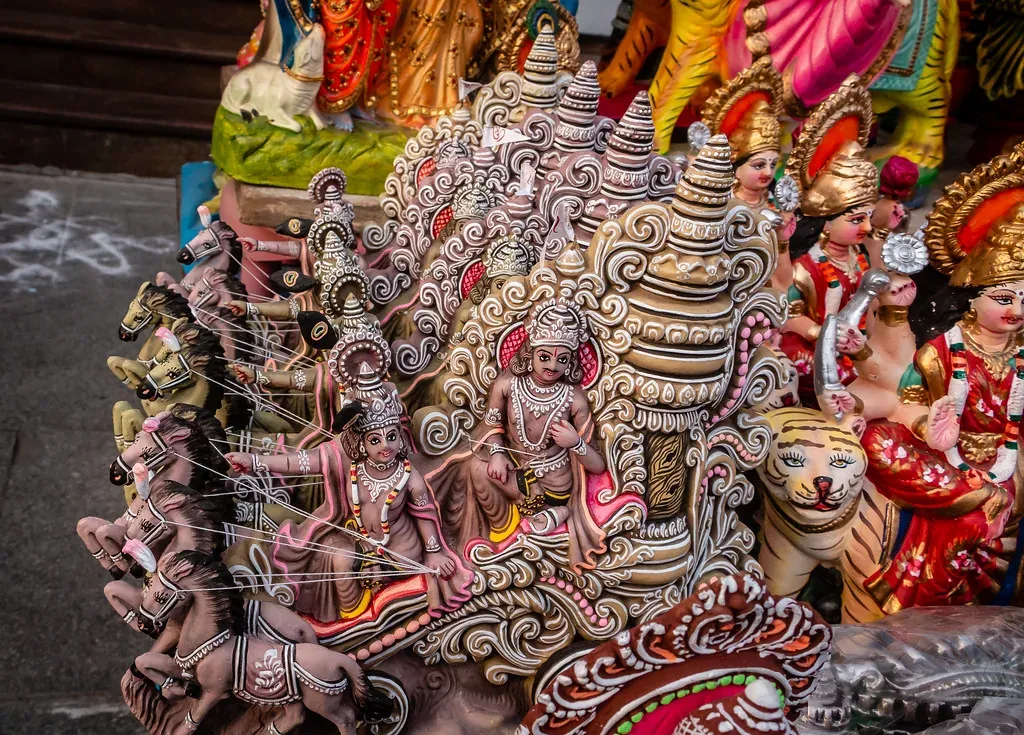
अर्जुन उवाचकिं तद्ब्रह्म किमध्यात्मं किं कर्म पुरुषोत्तमअधिभूतं च किं प्रोक्तमधिदैवं किमुच्यते ॥
अर्जुन ने कहा: हे पुरुषोत्तम, वह ब्रह्म क्या है, अध्यात्म क्या है और कर्म क्या है? अधिभूत किसे कहा गया है और अधिदैव किसे कहते हैं?
Arjuna said: Supreme Person, what is that Brahman? What is adhyatma, and what is karma? What is meant by adhibhuta, and what do they call adhidaiva?
Word meanings and reflectionअधियज्ञः कथं कोऽत्र देहेऽस्मिन्मधुसूदनप्रयाणकाले च कथं ज्ञेयोऽसि नियतात्मभिः ॥
हे मधुसूदन, इस देह में अधियज्ञ कौन है और कैसे है? और जिन्होंने मन को वश में कर लिया है, वे अंत समय में आपको कैसे जान पाते हैं?
Slayer of Madhu, who is the adhiyajna here in this body, and in what way? And at the time of departure, how are you to be known by those who have mastered themselves?
Word meanings and reflectionश्रीभगवानुवाचअक्षरं ब्रह्म परमं स्वभावोऽध्यात्ममुच्यतेभूतभावोद्भवकरो विसर्गः कर्मसंज्ञितः ॥
श्रीकृष्ण बोले: परम अविनाशी तत्त्व ब्रह्म है। प्रत्येक की अपनी प्रकृति अध्यात्म कहलाती है। प्राणियों के भावों को उत्पन्न करने वाला त्याग रूपी व्यापार कर्म कहा गया है।
The Lord said: Brahman is the supreme imperishable. One's own inborn nature is called adhyatma. The offering that brings forth the states of all beings is what is named karma.
Word meanings and reflectionअधिभूतं क्षरो भावः पुरुषश्चाधिदैवतम्अधियज्ञोऽहमेवात्र देहे देहभृतां वर ॥
नाशवान भाव अधिभूत है, विराट पुरुष अधिदैव है, और हे देहधारियों में श्रेष्ठ, इस शरीर में अधियज्ञ मैं ही हूँ।
The perishable aspect is adhibhuta, the cosmic person is adhidaiva, and here in the body, best of the embodied, I myself am the adhiyajna.
Word meanings and reflectionअन्तकाले च मामेव स्मरन्मुक्त्वा कलेवरम्यः प्रयाति स मद्भावं याति नास्त्यत्र संशयः ॥
जो अंत समय में भी मुझे ही याद करता हुआ शरीर छोड़कर जाता है, वह मेरे ही भाव को प्राप्त होता है। इसमें कोई संदेह नहीं।
Whoever, at the last hour, leaves the body remembering me alone reaches my own state of being. In this there is no doubt.
Word meanings and reflectionयं यं वापि स्मरन्भावं त्यजत्यन्ते कलेवरम्तं तमेवैति कौन्तेय सदा तद्भावभावितः ॥
हे कौंतेय, मनुष्य अंत में शरीर छोड़ते समय जिस-जिस भाव को याद करता है, सदा उसी भाव में रमा होने के कारण वह उसी को पाता है।
Son of Kunti, whatever state of being a person remembers when he gives up the body at the end, that very one he reaches, since he has always been absorbed in it.
Word meanings and reflectionतस्मात्सर्वेषु कालेषु मामनुस्मर युध्य चमय्यर्पितमनोबुद्धिर्मामेवैष्यस्यसंशयम् ॥
इसलिए सब समयों में मेरा स्मरण करो और युद्ध भी करो। मुझमें मन और बुद्धि अर्पित करने पर तुम निश्चय ही मुझे ही पाओगे।
So remember me at all times, and fight. With mind and intellect offered to me, you will certainly come to me alone.
Word meanings and reflectionअभ्यासयोगयुक्तेन चेतसा नान्यगामिनापरमं पुरुषं दिव्यं याति पार्थानुचिन्तयन् ॥
हे पार्थ, अभ्यास के योग से जुड़े हुए और कहीं और न जाने वाले चित्त से निरंतर चिंतन करता हुआ मनुष्य उस परम दिव्य पुरुष को पाता है।
By a mind joined through steady practice, one that does not wander elsewhere, a person who keeps meditating reaches the supreme, radiant Person, Partha.
Word meanings and reflectionकविं पुराणमनुशासितारमणोरणीयांसमनुस्मरेद्यःसर्वस्य धातारमचिन्त्यरूपमादित्यवर्णं तमसः परस्तात् ॥
जो उस सर्वज्ञ, पुरातन, सबके शासक, अणु से भी सूक्ष्म, सबके धारणकर्ता, अचिंत्य रूप वाले, सूर्य के समान प्रकाशमान और अंधकार से परे पुरुष का स्मरण करता है।
One who remembers the seer, the ancient one, the ruler of all, subtler than the atom, the supporter of everything, of a form beyond thought, shining like the sun and beyond darkness.
Word meanings and reflectionप्रयाणकाले मनसाऽचलेनभक्त्या युक्तो योगबलेन चैवभ्रुवोर्मध्ये प्राणमावेश्य सम्यक्स तं परं पुरुषमुपैति दिव्यम् ॥
मृत्यु के समय अचल मन से, भक्ति से युक्त होकर और योग के बल से भौंहों के बीच प्राण को भली-भाँति टिकाकर, वह उस परम दिव्य पुरुष को प्राप्त होता है।
At the time of death, with an unshaking mind, joined with devotion and the strength of yoga, having rightly set the life-breath between the brows, he reaches that supreme, divine Person.
Word meanings and reflectionयदक्षरं वेदविदो वदन्तिविशन्ति यद्यतयो वीतरागाःयदिच्छन्तो ब्रह्मचर्यं चरन्तितत्ते पदं संग्रहेण प्रवक्ष्ये ॥
जिसे वेद जानने वाले अक्षर कहते हैं, जिसमें आसक्ति छोड़े हुए संन्यासी प्रवेश करते हैं, और जिसे चाहते हुए लोग ब्रह्मचर्य का पालन करते हैं, वह पद मैं तुम्हें संक्षेप में बताऊँगा।
That which knowers of the Veda call the imperishable, into which passionless renunciants enter, and desiring which people live the life of discipline: that state I will tell you of in brief.
Word meanings and reflectionसर्वद्वाराणि संयम्य मनो हृदि निरुध्य चमूर्ध्न्याधायात्मनः प्राणमास्थितो योगधारणाम् ॥
सब द्वारों को रोककर, मन को हृदय में स्थिर करके और अपने प्राण को मस्तक में टिकाकर, योग की धारणा में स्थित होकर।
Closing all the gates of the body, holding the mind within the heart, and fixing one's own life-breath in the head, standing firm in yogic concentration.
Word meanings and reflectionओमित्येकाक्षरं ब्रह्म व्याहरन्मामनुस्मरन्यः प्रयाति त्यजन्देहं स याति परमां गतिम् ॥
जो ॐ इस एक अक्षर वाले ब्रह्म का उच्चारण करता हुआ और मुझे स्मरण करता हुआ देह त्यागकर जाता है, वह परम गति को प्राप्त होता है।
Whoever departs, leaving the body while uttering Om, the single-syllable Brahman, and remembering me, reaches the highest goal.
Word meanings and reflectionअनन्यचेताः सततं यो मां स्मरति नित्यशःतस्याहं सुलभः पार्थ नित्ययुक्तस्य योगिनः ॥
हे पार्थ, जो मन को कहीं और न लगाकर नित्य, निरंतर मेरा स्मरण करता है, उस नित्य जुड़े हुए योगी के लिए मैं सहज ही मिल जाने वाला हूँ।
For the yogi who thinks of nothing else and remembers me constantly, day after day, I am easy to reach, Partha, for one who is ever joined to me.
Word meanings and reflectionमामुपेत्य पुनर्जन्म दुःखालयमशाश्वतम्नाप्नुवन्ति महात्मानः संसिद्धिं परमां गताः ॥
मुझे पाकर वे महात्मा, परम सिद्धि को प्राप्त हुए, दुखों के घर और अनित्य पुनर्जन्म को फिर नहीं पाते।
Having come to me, the great souls who have reached the highest perfection do not take birth again, that impermanent house of sorrow.
Word meanings and reflectionआब्रह्मभुवनाल्लोकाः पुनरावर्तिनोऽर्जुनमामुपेत्य तु कौन्तेय पुनर्जन्म न विद्यते ॥
हे अर्जुन, ब्रह्मलोक तक के सभी लोक पुनः लौटने वाले हैं। पर हे कौंतेय, मुझे प्राप्त होने पर फिर जन्म नहीं होता।
All worlds, up to the realm of Brahma, are places one returns from, Arjuna. But once a person reaches me, there is no further birth.
Word meanings and reflectionसहस्रयुगपर्यन्तमहर्यद्ब्रह्मणो विदुःरात्रिं युगसहस्रान्तां तेऽहोरात्रविदो जनाः ॥
जो लोग ब्रह्मा के एक दिन को हज़ार युगों की अवधि वाला और रात को भी हज़ार युगों की अवधि वाली जानते हैं, वे ही दिन और रात को सचमुच जानने वाले हैं।
Those who know that Brahma's day lasts a thousand yugas, and his night also a thousand yugas, are the ones who truly understand day and night.
Word meanings and reflectionअव्यक्ताद्व्यक्तयः सर्वाः प्रभवन्त्यहरागमेरात्र्यागमे प्रलीयन्ते तत्रैवाव्यक्तसंज्ञके ॥
दिन के आरंभ पर अव्यक्त से सब व्यक्त रूप उत्पन्न होते हैं, और रात के आने पर उसी अव्यक्त नाम वाले तत्त्व में लीन हो जाते हैं।
At the dawn of the day, all manifest things arise from the unmanifest, and at the coming of night they dissolve again into that same thing called the unmanifest.
Word meanings and reflectionभूतग्रामः स एवायं भूत्वा भूत्वा प्रलीयतेरात्र्यागमेऽवशः पार्थ प्रभवत्यहरागमे ॥
हे पार्थ, यही प्राणियों का समूह बार-बार उत्पन्न होकर, रात आने पर विवश होकर लीन हो जाता है और दिन आने पर फिर प्रकट हो जाता है।
This very crowd of beings, coming into existence again and again, dissolves helplessly when night falls, Partha, and rises once more when day arrives.
Word meanings and reflectionपरस्तस्मात्तु भावोऽन्योऽव्यक्तोऽव्यक्तात्सनातनःयः स सर्वेषु भूतेषु नश्यत्सु न विनश्यति ॥
उस अव्यक्त से भी परे एक और सनातन अव्यक्त भाव है, जो सब प्राणियों के नष्ट हो जाने पर भी नष्ट नहीं होता।
But beyond that unmanifest there is another, eternal unmanifest being, which is not destroyed when all creatures perish.
Word meanings and reflectionअव्यक्तोऽक्षर इत्युक्तस्तमाहुः परमां गतिम्यं प्राप्य न निवर्तन्ते तद्धाम परमं मम ॥
उसे अव्यक्त और अक्षर कहा गया है, उसी को परम गति बताते हैं। जिसे पाकर लोग नहीं लौटते, वही मेरा परम धाम है।
That is declared the unmanifest and the imperishable, and they call it the highest goal. Having reached it, none return: that is my supreme abode.
Word meanings and reflectionपुरुषः स परः पार्थ भक्त्या लभ्यस्त्वनन्ययायस्यान्तःस्थानि भूतानि येन सर्वमिदं ततम् ॥
हे पार्थ, वह परम पुरुष केवल अनन्य भक्ति से ही प्राप्त होता है। उसी के भीतर सब प्राणी स्थित हैं और उसी से यह सब कुछ व्याप्त है।
That supreme Person, Partha, is gained only through devotion that looks to no other. All beings stand within him, and by him all of this is pervaded.
Word meanings and reflectionयत्र काले त्वनावृत्तिमावृत्तिं चैव योगिनःप्रयाता यान्ति तं कालं वक्ष्यामि भरतर्षभ ॥
हे भरतश्रेष्ठ, अब मैं वह समय बताऊँगा जिसमें प्रयाण करने वाले योगी लौटकर नहीं आते, और वह भी जिसमें लौटकर आते हैं।
Now I will tell you, best of the Bharatas, the moment when departing yogis do not return, and also the moment when they do.
Word meanings and reflectionअग्निर्ज्योतिरहः शुक्लः षण्मासा उत्तरायणम्तत्र प्रयाता गच्छन्ति ब्रह्म ब्रह्मविदो जनाः ॥
अग्नि, ज्योति, दिन, शुक्ल पक्ष और उत्तरायण के छह मास: उस मार्ग से प्रयाण करने वाले ब्रह्म को जानने वाले लोग ब्रह्म को पाते हैं।
Fire, light, daytime, the bright fortnight, and the six months of the sun's northern course: departing by that way, those who know Brahman reach Brahman.
Word meanings and reflectionधूमो रात्रिस्तथा कृष्णः षण्मासा दक्षिणायनम्तत्र चान्द्रमसं ज्योतिर्योगी प्राप्य निवर्तते ॥
धुआँ, रात, कृष्ण पक्ष और दक्षिणायन के छह मास: उस मार्ग से जाने वाला योगी चंद्रमा की ज्योति को पाकर फिर लौट आता है।
Smoke, night, the dark fortnight, and the six months of the sun's southern course: by that way the yogi reaches the moon's light and returns.
Word meanings and reflectionशुक्लकृष्णे गती ह्येते जगतः शाश्वते मतेएकया यात्यनावृत्तिमन्ययाऽऽवर्तते पुनः ॥
शुक्ल और कृष्ण, ये दो गतियाँ जगत के लिए सनातन मानी गई हैं। एक से जाने वाला लौटकर नहीं आता और दूसरी से जाने वाला फिर लौट आता है।
These two paths, bright and dark, are held to be everlasting for the world. By the one a person goes and does not return; by the other, he comes back again.
Word meanings and reflectionनैते सृती पार्थ जानन्योगी मुह्यति कश्चनतस्मात्सर्वेषु कालेषु योगयुक्तो भवार्जुन ॥
हे पार्थ, इन दोनों मार्गों को जानने वाला कोई भी योगी मोह में नहीं पड़ता। इसलिए हे अर्जुन, तुम सब समय योग में स्थिर रहो।
Knowing these two paths, no yogi is ever confused, Partha. Therefore, Arjuna, be steady in yoga at all times.
Word meanings and reflectionवेदेषु यज्ञेषु तपःसु चैवदानेषु यत्पुण्यफलं प्रदिष्टम्अत्येति तत्सर्वमिदं विदित्वायोगी परं स्थानमुपैति चाद्यम् ॥
वेदों, यज्ञों, तपों और दानों में जो-जो पुण्य फल बताया गया है, इस सबको जानकर योगी उससे भी आगे निकल जाता है और आदि परम स्थान को पाता है।
Whatever merit is laid down for studying the Vedas, for sacrifices, austerities and gifts, the yogi who understands this goes beyond all of it and reaches the supreme, original place.
Word meanings and reflection