भगवान शिव · अष्टोत्तरशतनामावली
भगवान शिव के १०८ नाम अर्थ सहित
108 names of Shiva with meaning
The 108 names of Lord Shiva (Shiva Ashtottara Shatanamavali) in Devanagari and Roman, each with its meaning in English and Hindi, plus how to chant them.
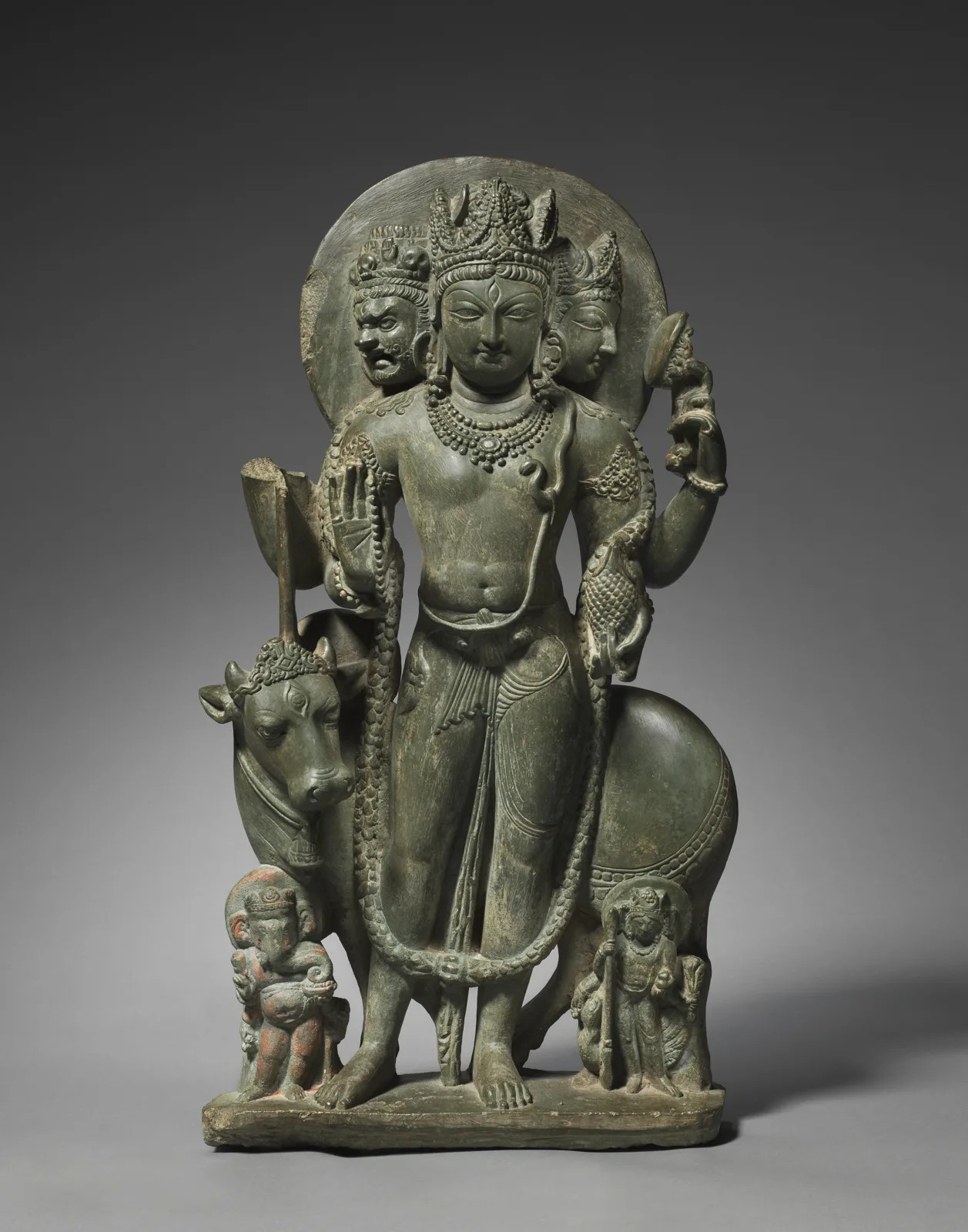
Shiva is the god people turn to when everything else has been taken away. He is Mahadeva, the great god, and also Bholenath, the one who is pleased with a leaf and a cup of water. The names given to him over the centuries read like a portrait: the moon in his hair, the river Ganga in his locks, the blue throat, the ash on his body, the bull at his door and the trident in his hand.
This page gives all 108 of those names, the Shiva Ashtottara Shatanamavali, in the order in which they are printed and chanted. Each name comes in Devanagari and in simple Roman letters, with the exact line you say in puja, and a meaning in English and in Hindi worked out from the Sanskrit roots.
You can read it as a quiet study of who Shiva is, one epithet at a time, or keep it open on your phone while you offer bilva leaves on a Monday morning. Either way, the meanings are there so that each name is understood as it is spoken.
१०८ नाम The full list, with meaning
108 of 108 names
- 1
शिव
Shiva
The auspicious one, pure good fortune itself
मंगलमय, जो स्वयं कल्याण और शुभता का रूप है
- 2
महेश्वर
Maheshvara
The great lord, master of all worlds
महान ईश्वर, जो सब लोकों का स्वामी है
- 3
शम्भु
Shambhu
Source of peace and well-being
जो शांति और सुख का स्रोत है
- 4
पिनाकी
Pinaki
Bearer of the Pinaka, his mighty bow
पिनाक नामक अपने महान धनुष को धारण करने वाला
- 5
शशिशेखर
Shashishekhara
He who wears the crescent moon on his head
जिसके मस्तक पर चंद्रमा का मुकुट सजा है
- 6
वामदेव
Vamadeva
The gracious god, pleasing and beautiful in form
सुंदर और प्रिय स्वरूप वाला देव; शिव का एक सौम्य रूप
- 7
विरूपाक्ष
Virupaksha
Of the unusual eyes; the three-eyed lord
विलक्षण नेत्रों वाला, तीन आँखों वाला प्रभु
- 8
कपर्दी
Kapardi
He with matted, coiled locks of hair
जटाओं का जूड़ा धारण करने वाला
- 9
नीललोहित
Nilalohita
Blue and red, the colour of the dusk-lit sky
नीले और लाल रंग वाला, संध्या के आकाश जैसा
- 10
शङ्कर
Shankara
Giver of happiness and blessings
कल्याण और सुख देने वाला
- 11
शूलपाणि
Shulapani
He who holds the trident in his hand
जिसके हाथ में त्रिशूल सुशोभित है
- 12
खट्वाङ्गी
Khatvangi
Bearer of the khatvanga, a staff topped with a skull
खट्वांग नामक दंड को धारण करने वाला
- 13
विष्णुवल्लभ
Vishnuvallabha
Dear to Vishnu
विष्णु को अत्यंत प्रिय
- 14
शिपिविष्ट
Shipivishta
Pervading the rays of light; also: the radiant one
किरणों में समाया हुआ, तेजस्वी
- 15
अम्बिकानाथ
Ambikanatha
Lord and consort of Mother Ambika
माता अंबिका का स्वामी और पति
- 16
श्रीकण्ठ
Shrikantha
He of the beautiful throat, made blue by the poison
जिसका कंठ विष पीने से नीला और शोभित है
- 17
भक्तवत्सल
Bhaktavatsala
Tender and affectionate towards his devotees
अपने भक्तों पर स्नेह रखने वाला
- 18
भव
Bhava
The source from whom all existence comes
जिससे सारा जगत उत्पन्न होता है
- 19
शर्व
Sharva
The remover of sorrow and sin, he who destroys at the end
दुःखों का नाश करने वाला
- 20
त्रिलोकेश
Trilokesha
Lord of the three worlds
तीनों लोकों का स्वामी
- 21
शितिकण्ठ
Shitikantha
The blue-throated one
नीले कंठ वाला
- 22
शिवाप्रिय
Shivapriya
Beloved of Shiva's consort Parvati; also: dear to the Goddess
शिवा यानी पार्वती को प्रिय
- 23
उग्र
Ugra
Fierce and powerful, terrible to evil
प्रचंड और शक्तिशाली, अधर्म के लिए भयंकर
- 24
कपाली
Kapali
Bearer of the skull-bowl
कपाल धारण करने वाला
- 25
कामारि
Kamari
Enemy of Kama, who burned desire to ashes
कामदेव का शत्रु, जिसने उसे भस्म किया
- 26
अन्धकासुरसूदन
Andhakasurasudana
Slayer of the demon Andhaka
अंधक नामक असुर का संहार करने वाला
- 27
गङ्गाधर
Gangadhara
He who bears the river Ganga in his hair
अपनी जटाओं में गंगा को धारण करने वाला
- 28
ललाटाक्ष
Lalataksha
He with an eye on the forehead
जिसके मस्तक पर तीसरा नेत्र है
- 29
कालकाल
Kalakala
Death of death; the time beyond Time
काल का भी काल, मृत्यु को भी जीतने वाला
- 30
कृपानिधि
Kripanidhi
Treasury of compassion
दया का भंडार
- 31
भीम
Bhima
The formidable one, awe-inspiring
विराट और भयोत्पादक, प्रचंड रूप वाला
- 32
परशुहस्त
Parashuhasta
He who holds the axe in his hand
हाथ में परशु यानी फरसा धारण करने वाला
- 33
मृगपाणि
Mrigapani
He who holds a deer in his hand
जिसके हाथ में हिरण सुशोभित है
- 34
जटाधर
Jatadhara
Wearer of matted hair
जटाएँ धारण करने वाला
- 35
कैलासवासी
Kailasavasi
Dweller on Mount Kailasa
कैलास पर्वत पर निवास करने वाला
- 36
कवची
Kavachi
He who is armoured, a protector clad in mail
कवच धारण करने वाला
- 37
कठोर
Kathora
Stern and unyielding, firm as stone
कठोर और अडिग, अपने संकल्प में दृढ़
- 38
त्रिपुरान्तक
Tripurantaka
Destroyer of the three demon cities
तीनों असुर नगरों का अंत करने वाला
- 39
वृषाङ्क
Vrishanka
He whose emblem is the bull
जिसके ध्वज और चिह्न में वृषभ है
- 40
वृषभारूढ
Vrishabharudha
He who rides the bull Nandi
वृषभ पर सवार रहने वाला
- 41
भस्मोद्धूलितविग्रह
Bhasmoddhulitavigraha
Whose body is smeared with sacred ash
जिसकी देह पर पवित्र भस्म रमी हुई है
- 42
सामप्रिय
Samapriya
Lover of the Sama Veda chants
सामवेद के गान से प्रेम करने वाला
- 43
स्वरमय
Svaramaya
Made of sound and musical note
स्वर और नाद से बना हुआ रूप
- 44
त्रयीमूर्ति
Trayimurti
Embodiment of the three Vedas
तीनों वेदों का साकार रूप
- 45
अनीश्वर
Anishvara
He who has no lord above him
जिसका कोई स्वामी नहीं, जो सर्वोपरि है
- 46
सर्वज्ञ
Sarvajna
The all-knowing
सब कुछ जानने वाला
- 47
परमात्मा
Paramatma
The supreme Self
परम आत्मा, सबके भीतर बसा परमतत्त्व
- 48
सोमसूर्याग्निलोचन
Somasuryagnilochana
He whose eyes are the moon, sun and fire
चंद्र, सूर्य और अग्नि जिसके तीन नेत्र हैं
- 49
हवि
Havi
The offering itself poured into the sacred fire
यज्ञ में अर्पित होने वाली हवि का स्वरूप
- 50
यज्ञमय
Yajnamaya
Embodiment of sacrifice
यज्ञ का साकार रूप
- 51
सोम
Soma
Shiva with Uma; also: the moon and the sacred soma
उमा सहित स्वरूप; चंद्र और सोमरस भी
- 52
पञ्चवक्त्र
Panchavaktra
The five-faced lord
पाँच मुखों वाला
- 53
सदाशिव
Sadashiva
Shiva ever auspicious, the eternal Shiva
सदा कल्याणकारी, नित्य शिव
- 54
विश्वेश्वर
Vishveshvara
Lord of the universe
संपूर्ण विश्व का ईश्वर
- 55
वीरभद्र
Virabhadra
The blessed hero, a mighty form born of his wrath
वीर और कल्याणकारी, शिव के क्रोध से उत्पन्न गण
- 56
गणनाथ
Gananatha
Lord of the ganas, his host of attendants
गणों का स्वामी
- 57
प्रजापति
Prajapati
Lord and guardian of all creatures
समस्त प्राणियों का पालक
- 58
हिरण्यरेता
Hiranyareta
Whose seed is golden, the source of creative fire
स्वर्ण के समान तेजस्वी सृष्टि-बीज वाला
- 59
दुर्धर्ष
Durdharsha
He who cannot be overcome
जिसे कोई परास्त नहीं कर सकता
- 60
गिरीश
Girisha
Lord of the mountains, master of Kailasa
पर्वतों का स्वामी
- 61
गिरिश
Girisha (2nd)
He who dwells on the mountain and guards it; a repeated name
पर्वत पर बसने वाला; सूची में दोहराया गया नाम
- 62
अनघ
Anagha
The sinless, free from all fault
निष्पाप, जिसमें कोई दोष नहीं
- 63
भुजङ्गभूषण
Bhujangabhushana
Adorned with serpents
सर्पों को आभूषण बनाने वाला
- 64
भर्ग
Bharga
The radiant one who burns away ignorance
तेजस्वी, जो अज्ञान को जला देता है
- 65
गिरिधन्वी
Giridhanvi
He whose bow is the mountain (Meru)
मेरु पर्वत को धनुष बनाने वाला
- 66
गिरिप्रिय
Giripriya
Lover of mountains
पर्वतों से प्रेम करने वाला
- 67
कृत्तिवासा
Krittivasa
Clad in an animal skin
जो चर्म का वस्त्र पहनता है
- 68
पुराराति
Purarati
Foe of the cities (Tripura)
त्रिपुर नामक नगरों का शत्रु
- 69
भगवान्
Bhagavan
The blessed lord, full of divine glory
ऐश्वर्य से पूर्ण भगवान
- 70
प्रमथाधिप
Pramathadhipa
Chief of the pramathas, his troop of attendants
प्रमथ गणों का अधिपति
- 71
मृत्युञ्जय
Mrityunjaya
Conqueror of death
मृत्यु पर विजय पाने वाला
- 72
सूक्ष्मतनु
Sukshmatanu
Of the subtle body, too fine to be seen
सूक्ष्म शरीर वाला, जो दृष्टि से परे है
- 73
जगद्व्यापी
Jagadvyapi
Pervading the whole world
संपूर्ण जगत में व्याप्त
- 74
जगद्गुरु
Jagadguru
Teacher of the world
समस्त जगत का गुरु
- 75
व्योमकेश
Vyomakesha
Whose hair is the sky
आकाश ही जिसके केश हैं
- 76
महासेनजनक
Mahasenajanaka
Father of Mahasena, that is Kartikeya
महासेन यानी कार्तिकेय का पिता
- 77
चारुविक्रम
Charuvikrama
Of graceful, beautiful valour
सुंदर और मनोहर पराक्रम वाला
- 78
रुद्र
Rudra
The fierce one who drives away sorrow
दुःख को दूर भगाने वाला प्रचंड रूप
- 79
भूतपति
Bhutapati
Lord of beings and spirits
प्राणियों और भूतगणों का स्वामी
- 80
स्थाणु
Sthanu
The unmoving, firm as a pillar
स्थिर और अचल, खंभे के समान दृढ़
- 81
अहिर्बुध्न्य
Ahirbudhnya
The serpent of the deep, a Vedic form of Rudra
गहराई में रहने वाला सर्प; रुद्र का वैदिक रूप
- 82
दिगम्बर
Digambara
Clad in the directions, that is, beyond all attachment
दिशाएँ ही जिसके वस्त्र हैं, जो अनासक्त है
- 83
अष्टमूर्ति
Ashtamurti
He who has eight forms
आठ रूपों वाला
- 84
अनेकात्मा
Anekatma
Of many selves, taking countless forms
अनेक रूपों और आत्माओं में प्रकट होने वाला
- 85
सात्त्विक
Sattvika
Of pure, serene nature
शुद्ध और शांत स्वभाव वाला
- 86
शुद्धविग्रह
Shuddhavigraha
Of a stainless form
निर्मल स्वरूप वाला
- 87
शाश्वत
Shashvata
The everlasting
सदा रहने वाला, अविनाशी
- 88
खण्डपरशु
Khandaparashu
Wielder of the broken axe
खंडित फरसा धारण करने वाला
- 89
अज
Aja
The unborn
जो कभी जन्म नहीं लेता
- 90
पाशविमोचक
Pashavimochaka
Liberator from the bonds of attachment
बंधनों के पाश से छुड़ाने वाला
- 91
मृड
Mrida
The one who grants happiness and mercy
सुख और करुणा देने वाला
- 92
पशुपति
Pashupati
Lord of all living beings
समस्त जीवों का स्वामी
- 93
देव
Deva
The shining god
तेजोमय देवता
- 94
महादेव
Mahadeva
The great god
देवों के देव, महान देव
- 95
अव्यय
Avyaya
The imperishable
जिसका कभी क्षय नहीं होता
- 96
हरि
Hari
The remover of suffering; also a name shared with Vishnu
दुःख हरने वाला; विष्णु का भी नाम
- 97
पूषदन्तभित्
Pushadantabhit
Breaker of the teeth of Pushan
पूषा देवता के दाँत तोड़ने वाला
- 98
अव्यग्र
Avyagra
The untroubled, steady and calm
अविचल, जो कभी व्याकुल नहीं होता
- 99
दक्षाध्वरहर
Dakshadhvarahara
Destroyer of Daksha's sacrifice
दक्ष के यज्ञ का विध्वंस करने वाला
- 100
हर
Hara
The one who takes away sins and sorrows
पाप और दुःख को हर लेने वाला
- 101
भगनेत्रभित्
Bhaganetrabhit
He who pierced the eyes of Bhaga
भग देवता के नेत्र भेदने वाला
- 102
अव्यक्त
Avyakta
The unmanifest, beyond form
अप्रकट, जो रूप से परे है
- 103
सहस्राक्ष
Sahasraksha
The thousand-eyed
हज़ार नेत्रों वाला
- 104
सहस्रपात्
Sahasrapat
The thousand-footed
हज़ार चरणों वाला
- 105
अपवर्गप्रद
Apavargaprada
Giver of liberation
मोक्ष प्रदान करने वाला
- 106
अनन्त
Ananta
The endless
जिसका कोई अंत नहीं
- 107
तारक
Taraka
The one who carries souls across
संसार सागर से पार उतारने वाला
- 108
परमेश्वर
Parameshvara
The supreme lord
परम ईश्वर
स्रोत Where this list comes from
Ashtottara Shatanamavali simply means a garland of one hundred and eight names. Almost every major deity has one, and they were composed for archana, the worship in which a name is spoken and a flower is offered. The Shiva list used here ends with a colophon in the printed text that credits the Shaktapramoda, a Sanskrit compendium of rites and mantras. It is a liturgical compilation drawn from older epithets of Rudra and Shiva found in the Vedas, the Mahabharata and the Puranas, not a single verse from one scripture.
Many names will sound familiar from older texts: Pinaki, Kapardi and Nilalohita echo the Rudra hymn of the Yajurveda, while Tripurantaka, Andhakasurasudana and Dakshadhvarahara recall stories told in the Puranas. The same names also circulate as a verse stotra, the Shiva Ashtottara Shatanama Stotram, which carries the identical epithets in metre.
This page follows the commonly printed 108-name garland. The much longer Shiva Sahasranama, with a thousand names, is a separate text; the 108 here are the short everyday form that fits into one sitting of puja and one turn of a rudraksha mala.
Printings agree on the 108 names but differ a little in order near the end. Hindupad places Bhaganetrabhide and Avyakta before Dakshadhvaraharaya and Hara, while Drikpanchang, which this page follows, puts Pushadantabhide and Avyagra first. Names 60 and 61 are both a form of Girisha (one with a long i, one short), so we show the second as Girisha (2nd).
जप और पूजा How the names are chanted
Each name is spoken in the same frame: Om, then the name in the dative case, then Namah. So Shiva becomes Om Shivaya Namah, and Maheshvara becomes Om Maheshvaraya Namah. The ready-made line for every name is written out in the list below so you do not have to work out the grammar.
At home, bathe, sit facing east or north, and keep a Shivling or a picture before you. Offer one bilva leaf, a pinch of akshat or a drop of water to the Shivling for each name. Many seekers also keep a rudraksha mala of 108 beads and speak one name per bead, finishing the round with Om Namah Shivaya.
The favourite times are Monday, the Pradosh evening of each fortnight, Maha Shivratri night and every day of the month of Shravan. Early morning after a bath is ideal, and anyone can do it: men, women and children are all welcome to chant. If time is short, read the names aloud without the offering and let the sound do its work.
Shiv ChalisaOm Jai Shiv Omkara aartiRudrashtakamLingashtakamShivashtakamMahamrityunjaya MantraMaha Shivratri pujaRudrabhishekShivling abhishekMaha Shivratri vrat kathaSomvar vrat katha
नामकरण Baby names from Shiva
Many families pick a name for a newborn from this very list. These pages sort out the ones that work as everyday given names.
प्रश्न Questions, answered
What are the 108 names of Shiva?
The 108 names of Shiva are the Shiva Ashtottara Shatanamavali, beginning Shiva, Maheshvara, Shambhu, Pinaki, Shashishekhara and ending with Taraka and Parameshvara. The full list is on this page in Devanagari and Roman, each with an English and Hindi meaning and the line to say in puja.
How many names does Shiva have?
Tradition gives Shiva far more than 108. The Ashtottara Shatanamavali holds 108 for everyday worship, the Shiva Sahasranama lists a thousand, and temples and regions add many local names such as Kashi Vishwanath, Somnath and Mahakaleshwar. The 108 are the standard short set.
Which day is best to chant the 108 names of Shiva?
Monday is the weekday of Shiva. The Pradosh evening, Maha Shivratri night, the monthly Masik Shivratri and each Monday of Shravan are especially loved. Early morning after a bath is the usual hour, but the names can be spoken any day with a clean mind.
Can women chant the Shiva Ashtottara?
Yes. Nothing in the practice of chanting names bars women, and in homes across India mothers, wives and daughters lead the Monday puja. The only requirements are cleanliness, a calm mind and sincerity.
What is the meaning of the name Mrityunjaya?
Mrityunjaya is name 71 and means the conqueror of death. It is formed from mrityu, death, and jaya, victory. It is the name behind the well-known Mahamrityunjaya mantra, chanted for health, protection and a peaceful mind.
Why is Shiva called Neelkanth or Shrikantha?
Names 16 and 21, Shrikantha and Shitikantha, point to his blue throat. When the churning of the ocean threw up a deadly poison, Shiva drank it to save the world and held it in his throat, which turned blue. The name honours that act of protection.
How should I offer bilva leaves while chanting?
Offer one clean bilva leaf with three leaflets for each name, stalk end towards the Shivling, along with a little water. If you have no fresh leaf, a pinch of rice or a few drops of water is accepted just as well.
नामों के रूप और क्रम अलग-अलग परंपराओं में थोड़े भिन्न मिलते हैं; कुल की परंपरा और गुरु का क्रम सर्वोपरि है। Wording and order differ a little between traditions, so follow your family or guru's version if it differs.
Chant it where it was sung. Laladham picks you up in Delhi and runs the complete trip, so you can recite the names in the temples themselves.
Plan my trip