Stotra · Shiv
Mahamrityunjaya Mantra महामृत्युंजय मन्त्र
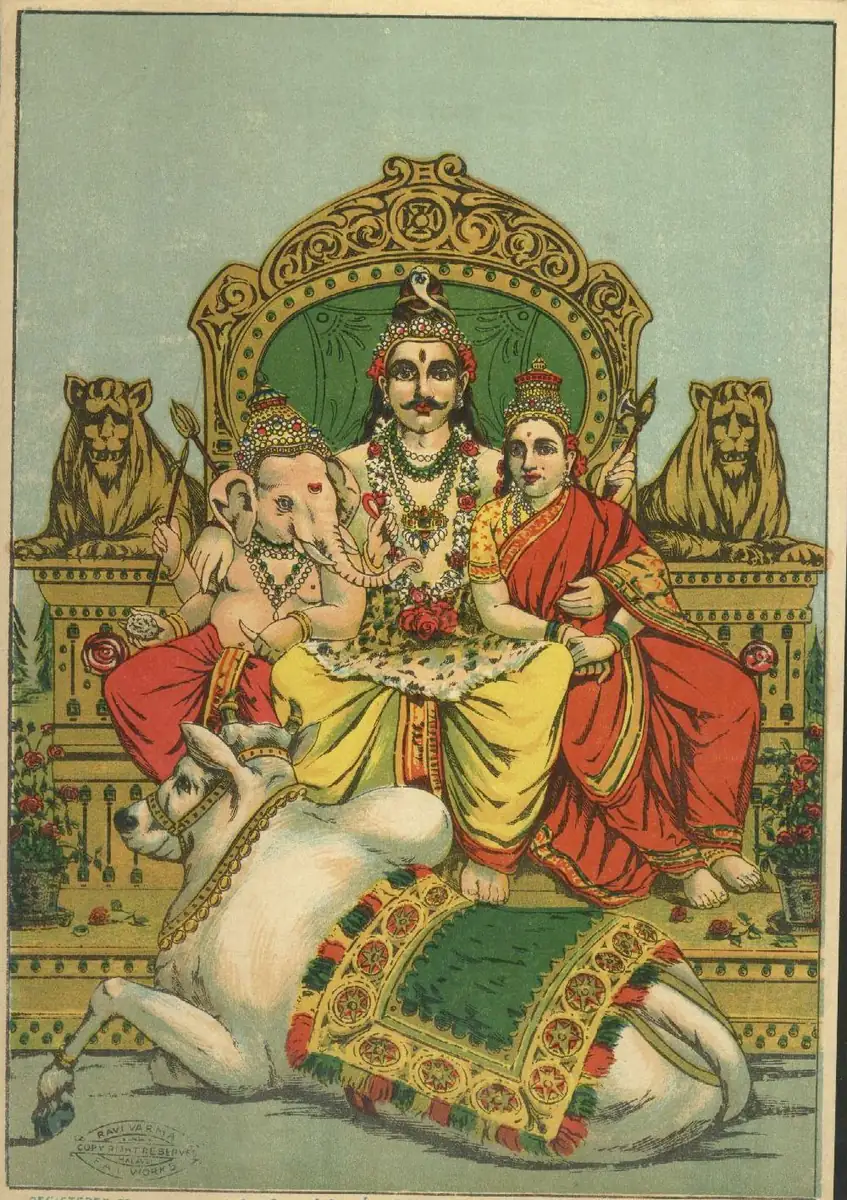
The three-eyed one, Tryambaka, is worshipped here as the sweet-smelling giver of nourishment.
ॐ त्र्यम्बकं यजामहे सुगन्धिं पुष्टिवर्धनम् ।
उर्वारुकमिव बन्धनान्मृत्योर्मुक्षीय मामृतात् ॥
What it means
The three-eyed one, Tryambaka, is worshipped here as the sweet-smelling giver of nourishment. The image in the second line is a ripe cucumber. It hangs on the vine and one day simply lets go, falling free of its stalk without any tearing. In the same way the prayer asks to be freed from the bond of death, not by being cut off from life but by coming loose when the time is ripe, and to be held by immortality. The verse is Rigveda 7.59.12, credited to Vasishtha, and it turns up again in the Yajurveda. In that old setting Tryambaka is a name of Rudra, whom later tradition took as Shiva. The name Mahamrityunjaya, the great conquest of death, came after.
How it is sung
It is chanted in the Vedic even rhythm, four short lines in one breath each. A mala of 108 beads gives the usual round, and the favourite times are Mondays and Shivratri, and when someone in the house is unwell. The pace stays slow so that every long vowel gets its full weight.
Questions, answered
What does the cucumber mean in the Mahamrityunjaya Mantra?
A ripe cucumber falls off its vine by itself without a tear. The wish is to part from death's grip just so, easily and in season, never torn away by force.
Where does the mantra come from?
Rigveda 7.59.12, addressed to Tryambaka and credited to the sage Vasishtha. It also appears in the Yajurveda. The Om at the front is added in common practice.
How many times should it be chanted?
There is no fixed rule in the verse. The verse sets no count. Many people simply chant it for as long as they can sit calmly.