Stotra · Shiv
Shiv Panchakshara Stotra शिव पञ्चाक्षर स्तोत्र
The five syllables of Namah Shivaya, na, ma, shi, va and ya, each get a verse, and each verse ends by bowing to Shiva through that syllable.
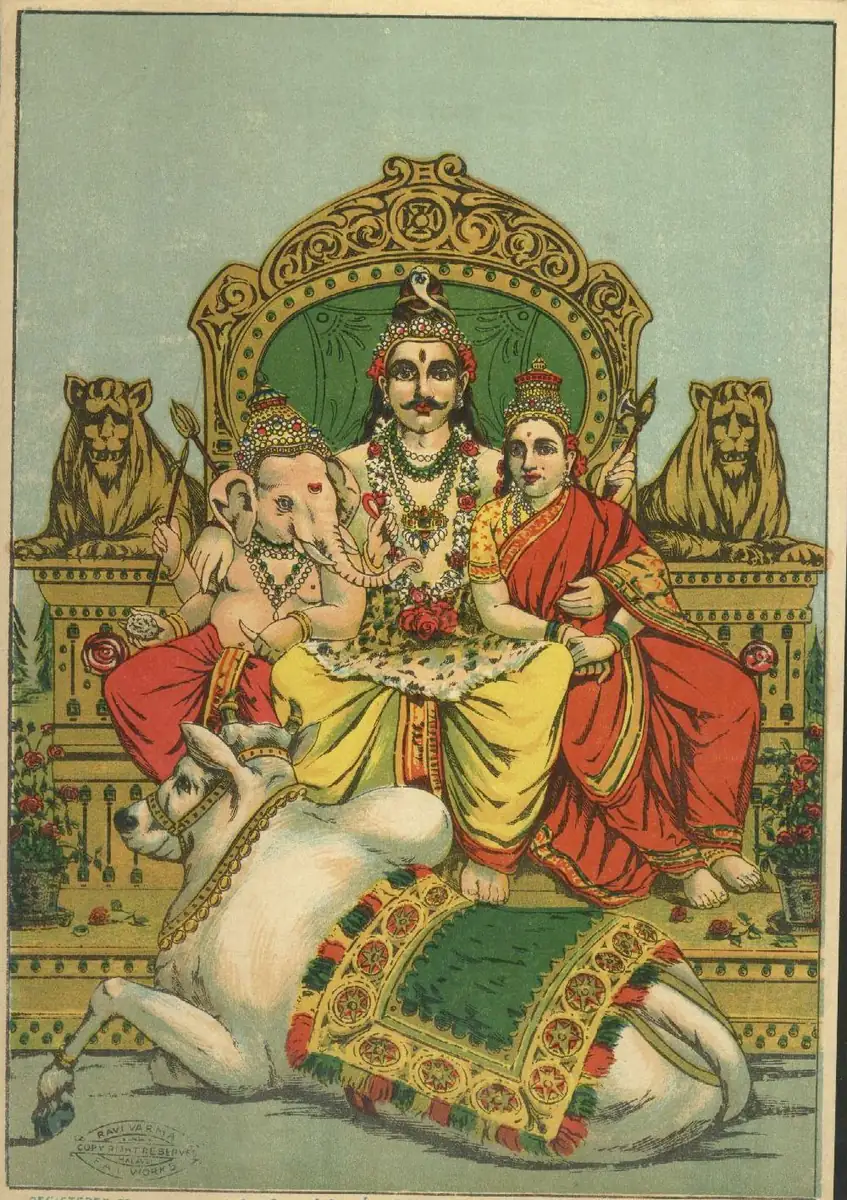
नागेन्द्रहाराय त्रिलोचनाय
भस्माङ्गरागाय महेश्वराय ।
नित्याय शुद्धाय दिगम्बराय
तस्मै नकाराय नमः शिवाय ॥
मन्दाकिनीसलिलचन्दनचर्चिताय
नन्दीश्वरप्रमथनाथमहेश्वराय ।
मन्दारपुष्पबहुपुष्पसुपूजिताय
तस्मै मकाराय नमः शिवाय ॥
शिवाय गौरीवदनाब्जवृन्दसूर्याय
दक्षाध्वरनाशकाय ।
श्रीनीलकण्ठाय वृषध्वजाय
तस्मै शिकाराय नमः शिवाय ॥
वसिष्ठकुम्भोद्भवगौतमार्यमुनीन्द्रदेवार्चितशेखराय ।
चन्द्रार्कवैश्वानरलोचनाय
तस्मै वकाराय नमः शिवाय ॥
यज्ञस्वरूपाय जटाधराय
पिनाकहस्ताय सनातनाय ।
दिव्याय देवाय दिगम्बराय
तस्मै यकाराय नमः शिवाय ॥
पञ्चाक्षरमिदं पुण्यं यः पठेच्छिवसंनिधौ ।
शिवलोकमवाप्नोति शिवेन सह मोदते ॥
What it means
The five syllables of Namah Shivaya, na, ma, shi, va and ya, each get a verse, and each verse ends by bowing to Shiva through that syllable. The na verse addresses the one with the king of snakes for a necklace, three eyes, ash on his body and the directions for clothing. The ma verse turns to the lord worshipped with water of the heavenly Ganga, sandal paste and mandar flowers, master of Nandi and the host of attendants. The shi verse praises him as the blue-throated one with the bull on his banner who put an end to Daksha's sacrifice. In the va verse the great sages Vasishtha, Agastya and Gautama and the gods bow to his head, with the moon, sun and fire as his three eyes. The ya verse gives the form of sacrifice itself, matted hair and the bow Pinaka in hand, the eternal and heavenly lord. The closing line promises that one who reads these five verses near Shiva reaches his world and is glad there.
How it is sung
It is read slowly with a short pause after every verse, because the next one starts a new letter. Many people recite it before or while offering water on a Shiva lingam on Monday, and it is a favourite in the days of Sawan. The five verses can also be learned one for each day of a week of practice.
Questions, answered
What is the Panchakshara mantra?
The five syllables said together as Namah Shivaya. The stotra gives one verse to each of the five, and its name means hymn of the five syllables.
Who composed this stotra?
It is traditionally credited to Adi Shankaracharya, and the Hindi page that carries the text says so. Since the verses are unsigned, it is given as traditional here.
Which verse is the yajna one?
The fifth, the ya verse. Some sites print the opening word as yaksha and others as yajna. The printed text on this page follows yajna, a form of sacrifice, the reading used by the Shlokam text and the one that matches the sacrifice imagery of the verse.