Ashtak · Shiv
Rudrashtakam श्री रुद्राष्टकम्
Tulsidas puts this Sanskrit hymn into the Uttarkand of his Ramcharitmanas, where it stands as a prayer of praise and pleading to Shiva.
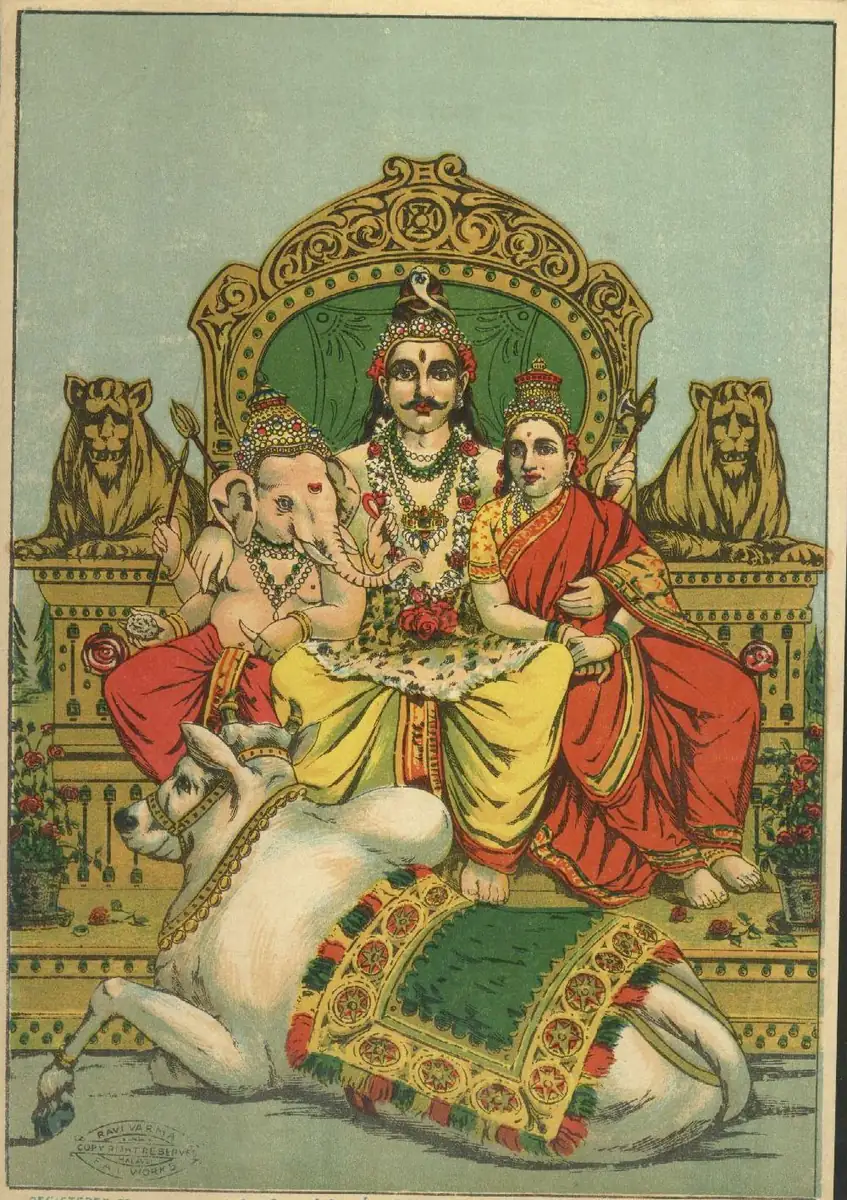
नमामीशमीशान निर्वाणरूपं
विभुं व्यापकं ब्रह्मवेदस्वरूपम् ।
निजं निर्गुणं निर्विकल्पं निरीहं
चिदाकाशमाकाशवासं भजेऽहम्॥
निराकारमोंकारमूलं तुरीयं
गिरा ज्ञान गोतीतमीशं गिरीशम् ।
करालं महाकाल कालं कृपालं
गुणागार संसारपारं नतोऽहम्॥
तुषाराद्रि संकाश गौरं गभीरं
मनोभूत कोटिप्रभा श्री शरीरम् ।
स्फुरन्मौलि कल्लोलिनी चारु गङ्गा
लसद्भालबालेन्दु कण्ठे भुजङ्गा॥
चलत्कुण्डलं भ्रू सुनेत्रं विशालं
प्रसन्नाननं नीलकण्ठं दयालम् ।
मृगाधीशचर्माम्बरं मुण्डमालं
प्रियं शंकरं सर्वनाथं भजामि॥
प्रचण्डं प्रकृष्टं प्रगल्भं परेशं
अखण्डं अजं भानुकोटिप्रकाशम् ।
त्रयः शूल निर्मूलनं शूलपाणिं
भजेऽहं भवानीपतिं भावगम्यम्॥
कलातीत कल्याण कल्पान्तकारी
सदा सज्जनानन्ददाता पुरारी ।
चिदानन्द संदोह मोहापहारी
प्रसीद प्रसीद प्रभो मन्मथारी॥
न यावत् उमानाथ पादारविन्दं
भजन्तीह लोके परे वा नराणाम् ।
न तावत् सुखं शान्ति सन्तापनाशं
प्रसीद प्रभो सर्वभूताधिवासम्॥
न जानामि योगं जपं नैव पूजां
नतोऽहं सदा सर्वदा शम्भु तुभ्यम् ।
जरा जन्म दुःखौघ तातप्यमानं
प्रभो पाहि आपन्नमामीश शम्भो॥
रुद्राष्टकमिदं प्रोक्तं विप्रेण हरतोषये ।
ये पठन्ति नरा भक्त्या तेषां शम्भुः प्रसीदति ॥
॥ इति श्रीगोस्वामितुलसीदासकृतं श्रीरुद्राष्टकं संपूर्णम् ॥
What it means
Tulsidas puts this Sanskrit hymn into the Uttarkand of his Ramcharitmanas, where it stands as a prayer of praise and pleading to Shiva. The first verse bows to Shiva as lord of all, formless liberation, all-pervading, without qualities and without wants, wearing the sky as his clothing. The second calls him beyond speech, thought and the senses, the root of Om, terrible and gentle together, the Lord of Kailash and the death of Death. The third and fourth describe the snow-mountain white body, the Ganga in his hair, the moon on his brow, the snake at his throat and the tiger skin. The next verses name him as the one with the trident, the husband of Bhavani, the destroyer of Kama, the one who ends the age. Verse seven says peace and happiness do not come until one worships the feet of Uma's lord, and verse eight is the plain plea: I know no yoga, prayer or worship, burned by age, birth and sorrow, protect me, Shambhu. The last two lines say Shambhu is pleased with anyone who reads the eight verses with devotion.
How it is sung
It is sung in a measured tune, the first half of each line a little slower than the second, with the eight verses taken one after another and the two closing lines said together. Monday mornings, the month of Sawan and Maha Shivratri are the common times, and it is often sung at a Shiva temple after the main puja.
Questions, answered
Where does the Rudrashtakam come from?
It sits in the Uttarkand of Tulsidas's Ramcharitmanas, as a Sanskrit hymn amid the Awadhi verses. That origin is why it is credited to Tulsidas by name, while most other Shiva stotras are credited to traditions.
What does the word Rudrashtakam mean?
Rudra is a name of Shiva and ashtakam means a hymn of eight. The eight verses are followed by a two-line promise of the fruit of reading them.
Is it difficult to learn?
Not much. The verses are short and share a gentle rhythm. Most people learn them one a day, and the last verse, the plain plea of someone who knows no rituals, is the one that usually sticks first.