भगवान कार्तिकेय · अष्टोत्तरशतनामावली
भगवान कार्तिकेय (मुरुगन) के १०८ नाम अर्थ सहित
108 names of Kartikeya (Subrahmanya, Murugan) with meaning
The 108 names of Lord Kartikeya, also Subrahmanya, Skanda and Murugan (Ashtottara Shatanamavali), in Devanagari and Roman with the meaning of every name.
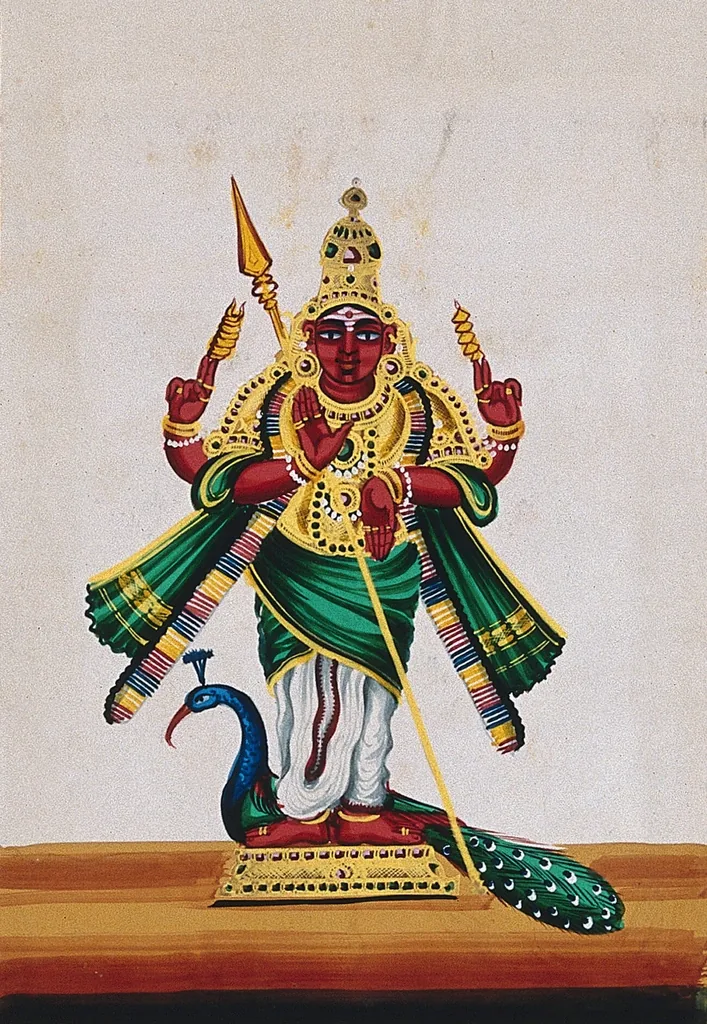
Kartikeya is the young commander of the gods, the son of Shiva and Parvati. He is known as Skanda in the north and in the Puranas, as Subrahmanya across Karnataka, Andhra and Kerala, and as Murugan in Tamil Nadu, where he is the beloved lord of the hills. His peacock, his bright spear and his six faces appear in temples from Palani to Kukke Subramanya.
This page gives the 108 names, the Ashtottara Shatanamavali, in the order that is printed most widely. Each name carries the Devanagari and a simple Roman spelling, the full line to say aloud in puja, and a short meaning in English and Hindi. Reading them together shows how many sides he has: warrior, child, teacher, husband of Valli and Devasena, and lord of the inner cave of the heart.
Families chant these names for courage, for clear thinking, for a child's health and for the removal of obstacles in work and study. You can use the list to learn, to chant on a Tuesday or Shashthi, or to pick a name for a baby. A separate page lists baby boy names drawn from them.
१०८ नाम The full list, with meaning
108 of 108 names
- 1
स्कन्द
Skanda
the leaping warrior, he who strikes the foe
उछलकर प्रहार करने वाला वीर योद्धा
- 2
गुह
Guha
the hidden one who lives in the cave of the heart
हृदय की गुफा में छिपकर रहने वाला
- 3
षण्मुख
Shanmukha
the six-faced one
छह मुखों वाला
- 4
फालनेत्रसुत
Phalanetrasuta
son of the one with an eye on the forehead, Shiva
मस्तक पर नेत्र वाले शिव का पुत्र
- 5
प्रभु
Prabhu
the lord, master of all
सबका स्वामी
- 6
पिङ्गल
Pingala
tawny, golden-brown in hue
सुनहरे भूरे वर्ण वाला
- 7
कृत्तिकासूनु
Krittikasunu
son of the Krittikas who nursed him
कृत्तिकाओं का पुत्र
- 8
शिखिवाहन
Shikhivahana
he whose mount is the peacock
मोर जिसका वाहन है
- 9
द्विषड्भुज
Dvishadbhuja
twelve-armed
बारह भुजाओं वाला
- 10
द्विषण्णेत्र
Dvishannetra
twelve-eyed
बारह नेत्रों वाला
- 11
शक्तिधर
Shaktidhara
bearer of the spear called Shakti
शक्ति नामक भाला धारण करने वाला
- 12
पिशिताशप्रभञ्जन
Pishitashaprabhanjana
breaker of the flesh-eating demons
मांस खाने वाले राक्षसों को तोड़ने वाला
- 13
तारकासुरसंहर्ता
Tarakasurasanhartri
slayer of the demon Taraka
तारकासुर का वध करने वाला
- 14
रक्षोबलविमर्दन
Rakshobalavimardana
crusher of the strength of the rakshasas
राक्षसों के बल को कुचलने वाला
- 15
मत्त
Matta
merry and glad, drunk on joy
आनन्द में मस्त
- 16
प्रमत्त
Pramatta
wholly absorbed in his own bliss
अपने आनन्द में पूरी तरह डूबा हुआ
- 17
उन्मत्त
Unmatta
carried beyond all bounds in ecstasy
आनन्द में सीमाओं से परे गया हुआ
- 18
सुरसैन्यसुरक्षक
Surasainyasurakshaka
guardian of the army of the gods
देवताओं की सेना का रक्षक
- 19
देवसेनापति
Devasenapati
commander of the gods' army; also the husband of Devasena
देवताओं की सेना का सेनापति, देवसेना के पति भी
- 20
प्राज्ञ
Prajna
the wise one
प्रज्ञावान, बुद्धिमान
- 21
कृपालु
Kripalu
full of mercy
कृपा से भरा हुआ
- 22
भक्तवत्सल
Bhaktavatsala
tender to his devotees
भक्तों से स्नेह रखने वाला
- 23
उमासुत
Umasuta
son of Uma
उमा का पुत्र
- 24
शक्तिधर
Shaktidhara (second)
bearer of the spear, named once more
भाला धारण करने वाला, दोबारा आया नाम
- 25
कुमार
Kumara
the ever young prince
सदा तरुण राजकुमार
- 26
क्रौञ्चदारण
Kraunchadarana
splitter of Mount Krauncha
क्रौंच पर्वत को चीरने वाला
- 27
सेनानी
Senani
leader of the army
सेना का नायक
- 28
अग्निजन्मा
Agnijanma
born of fire
अग्नि से उत्पन्न
- 29
विशाख
Vishakha
the one of the Vishakha star; also the branching spear
विशाखा नक्षत्र से जुड़ा, शाखाओं वाला भाला भी
- 30
शङ्करात्मज
Shankaratmaja
son of Shankara
शंकर का अपना पुत्र
- 31
शिवस्वामी
Shivasvami
lord and teacher even of Shiva
शिव का भी स्वामी और गुरु
- 32
गणस्वामी
Ganasvami
lord of Shiva's attendant hosts
शिव के गणों का स्वामी
- 33
सर्वस्वामी
Sarvasvami
lord of everything
सबका स्वामी
- 34
सनातन
Sanatana
eternal, without beginning
सदा से रहने वाला, शाश्वत
- 35
अनन्तशक्ति
Anantashakti
of endless power
अनन्त शक्ति वाला
- 36
अक्षोभ्य
Akshobhya
not to be shaken
जिसे हिलाया न जा सके
- 37
पार्वतीप्रियनन्दन
Parvatipriyanandana
the dear and joyful son of Parvati
पार्वती का प्रिय और आनन्द देने वाला पुत्र
- 38
गङ्गासुत
Gangasuta
son of Ganga
गंगा का पुत्र
- 39
शरोद्भूत
Sharodbhuta
born in the thicket of reeds
सरकंडों के वन में जन्मा
- 40
आहुत
Ahuta
the invoked one, called to the offering
जिसे आवाहन करके बुलाया जाए
- 41
पावकात्मज
Pavakatmaja
son of Pavaka, the fire
पावक अग्नि का पुत्र
- 42
जृम्भ
Jrimbha
the expanding one
फैलने वाला
- 43
प्रजृम्भ
Prajrimbha
the greatly expanding one
बहुत विस्तार पाने वाला
- 44
उज्जृम्भ
Ujjrimbha
the fully unfolding one
पूर्ण रूप से खिलने वाला
- 45
कमलासनसंस्तुत
Kamalasanasamstuta
praised by Brahma, seated on the lotus
कमल पर बैठे ब्रह्मा द्वारा स्तुत
- 46
एकवर्ण
Ekavarna
of one hue, or of one syllable, Om
एक रंग का, या एक अक्षर ओम् वाला
- 47
द्विवर्ण
Dvivarna
of two hues or two syllables
दो रंगों या दो अक्षरों वाला
- 48
त्रिवर्ण
Trivarna
of three hues or three syllables
तीन रंगों या तीन अक्षरों वाला
- 49
सुमनोहर
Sumanohara
supremely charming
अत्यन्त मनोहर
- 50
चतुर्वर्ण
Chaturvarna
of four hues or four syllables
चार रंगों या चार अक्षरों वाला
- 51
पञ्चवर्ण
Panchavarna
of five hues or five syllables
पाँच रंगों या पाँच अक्षरों वाला
- 52
प्रजापति
Prajapati
lord of all creatures
समस्त प्राणियों का स्वामी
- 53
अहस्पति
Ahaspati
lord of the day
दिन का स्वामी
- 54
अग्निगर्भ
Agnigarbha
bearing fire in his womb, fire-born
जिसके भीतर अग्नि का गर्भ है
- 55
शमीगर्भ
Shamigarbha
born of the shami tree where fire rests
शमी वृक्ष से उत्पन्न, जिसमें अग्नि निवास करती है
- 56
विश्वरेता
Vishvareta
the seed of the universe
सारे संसार का बीज
- 57
सुरारिघ्न
Surarighna
destroyer of the gods' enemies
देवताओं के शत्रुओं का नाश करने वाला
- 58
हरिद्वर्ण
Haridvarna
of a golden-yellow glow
सुनहरे पीले वर्ण वाला
- 59
शुभकर
Shubhakara
doer of good
मंगल करने वाला
- 60
वसुमान्
Vasuman
rich in treasure
धन-सम्पदा से भरपूर
- 61
वटुवेषभृत्
Vatuveshabhrit
wearing the form of a young student
ब्रह्मचारी बालक का रूप धारण करने वाला
- 62
पूषा
Pusha
the nourisher, a name also of the sun
पोषण करने वाला, सूर्य का भी नाम
- 63
गभस्ति
Gabhasti
a ray of light
प्रकाश की किरण
- 64
गहन
Gahana
deep and unfathomable
गहरा, जिसकी थाह न मिले
- 65
चन्द्रवर्ण
Chandravarna
moon-hued
चन्द्रमा जैसे वर्ण वाला
- 66
कलाधर
Kaladhara
bearer of the arts, the phases of time
कलाओं को धारण करने वाला
- 67
मायाधर
Mayadhara
wielder of maya
माया को धारण करने वाला
- 68
महामायी
Mahamayin
master of the great illusion
महामाया का स्वामी
- 69
कैवल्य
Kaivalya
absolute oneness, liberation
पूर्ण एकत्व, मोक्ष का स्वरूप
- 70
शङ्करात्मज
Shankaratmaja (second)
son of Shankara, named again
शंकर का पुत्र, दोबारा आया नाम
- 71
विश्वयोनि
Vishvayoni
source of the universe
संसार का उद्गम
- 72
अमेयात्मा
Ameyatma
of a self that cannot be measured
जिसका स्वरूप नापा न जा सके
- 73
तेजोनिधि
Tejonidhi
treasure-house of radiance
तेज का खजाना
- 74
अनामय
Anamaya
free of all disease
सब रोगों से मुक्त
- 75
परमेष्ठी
Parameshthin
he who stands at the highest place
सर्वोच्च स्थान पर स्थित
- 76
परब्रह्म
Parabrahma
the supreme Brahman
परम ब्रह्म
- 77
वेदगर्भ
Vedagarbha
womb of the Vedas, who holds them within
वेदों को अपने भीतर धारण करने वाला
- 78
विराट्सुत
Viratsuta
son of the cosmic Virat
विराट पुरुष का पुत्र
- 79
पुलिन्दकन्याभर्ता
Pulindakanyabhartri
husband of the hill-tribe girl, Valli
पुलिन्द कन्या वल्ली का पति
- 80
महासारस्वतव्रत
Mahasarasvatavrata
keeper of the great Sarasvata vow of learned speech
महान सारस्वत व्रत का पालन करने वाला
- 81
आश्रिताखिलदाता
Ashritakhiladatri
giver of everything to those who take refuge
शरण में आने वालों को सब कुछ देने वाला
- 82
चोरघ्न
Choraghna
destroyer of thieves
चोरों का नाश करने वाला
- 83
रोगनाशन
Roganashana
remover of disease
रोग मिटाने वाला
- 84
अनन्तमूर्ति
Anantamurti
of endless forms
अनन्त रूपों वाला
- 85
आनन्द
Ananda
pure bliss
शुद्ध आनन्द
- 86
शिखण्डिकृतकेतन
Shikhandikritaketana
whose banner shows the peacock
जिसकी ध्वजा पर मोर बना है
- 87
दम्भ
Dambha
the splendid show of his divine play
अपनी दिव्य लीला का भव्य प्रदर्शन
- 88
परमदम्भ
Paramadambha
the supreme display of that play
उस लीला का सर्वोच्च प्रदर्शन
- 89
महादम्भ
Mahadambha
the great display of that play
उस लीला का महान प्रदर्शन
- 90
वृषाकपि
Vrishakapi
an ancient name of the lord who showers dharma
धर्म की वर्षा करने वाले प्रभु का प्राचीन नाम
- 91
कारणोपात्तदेह
Karanopattadeha
he who takes a body for a purpose
किसी प्रयोजन से देह धारण करने वाला
- 92
कारणातीतविग्रह
Karanatitavigraha
whose true form is beyond all cause
जिसका वास्तविक रूप हर कारण से परे है
- 93
अनीश्वर
Anishvara
having no lord above him
जिसके ऊपर कोई स्वामी नहीं
- 94
अमृत
Amrita
immortal, the nectar
अमर, अमृत स्वरूप
- 95
प्राण
Prana
the life breath
जीवन की साँस
- 96
प्राणायामपरायण
Pranayamaparayana
devoted to breath discipline
प्राणायाम में लीन रहने वाला
- 97
विरुद्धहन्ता
Viruddhahantri
slayer of hostile foes
विरोधियों का नाश करने वाला
- 98
वीरघ्न
Viraghna
slayer of hostile heroes
शत्रु वीरों का संहार करने वाला
- 99
रक्तश्यामगल
Raktashyamagala
with a neck of red and dark hues
लाल और श्याम कण्ठ वाला
- 100
श्यामकन्धर
Shyamakandhara
dark-necked
श्याम वर्ण के कण्ठ वाला
- 101
महान्
Mahat
the great one
महान
- 102
सुब्रह्मण्य
Subrahmanya
dear to the learned, devoted to holy knowledge
ज्ञानियों का प्रिय, पवित्र ज्ञान में निष्ठावान
- 103
गुहप्रीत
Guhaprita
delighting in the cave of the heart
हृदय की गुफा में आनन्द लेने वाला
- 104
ब्रह्मण्य
Brahmanya
friend of Vedic wisdom and its keepers
वेद ज्ञान और उसके धारकों का हितैषी
- 105
ब्राह्मणप्रिय
Brahmanapriya
beloved of the learned
विद्वानों का प्रिय
- 106
वेदवेद्य
Vedavedya
to be known through the Vedas
वेदों से जाना जाने वाला
- 107
अक्षयफलप्रद
Akshayaphalaprada
giver of fruit that never runs out
कभी न घटने वाला फल देने वाला
- 108
वल्लीदेवसेनासमेतश्रीसुब्रह्मण्यस्वामी
Valli Devasenasameta Shri Subrahmanyasvami
Lord Subrahmanya together with Valli and Devasena
वल्ली और देवसेना सहित श्री सुब्रह्मण्य स्वामी
स्रोत Where this list comes from
This is the Sri Subrahmanya Ashtottara Shatanamavali, a liturgical list of 108 names used in temple and home worship, especially in the south. Many of its names, such as Guha, Kumara, Senani, Agnijanma and Krittikasunu, also appear as epithets of Skanda in the Mahabharata and the Skanda Purana. The list itself is a later compilation, not a verse with one named author.
Several 108-name lists for him are in circulation. The one used here starts with Skanda, Guha and Shanmukha, and is the form posted on common devotional sites. A different list, called a Skanda panchashata or 50-name text, begins with Agneya and is another work, so we have not mixed it in.
The garland closes with a salutation to the Lord together with his two consorts, Valli and Devasena, which in this printing is counted as name 108. The much longer Subrahmanya Sahasranama is the 1000-name counterpart of this short form.
Two names are repeated in the printed list: Shaktidhara (names 11 and 24) and Shankaratmaja (names 30 and 70), and we mark the second of each. Name 20 reads Pragya in one Roman text; it is Prajna. Name 60 is Vasuman in one source and Patu in another, and name 80 is Mahasarasvatavrata or Mahasarasvatavrita. The two sources also differ over the last ten names: one gives Shyamakandhara and Mahate after name 99 and ends with the salutation to Valli and Devasena, while the other splits Guha and Prita and adds Vamshavriddhikara. We follow the first.
जप और पूजा How the names are chanted
Bathe, sit before a picture or vel with a lamp lit, and begin with a short prayer to Ganesha. Say each name as Om, the name in the dative, then Namah, for example Om Skandaya Namah. Offer a red flower, a few grains of akshat, or a pinch of vibhuti or kumkum with each name. In Tamil homes jasmine or red oleander is common.
For japa, use a rudraksha mala for the garland or keep count with a small dish of flowers. Many people take the full list in one sitting of about fifteen minutes. A little milk or fruit offered afterwards is shared with the family.
Tuesday is the usual day, and the sixth day of each lunar fortnight, Shashthi, is the special day for him. Skanda Shashthi in the Kartik or Aippasi month, Thaipusam and Kartik Purnima are the major festivals. Evening chanting after sunset also suits him.
Om Jai Shiv Omkara aartiShiv ChalisaPanchopchar pujaMangalvar vrat katha
नामकरण Baby names from Kartikeya
Many families pick a name for a newborn from this very list. These pages sort out the ones that work as everyday given names.
प्रश्न Questions, answered
What are the 108 names of Lord Kartikeya?
They are the Subrahmanya or Skanda Ashtottara Shatanamavali, starting with Skanda, Guha, Shanmukha, Phalanetrasuta and Prabhu. This page lists all 108 in order, each with its Devanagari form, puja line and meaning in English and Hindi.
Are Kartikeya, Murugan, Subrahmanya and Skanda the same?
Yes. They are four names, and four regional ways of knowing the same son of Shiva and Parvati. Skanda is the northern and Puranic name, Kartikeya recalls the Krittikas who nursed him, Subrahmanya is common in Karnataka and Andhra, and Murugan is the Tamil name.
Which day is best to chant the 108 names of Kartikeya?
Tuesday is the weekday linked with him, and Shashthi, the sixth lunar day, is his tithi. Skanda Shashthi, Thaipusam and Kartik Purnima are the major festivals. Chanting at dawn after bathing or in the evening are both fine.
Can women chant the Kartikeya Ashtottara?
Yes, at home. In the south, women worship Murugan freely and are among the main keepers of his festivals. Some temples in the north follow local customs about who enters the shrine, so check with the temple, but chanting these names at home is open to everyone.
What is the meaning of the name Shanmukha?
Shanmukha is shat for six and mukha for face, so six-faced. The Puranas say he took six faces to be nursed by the six Krittika sisters at once. It is among the most chanted of his names and also a popular boy name.
Why does Kartikeya have a peacock and a spear?
The peacock, named in Shikhivahana and Shikhandikritaketana, is his mount and banner, a sign of beauty and the conquest of pride. The spear, in Shaktidhara, was given to him by Parvati and is the symbol of knowledge sharpened to a point.
Why are some names repeated in the list?
The traditional text repeats Shaktidhara and Shankaratmaja. Printers have kept both and so do we. When chanting, say them each time they arrive, so you keep the rhythm of the full garland.
नामों के रूप और क्रम अलग-अलग परंपराओं में थोड़े भिन्न मिलते हैं; कुल की परंपरा और गुरु का क्रम सर्वोपरि है। Wording and order differ a little between traditions, so follow your family or guru's version if it differs.
Chant it where it was sung. Laladham picks you up in Delhi and runs the complete trip, so you can recite the names in the temples themselves.
Plan my trip