Aarti · Shiv
Om Jai Shiv Omkara ॐ जय शिव ओंकारा
This aarti sings Shiv as the one lord behind the three great forms.
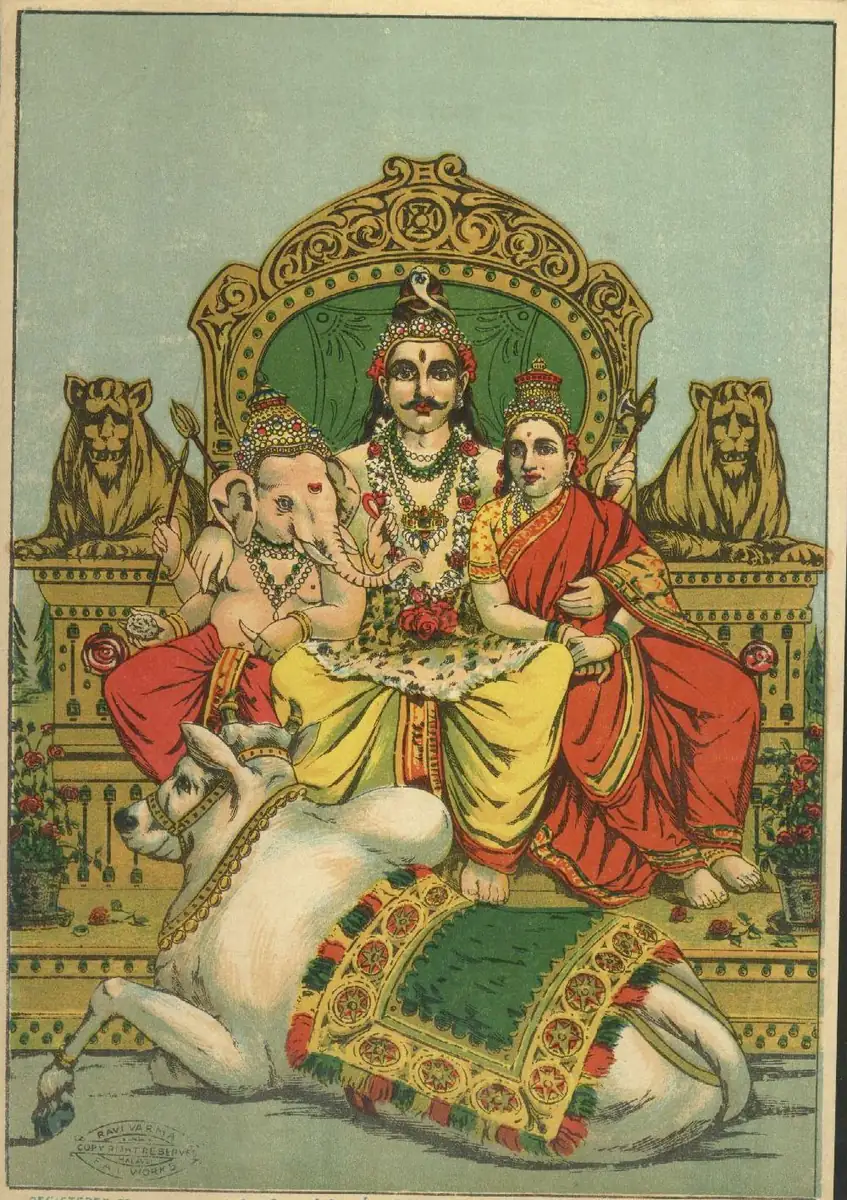
ॐ जय शिव ओंकारा, स्वामी जय शिव ओंकारा।
ब्रह्मा विष्णु सदाशिव, अर्द्धांगी धारा॥
एकानन चतुरानन पंचानन राजे।
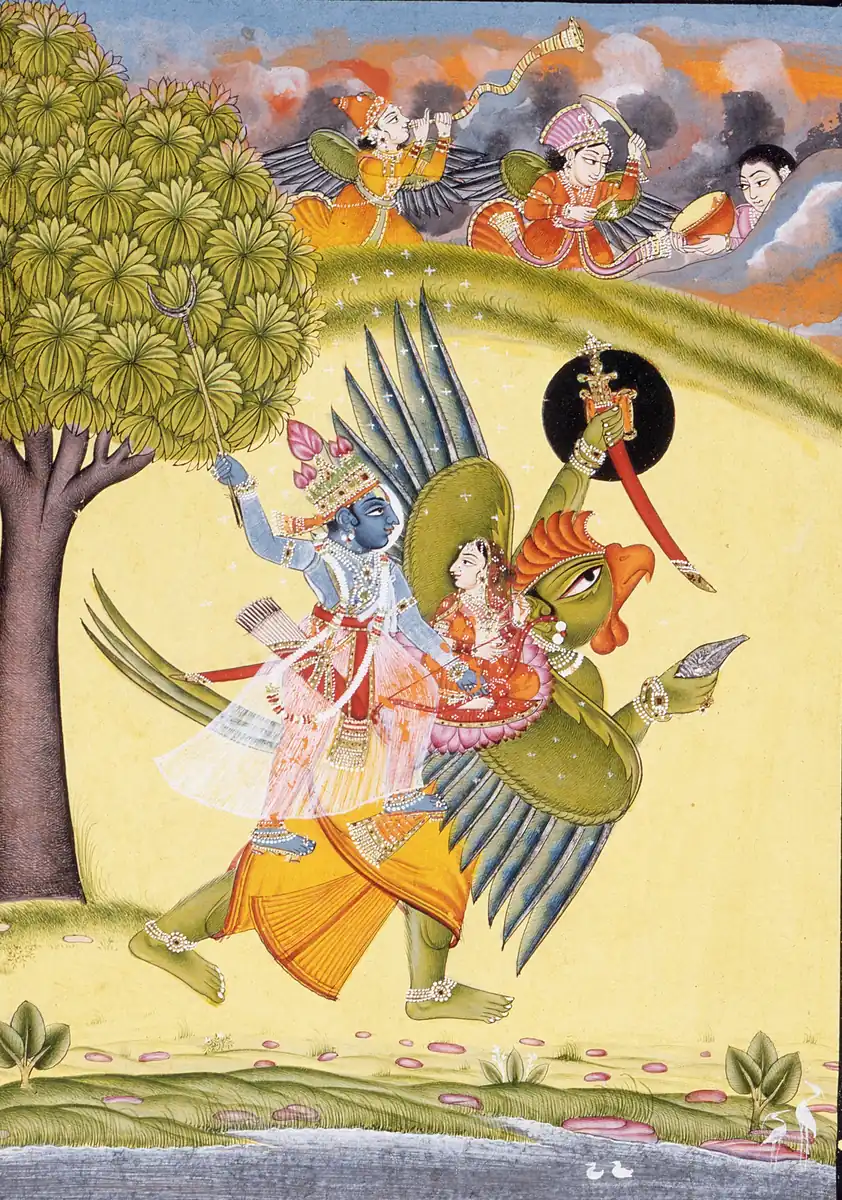
हंसासन गरूड़ासन वृषवाहन साजे॥
दो भुज चार चतुर्भुज दसभुज अति सोहे।
त्रिगुण रूप निरखते त्रिभुवन जन मोहे॥
अक्षमाला वनमाला मुण्डमाला धारी।
चंदन मृगमद सोहै भाले शशिधारी॥
श्वेताम्बर पीताम्बर बाघम्बर अंगे।
सनकादिक गरुड़ादिक भूतादिक संगे॥
कर के मध्य कमण्डलु चक्र त्रिशूलधारी।
सुखकारी दुखहारी जगपालन कारी॥
ब्रह्मा विष्णु सदाशिव जानत अविवेका।
प्रणवाक्षर में शोभित ये तीनों एका॥
लक्ष्मी व सावित्री पार्वती संगा।
पार्वती अर्द्धांगी, शिवलहरी गंगा॥
पर्वत सोहैं पार्वती, शंकर कैलासा।
भांग धतूर का भोजन, भस्मी में वासा॥
त्रिगुणस्वामी जी की आरती जो कोई नर गावे।
कहत शिवानन्द स्वामी मनवांछित फल पावे॥
What it means
This aarti sings Shiv as the one lord behind the three great forms. The first verse sets Brahma, Vishnu and Sadashiv together, with the goddess as half of his body. Next it pictures him with one face, four faces, five faces, riding a swan, an eagle or a bull, and wearing garlands of beads, flowers and skulls, sandal paste and the moon on his brow. It says the three gods are one in the sound Om, and lists his mountain home at Kailash, his food of bhang and datura, and his seat in ash. The last couplet promises the singer's wishes will be met.
How it is sung
The standard evening aarti at Shiv temples, strongest on Mondays and on Mahashivratri nights. The bell and the damaru keep the beat while the lamp moves slowly clockwise before the lingam. Voices take the first line together and the group answers on the second. Many sing the verses in the order shown here, though the position of the Lakshmi and Savitri verse differs from place to place.
Laladham can bring you from Delhi to Vrindavan for an evening at Gopeshwar Mahadev, and plan the visit around the aarti hour. Plan the trip
Questions, answered
Who wrote Om Jai Shiv Omkara?
The closing couplet names a Shivanand Swami, and that is all the text gives. Which Shivanand is meant is not settled, so we list it as traditional.
Why do versions have the verses in a different order?
Temple singers learn it by ear, so the Lakshmi and Savitri verse and the Kailash verse move around. The words stay the same. We follow the order most sites print.
Can it be sung at home?
Yes. A lamp, some incense and a Shiv image or lingam are enough, and Monday evening is the usual day.