Parvati · पर्व के व्रत
करवा चौथ व्रत कथा
Karwa Chauth Vrat Katha (Veervati and Karva)
Karwa Chauth katha in Hindi and English: Veervati and her seven brothers, the false moon, the year of service, plus the story of Karva and Yamraj and the fast.
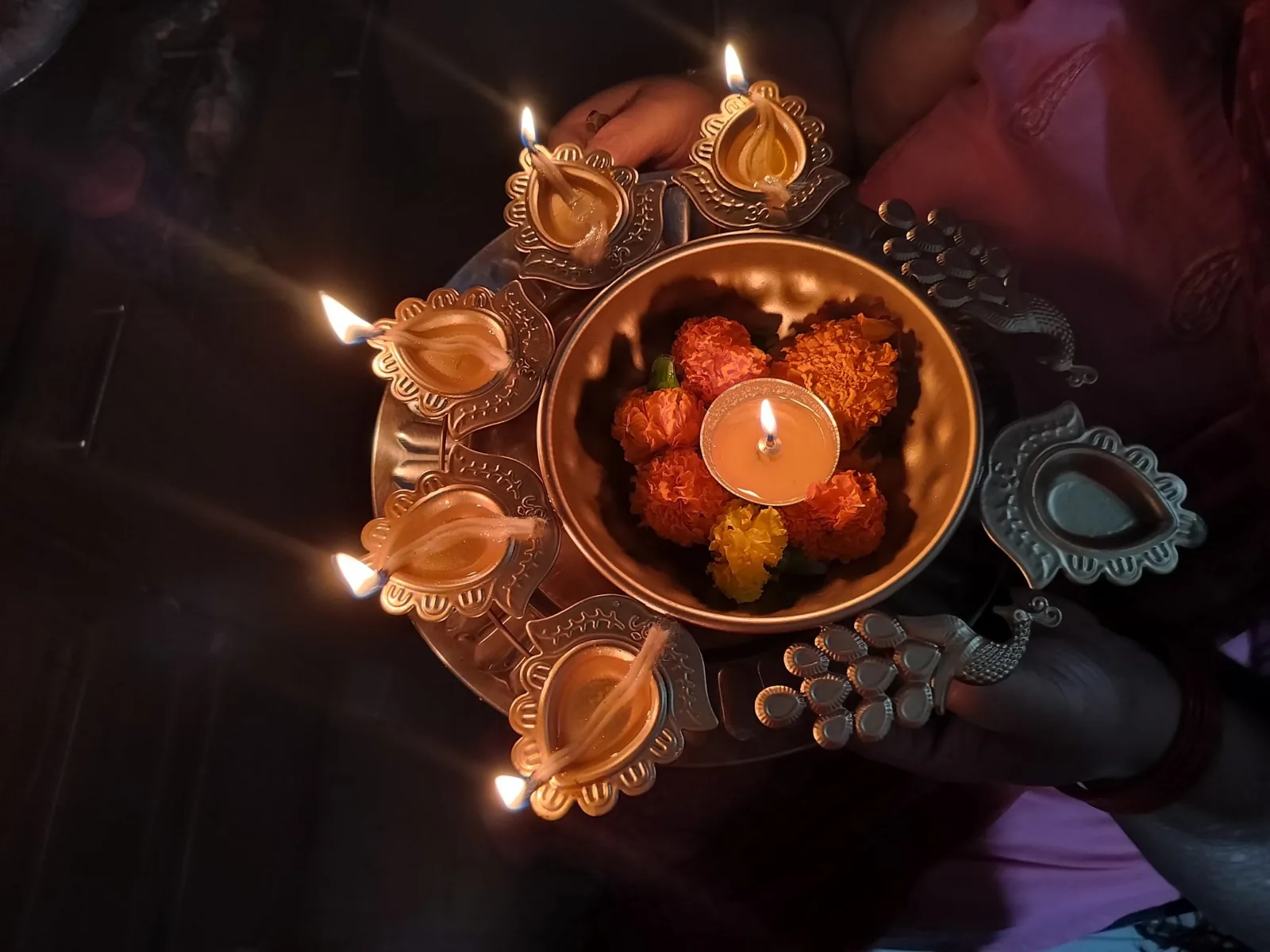
Chaturthi of Kartik Krishna Paksha (north Indian purnimanta count), about nine days before Diwali. The fast runs from sargi before sunrise until moonrise, and the katha is heard at dusk before the arghya. Moonrise differs by city, so check a panchang (drikpanchang.com) for your own place.
Parvati · Krishna Chaturthi
कार्तिक (Kartik)
व्रत कथा The katha
Printed books give several kathas. This page tells Veervati with the Indrani advice, then Karva and Yamraj. Another widely printed version has a moneylender's daughter who is sent to her in-laws in white clothes, receives the blessing of the youngest sister-in-law, and is revived by the karwa-seller sisters after a year; and in one book Krishna tells the story to Draupadi. Names and small details differ, so follow your family's tradition for the version you hear in puja.
कथा (हिंदी)
कहा जाता है कि बहुत पुराने समय में वीरवती नाम की एक कन्या थी जो सात भाइयों की इकलौती और बहुत लाड़ली बहन थी। सातों भाई उसे अपनी जान से अधिक चाहते थे। जब उसका विवाह हुआ तो पहला करवा चौथ आया और वह मायके आई हुई थी। उसने सुबह से निर्जला व्रत रखा, न पानी का घूँट लिया, न अन्न का दाना। सारा दिन घर के कामों और पूजा की तैयारी में बीता, पर शाम होते-होते भूख और प्यास से उसका चेहरा मुरझा गया और शरीर निढाल हो गया।
भाई बहन की यह दशा देख न सके। वे बार-बार कहते कि बहन, थोड़ा कुछ खा ले, पर वीरवती ने कहा कि चाँद को अर्घ्य दिए बिना मैं कुछ नहीं लूँगी। चंद्रोदय में अभी देर थी। भाइयों ने आपस में सलाह की और एक चाल सोची। वे दूर के पीपल के पेड़ के पीछे दीपक जलाकर बैठ गए, और कहीं-कहीं बताया जाता है कि उन्होंने छलनी की ओट से वह रोशनी दिखाई, ताकि वह चाँद का भ्रम बन जाए। फिर भागे-भागे आए और बोले कि बहन, देखो, चाँद निकल आया।
सीधी-सादी वीरवती ने उस रोशनी को सचमुच चंद्रमा मान लिया। उसने अर्घ्य दिया और भोजन का पहला कौर मुँह में डाला। इतने में ससुराल से खबर आई कि उसके पति का देहांत हो गया है। वीरवती के पाँव तले से धरती निकल गई। वह रोती-बिलखती ससुराल की ओर भागी। रास्ते में उसे तीन लोक में घूमने वाली देवी इंद्राणी मिलीं। वीरवती ने उनके पाँव पकड़ लिए और पूछा कि मुझसे क्या अपराध हुआ।
इंद्राणी ने समझाया कि तुमने चंद्रमा को देखे बिना ही व्रत तोड़ दिया, इसी का परिणाम है। उन्होंने उसे उपाय बताया कि तुम अपने पति के शव की देखभाल करो, उसे अकेला मत छोड़ो, और पूरे वर्ष हर कृष्ण पक्ष की चतुर्थी का व्रत नियम से रखो। फिर अगले वर्ष कार्तिक की करवा चौथ पर विधिपूर्वक पूरा व्रत करना, तब तुम्हारे पति को जीवन मिलेगा। इतना कहकर इंद्राणी अदृश्य हो गईं।
वीरवती ने वैसा ही किया। वह पति के शरीर को सहेजकर बैठी रही, उसकी सेवा करती रही और हर चतुर्थी पर व्रत रखकर चंद्रमा की प्रतीक्षा करती रही। रास्ते की धूल, लोगों के ताने, अकेलेपन की रातें, सब उसने धीरज से सहे। जब बारह महीने बीत गए और अगली करवा चौथ आई तो उसने सोलह श्रृंगार किए, करवे सजाए, देवी गौरी की पूजा की और सच्चे चंद्रमा के निकलने तक बिना कुछ खाए-पिए प्रतीक्षा की।
तब चाँद सचमुच निकला। वीरवती ने अर्घ्य दिया और जैसे ही पूजा पूरी हुई, उसके पति की साँस लौट आई। उसकी आँखें खुलीं, मानो वह गहरी नींद से जागा हो। कहते हैं कि वीरवती की निष्ठा और व्रत की शक्ति से उसके सुहाग को नया जीवन मिला। तभी से यह मान्यता चली कि जो स्त्री चंद्रमा को देखकर और कथा सुनकर यह व्रत करती है, उसके पति की आयु बढ़ती है।
इस कथा के साथ एक और कथा करवा नाम की पतिव्रता स्त्री की भी कही जाती है। उसका पति नदी में स्नान कर रहा था कि एक मगरमच्छ ने उसका पैर पकड़कर उसे खींच लिया। पति ने करवा को पुकारा। करवा दौड़ी आई और अपनी पवित्र निष्ठा के बल पर कच्चे सूत से मगर को बाँध दिया। फिर वह सूत लेकर यमराज के पास पहुँची और कहा कि इस मगर को नरक में भेजिए और मेरे पति को दीर्घ आयु दीजिए।
यमराज ने पहले टालना चाहा। करवा ने तब कहा कि यदि आपने मेरी बात नहीं मानी तो मैं अपने सतीत्व के बल पर आपको भी श्राप दे दूँगी। श्राप के भय से यमराज झुक गए। उन्होंने मगर को यमलोक भेज दिया और करवा के पति को लंबी आयु का वरदान दिया। यह भी कहा जाता है कि इसी करवा के नाम पर इस व्रत का नाम करवा चौथ पड़ा, और पूजा में जो मिट्टी का करवा रखा जाता है, उसका नाम भी उसी से जुड़ा है।
सुनने वाले यह भी जोड़ते हैं कि अलग-अलग घरों में कथा के रूप थोड़े बदल जाते हैं। कहीं साहूकार की बेटी का नाम लिया जाता है, कहीं ब्राह्मण की, कहीं वीरवती को रानी कहा जाता है। पर सार एक ही रहता है: व्रत सच्चे चंद्रमा को देखकर ही खोला जाए, और आस्था से किया गया उपवास यम के द्वार तक भी रास्ता बना देता है।
The katha (English)
Long ago, so the old women tell, there lived a girl named Veervati, the only sister of seven brothers, and the dearest of the family. Her brothers loved her more than their own lives. When she was married, her first Karwa Chauth came while she was staying at her parents' home. From sunrise she kept a strict fast without a sip of water or a grain of food. The day went in housework and puja preparation, but as evening came hunger and thirst made her face pale and her limbs heavy.
Her brothers could not bear to watch. Again and again they begged her to take something, but Veervati answered that she would eat nothing until she had offered arghya to the moon. Moonrise was still far off. So the brothers whispered together and made a plan. Behind a distant peepal tree they set a lamp, and in some tellings they held it behind a sieve, so that the glow looked like a rising moon. Then they ran back to her, crying that the moon was up.
Trusting and simple, Veervati took that glow for the real moon. She poured out the water offering and put the first morsel in her mouth. At that very moment a messenger came from her husband's house: her husband had died. The earth seemed to slip from under her feet. Weeping, she ran toward her in-laws' village, and on the road she met the goddess Indrani, who wanders through the three worlds. Veervati fell at her feet and asked what wrong she had done.
Indrani told her gently that she had ended the fast without ever seeing the moon, and this was the result. But there was a way. She should not leave her husband's body, and she should tend it with care. All through the coming year she must observe the fast of every Krishna Paksha Chaturthi, and when the next Kartik Karwa Chauth came, she must perform the full vrat as the rules say. Then her husband would live again. With that, the goddess vanished.
Veervati did all of it. She sat beside him, served him, and kept every monthly fast, waiting each time for the moon. Dust, gossip and lonely nights, she bore them all with patience. When twelve months had passed and Karwa Chauth returned, she dressed in her sixteen adornments, set out the karwas, worshipped Gauri, and waited without a bite or a drop until the true moon climbed the sky.
This time the moon was real. Veervati poured the water for the moon, and as the puja ended her husband's breath came back. His eyes opened, as though he were waking from a deep sleep. By her steadiness and the power of the vrat, it is believed, her marriage received a new life. Ever since, women have held that whoever observes this fast once the moon is visible and the katha is heard gains long life for her husband.
A second tale is often added: the story of Karva, a wife of unshakable devotion. While her husband was bathing in the river, a crocodile caught his foot and began to drag him in. He called to Karva, and she ran to the bank. With the strength of her faith she tied the crocodile with a plain cotton thread so that it could not move. Then she carried that thread to Yamraj, god of death, and demanded that the crocodile be sent to hell and her husband be granted a long life.
Yamraj tried to put her off. Karva warned him that she would curse him with the power of her virtue if he refused. Fearing the curse, he bowed. The crocodile was sent to the house of death and Karva's husband received a blessing of many years. It is said that this vrat takes its name from Karva, and that the clay pot placed in the puja is called a karwa in her memory.
Listeners will add that details change from home to home. In one house the heroine is a moneylender's daughter, in another a Brahmin's, and in some Veervati is a queen. Yet the heart stays the same: the fast should be opened only when the true moon is seen, and a vow kept with faith can find a road even to the doorstep of death.
Traditional source: Folk and printed Karwa Chauth katha tradition: the Veervati and Indrani telling (shared with Draupadi by Krishna in some books) and the story of Karva and Yamraj
क्या खाएँ · What to eat
- Sargi before sunrise, sent by the mother-in-law where this is your custom: sevaiyan or phirni, fruit, dry fruit and mathri
- After moonrise: water first, then a light meal of the day's puja prasad, halwa and puri or a simple home meal
क्या छोड़ें · What to avoid
- Water and food from sunrise until the moon is seen, in the traditional nirjala fast
- Sleeping through the day, quarrel and harsh words
- Cutting cloth, sewing or using a knife during the vrat, as many homes advise
- Breaking the fast on a false moon, a lamp or a rooftop light, which is the lesson of the katha itself
नियम How the day is kept
- Wake before dawn, eat sargi, bathe and take a sankalp for the vrat
- In the evening, dress in your adornments and set the karwa with water, wheat and a diya in front of Gauri
- Sit with the other women, pass the karwa around seven times and hear the katha with rice or wheat grains in your hand
- At moonrise see the moon through a sieve, give arghya, then see your husband through the same sieve
- Give bayana and a gift to the mother-in-law or an elder woman and touch her feet
- Give a donation of food, a karwa or clothes to a woman in need
पारण और उद्यापन Breaking the fast
The fast is broken only after you see the moon. Give arghya of water, look at the moon through a sieve with a lamp behind it, then look at your husband's face through the same sieve. He offers you water and the first morsel from his hand, and you take it. Sweets from the puja thali follow, and then a normal meal. If clouds hide the moon, many families wait for the moonrise time shown in the panchang for their city and follow what their elders do.
A woman who has finished the fast many years may do the udyapan with a family puja, a gift of karwas and suhag items to married women, and a meal. Ask your family elders about your custom.
आरती और पूजा Aarti and puja
Sing the Gauri aarti, Om Jai Ambe Gauri, at the end of the puja, while the lamp is circled before the karwa and the picture of Gauri.
प्रश्न Questions, answered
Why is a sieve used on Karwa Chauth?
The wife sees the moon through a sieve with a lamp behind it, then her husband through the same sieve. It is a custom handed down in the family, and it is also tied in many tellings to the brothers' false moon.
Can I drink water during Karwa Chauth?
The traditional fast is nirjala, without water. Pregnant women, those who are unwell, and elders may take fruit or water on a doctor's advice and still join the puja.
What if the moon is not visible?
Moonrise time is given in the panchang for each city. If clouds hide the moon, most families wait for that time and open the fast, as their elders advise.
Who was Veervati?
Veervati is the girl of the main Karwa Chauth story, the only sister of seven brothers. Her fast was broken by a false moon, and her year of service and faith brought her husband back to life.
Can an unmarried girl or a husband keep Karwa Chauth?
Unmarried girls sometimes keep it for a husband of their choice, and some husbands now fast with their wives. The core of the vrat is love, trust and the evening puja.
तिथि और पारण का समय हर शहर में अलग होता है; अपने शहर का पंचांग (drikpanchang.com) देखें। कुल की परंपरा सर्वोपरि है। Dates change every year, so check a panchang for your city. If you are unwell, pregnant or on medicine, keep the fast in a lighter way.
Hear it in Braj. Laladham picks you up in Delhi and runs the complete trip, so you can keep your vrat where the stories happened.
Plan my trip