Many devs · पर्व के व्रत
वट सावित्री व्रत कथा
Vat Savitri Vrat Katha
The full Vat Savitri katha of Savitri and Satyavan from the Mahabharata, with the two dates by region, what to eat and avoid, and how the fast is opened.
Jyeshtha Amavasya in the purnimanta calendar of north India, usually in May or June. In Maharashtra, Gujarat and other amanta regions the same vrat is kept on Jyeshtha Purnima, about a fortnight later, and is called Vat Purnima. Check a panchang (drikpanchang.com) for your city, since the tithi can spill over two days.
Many devs · Jyeshtha Amavasya or Purnima
ज्येष्ठ (Jyeshtha)
व्रत कथा The katha
The epic itself has four boons to Savitri (sight and strength for the father-in-law, his kingdom, sons for her father, sons for herself and Satyavan). Many popular printed and web versions compress these to three. The banyan tree link and the Jyeshtha Amavasya date come from later folk tradition, not from the epic text. The older books name the king's land Madra, many Hindi pages say Bhadra.
कथा (हिंदी)
भद्र देश में अश्वपति नाम के एक धर्मात्मा राजा थे। राजा सब कुछ से संपन्न थे, पर संतान का सुख उनके आँगन में नहीं था। कहा जाता है कि उन्होंने अठारह वर्ष तक सावित्री देवी के मंत्रों से प्रतिदिन हवन किया। अठारहवें वर्ष देवी प्रसन्न हुईं और वर दिया कि तुम्हें एक तेजस्वी कन्या मिलेगी। देवी के प्रसाद से जन्मी उस कन्या का नाम इसी कारण सावित्री रखा गया।
सावित्री बड़ी हुई तो रूप, शील और बुद्धि में उसकी बराबरी कोई नहीं कर पाता था। उसके तेज के आगे राजकुमार संकोच में पड़ जाते थे और कोई विवाह का प्रस्ताव लेकर नहीं आया। तब पिता ने कहा कि बेटी, तू मंत्रियों के साथ जा और अपने योग्य वर स्वयं खोज ले। सावित्री रथ में बैठकर तपोवनों और तीर्थों में घूमी। एक आश्रम में उसने सत्यवान को देखा, जो शाल्व देश के राजा द्युमत्सेन का पुत्र था। राजा अंधे हो गए थे, शत्रु ने उनका राज्य छीन लिया था और पूरा परिवार वन की कुटिया में रहता था। सावित्री का मन वहीं ठहर गया।
राजा के घर लौटने पर देवर्षि नारद बैठे थे। सावित्री ने अपना चुना हुआ वर बताया तो नारद ने कहा कि राजन, सत्यवान सत्यवादी, क्षमाशील और गुणों का सागर है, पर उसकी आयु बस एक वर्ष बची है। इसके बाद वह देह छोड़ देगा। अश्वपति घबरा गए और बेटी से बोले कि किसी और को चुन लो। सावित्री ने शांत स्वर में उत्तर दिया कि पिताजी, राजा आज्ञा एक बार देता है, पिता कन्यादान एक बार करता है, और स्त्री पति का वरण भी एक ही बार करती है। मैंने मन से सत्यवान को चुन लिया है, अब चाहे आयु लंबी हो या छोटी, गुणवान हो या निर्गुण, मैं उन्हीं की हूँ। पिता ने उसका निश्चय देखकर विधिपूर्वक विवाह कर दिया।
विवाह के बाद सावित्री ने राजसी गहने उतार दिए और वल्कल पहनकर वन की कुटिया में सास और ससुर की सेवा में लग गई। उसने मन में नारद के कहे दिन गिन रखे थे, पर किसी से कुछ नहीं कहा। जब बताई हुई मृत्यु की तिथि में केवल तीन दिन रह गए, तब उसने तीन दिन और तीन रात का कठिन व्रत लिया, खड़े होकर उपवास किया और निराहार रही। ससुर ने उसे इतना कठोर तप न करने को कहा, पर वह बोली कि मैंने यह संकल्प लिया है।
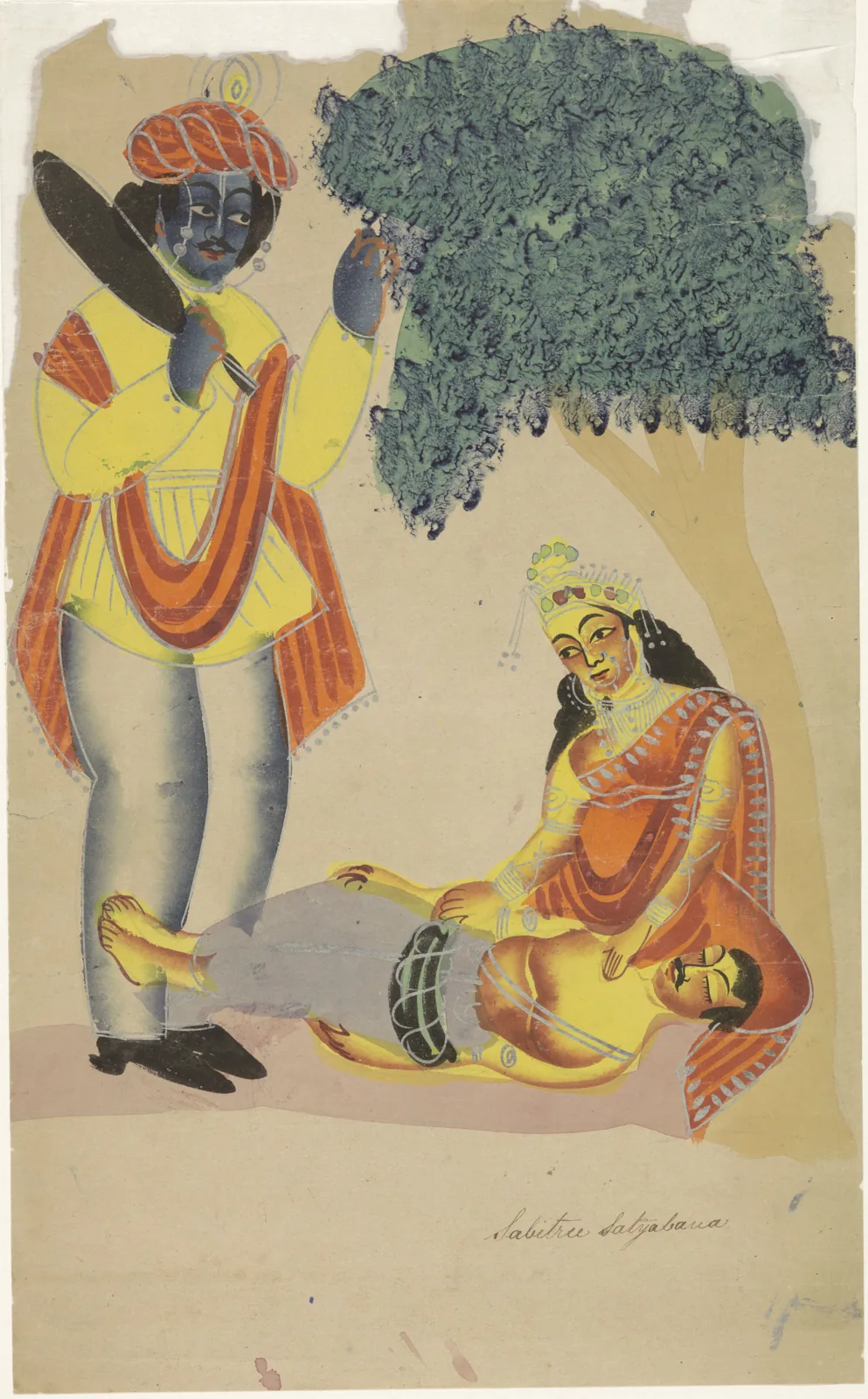
नियत दिन आया। सत्यवान कुल्हाड़ी लेकर लकड़ी और फल लेने वन की ओर चला तो सावित्री ने कहा कि आज मैं भी साथ चलूँगी। सत्यवान ने मना किया कि तुम व्रत से दुर्बल हो और रास्ता कठिन है, पर सावित्री ने आग्रह किया और सास ससुर की आज्ञा लेकर साथ चली। वन में फूल खिले थे और पक्षी बोल रहे थे, पर सावित्री का मन नारद के शब्दों में उलझा था। सत्यवान लकड़ी काटने एक पेड़ पर चढ़ा, तभी अचानक उसके सिर में भयंकर पीड़ा उठी। वह नीचे उतरा और बोला कि सावित्री, मेरा सिर फटा जा रहा है, मुझे लेटना है। सावित्री ने उसका सिर अपनी गोद में रखा और वहीं भूमि पर बैठ गई।
थोड़ी देर में उसने देखा कि लाल वस्त्र पहने, काले रंग के एक तेजस्वी पुरुष पास खड़े हैं, उनके हाथ में पाश है। वे यमराज थे। सावित्री ने सत्यवान का सिर धीरे से भूमि पर रखा, उठकर हाथ जोड़े और पूछा कि आप कौन हैं और मेरे पति को कहाँ ले जा रहे हैं। यमराज ने कहा कि तुम पतिव्रता और तपस्विनी हो इसलिए मुझे देख पा रही हो। मैं यम हूँ, इसकी आयु पूरी हो गई। इतना कहकर उन्होंने सत्यवान की देह से अँगूठे के बराबर जीव को पाश में बाँधा और दक्षिण दिशा की ओर चल पड़े। देह निष्प्राण हो गई।
सावित्री उनके पीछे चल पड़ी। यम ने कहा कि लौट जाओ, यही संसार का नियम है। सावित्री बोली कि पति जहाँ जाएँ, पत्नी का मार्ग भी वहीं है, और संतों के साथ सात कदम चलने से भी मित्रता हो जाती है। उसने धर्म की ऐसी बातें कहीं कि यमराज प्रसन्न हुए। उन्होंने कहा कि सत्यवान के प्राण छोड़कर कोई भी वर माँग लो। सावित्री ने पहला वर माँगा कि मेरे ससुर की आँखें लौट आएँ और उनका बल भी। यम ने कहा कि ऐसा ही होगा, अब थके हुए मत चलो, लौट जाओ। सावित्री बोली कि पति के साथ रहते मुझे थकान कहाँ, और फिर संतों के सत्संग की बात करती रही। यम ने दूसरा वर दिया कि ससुर का खोया हुआ राज्य उन्हें वापस मिलेगा। तीसरा वर उसने अपने पिता के लिए माँगा कि उन्हें सौ पुत्र हों, और यम ने वह भी दे दिया।
फिर भी सावित्री पीछे चलती रही। यम ने कहा कि अब लौट जाओ, पर उसने धर्म और सत्य की शरण का ऐसा उपदेश दिया कि यम बोले, तुम्हारे वचन मुझे अमृत जैसे लगते हैं। सत्यवान के प्राण को छोड़कर एक और वर माँगो। तब सावित्री ने चौथा वर माँगा कि मेरे और सत्यवान के कुल से सौ पुत्र हों जो वंश बढ़ाएँ। यम ने वचन दे दिया कि ऐसा ही होगा। सावित्री ने हाथ जोड़कर कहा कि देव, आपका वचन पति के बिना कैसे पूरा होगा। सत्यवान के प्राण लौटाए बिना मैं पुत्रों की माँ कैसे बनूँगी। यम समझ गए कि वे अपने ही वरदान में बँध गए हैं। हँसकर बोले कि तुम जीत गईं, और उन्होंने पाश खोल दिया। उन्होंने कहा कि सत्यवान दीर्घायु होगा, तुम दोनों सुखी रहोगे।
सावित्री उसी जगह लौटी जहाँ सत्यवान की देह पड़ी थी। उसने उसका सिर फिर गोद में रखा तो सत्यवान ऐसे उठा जैसे गहरी नींद से जागा हो। दोनों रात में कुटिया की ओर चले। इधर माता पिता अंधेरे में बेटे बहू को ढूँढ रहे थे और घबराए बैठे थे। लौटते ही सावित्री ने पूरी बात बताई। उसी बीच राजा द्युमत्सेन की आँखें लौट आईं और उनके पुराने मंत्री यह कहते हुए आए कि शत्रु मारा गया है और प्रजा आपको राजा के रूप में चाहती है। राजा अपने राज्य लौटे। कुछ समय बाद अश्वपति को भी सौ पुत्र हुए और सावित्री के भी पुत्र हुए।
लोक में कहा जाता है कि यह सब ज्येष्ठ की अमावस्या के दिन हुआ था। इसीलिए सुहागिन स्त्रियाँ इस दिन वट के पेड़ की पूजा करती हैं। वट की लंबी जड़ें और अटल छाया अखंड सौभाग्य का प्रतीक मानी गईं। वे कच्चे सूत से पेड़ को लपेटती हैं और सावित्री की तरह दृढ़ मन से पति की लंबी आयु माँगती हैं। जो कथा श्रद्धा से सुनता है, उसके घर में दांपत्य का संकट नहीं टिकता, ऐसा कहा जाता है।
The katha (English)
In the land of Madra, which the older books also call Bhadra, there lived a righteous king named Ashvapati. He had wealth, a loyal court and the love of his subjects, but no child. It is said that for eighteen years he offered ghee into the sacred fire every day, chanting to the goddess Savitri, the divine form of the Gayatri hymn. In the eighteenth year she appeared before him and promised a radiant daughter. When the girl was born, the king named her Savitri in honour of the goddess whose blessing had brought her.
As Savitri grew, her beauty and good sense became so well known that young princes were almost afraid to approach her. No proposal came. Her father finally told her to take elders and ministers with her and find a husband on her own. She travelled in a chariot through forest hermitages and holy places, and in one of them she saw Satyavan. He was the son of Dyumatsena, king of the Shalvas, who had gone blind, lost his throne to an enemy, and now lived with his wife and son in a hut in the woods. Savitri did not have to think twice. She had found the man she wanted.
When she returned, the sage Narada was sitting with her father. She told them her choice. Narada praised Satyavan as truthful, patient and generous, and then said gently that the young man had only one year left to live. Ashvapati was shaken and begged his daughter to choose someone else. Savitri answered quietly. A king gives his command once, she said, a father gives away his daughter once, and a woman chooses her husband once. She had chosen in her heart already, and neither a long life nor a short one, neither wealth nor poverty, would change it. Seeing her resolve, the king gave his blessing, and the wedding was held with the proper rites.
Savitri put aside her jewels, wore the plain bark cloth of the hermitage, and served her blind father-in-law and her mother-in-law with full devotion. She kept to herself the count of days that Narada had given. Three days before the fatal one, she took up a hard vow: she fasted completely and stood in prayer through the days and nights. Her father-in-law was troubled by her severity and asked her to be gentler with herself. She answered that the vow was her promise and she would finish it.
The morning arrived. Satyavan picked up his axe to go and gather firewood and fruit. Savitri said she would come along. He warned her that she was weak from fasting and the path was rough, but she insisted, and with her in-laws' permission she followed him into the forest. Flowers were blooming and birds were calling, yet her mind stayed on the sage's words. Satyavan climbed a tree to cut branches and, in the middle of the work, was struck by a violent pain in his head. He climbed down and told her he had to lie down. Savitri sat on the ground and let his head rest against her knees.
Soon she saw a tall, dark figure in red robes standing beside them, a noose in his hand. It was Yama, lord of death. Savitri gently set her husband's head on the earth, stood up, joined her palms and asked who he was and where he was taking her husband. Yama said she could see him only because of her purity and penance. Satyavan's years were over, and with the noose he drew out the tiny soul, no bigger than a thumb, and turned south. The body lay still behind them.
Savitri walked after him. Yama told her to go home, since this was the way of the world. She replied that a wife's road is wherever her husband goes, and that even seven steps with a good person make a friend. She spoke on duty and truth so wisely that Yama was pleased, and said she could ask any boon except her husband's life. Her first wish was that her father-in-law's sight and strength be restored. Yama granted it and told her again to turn back. She kept walking, saying she felt no weariness beside her husband. Yama gave a second boon: the lost kingdom would return to the old king. Her third wish was sons for her own father, a hundred of them, and Yama gave that too.
Still she followed. Yama said her words were like nectar to him and offered one more boon, again barring Satyavan's life. This time Savitri begged that she and Satyavan might have as many sons, to carry on their line. Yama, moved, promised it. Then she folded her hands and said, lord, how can your word come true if my husband does not live? How can I be a mother without him? Yama saw that he had bound himself with his own promise. He laughed, said she had won, and untied the noose. He told her that Satyavan would live long and that both would be happy.
Savitri went back to the place where Satyavan's body lay. When she took him in her arms again, he stirred and rose as if waking from deep sleep. Together they walked home in the dark. Meanwhile his parents, in great fear, were searching the woods and calling for them. Savitri told them everything. At the same hour the old king's eyesight returned, and his former ministers arrived with news that the usurper was dead and that the people wanted Dyumatsena back on the throne. In time Ashvapati had his hundred sons, and Savitri and Satyavan had theirs.
People say all this happened on the Jyeshtha new moon, and that is why married women worship the banyan on this day. The vat tree is long lived and sends down roots from its branches, so it stands for a marriage that stays rooted. Women wind a raw thread around its trunk and ask, as Savitri did, for a long life for their husbands. Those who listen to the story with faith are said to keep trouble away from their home.
Traditional source: Mahabharata, Vana Parva, Savitri Upakhyana (told by sage Markandeya to Yudhishthira), as retold in common Hindi vrat-katha books
क्या खाएँ · What to eat
- Water, fruit and milk if you keep a lighter fast
- Soaked chana and fruit as the offering, then eaten as prasad
- Sattvik food without onion and garlic when you open the fast
क्या छोड़ें · What to avoid
- Grain, onion, garlic and non-vegetarian food through the day
- Cutting or harming the banyan tree
- Sleeping through the day or quarrels at home
नियम How the day is kept
- Bathe early and dress in fresh clothes with suhag items
- Go to a banyan tree with the puja thali and water
- Wind raw thread around the trunk, usually seven or twelve rounds
- Hear the Savitri Satyavan katha, touch the feet of elders and give daan
पारण और उद्यापन Breaking the fast
Open the fast the same evening or after the puja is done, according to your family custom. First eat a little of the soaked chana and fruit offered at the tree, then take a simple sattvik meal. Some families break the fast after sunset on Amavasya or after offering the tree its water, and some on the next morning. Follow your own household practice.
Some women do an udyapan after a number of years by feeding married women and giving a bamboo basket, suhag items and a cloth. Ask an elder of your family for your custom.
आरती और पूजा Aarti and puja
After the katha, sing the Jai Ambe Gauri aarti, and Jai Ganesh before it if your family begins with Ganesh.
If your family wishes to bathe at Haridwar or sit under an old banyan beside the Ganga, Laladham can pick you up in Delhi and take you there as a complete trip. Plan this trip
प्रश्न Questions, answered
Which day is Vat Savitri in 2026?
The vrat is kept on Jyeshtha Amavasya in north India and on Jyeshtha Purnima in Maharashtra and Gujarat. Open drikpanchang.com for your city to see the exact date and the puja time.
Why is the banyan tree worshipped?
In the folk telling Savitri brought Satyavan back to life near a banyan, and the tree's long life and spreading roots stand for a lasting marriage. The epic itself does not mention the tree.
Can an unmarried girl or a widow keep this vrat?
The vrat is mainly for married women, but unmarried girls and others can honour Savitri, listen to the katha and water the banyan. Customs differ between families.
How many rounds of thread are wound around the tree?
Families wind it seven, twelve or one hundred and eight times. Seven is the commonest.
What is the difference between Vat Savitri and Vat Purnima?
They are the same vrat. North India keeps it on Amavasya, while amanta regions keep it on the Purnima of the same month, because they count the month differently.
तिथि और पारण का समय हर शहर में अलग होता है; अपने शहर का पंचांग (drikpanchang.com) देखें। कुल की परंपरा सर्वोपरि है। Dates change every year, so check a panchang for your city. If you are unwell, pregnant or on medicine, keep the fast in a lighter way.
Hear it in Braj. Laladham picks you up in Delhi and runs the complete trip, so you can keep your vrat where the stories happened.
Plan my trip