Many devs · व्रत
वट सावित्री व्रत
Vat Savitri Vrat
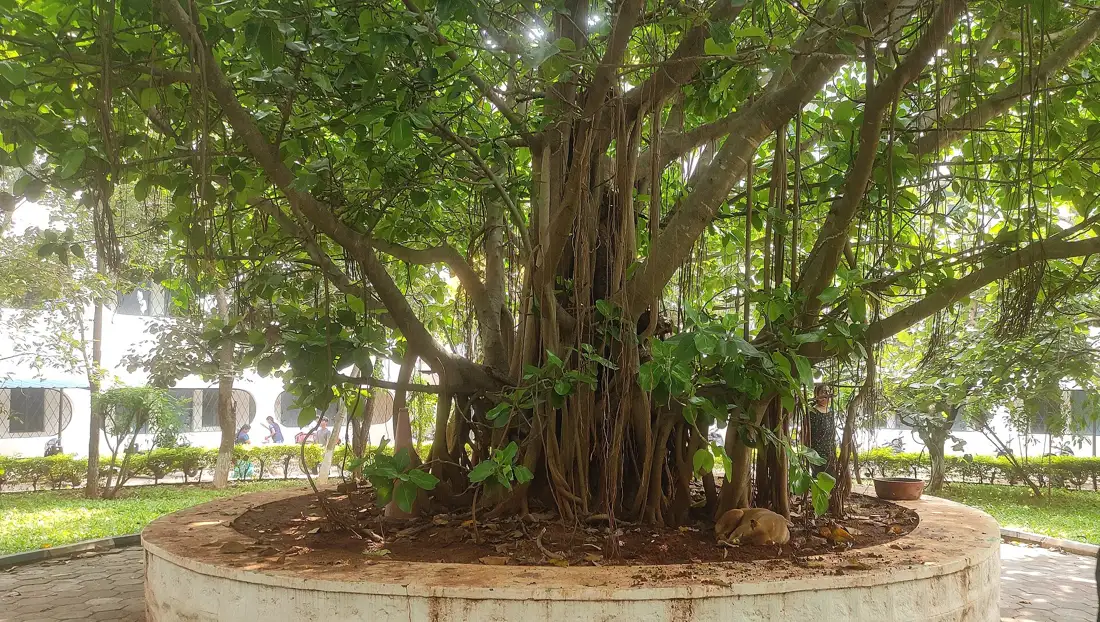
Vat Savitri is the banyan-tree vrat of Jyeshtha: raw thread wound round the vat, Savitri and Satyavan worshipped, the katha heard, and the fast opened at sunset.
Jyeshtha Amavasya in the north Indian purnimanta count, in May or June, often along with Shani Jayanti. Amanta regions such as Maharashtra keep the same vrat on Jyeshtha Purnima, a fortnight later, and call it Vat Purnima. Look at a panchang for your city, because the tithi can run over two days.
Married women for the long life of the husband. Unmarried girls and others who wish to honour Savitri may also join the puja. A banyan tree is needed for the full vidhi, or a picture of one if a tree is not near.
About 2 hours for the puja; the fast runs until sunset or later
सामग्री Samagri checklist
Puja thali
Offerings
Suhag items
तैयारी Before you begin
- Bathe early and wear fresh clothes, preferably red, yellow or green. Dress with suhag items.
- Soak the chana the night before and get the thali ready.
- Know where your nearest banyan is, and plan to go in the morning before it gets hot.
- Wind the raw thread on a spool so that it can be wound round the tree easily.
- Take water, a mat or small seat and the thali to the tree.
पूजा विधि Step by step
आचमन Achaman, sipping water to purify
about 2 minutes
Sit on your asan facing east or north with a small cup (a copper or steel panchpatra if you have one) of clean water and a spoon. Pour a little water into your right palm and sip it three times, each time with one name of Vishnu, without a sound of slurping. Then wash the right palm, touch your lips, and touch water to the eyes, nose, ears and heart with the fingers, as your family does. Take only a small sip each time, not a mouthful. Do it before sankalp, and again whenever you leave the seat and return.
ॐ केशवाय नमः। ॐ नारायणाय नमः। ॐ माधवाय नमः।
Om Keshavaya namah. Om Narayanaya namah. Om Madhavaya namah.
Meaning: Salutations to Keshava, Narayana and Madhava, three names of Vishnu, one for each sip. Many Vedic households say 'svaha' in place of 'namah' for these three sips, and the Sandhya text does the same.
ॐ गोविन्दाय नमः
Om Govindaya namah
Meaning: A fourth name of Vishnu, said as the hand is washed after the three sips.
संकल्प Vrat sankalp
about 5 minutes
After the bath, sit before the family deity or the banyan itself. Take water and akshat in your palm and say in your own words that you keep the Vat Savitri vrat for your husband's long life and a happy home, as Savitri did. Release the water on the ground. A standard Sanskrit text for this step was not confirmed, so speak it simply.
वट वृक्ष की ओर At the banyan tree
about 10 minutes
Go to the banyan with the thali. Clean the base, sprinkle water and draw a small square of roli or rice paste. Place the images of Savitri and Satyavan against the trunk, with Yamraj beside them if you follow that custom. If no tree is available, many women do the puja at home before a drawing or a cut branch.
गणेश-गौरी स्मरण / आवाहन Ganesh and Gauri invocation at the start
about 5 minutes
Every puja begins by remembering Ganesh so that no obstacle comes in the way, with Gauri (Parvati) beside him. Place a small mound of rice or a betel nut wrapped with red thread (moli) on a leaf or a small plate as Ganesh, and a second smaller one as Gauri. If you have a Ganesh murti, use that. Bow, offer a little water, a dot of roli or sandal, rice and a flower to each, and pray that they stay till the puja is finished. When the main puja is over, offer them water again and say they may go where they please.
वक्रतुण्ड महाकाय सूर्यकोटि समप्रभ। निर्विघ्नं कुरु मे देव सर्वकार्येषु सर्वदा॥
Vakratunda mahakaya suryakoti samaprabha. Nirvighnam kuru me deva sarvakaryeshu sarvada.
Meaning: O curved-trunked, large-bodied one with the brilliance of a crore suns, make all my works free from obstacles, always. This is the Ganesh smaran verse already on our bhajan pages. For the avahan (invitation) proper, families use different verses, so recite the Ganesh verse of your own household.
जल और पूजन Water and worship at the roots
about 20 minutes
Pour water slowly at the roots of the vat, then offer roli, haldi, akshat, flowers and chandan. Light the ghee diya and the dhoop. Offer the soaked chana and fruit, and put the small bamboo fan if you have one. Bow to the tree with thanks.
सावित्री-सत्यवान पूजन Savitri and Satyavan
about 10 minutes
Worship the images with sindoor, bindi and flowers. Offer a sindoor tilak to Savitri and then take a little from it for your own parting. Think of Savitri's resolve, which is the whole point of the day. The images stay in place till the katha is over.
परिक्रमा Parikrama with the thread
about 20 to 40 minutes
Hold the end of the raw thread at the trunk and walk clockwise around the vat, winding it as you go. Sources differ on the count: 7 rounds is the common one, and 11, 21 and 108 are also kept. If you are strong enough, 108 is called best, otherwise 21 is accepted. Count with small chana grains if you wish. Tie the thread with a knot at the end.
कथा Savitri-Satyavan katha
about 20 minutes
Sit under the tree with the soaked chana in your hand and hear the story. Savitri, daughter of King Ashvapati, chose the forest-dwelling Satyavan though she knew he had only a year to live. When Yama took his soul she followed him and spoke so wisely that Yama granted her boons, till he had to return her husband to life. In the Mahabharata the tale is told to Yudhishthira in Vana Parva, and the tree is honoured since it sheltered him in the forest.
बड़ों को बायना Gift to the elder woman
about 5 minutes
Take the soaked chana, a piece of cloth and some dakshina to your mother-in-law, touch her feet and seek her blessing. If she lives away, give it to an elder woman of the house or send it through someone. Share the rest of the soaked chana as prasad.
आरती Closing aarti
about 5 minutes
Wave the ghee diya before the tree and the images, with a Devi or Vishnu aarti of your family. Bow to the vat.
पारण Parana in the evening
about 15 minutes
Many homes break the fast after the puja or after sunset by eating the tender new leaves of the banyan, and some use black chana. Others take simple fruit and water. Follow your own family, then eat a light meal.
क्षमा प्रार्थना / पूजा समापन Kshama prarthana, asking forgiveness and closing
about 3 minutes
At the very end, after aarti and pradakshina, stand or sit with folded hands and ask pardon for every lack in the puja: wrong words, missed steps, thin devotion. This is not a formality; it is said that even a puja done with errors becomes complete by this prayer. Then offer a little water and flowers, say 'sarvam shri bhagavat arpanam' (all this is offered to the Lord), and take the water on the kalash as prasad. Do not rush away; sit a minute in silence. Close by saying the deity may go where he or she pleases (utthapan or visarjan) only if you called the deity into a fresh murti. A home murti or picture that lives on your altar is not sent away: you only bow and cover the offerings.
आवाहनं न जानामि न जानामि विसर्जनम्। पूजां चैव न जानामि क्षमस्व परमेश्वर॥ मन्त्रहीनं क्रियाहीनं भक्तिहीनं सुरेश्वर। यत्पूजितं मया देव परिपूर्णं तदस्तु मे॥
Avahanam na janami na janami visarjanam. Pujam chaiva na janami kshamasva Parameshvara. Mantra-hinam kriya-hinam bhakti-hinam Sureshvara. Yat pujitam maya deva paripurnam tad astu me.
Meaning: I do not know how to invite you, how to send you off, or how to worship; forgive me, O Supreme Lord. Whatever I have worshipped with lack of mantra, lack of action and lack of devotion, O Lord of the gods, let it be made complete. Two sources agree on this pair of verses; one prints 'tava archanam' (your worship) in the first line in place of 'pujam'.
आरती और विसर्जन Aarti and closing
Keep it short: a ghee diya and camphor waved in front before the banyan and the Savitri-Satyavan images, then to all the women who have joined. A Lakshmi-Narayan or Devi aarti is common.
The images are returned to the puja room the same day. Leave the thread on the tree. The flowers and the water go at the foot of the vat or into a plant pot. Do not break branches or leaves beyond what the parana needs.
क्या करें · Do
- Go to the tree early and wind the thread with care.
- Bring a little water for the roots.
- Listen to the katha right to the end.
- Give chana and cloth to an elder.
- Keep the vrat mindful of the tree, since it is a living one.
क्या न करें · Avoid
- Do not harm the banyan to hold the puja.
- Do not break the fast before the puja and katha are done.
- Do not cut or tear the thread while winding.
- Do not skip the tithi check, because the date changes by region.
परंपराएँ Variations and Braj
- The tithi is the chief difference: Amavasya in the north Indian purnimanta count against Purnima in Maharashtra, Gujarat and Goa. The vow, the banyan and the Savitri story remain the same.
- The number of rounds with the thread varies: 7, 11, 21 and 108 are named in different houses and guides.
- Where a tree is far, a cut branch or a wall drawing stands in for the vat.
- Black chana is used in some places for parana, while other guides name tender banyan shoots.
Mathura and Vrindavan are in the purnimanta belt, so the Jyeshtha Amavasya is the day for the vat puja there. Old banyans stand at many ghats and temples, and the Vanshivat at Vrindavan is among the best known in Braj. Do the puja only at a tree where it is allowed, and keep the thread loose.
प्रश्न Questions, answered
Vat Savitri Amavasya or Purnima, which date to follow?
North India follows Jyeshtha Amavasya. Amanta regions like Maharashtra, Gujarat and Goa follow the Purnima instead. Go by your own family and region.
How many rounds around the banyan?
Seven is common, and 11 or 21 are also named. A full 108 is called best, but 21 is fine if you cannot manage. Guides differ, so follow your elders.
What can I do if there is no banyan tree nearby?
Draw a vat on a clean wall or use a branch, and do the same puja at home. Some women visit a temple that has the tree and do the parikrama there.
Can I drink water during the fast?
Most women eat no grain, and many take only fruit and water. The vow closes at sunset or earlier, as your family says.
Why do we worship the banyan?
The katha says the vat sheltered Satyavan's body in the forest until Savitri won back his life. A long-lived tree also stands for a long marriage.
कुल की परंपरा सर्वोपरि है। Where your family custom differs, follow it, and ask your priest when in doubt.
Check locally
- Amavasya or Purnima for your region, and the exact tithi window on drikpanchang.com.
- Rounds with the thread: 7, 11, 21 or 108 in your house.
- A standard Sanskrit sankalp and the Savitri arghya verse were not confirmed from two sources, so only the steps are given.
- How your family closes the fast, and whether an older longer form is kept in your house.
व्रत कथा Read the katha
Doing this in Braj? Seekers often bring a puja to Vrindavan, Govardhan or Mathura. A Laladham driver who knows the ghats and the timings is one message away.
Plan my trip