Shiva · व्रत
हरतालिका तीज
Hartalika Teej
Hartalika Teej is the nirjala fast of Bhadrapada Shukla Tritiya: Shiva, Parvati and Ganesh made from sand, full shringar for Gauri, a night of jagran and the katha of Parvati's tapasya.
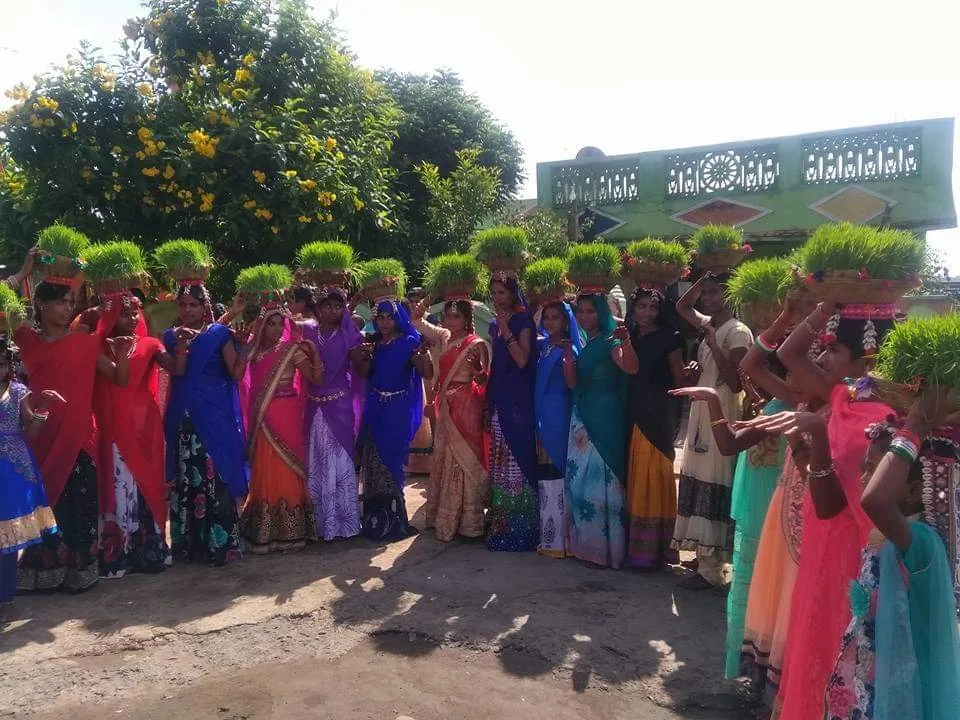
Tritiya of Bhadrapada Shukla Paksha, usually in August or September, a day before Ganesh Chaturthi. Puja is best in the morning, and where that is not possible it is done in Pradosh kaal, the dusk hours. Check a panchang such as drikpanchang.com for the exact muhurat in your city.
Married women for the husband's long life, and unmarried girls for a good match. Widows may also keep it. Once taken up, tradition says the vrat should be kept each year and not dropped.
A full day and night; the puja itself is about 1.5 to 2 hours, then night jagran, then a short morning puja
सामग्री Samagri checklist
For the idols and seat
Worship items
For Shiva and Parvati
तैयारी Before you begin
- Some homes eat a sargahi before dawn, a simple meal after which no food or water is taken until the next sunrise.
- Bathe in the morning, using sesame and amla powder as the old texts advise, and wear clean new clothes.
- Collect sand or black clay the day before, and wash and dry it.
- Lay a banana leaf on a chowki and decorate the spot with flowers and a rangoli.
- Dress with full shringar before the evening puja.
पूजा विधि Step by step
आचमन Achaman, sipping water to purify
about 2 minutes
Sit on your asan facing east or north with a small cup (a copper or steel panchpatra if you have one) of clean water and a spoon. Pour a little water into your right palm and sip it three times, each time with one name of Vishnu, without a sound of slurping. Then wash the right palm, touch your lips, and touch water to the eyes, nose, ears and heart with the fingers, as your family does. Take only a small sip each time, not a mouthful. Do it before sankalp, and again whenever you leave the seat and return.
ॐ केशवाय नमः। ॐ नारायणाय नमः। ॐ माधवाय नमः।
Om Keshavaya namah. Om Narayanaya namah. Om Madhavaya namah.
Meaning: Salutations to Keshava, Narayana and Madhava, three names of Vishnu, one for each sip. Many Vedic households say 'svaha' in place of 'namah' for these three sips, and the Sandhya text does the same.
ॐ गोविन्दाय नमः
Om Govindaya namah
Meaning: A fourth name of Vishnu, said as the hand is washed after the three sips.
संकल्प Sankalp
about 5 minutes
Sit facing east with rice, a flower, a coin, a betel nut and water in your right palm. Name the date and paksha as your priest or family knows it, state your name and gotra, and say that you keep the Hartalika vrat. Then let the water fall before you. The long form differs by family, so many just recite the short line.
उमामहेश्वरसायुज्य सिद्धये हरितालिका व्रतमहं करिष्ये।
umā-maheśvara-sāyujya-siddhaye haritālikā vratam ahaṃ kariṣye.
Meaning: To attain union with Uma and Maheshwar, I take up the Hartalika vrat.
प्रतिमा निर्माण Making the three idols
about 20 minutes
With your own hands shape the three deities from sand or black clay. Keep them small and simple, a lingam is also fine for Shiva. Seat the three on the banana leaf over the chowki. The work is part of the worship, so do it quietly, thinking of Parvati's tapasya.
कलश स्थापना Kalash setup
about 10 minutes
Fill a lota or small pitcher with water, tie red nada round its mouth and mark it with a satiya. Place a coconut or a diya on top, and offer akshat. Pour a little water, then kumkum, haldi, rice and flowers on the kalash. It is worshipped first.
गणेश-गौरी स्मरण / आवाहन Ganesh and Gauri invocation at the start
about 5 minutes
Every puja begins by remembering Ganesh so that no obstacle comes in the way, with Gauri (Parvati) beside him. Place a small mound of rice or a betel nut wrapped with red thread (moli) on a leaf or a small plate as Ganesh, and a second smaller one as Gauri. If you have a Ganesh murti, use that. Bow, offer a little water, a dot of roli or sandal, rice and a flower to each, and pray that they stay till the puja is finished. When the main puja is over, offer them water again and say they may go where they please.
वक्रतुण्ड महाकाय सूर्यकोटि समप्रभ। निर्विघ्नं कुरु मे देव सर्वकार्येषु सर्वदा॥
Vakratunda mahakaya suryakoti samaprabha. Nirvighnam kuru me deva sarvakaryeshu sarvada.
Meaning: O curved-trunked, large-bodied one with the brilliance of a crore suns, make all my works free from obstacles, always. This is the Ganesh smaran verse already on our bhajan pages. For the avahan (invitation) proper, families use different verses, so recite the Ganesh verse of your own household.
शिव पूजन Worship of Shiva
about 20 minutes
Bathe the Shiva idol lightly with water and panchamrit and give sandal, belpatra, flowers and dhoop. Offer the dhoti and angochha you set aside. Light the ghee diya. Names like Hara, Maheshwara, Shambhu, Pashupati and Mahadeva are sung one by one with each flower, as the priest or your family has taught you.
पार्वती का श्रृंगार Parvati and the sixteen shringar
about 30 minutes
Offer Gauri the full shringar: sindoor, bindi, bangles, mehendi, alta, a chunari and the rest of the suhag items. This offering is the heart of the evening. The sixteen-step shodashopchar and the anga puja of Parvati follow, naming her as Uma, Parvati, Jagaddhatri and Shivaa while offering flowers.
कथा Hearing the katha
about 20 minutes
Read or listen to the story. Parvati, born as Himalaya's daughter, wished for Shiva alone. When Narad brought a proposal from Vishnu her father agreed, and she was heartbroken. Her friend took her away into the forest, which gave the vrat its name, harana meaning to carry off and alika meaning friend. There on the Bhadrapada Tritiya she made a Shivalinga from sand and stayed awake all night, and Shiva appeared and accepted her.
आरती Aarti in order
about 10 minutes
Wave the lamp first to Ganesh, then Shiva, then Gauri, singing the aarti of each. Go round the idols clockwise. Hand the flame to everyone in the circle.
रात्रि जागरण Night jagran
about Through the night
Stay awake through the night with bhajans, group singing and dance. Women wear new clothes and full makeup. Traditionally five pujas and aartis are done through the night. Water is not taken, so take rest in the sitting spots and keep the diya burning.
प्रातः पूजन Morning puja and sindoor
about 20 minutes
After a bath at dawn, do a last aarti. Married women take sindoor from the final offering made to Gauri and put it in the parting of their own hair. Then touch the feet of the elder women of the house and ask for their blessings.
पारण Parana
about 15 minutes
Offer kakdi and halwa to Parvati. Break the fast by eating the kakdi first, then halwa or any sweet from the offering. Take a simple meal afterwards, and give a dhoti and angochha with dakshina to a Brahmin.
क्षमा प्रार्थना / पूजा समापन Kshama prarthana, asking forgiveness and closing
about 3 minutes
At the very end, after aarti and pradakshina, stand or sit with folded hands and ask pardon for every lack in the puja: wrong words, missed steps, thin devotion. This is not a formality; it is said that even a puja done with errors becomes complete by this prayer. Then offer a little water and flowers, say 'sarvam shri bhagavat arpanam' (all this is offered to the Lord), and take the water on the kalash as prasad. Do not rush away; sit a minute in silence. Close by saying the deity may go where he or she pleases (utthapan or visarjan) only if you called the deity into a fresh murti. A home murti or picture that lives on your altar is not sent away: you only bow and cover the offerings.
आवाहनं न जानामि न जानामि विसर्जनम्। पूजां चैव न जानामि क्षमस्व परमेश्वर॥ मन्त्रहीनं क्रियाहीनं भक्तिहीनं सुरेश्वर। यत्पूजितं मया देव परिपूर्णं तदस्तु मे॥
Avahanam na janami na janami visarjanam. Pujam chaiva na janami kshamasva Parameshvara. Mantra-hinam kriya-hinam bhakti-hinam Sureshvara. Yat pujitam maya deva paripurnam tad astu me.
Meaning: I do not know how to invite you, how to send you off, or how to worship; forgive me, O Supreme Lord. Whatever I have worshipped with lack of mantra, lack of action and lack of devotion, O Lord of the gods, let it be made complete. Two sources agree on this pair of verses; one prints 'tava archanam' (your worship) in the first line in place of 'pujam'.
आरती और विसर्जन Aarti and closing
The aarti follows the order Ganesh, Shiva, Gauri, with a ghee diya and camphor, and it is repeated at the end of each of the night pujas. Use the Shiv aarti and the Gauri aarti of your family, circle the idols and share the flame.
After the morning parana, the sand idols, flowers and puja material are put into a holy river, a kund or a clean pond. If you cannot reach water, immerse them in a tub and pour the water at the root of a tree. Do not leave the idols lying on the ground.
क्या करें · Do
- Make the idols by hand and keep them on a clean leaf.
- Keep the lamp burning through the night.
- Wear new clothes and take full shringar.
- Hear the full katha with attention.
- Give the dhoti and angochha to a Brahmin.
क्या न करें · Avoid
- Do not take food or water until the next sunrise.
- Do not drop the vrat after you start it, as tradition asks it to be continued each year.
- Do not sleep through the night: the vigil is the point.
- Do not leave the immersion material on the road.
परंपराएँ Variations and Braj
- In Uttar Pradesh, Bihar, Jharkhand and Madhya Pradesh it is a major nirjala vrat; in Jharkhand a sargahi before dawn is spoken of as important.
- Unmarried girls keep it for a husband like Shiva, while married women keep it for the husband's life.
- Some families make Shiva as a sand lingam only, while others make all three idols.
- Hartalika Teej is different from Hariyali Teej (Shravan) and Kajari Teej, which are other Teej days with their own songs and swings.
- The Teej falls under the Hasta nakshatra in the katha, and some panchangs mention it as a muhurat marker.
In Braj the Teej season is mostly known for the swings of Radha and Krishna at Vrindavan and Barsana in Shravan, on Hariyali Teej. Hartalika Teej in Bhadrapada is a home vrat there as elsewhere, and the Yamuna ghats are the nearest place to let the idols go if you are staying in Mathura.
प्रश्न Questions, answered
Why is it called Hartalika?
Hrita means carried away and alika means a woman's friend. Parvati's friend took her into the forest to save her from marrying Vishnu, so that she could do tapasya for Shiva.
Is Hartalika Teej fast with water?
It is traditionally nirjala, no food and no water from dawn through the night until the next sunrise. If you are unwell or pregnant, follow a doctor and a priest.
When is the best time for Hartalika puja?
Morning is called best by the texts, and Pradosh kaal in the evening is the alternative. Look at a panchang for your city.
Why are the idols made of sand?
In the katha Parvati moulded a sand lingam in the forest and kept watch beside it all night. The sand idols recall that, and they return easily to water the next day.
Can unmarried girls keep it?
Yes. Unmarried girls and married women both keep it, and widows may too.
What is eaten to break the fast?
Kakdi (cucumber) and halwa, offered first to Parvati, then eaten as prasad.
कुल की परंपरा सर्वोपरि है। Where your family custom differs, follow it, and ask your priest when in doubt.
Check locally
- Exact puja muhurat for your city on drikpanchang.com.
- Which sankalp your family or priest uses, since the long form varies.
- Whether idols or only a sand lingam are made in your house, and where immersion is done.
- Individual Shiva and Parvati naam mantras were not confirmed in Devanagari from two sources, so they are described by name only.
- The sixteen shringar list differs by family: ask the elder women of your house.
व्रत कथा Read the katha
Doing this in Braj? Seekers often bring a puja to Vrindavan, Govardhan or Mathura. A Laladham driver who knows the ghats and the timings is one message away.
Plan my trip