श्री महालक्ष्मी · अष्टोत्तरशतनामावली
माँ लक्ष्मी के १०८ नाम
108 names of Lakshmi with meaning
The 108 names of Goddess Lakshmi (Lakshmi Ashtottara Shatanamavali) in Sanskrit, Hindi and English with meaning, and how to chant them.
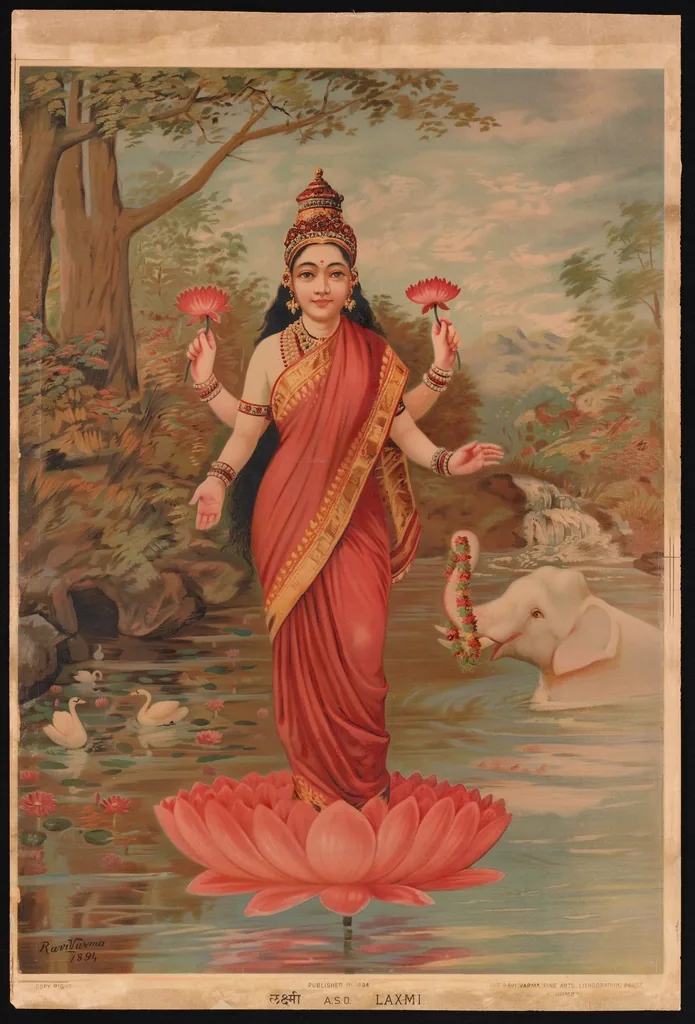
Lakshmi is the goddess of shri: not only money but beauty, grace, harvest, good luck and the quiet order that lets a household prosper. In temples she sits on a lotus, with gold coins pouring from one hand and the other raised in blessing. Families call on her at Diwali, on Fridays, when opening a shop or closing the old books for the new year.
The Ashtottara Shatanamavali is the list of her 108 names, each one a small portrait. Some name her body and ornaments (Padmakshi, the lotus-eyed), some her birth from the ocean of milk, some her closeness to Vishnu, and a few her wider power as mother of the worlds. Reading the meanings makes the chanting feel like a conversation instead of a recital.
On this page you will find all 108 names in Devanagari and simple Roman spelling, the exact puja line to say with each name, and a short meaning in English and Hindi. Below the list are notes on how the version was chosen and how to chant it at home.
१०८ नाम The full list, with meaning
108 of 108 names
- 1
प्रकृति
Prakriti
Nature, the original creative power behind the world
सृष्टि की मूल रचनाशक्ति, स्वयं प्रकृति
- 2
विकृति
Vikriti
Nature as it changes into many forms
प्रकृति का अनेक रूपों में बदला हुआ स्वरूप
- 3
विद्या
Vidya
Knowledge and learning
ज्ञान और विद्या की स्वरूप
- 4
सर्वभूतहितप्रदा
Sarvabhutahitaprada
Giver of good to all living beings
सब प्राणियों का भला करने वाली
- 5
श्रद्धा
Shraddha
Faith and trust
आस्था और विश्वास का रूप
- 6
विभूति
Vibhuti
Glory and abundant prosperity
महिमा और ऐश्वर्य की स्वामिनी
- 7
सुरभि
Surabhi
The fragrant one; also the wish-granting cow
सुगंध वाली, कामधेनु का भी नाम
- 8
परमात्मिका
Paramatmika
One whose nature is the Supreme Self
परमात्मा के स्वरूप वाली
- 9
वाच्
Vach
Speech, the power of the spoken word
वाणी की शक्ति, बोलने की देवी
- 10
पद्मालया
Padmalaya
She who dwells in the lotus
कमल में निवास करने वाली
- 11
पद्मा
Padma
The lotus one
कमल के समान कोमल और पावन
- 12
शुचि
Shuchi
The pure and clean one
पवित्र और निर्मल
- 13
स्वाहा
Svaha
The call that carries an offering into the fire
यज्ञ की अग्नि में आहुति पहुँचाने वाली शक्ति
- 14
स्वधा
Svadha
The offering made to ancestors
पितरों को अर्पण की शक्ति
- 15
सुधा
Sudha
Nectar, sweetness that sustains
अमृत के समान मधुर
- 16
धन्या
Dhanya
The blessed and fortunate one
धन्य और सौभाग्यशालिनी
- 17
हिरण्मयी
Hiranmayi
Golden in form and glow
सोने के समान दमकती हुई
- 18
लक्ष्मी
Lakshmi
She who marks the way to good fortune and grants it
शुभ लक्षण और समृद्धि प्रदान करने वाली
- 19
नित्यपुष्टा
Nityapushta
Ever nourished, ever thriving
सदा पुष्ट और सदा फलती-फूलती
- 20
विभावरी
Vibhavari
The radiant one; also a name for night
तेजस्विनी, रात्रि का भी नाम
- 21
अदिति
Aditi
Boundless mother of the gods
असीम, देवताओं की माता
- 22
दिति
Diti
Diti, the mother of the daityas, here seen as her power
दैत्यों की माता दिति, उनके रूप में भी
- 23
दीप्ता
Dipta
The shining, blazing one
प्रकाश से जगमगाती
- 24
वसुधा
Vasudha
The earth, giver of wealth
पृथ्वी, धन देने वाली
- 25
वसुधारिणी
Vasudharini
Bearer of the earth and its treasures
पृथ्वी और उसके खजानों को धारण करने वाली
- 26
कमला
Kamala
The lotus lady
कमल से जुड़ी देवी
- 27
कान्ता
Kanta
The beloved, radiant lady
प्रिय और मनोहर
- 28
क्षमा
Kshama
Patience and forgiveness
धैर्य और क्षमा का रूप
- 29
क्षीरोदसंभवा
Kshirodasambhava
Born of the ocean of milk
क्षीरसागर से प्रकट हुई
- 30
अनुग्रहपरा
Anugrahapara
Always inclined to show grace
कृपा करने में सदा तत्पर
- 31
बुद्धि
Buddhi
Intellect and clear discernment
विवेक और सही समझ
- 32
अनघा
Anagha
The faultless, sinless one
निष्पाप और निर्दोष
- 33
हरिवल्लभा
Harivallabha
Beloved of Hari, which is Vishnu
हरि अर्थात विष्णु की प्रिया
- 34
अशोका
Ashoka
The one without sorrow
शोक से रहित
- 35
अमृता
Amrita
The deathless; the nectar of immortality
अमर, अमृत के समान
- 36
दीप्ता (दूसरी बार)
Dipta (second)
Shining again: the second mention of the radiant one
दूसरी बार आया तेजोमयी का नाम
- 37
लोकशोकविनाशिनी
Lokashokavinashini
Destroyer of the sorrows of the world
संसार के शोक मिटाने वाली
- 38
धर्मनिलया
Dharmanilaya
The home where dharma lives
धर्म का निवास स्थान
- 39
करुणा
Karuna
Compassion
दया और करुणा
- 40
लोकमाता
Lokamata
Mother of the worlds
समस्त लोकों की माता
- 41
पद्मप्रिया
Padmapriya
She who loves lotuses
जिसे कमल प्रिय हैं
- 42
पद्महस्ता
Padmahasta
She who holds a lotus in her hand
हाथ में कमल धारण करने वाली
- 43
पद्माक्षी
Padmakshi
Lotus-eyed
कमल जैसे नेत्रों वाली
- 44
पद्मसुन्दरी
Padmasundari
Beautiful as a lotus
कमल के समान सुंदर
- 45
पद्मोद्भवा
Padmodbhava
Born from the lotus
कमल से उत्पन्न
- 46
पद्ममुखी
Padmamukhi
Lotus-faced
कमल के समान मुख वाली
- 47
पद्मनाभप्रिया
Padmanabhapriya
Beloved of Padmanabha, Vishnu with the lotus navel
पद्मनाभ विष्णु की प्रिया
- 48
रमा
Rama
The one who delights
आनंद और सुख देने वाली
- 49
पद्ममालाधरा
Padmamaladhara
Wearer of a garland of lotuses
कमलों की माला पहनने वाली
- 50
देवी
Devi
The goddess, the shining one
दिव्य देवी
- 51
पद्मिनी
Padmini
Lady of the lotus pond
कमलों से भरे सरोवर की स्वामिनी
- 52
पद्मगन्धिनी
Padmagandhini
Fragrant like a lotus
कमल की सुगंध वाली
- 53
पुण्यगन्धा
Punyagandha
Of sacred fragrance
पवित्र सुगंध वाली
- 54
सुप्रसन्ना
Suprasanna
Ever cheerful and gracious
सदा प्रसन्न रहने वाली
- 55
प्रसादाभिमुखी
Prasadabhimukhi
Facing the devotee, ready to bless
भक्त की ओर कृपा करने को उन्मुख
- 56
प्रभा
Prabha
Radiance, glow
कांति और आभा
- 57
चन्द्रवदना
Chandravadana
Moon-faced
चंद्रमा जैसे मुख वाली
- 58
चन्द्रा
Chandra
Cool and bright like the moon
चंद्रमा के समान शीतल और उज्ज्वल
- 59
चन्द्रसहोदरी
Chandrasahodari
Sister of the moon, as both rose from the ocean
चंद्रमा की बहन, दोनों सागर से प्रकट हुए
- 60
चतुर्भुजा
Chaturbhuja
Four-armed
चार भुजाओं वाली
- 61
चन्द्ररूपा
Chandrarupa
Moon-formed, serene in appearance
चंद्रमा जैसे सौम्य रूप वाली
- 62
इन्दिरा
Indira
The powerful, shining one; a common name of Lakshmi
तेजस्वी और सामर्थ्यवान, लक्ष्मी का प्रचलित नाम
- 63
इन्दुशीतला
Indushitala
Cool as the moon
चंद्रमा के समान शीतल
- 64
आह्लादजननी
Ahladajanani
Mother of joy
आनंद को जन्म देने वाली
- 65
पुष्टि
Pushti
Nourishment and well-being
पोषण और हृष्ट-पुष्टता
- 66
शिवा
Shiva
The auspicious one
कल्याणी, मंगलमयी
- 67
शिवकरी
Shivakari
Maker of auspiciousness
शुभ और मंगल करने वाली
- 68
सती
Sati
The true and virtuous one
सत्य और सदाचार से युक्त
- 69
विमला
Vimala
Spotless, without stain
निर्मल, दाग रहित
- 70
विश्वजननी
Vishvajanani
Mother of the universe
समस्त विश्व की जननी
- 71
तुष्टि
Tushti
Contentment
संतोष और तृप्ति
- 72
दारिद्र्यनाशिनी
Daridryanashini
Destroyer of poverty
दरिद्रता का नाश करने वाली
- 73
प्रीतिपुष्करिणी
Pritipushkarini
A lotus pool of affection
प्रेम का कमलों से भरा सरोवर
- 74
शान्ता
Shanta
Peaceful and calm
शांत और स्थिर
- 75
शुक्लमाल्याम्बरा
Shuklamalyambara
Clad in white garlands and garments
श्वेत माला और वस्त्र धारण करने वाली
- 76
श्री
Shri
Splendour, beauty and prosperity
शोभा, सौंदर्य और समृद्धि
- 77
भास्करी
Bhaskari
Bright like the sun
सूर्य के समान दीप्तिमान
- 78
बिल्वनिलया
Bilvanilaya
Dweller in the bilva tree
बेल के वृक्ष में निवास करने वाली
- 79
वरारोहा
Vararoha
Of noble bearing, excellent
उत्तम और श्रेष्ठ आचरण वाली
- 80
यशस्विनी
Yashasvini
Famous and glorious
यश और कीर्ति वाली
- 81
वसुन्धरा
Vasundhara
Earth, holder of treasures
पृथ्वी, रत्नों को धारण करने वाली
- 82
उदाराङ्गा
Udaranga
Of graceful, generous form
उदार और सुंदर अंगों वाली
- 83
हरिणी
Harini
Golden one; also the gentle doe
सुनहरी आभा वाली, हरिणी जैसी कोमल
- 84
हेममालिनी
Hemamalini
Wearing a golden garland
स्वर्ण की माला धारण करने वाली
- 85
धनधान्यकरी
Dhanadhanyakari
Maker of wealth and grain
धन और अन्न की वृद्धि करने वाली
- 86
सिद्धि
Siddhi
Success and fulfilment
सफलता और मनोकामना की पूर्ति
- 87
स्त्रैणसौम्या
Strainasaumya
Gentle, with a woman's grace
स्त्री-सुलभ कोमलता और सौम्यता वाली
- 88
शुभप्रदा
Shubhaprada
Giver of auspicious results
शुभ फल देने वाली
- 89
नृपवेश्मगतानन्दा
Nripaveshmagatananda
Joy that dwells in the houses of kings
राजाओं के भवनों में आनंद बनकर रहने वाली
- 90
वरलक्ष्मी
Varalakshmi
Lakshmi the giver of boons
वरदान देने वाली लक्ष्मी
- 91
वसुप्रदा
Vasuprada
Giver of wealth
धन प्रदान करने वाली
- 92
शुभा
Shubha
The auspicious one
शुभ और मंगलकारी
- 93
हिरण्यप्राकारा
Hiranyaprakara
Surrounded by a golden rampart
सोने के परकोटे से घिरी
- 94
समुद्रतनया
Samudratanaya
Daughter of the ocean
समुद्र की पुत्री
- 95
जया
Jaya
Victory
विजय की स्वरूप
- 96
मङ्गला देवी
Mangala Devi
The auspicious goddess
मंगल करने वाली देवी
- 97
विष्णुवक्षःस्थलस्थिता
Vishnuvakshasthalasthita
She who rests on the chest of Vishnu
विष्णु के वक्षस्थल पर विराजमान
- 98
विष्णुपत्नी
Vishnupatni
Wife of Vishnu
विष्णु की पत्नी
- 99
प्रसन्नाक्षी
Prasannakshi
Gracious-eyed
प्रसन्न और कृपालु नेत्रों वाली
- 100
नारायणसमाश्रिता
Narayanasamashrita
One who abides in the shelter of Narayana
नारायण के आश्रय में रहने वाली
- 101
दारिद्र्यध्वंसिनी
Daridryadhvamsini
Crusher of poverty and want
अभाव और दरिद्रता को ध्वस्त करने वाली
- 102
देवी (दूसरी बार)
Devi (second)
The goddess, named a second time
दिव्य देवी, दूसरी बार आया नाम
- 103
सर्वोपद्रववारिणी
Sarvopadravavarini
Warder-off of every calamity
हर उपद्रव और संकट को दूर करने वाली
- 104
नवदुर्गा
Navadurga
The nine forms of Durga
दुर्गा के नौ रूपों की स्वरूप
- 105
महाकाली
Mahakali
The great Kali, power over time
महाकाली, काल पर अधिकार रखने वाली
- 106
ब्रह्माविष्णुशिवात्मिका
Brahmavishnushivatmika
One whose nature is Brahma, Vishnu and Shiva together
ब्रह्मा, विष्णु और शिव का संयुक्त स्वरूप
- 107
त्रिकालज्ञानसम्पन्ना
Trikalajnanasampanna
Endowed with knowledge of past, present and future
भूत, वर्तमान, भविष्य का ज्ञान रखने वाली
- 108
भुवनेश्वरी
Bhuvaneshvari
Queen of all the worlds
समस्त भुवनों की स्वामिनी
स्रोत Where this list comes from
The 108 names of Lakshmi are a liturgical text of the Ashtottara Shatanamavali kind: a list in which each name is put in the dative case and framed with Om and Namah, so that it can be spoken during worship while offerings are made. It is widely printed in Lakshmi puja booklets and temple publications across India, but no single early scripture is named on the common printings, so it is best described as a traditional compilation rather than the words of one dated text.
This page follows the commonly printed order that begins with Prakriti, Vikriti and Vidya and ends with Bhuvaneshvari. Two independent printings were compared name by name and they agree on 102 of the 108 positions. Where they differ, the more common reading is used and the other is described in the variant note. Two names occur twice in the list (Dipta and Devi), as they do in the printings, so the repeats are marked as second mentions.
This is different from the Lakshmi Sahasranama, the thousand names, which is a much longer recitation. The 108 is the one most families actually use, because it can be finished in about ten minutes with a mala and fits easily into Friday evening or Diwali puja.
Some printings read Dipa for name 23, Kamakshi for name 28 (Kshama here), Krodhasambhava for name 29 (Kshirodasambhava here), Anugrahaprada for name 30, and Satya for name 68. The page uses the more common reading in each case.
जप और पूजा How the names are chanted
Wash, wear clean clothes and sit facing east or north in front of a picture or murti of Lakshmi, ideally with a lamp lit. Say each line as Om, the name in its dative form, then Namah, for example Om Lakshmyai Namah. With every name offer one flower, a pinch of kumkum, a few akshat grains or a coin, and let the offerings gather on a plate near her feet. A lotus is dearest to her, but any fresh flower is accepted.
If you wish to do japa instead, hold a mala and say the 108 names once through, one bead per name. Many families keep Friday for this, and the evening of Diwali Lakshmi pujan is the high point of the year. Thursday, Purnima and the start of a new venture are also good days. Finish with aarti and distribute prasad, usually something sweet.
There is no rule that restricts the chant to a priest or to men. Anyone who can read the names, or simply repeat them after a recording, may chant. Go slowly and say each name clearly, because the sound of the name is part of the offering. If the Sanskrit feels hard, begin by reading only the Roman line and learn the Devanagari with time.
Lakshmi ChalisaOm Jai Lakshmi Mata aartiMahalakshmi AshtakamKanakadhara StotraLakshmi Pujan vidhiDhanteras pujaShukravar vrat kathaGuruvar vrat katha
नामकरण Baby names from Lakshmi
Many families pick a name for a newborn from this very list. These pages sort out the ones that work as everyday given names.
प्रश्न Questions, answered
What are the 108 names of Goddess Lakshmi?
They are the Lakshmi Ashtottara Shatanamavali, a traditional list that begins Prakriti, Vikriti, Vidya, Sarvabhutahitaprada, Shraddha and ends with Trikalajnanasampanna and Bhuvaneshvari. The full list with the Om and Namah puja line, Roman spelling and a meaning for each name is given on this page.
Which day is best to chant the Lakshmi 108 names?
Friday is the weekday most associated with Lakshmi, and the Diwali evening Lakshmi pujan is the most important single occasion. Thursday, Purnima and the day of starting a new business are also popular. Chant in the morning after a bath or in the evening at lamp-lighting time, with a clean place and a lit diya.
Can women chant the Lakshmi Ashtottara?
Yes. Lakshmi worship at home is led by women in many households, and the names can be chanted by anyone who says them with respect. There is no restriction by gender or age. Children can repeat along with an elder, and a recording is fine if the pronunciation is difficult.
What does the name Lakshmi mean?
The word Lakshmi comes from a root meaning to mark, to see or to aim at, and is linked with the sign of good fortune. Traditionally she is the one who marks a person or a home with prosperity. Shri, another name in the list, means beauty, splendour and wealth.
How many times should I chant the 108 names?
Once through, say 108 lines, is a complete round. Many people do one round on a Friday, three or eleven on special days, and a single unhurried round with flowers during Diwali puja. Consistency matters more than the count.
Why does Lakshmi have lotus names like Padmalaya and Padmakshi?
The lotus grows in mud yet stays clean, which is why it stands for purity and for wealth that does not stain the owner. Lakshmi is shown seated on a lotus and holding one, and a run of her names (Padma, Padmapriya, Padmahasta, Padmakshi, Padmasundari) simply describe her in lotus terms.
Is this the same as the Lakshmi Sahasranama?
No. The Sahasranama is the separate thousand-name text and takes far longer to recite. The Ashtottara has 108 names, fits in a few minutes and is the one normally used in daily and festival puja.
नामों के रूप और क्रम अलग-अलग परंपराओं में थोड़े भिन्न मिलते हैं; कुल की परंपरा और गुरु का क्रम सर्वोपरि है। Wording and order differ a little between traditions, so follow your family or guru's version if it differs.
Chant it where it was sung. Laladham picks you up in Delhi and runs the complete trip, so you can recite the names in the temples themselves.
Plan my trip