Ashtak · Lakshmi
Mahalakshmi Ashtakam महालक्ष्म्यष्टकम्
Indra, ruler of the gods, speaks, and each of the eight verses ends with the same bow: Mahalakshmi, salutations to you.
इन्द्र उवाच ।
नमस्तेऽस्तु महामाये श्रीपीठे सुरपूजिते ।
शङ्खचक्रगदाहस्ते महालक्ष्मि नमोऽस्तु ते॥
नमस्ते गरुडारूढे कोलासुरभयङ्करि ।
सर्वपापहरे देवि महालक्ष्मि नमोऽस्तु ते॥
सर्वज्ञे सर्ववरदे सर्वदुष्टभयङ्करि ।
सर्वदुःखहरे देवि महालक्ष्मि नमोऽस्तु ते॥
सिद्धिबुद्धिप्रदे देवि भुक्तिमुक्तिप्रदायिनि ।
मन्त्रमूर्ते सदा देवि महालक्ष्मि नमोऽस्तु ते ॥
आद्यन्तरहिते देवि आद्यशक्तिमहेश्वरि ।
योगजे योगसम्भूते महालक्ष्मि नमोऽस्तु ते॥
स्थूलसूक्ष्ममहारौद्रे महाशक्ति महोदरे ।
महापापहरे देवि महालक्ष्मि नमोऽस्तु ते॥
पद्मासनस्थिते देवि परब्रह्मस्वरूपिणि ।
परमेशि जगन्मातर्महालक्ष्मि नमोऽस्तु ते॥
श्वेताम्बरधरे देवि नानालङ्कारभूषिते ।
जगत्स्थिते जगन्मातर्महालक्ष्मि नमोऽस्तु ते॥
महालक्ष्म्यष्टकस्तोत्रं यः पठेद्भक्तिमान्नरः ।
सर्वसिद्धिमवाप्नोति राज्यं प्राप्नोति सर्वदा ॥
एककाले पठेन्नित्यं महापापविनाशनम् ।
द्विकालं यः पठेन्नित्यं धनधान्यसमन्वितः ॥
त्रिकालं यः पठेन्नित्यं महाशत्रुविनाशनम् ।
महालक्ष्मीर्भवेन्नित्यं प्रसन्न वरदा शुभा ॥
महालक्ष्मि नमोऽस्तु ते ॥
॥ इतीन्द्रकृतं महालक्ष्म्यष्टकं सम्पूर्णम् ॥
What it means
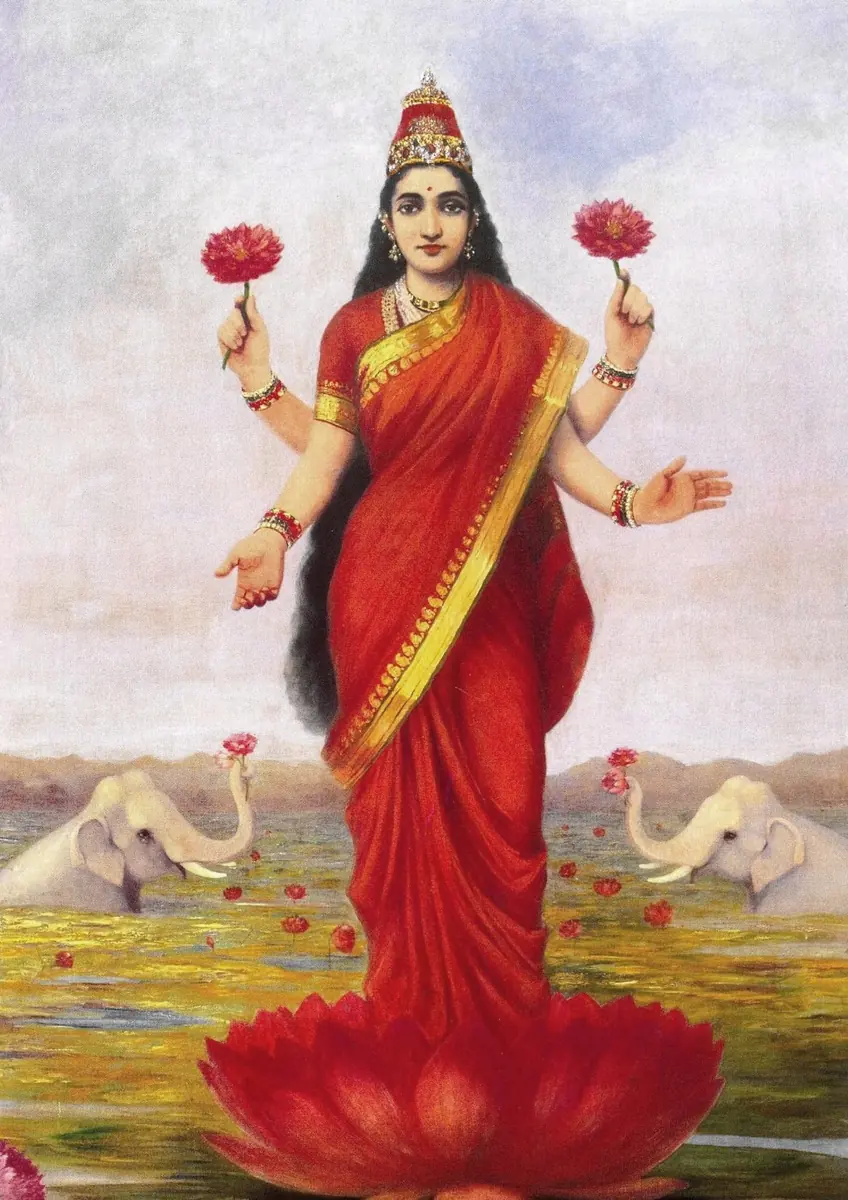
Indra, ruler of the gods, speaks, and each of the eight verses ends with the same bow: Mahalakshmi, salutations to you. He greets her first as the great illusion who sits on the seat of fortune and is worshipped by the gods, with conch, discus and mace in her hands. Then as the one who rides Garuda and terrifies the demon Kolasura, who knows all, gives every boon, and takes away every sorrow. The fourth and fifth verses call her giver of success and wisdom, of enjoyment and freedom, a form of the mantra, without beginning or end, the first power, born of yoga. She is gentle and terrible, large and small, destroyer of great sin in the sixth, then in the seventh the lotus-seated one with the form of the supreme, and finally the white-robed mother of the world dressed in many ornaments. Three couplets then promise rewards by the number of daily readings, with sin removed for the first, wealth for the second, and enemies defeated and her favour won for the third.
How it is sung
The refrain makes it easy to join, as everyone says Mahalakshmi namostu te together at the close of each verse. Friday is her day, and Diwali and the nine nights of Navratri are the big occasions for it. The text itself sets a rhythm of readings through the day, and each repeat is said to add to the reward.
Questions, answered
Who composed the Mahalakshmi Ashtakam?
The colophon says Indra, king of the gods, composed it, and tradition places it in the Padma Purana. It is a hymn spoken by a god in the Purana's story, so it is credited to him.
How often should it be recited?
The closing verses link the reward to the count: once a day for sins to fall away, twice for wealth and grain, and a thrice-daily reading for the end of great enemies. A single Friday reading is a common starting point.
What does Kolasura mean?
Kolasura is a demon, and the second verse addresses Lakshmi, seated on Garuda, as the one who strikes fear into him. The hymn gives no further story about him.