Stotra · Lakshmi
Kanakadhara Stotra कनकधारा स्तोत्रम्
The name Kanakadhara means stream of gold, and tradition links it to the young Shankara and a woman too poor to give anything but a dried gooseberry.
अङ्गं हरेः पुलकभूषणमाश्रयन्ती
भृङ्गाङ्गनेव मुकुलाभरणं तमालम् ।
अङ्गीकृताखिलविभूतिरपाङ्गलीला
माङ्गल्यदाऽस्तु मम मङ्गलदेवतायाः॥
मुग्धा मुहुर्विदधती वदने मुरारेः
प्रेमत्रपाप्रणिहितानि गतागतानि ।
माला दृशोर्मधुकरीव महोत्पले या
सा मे श्रियं दिशतु सागरसम्भवायाः॥
विश्वामरेन्द्रपदविभ्रमदानदक्षं
आनन्दहेतुरधिकं मुरविद्विषोऽपि ।
ईषन्निषीदतु मयि क्षणमीक्षणार्धम्
इन्दीवरोदरसहोदरमिन्दिरायाः॥
आमीलिताक्षमधिगम्य मुदा मुकुन्दं
आनन्दकन्दमनिमेषमनङ्गतन्त्रम् ।
आकेकरस्थितकनीनिकपक्ष्मनेत्रं
भूत्यै भवेन्मम भुजङ्गशयाङ्गनायाः॥
बाह्वन्तरे मधुजितः श्रितकौस्तुभे या
हारावलीव हरिनीलमयी विभाति ।
कामप्रदा भगवतोऽपि कटाक्षमाला
कल्याणमावहतु मे कमलालयायाः॥
कालाम्बुदालिललितोरसि कैटभारेः
धाराधरे स्फुरति या तडिदङ्गनेव ।
मातुस्समस्तजगतां महनीयमूर्तिः
भद्राणि मे दिशतु भार्गवनन्दनायाः॥
प्राप्तं पदं प्रथमतः खलु यत्प्रभावात्
माङ्गल्यभाजि मधुमाथिनि मन्मथेन ।
मय्यापतेत्तदिह मन्थरमीक्षणार्धं
मन्दालसं च मकरालयकन्यकायाः॥
दद्याद्दयानुपवनो द्रविणाम्बुधारां
अस्मिन्नकिञ्चनविहङ्गशिशौ विषण्णे ।
दुष्कर्मघर्ममपनीय चिराय दूरं
नारायणप्रणयिनीनयनाम्बुवाहः॥
इष्टाविशिष्टमतयोऽपि यया दयार्द्र-
दृष्ट्या त्रिविष्टपपदं सुलभं लभन्ते ।
दृष्टिः प्रहृष्टकमलोदरदीप्तिरिष्टां
पुष्टिं कृषीष्ट मम पुष्करविष्टरायाः॥
गीर्देवतेति गरुडध्वजसुन्दरीति
शाकम्भरीति शशिशेखरवल्लभेति ।
सृष्टिस्थितिप्रलयकेलिषु संस्थितायै
तस्यै नमस्त्रिभुवनैकगुरोस्तरुण्यै॥
श्रुत्यै नमोऽस्तु शुभकर्मफलप्रसूत्यै
रत्यै नमोऽस्तु रमणीयगुणार्णवायै ।
शक्त्यै नमोऽस्तु शतपत्रनिकेतनायै
पुष्ट्यै नमोऽस्तु पुरुषोत्तमवल्लभायै॥
नमोऽस्तु नालीकनिभाननायै
नमोऽस्तु दुग्धोदधिजन्मभूम्यै ।
नमोऽस्तु सोमामृतसोदरायै
नमोऽस्तु नारायणवल्लभायै॥
सम्पत्कराणि सकलेन्द्रियनन्दनानि
साम्राज्यदानविभवानि सरोरुहाक्षि ।
त्वद्वन्दनानि दुरिताहरणोद्यतानि
मामेव मातरनिशं कलयन्तु मान्ये॥
यत्कटाक्षसमुपासनाविधिः
सेवकस्य सकलार्थसम्पदः ।
सन्तनोति वचनाङ्गमानसैः
त्वां मुरारिहृदयेश्वरीं भजे॥
सरसिजनिलये सरोजहस्ते
धवलतमांशुकगन्धमाल्यशोभे ।
भगवति हरिवल्लभे मनोज्ञे
त्रिभुवनभूतिकरि प्रसीद मह्यम्॥
दिग् हस्तिभिः कनककुम्भमुखावसृष्ट-
स्वर्वाहिनीविमलचारुजलप्लुताङ्गीम् ।
प्रातर्नमामि जगतां जननीमशेष-
लोकाधिनाथगृहिणीममृताब्धिपुत्रीम्॥
कमले कमलाक्षवल्लभे त्वं
करुणापूरतरङ्गितैरपाङ्गैः ।
अवलोकय मामकिञ्चनानां
प्रथमं पात्रमकृत्रिमं दयायाः॥
स्तुवन्ति ये स्तुतिभिरमीभिरन्वहं
त्रयीमयीं त्रिभुवनमातरं रमाम् ।
गुणाधिका गुरुतरभाग्यभागिनो
भवन्ति ते भुवि बुधभाविताशयाः॥
॥ इति श्रीमच्छङ्कराचार्यकृत श्री कनकधारास्तोत्रं सम्पूर्णम् ॥
What it means
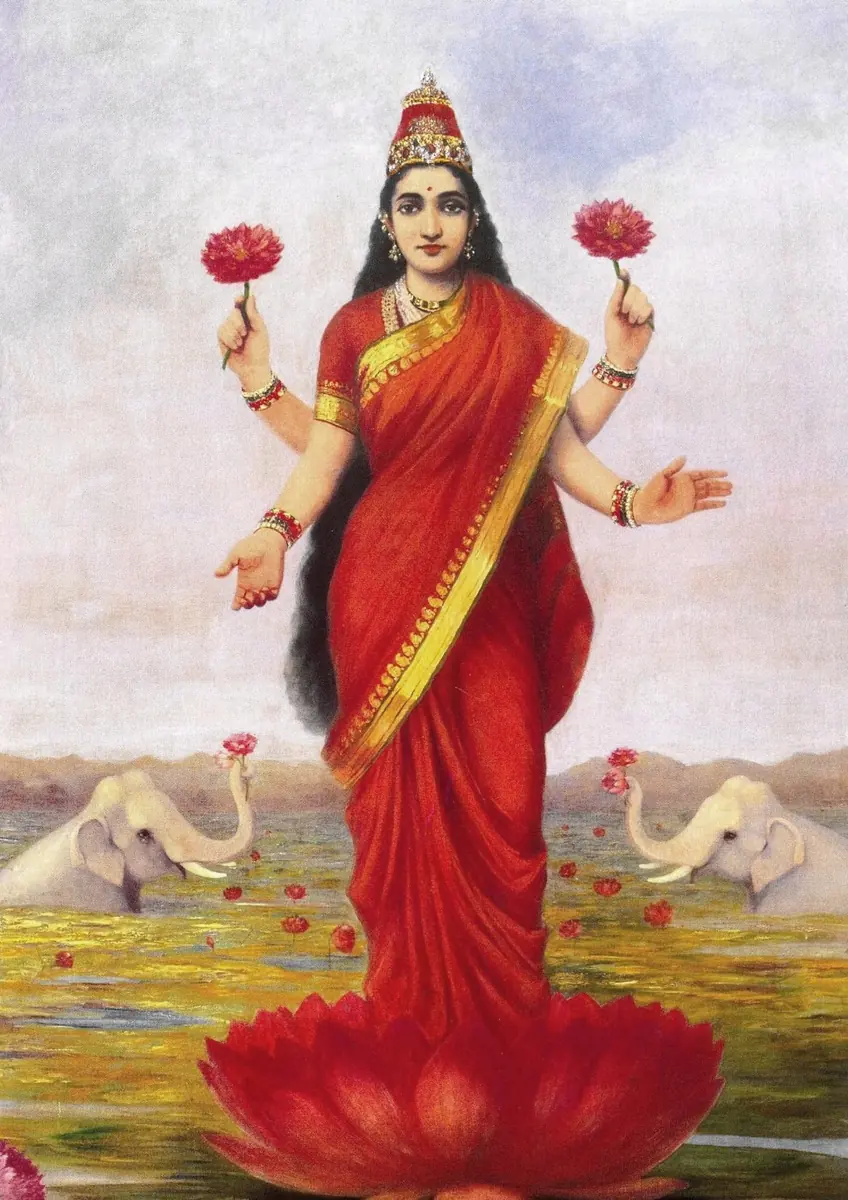
The name Kanakadhara means stream of gold, and tradition links it to the young Shankara and a woman too poor to give anything but a dried gooseberry. The hymn is eighteen verses of long, flowing Sanskrit, and most of it is one extended picture of Lakshmi's glance. The first verse shows the glance resting on Vishnu's body as a bee-woman rests on a dark tamal tree in bud. The second describes her eyes moving shyly to and from Murari's face, a row of bees on a great lotus. Verses ten to twelve are bows to her under many names: Goddess of speech, consort of Garuda's rider, Shakambhari, wife of the moon-crowned one, scripture, delight, power and nourishment. The last verses ask her to turn that glance on a poor one who has nothing, and say that those who read these verses daily become blessed in fortune and are held in honour by the wise.
How it is sung
Slow and rolling, in a rising and falling tune that follows the long metre of the verse. Friday is the day, and many people read it in the morning at a Lakshmi puja, at Diwali, or when starting something new in business. It takes about ten minutes, so it is easier to learn it in four or five parts over a week.
Questions, answered
What is the story of the Kanakadhara Stotra?
The story says the child Shankara went begging, a woman with nothing offered him a single dried amla, and moved by that gift he praised Lakshmi, who rained gold amlas down on the house. It is a legend told by tradition, and nothing in the hymn itself mentions it.
How many verses are there?
The commonly read text has eighteen verses. Some editions add several extra verses after the eighteenth and a closing line about the one who reads it three times a day, so counts can vary from eighteen to twenty-five.
Who wrote it?
It is attributed to Adi Shankaracharya in the closing line. The attribution is by tradition rather than proof, and it is labelled that way here.