It is named after the hornbill, the large forest bird with the golden beak that appears in the folklore of most of the state's communities. The festival itself is not old. It was inaugurated on 1 December 2000, and the government calls it the Festival of Festivals. But what it brings together is very old, and the visitor leaves with a sense of how many peoples live in these hills.
The festival always opens on 1 December and runs ten days, and 2026 is listed the same way. Do confirm with the Nagaland tourism office before you plan.
Where it happens: Kisama
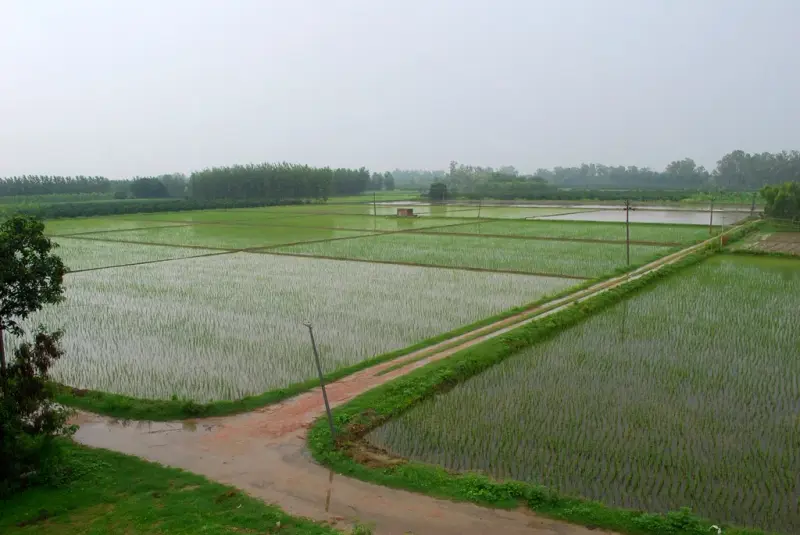
The festival ground is Kisama Heritage Village, a short drive out of Kohima, the state capital. Kisama is a made village. The tribes raise houses in their own traditional style, so that a visitor can walk from one tribe's home to another's in a few minutes, on a grassy hill with a view of blue ridges.
The state government runs it through its tourism and arts departments. There are also events in the town, including the Hornbill International Rock Festival, with local and international bands, which is held at the Indira Gandhi stadium.
Morungs: the tribal houses
The heart of the festival is the morung, the traditional young men's house of a Naga village, a thatched hall with carved posts and a high roof peak. At Kisama the morungs serve as exhibition halls, with crafts, food and performance.
Walk into each one, take your shoes off if asked, and ask about the carving. People are used to questions, and a visitor who listens is looked on with warmth.

What you will see
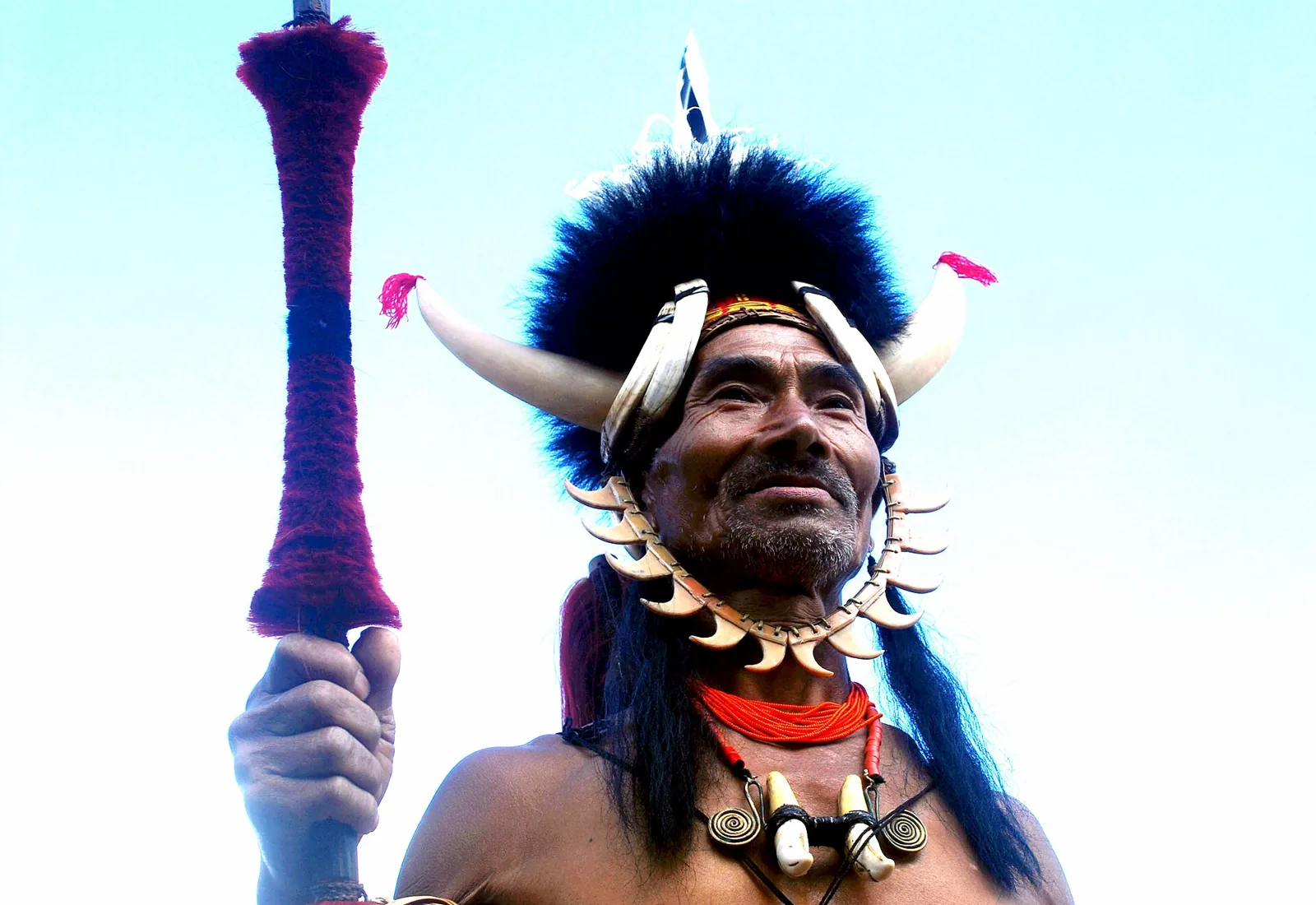
In the arena, tribes perform in turn, in feathered headdresses, shell necklaces and black and red cloth. There are war dances, folk songs, and demonstrations of traditional archery, Naga wrestling and indigenous games. In the stalls, there are crafts, woven shawls, bamboo and cane work, and food.
Late in the day, the mood moves from the arena to the music. In the evenings the programme includes concerts, and the rock festival in town draws young people from across the state.
Food at Kisama
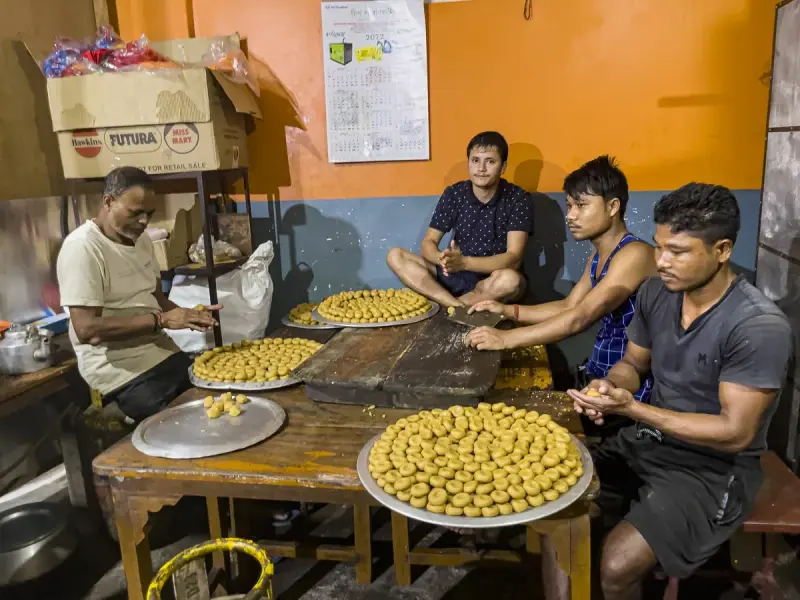
Naga cooking is simple and strong. Many dishes are boiled or smoked, with bamboo shoots, fermented soybean, local greens and very hot chillies. There are meat dishes at many stalls, and a vegetarian visitor should ask what is in each one.
Take care with the chilli, and ask before you eat anything that looks mild. If you are offered a drink you would rather not have, a polite smile and a small sip are understood everywhere.

Permits and practical matters
Nagaland has a permit system for visitors from outside the state. The details change, so check what applies to you (as an Indian visitor or as a foreign citizen) well before you go. The official tourism office lists the current rules.
December in the hills is cold at night. Bring a warm jacket, a cap and good shoes for a grassy slope. Rooms in Kohima fill early, and some visitors stay in Kisama in homestays or camps.
Getting there
The nearest railhead and airport for Kohima are at Dimapur, which is in the plains of Nagaland, and from there the road climbs to Kohima. Count a few hours for that drive, and add a margin on the day of a festival. From Delhi, the usual way is a flight to Dimapur or Guwahati, or a train to Guwahati and then on.
Keep a day at both ends. Kohima has a Second World War cemetery, a state museum and a busy market, and most visitors want at least one day in town besides the festival. Walk slowly, since the town is built on steep hills, and carry a little cash.
How to spend three days
On the first day, settle in at Kohima and walk the town, and take in the museum and the cemetery. On the second, reach Kisama in the morning, spend the hours before noon in the morungs, watch the arena in the afternoon, and stay for the evening programme if the cold allows. On the third, go back for the crafts stalls and the games, or drive into a nearby village to meet a family.
Do not try to see every tribe. It is better to sit with a few, hear a song to the end and learn one name, than to hurry through all of them.
Planning it from Delhi
Nagaland is far from Delhi and works best with a plan made early. Laladham can pick you up in Delhi and run the whole trip: your flights or train, help with the permit, a cab and a driver in the hills, a room in Kohima close to the festival, days at Kisama, and a way home through Assam if you wish.
Send us your dates and your group on the booking page and ask for a quote. In December, the best rooms go first.
Questions, answered
When is the Hornbill Festival?
Ten days from 1 December, every year, and the same days are listed for 2026.
Where is it held?
At Kisama Heritage Village in Kohima district, about twelve kilometres from Kohima.
What is a morung?
A traditional tribal hall. At Kisama the tribes put up their own, and show their craft there.
Do I need a permit?
Visitors from outside Nagaland need one, and the rules depend on who you are. Check with the tourism office.