The word, it is said, may come from the Deori word Bisu, which means great joy. It is a fair guess. Bihu is the one festival of Assam that every community of the state keeps as its own, and it is much more than a stage dance. It marks the farming year in three seasons, and each of the three has its own mood.
The exact days are set afresh every year, so check them before you go.
Three Bihus in one year
Rongali or Bohag Bihu, in mid April, comes first and matters most. It marks the Assamese New Year and the arrival of spring, and it runs for about a week, starting with a day for the cattle. Kongali or Kati Bihu, in mid October, is quiet and sombre. Earthen lamps are lit in the paddy fields to protect the young crop. Bhogali or Magh Bihu, in mid January, is a harvest festival of community feasts, bonfires, rice cakes called pitha, and games.
If you can come only once, come for Rongali. If you want to be with families rather than crowds, choose Bhogali.
Rongali Bihu: the New Year week
The seven days of Rongali each have a purpose, beginning with the day on which the cattle are washed, fed and honoured. Then come days for visiting relatives, for new clothes and for the feast, and for dances that spread from the courtyard to the stage.
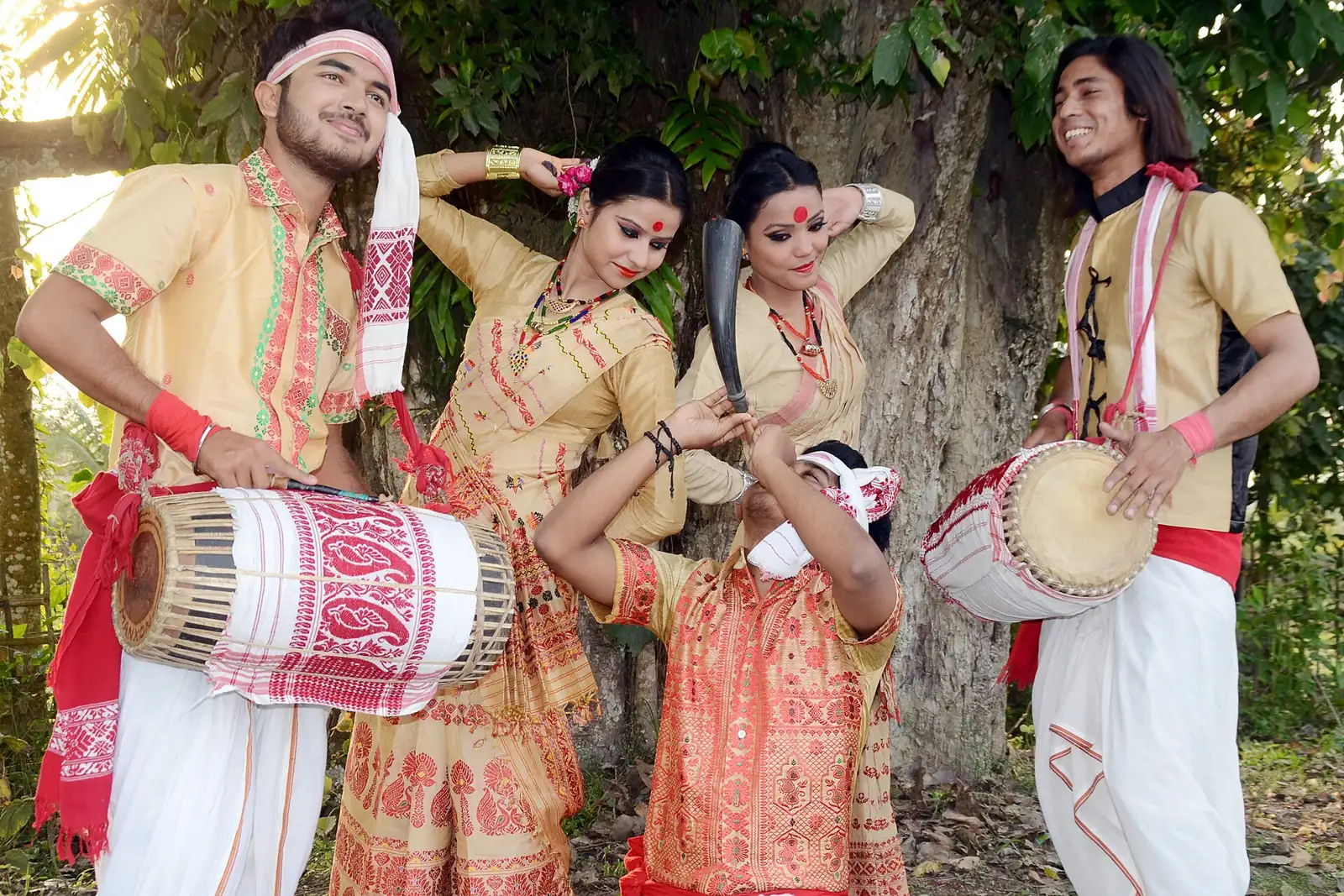
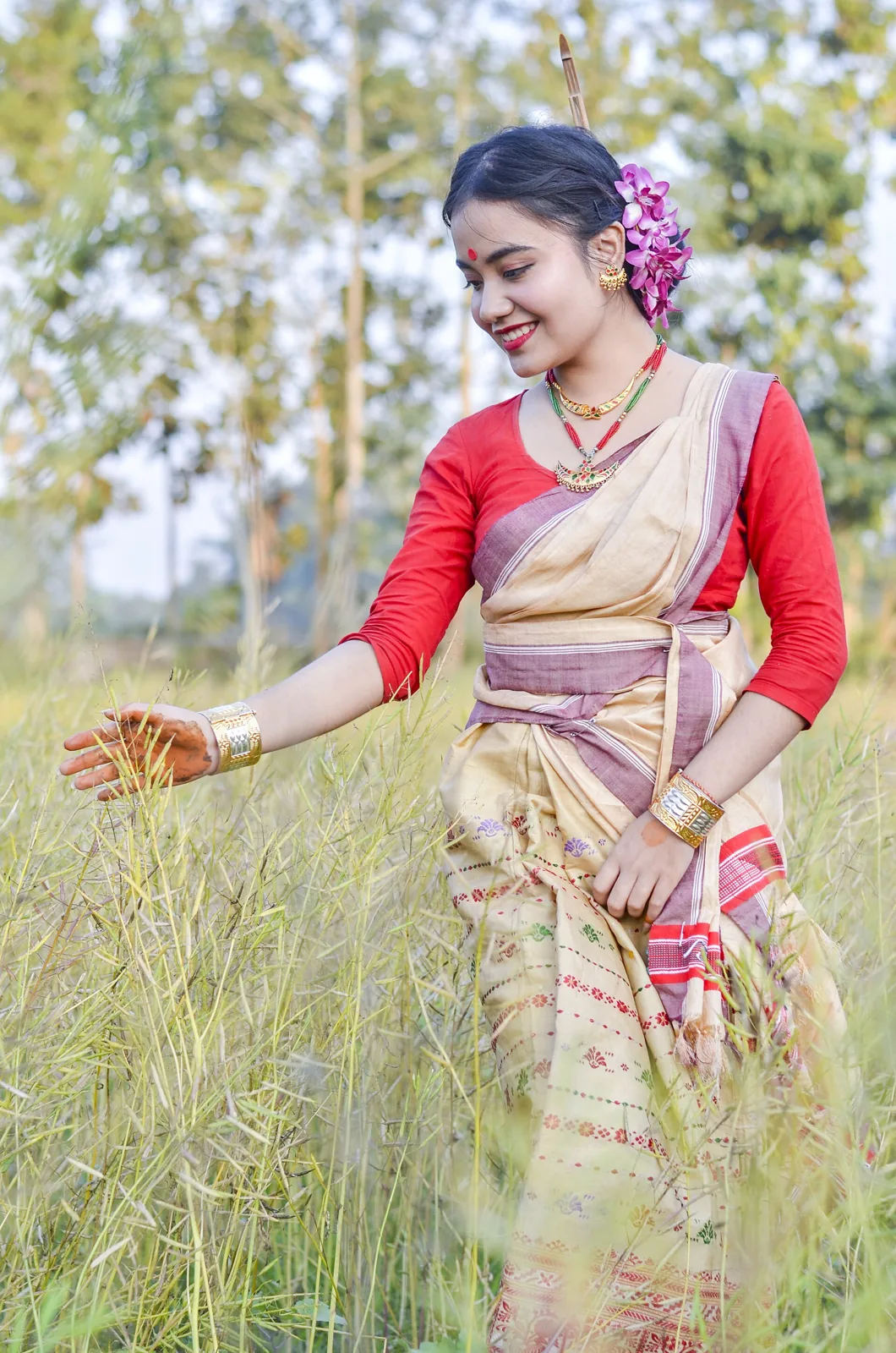
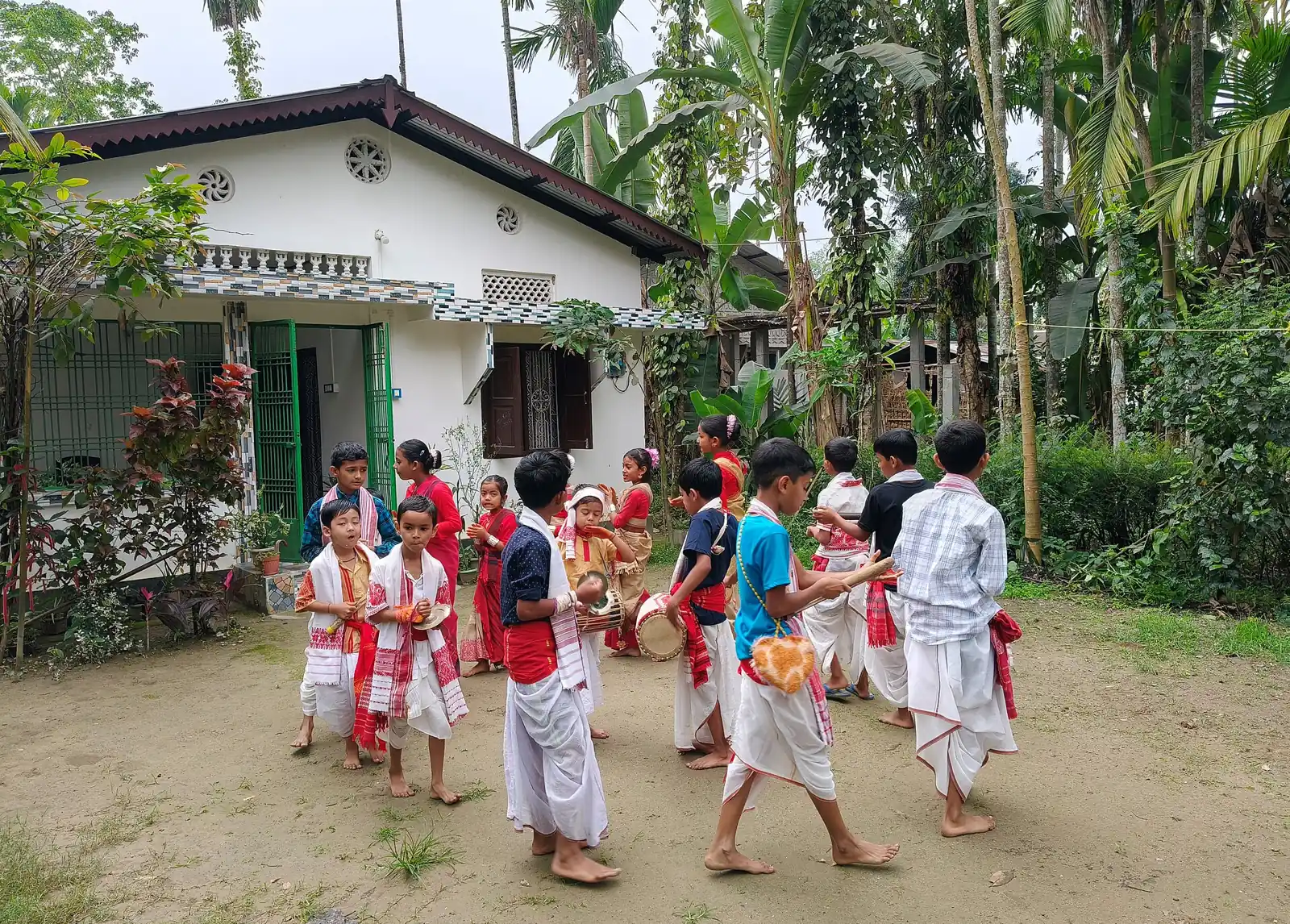
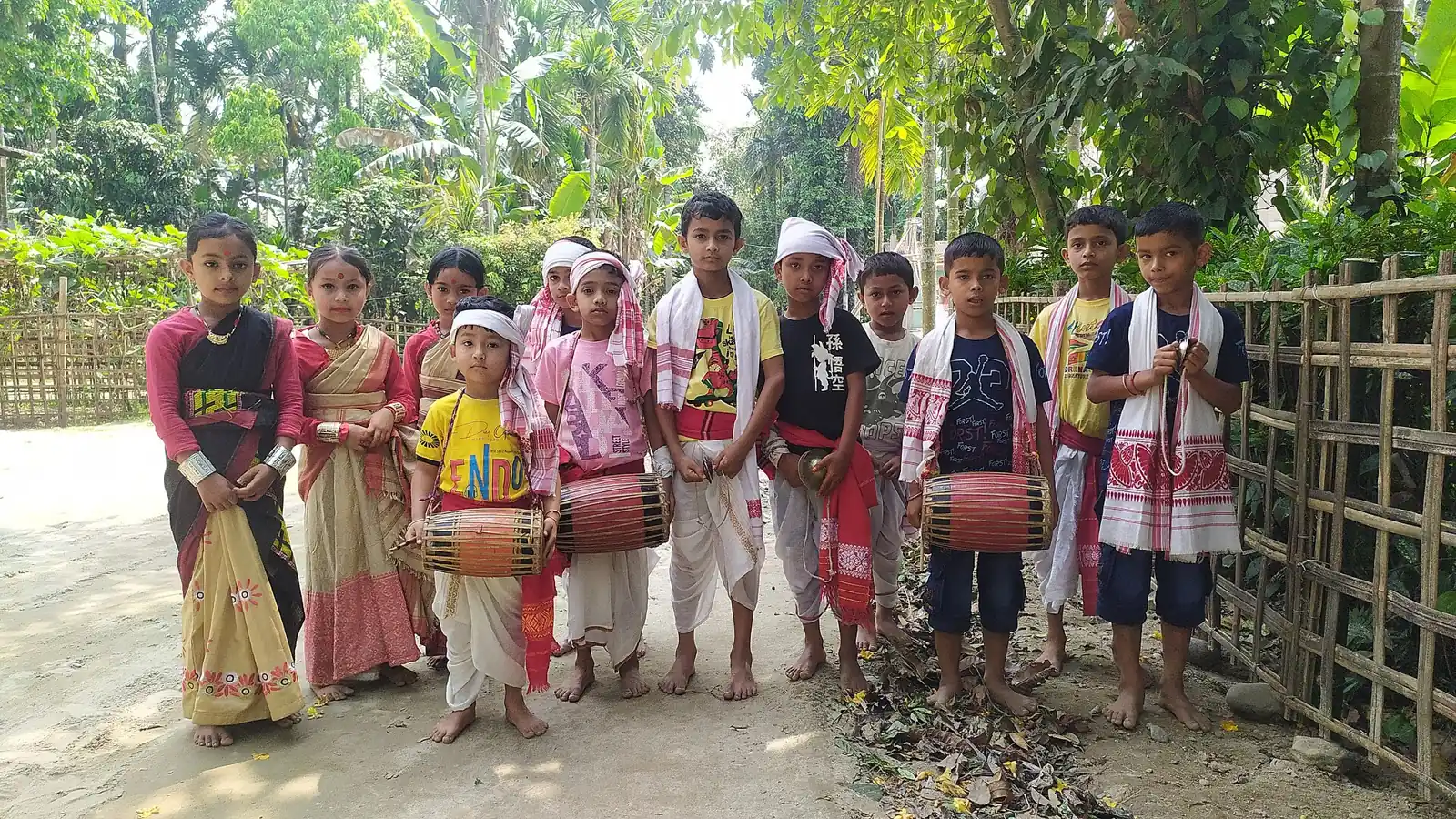
A young man might tie a gamusa, the white and red cotton scarf of Assam, around his head, and a girl might wear a mekhela chador of golden silk. A gamusa offered to a guest is a mark of respect, and if one is offered to you, accept it with both hands.
The Bihu dance
The Bihu dance is quick, bright and joyous. Dhol, pepa and taal carry the music, and the dancers move in lines and circles, hips and hands in rapid movement. The songs are about love, spring and the land.
Besides the stage shows, which are often held on temporary grounds called Bihutoli, small groups dance in the open on the road. The Ahom kings gave Bihu their patronage, and the stage tradition grew in towns like Guwahati, but the village is where the festival lives.
Kongali: the lamp in the field
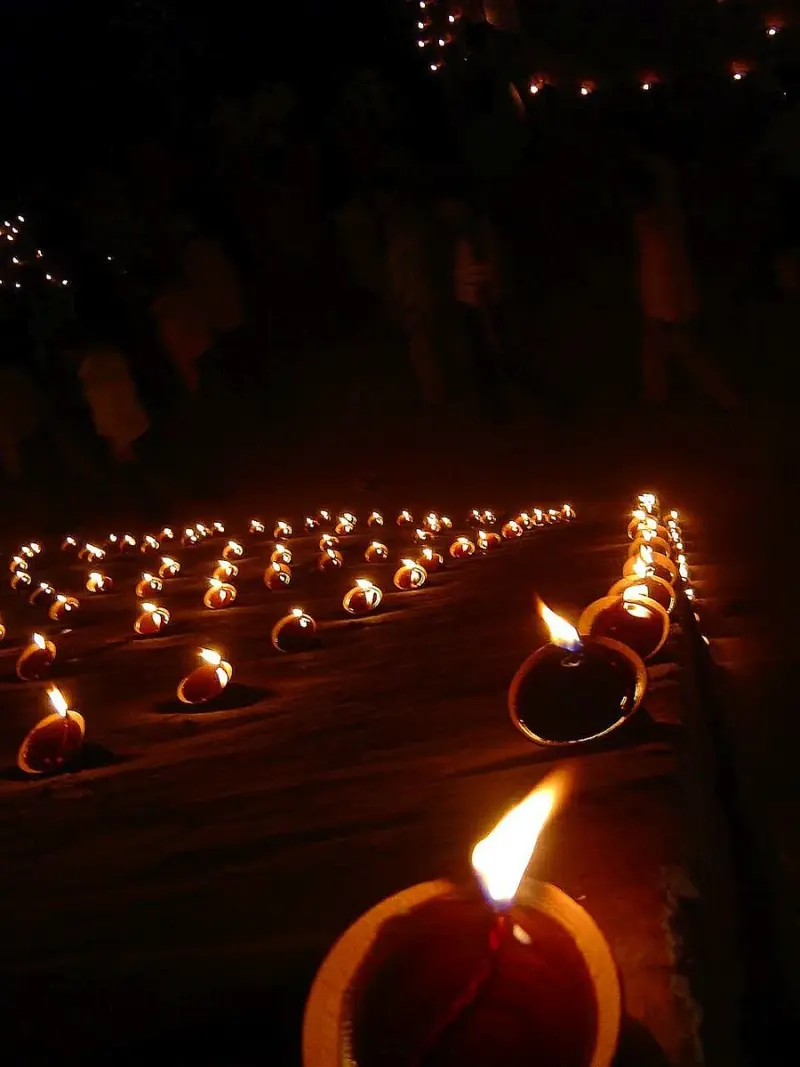
Kati Bihu in October is a very different mood. The paddy stands in the fields and is not yet ripe, and the lamps are for its protection. Families light them at home and carry them out to the rice.
There is no great dance, and no feast. It is for those who love the countryside after dark, and for the visitor who has the patience to stand by a field at nightfall.
Bhogali: feasts and fires
Magh Bihu is the harvest feast, and its name comes from bhog, which means food. Young men build a hut of straw and bamboo called a bhelaghar, and spend the night in it, feasting and keeping a bonfire, which is burned in the morning. Rice cakes, sweets and sesame laddus are eaten, and community games follow.
This is the Bihu of the table. Come with an appetite, and let someone show you how a pitha is made.

Where to see Bihu
Guwahati, the gateway to the state, has the biggest stage programmes. For the village feeling, go east to the towns of Upper Assam, where the rivers and tea estates give the festival a setting. Dibrugarh is a long rail run from Delhi and makes a good base.
If you plan a visit to Kaziranga or a tea estate in April, Bohag Bihu is a wonderful moment in the year. The grass is green and the dancers are in the fields.
Etiquette and clothing
Dress simply and modestly. Accept a gamusa with grace, and ask before photographing a dancer in close-up. If you are invited to a feast, the food is served on a banana leaf in many homes, and rice, fish and greens are all common.
A trip from Delhi
Assam is a long train ride or a flight from Delhi, and a Bihu trip works best with a plan. Laladham can pick you up in Delhi and run the whole trip: the flight to Guwahati or the train, a cab and a driver in Assam, a place to stay, evenings at a Bihu show or in a village, a day at Kaziranga, and the way back.
Tell us your dates and group size on the booking page, and ask for a quote.
Questions, answered
When is Bihu?
Rongali in mid April, Kongali in mid October and Bhogali in mid January. Spring, autumn and midwinter, with the exact days set yearly.
Which Bihu is the biggest?
Rongali, also called Bohag Bihu, the Assamese New Year, which stretches over about a week.
What instruments are used?
Drums, a horn and cymbals: dhol, pepa and taal.
What is a gamusa?
A cotton scarf with a woven border, given as an honour to guests in Assam.