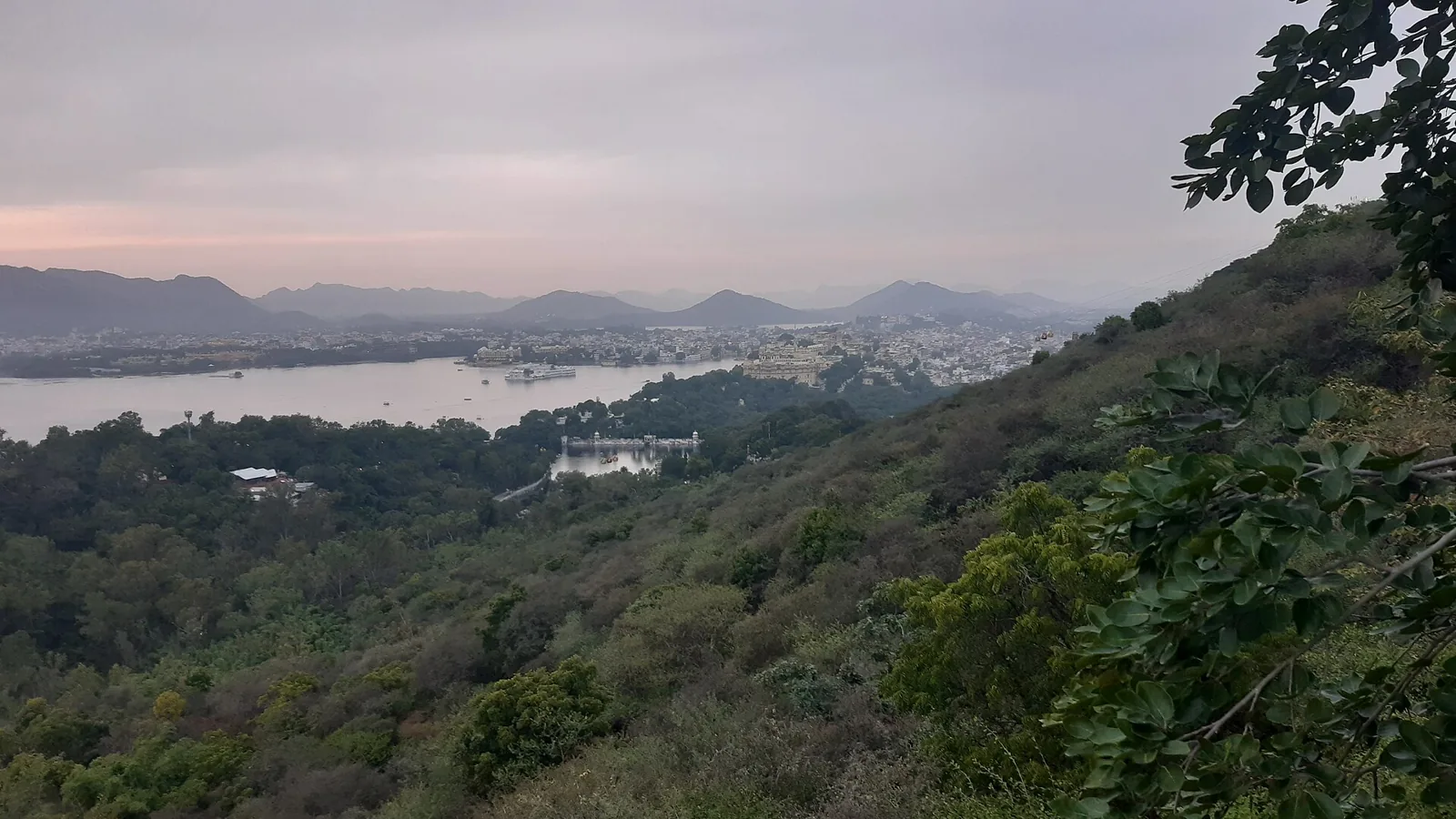
Most first trips to Rajasthan try to hold three cities in the head at once, and the cities do not agree with each other. Jaipur is busy, pink and a little hot-headed. Jodhpur is a single enormous fort with a town of blue lanes crawling around its feet. Udaipur is soft and watery, the place where people finally exhale. Eight days is the length that lets each one keep its own mood instead of blurring into a slideshow.
The shape here is a straight line south-west: two full days in Jaipur, a driving day to Jodhpur, a day for the fort and the lanes, then the long road to Udaipur with a stop at the Ranakpur marble temple, and two days beside the lakes. It is built from what people who have done exactly this route say afterwards. The repeated verdict in trip reports is that the drive days are fine, the rushed city days are the regret, and most people wish they had started their mornings earlier.
It suits couples, families with teenagers and parents who want the famous places without sleeping in a different bed every night. It does not suit anyone who wants to see six cities in a week; if that is you, the trip reports are blunt that you will spend the holiday on the road.
From your pickup
Same trip, four starting points. Road times are real driving times; a long drive becomes its own travel day so nobody arrives wrecked.
Day by day
Day 1 · night in Jaipur
Amer Fort before the crowds, then the old city
Begin at Amer, the old hill fort above Jaipur, and treat the clock seriously. People who visit say the crowd builds from about ten, and that by then the heat on the ramps and the queues at the gates have changed the whole experience. Be at the ticket counter early, hire a guide there, and allow two to three hours; four or five if you take photographs of every mirrored ceiling. The climb to the gate can be done by jeep on a narrow road, and several recent writers recommend jeeps over elephants for the animals' sake.
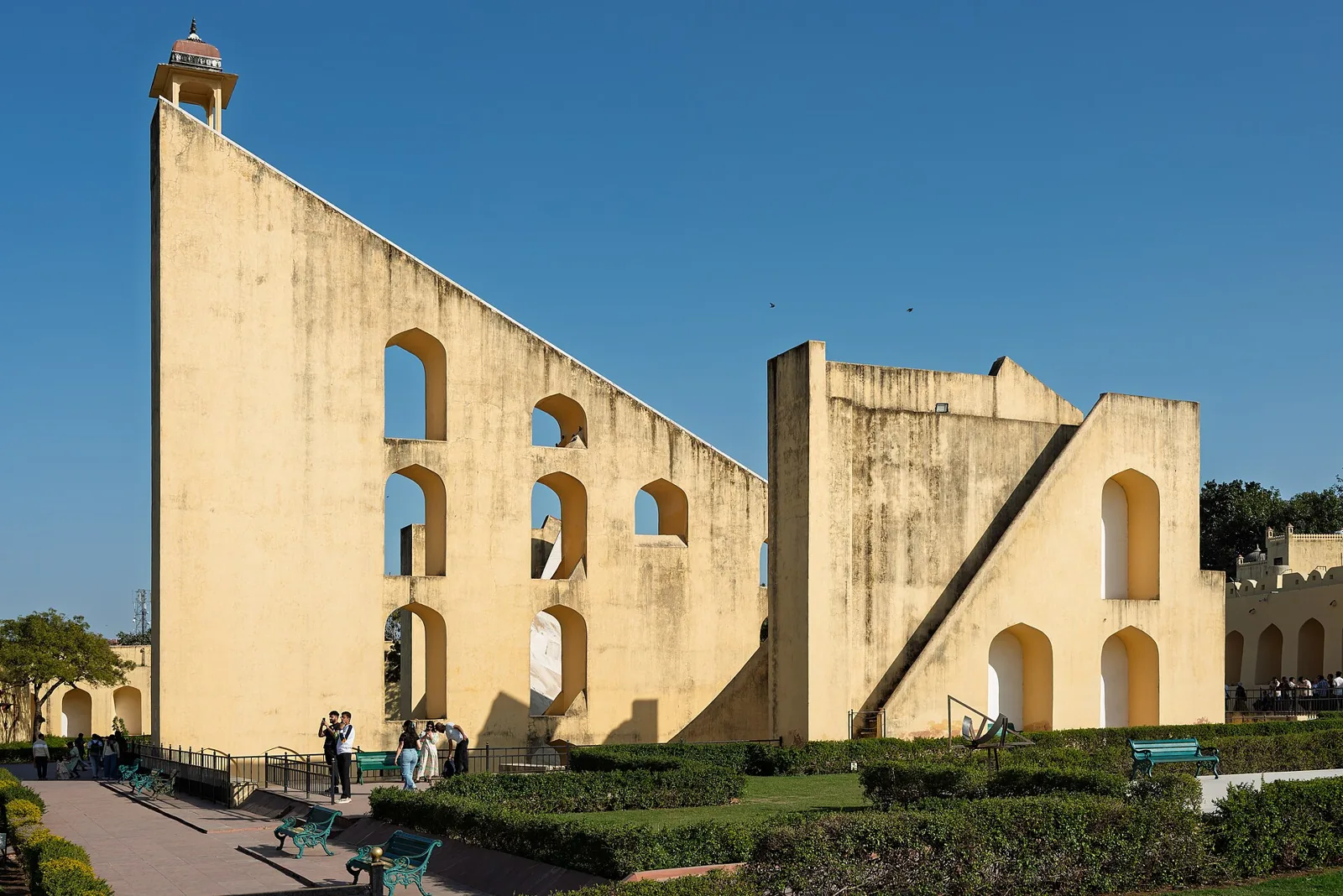
After lunch the car takes you down into the walled city. The City Palace courtyards come first, with the painted gates that appear on every postcard, then the Jantar Mantar observatory, home to a giant stone sundial. Late afternoon is the time to stand across the road from the Hawa Mahal and look at its honeycomb of windows while the sandstone turns the colour that gave the city its name. Dinner is at your stay.
- Amer Fort
- City Palace
- Jantar Mantar
- Hawa Mahal

Day 2 · night in Jaipur
Markets, a hilltop view and an evening with no plan
The second day is deliberately looser. Mornings in the bazaars around Johari and Bapu are for block-printed cotton, mojari shoes and jewellery; a local guide helps you tell a good workshop from a showroom that is paying someone to bring you. A long-standing regret among travellers is leaving all the shopping for the last afternoon and running out of time, so buy as you go.
Midday can be a museum or a textile workshop, depending on what you care about. Check the weekly closing day first: one family that wrote up a ten-day Rajasthan trip turned up at a hand-printing museum on a Monday and found it shut. For the golden hour the car goes up to the Nahargarh ridge, where the city spreads out below in a way the street level never shows. Come back down for an unhurried dinner, because tomorrow is a travelling day.
- Johari Bazaar
- Bapu Bazaar
- Nahargarh
- Jaipur textile workshop
Day 3 · night in Jodhpur
West to Jodhpur, with a stop if you want one
Jaipur to Jodhpur, a full day on the highway
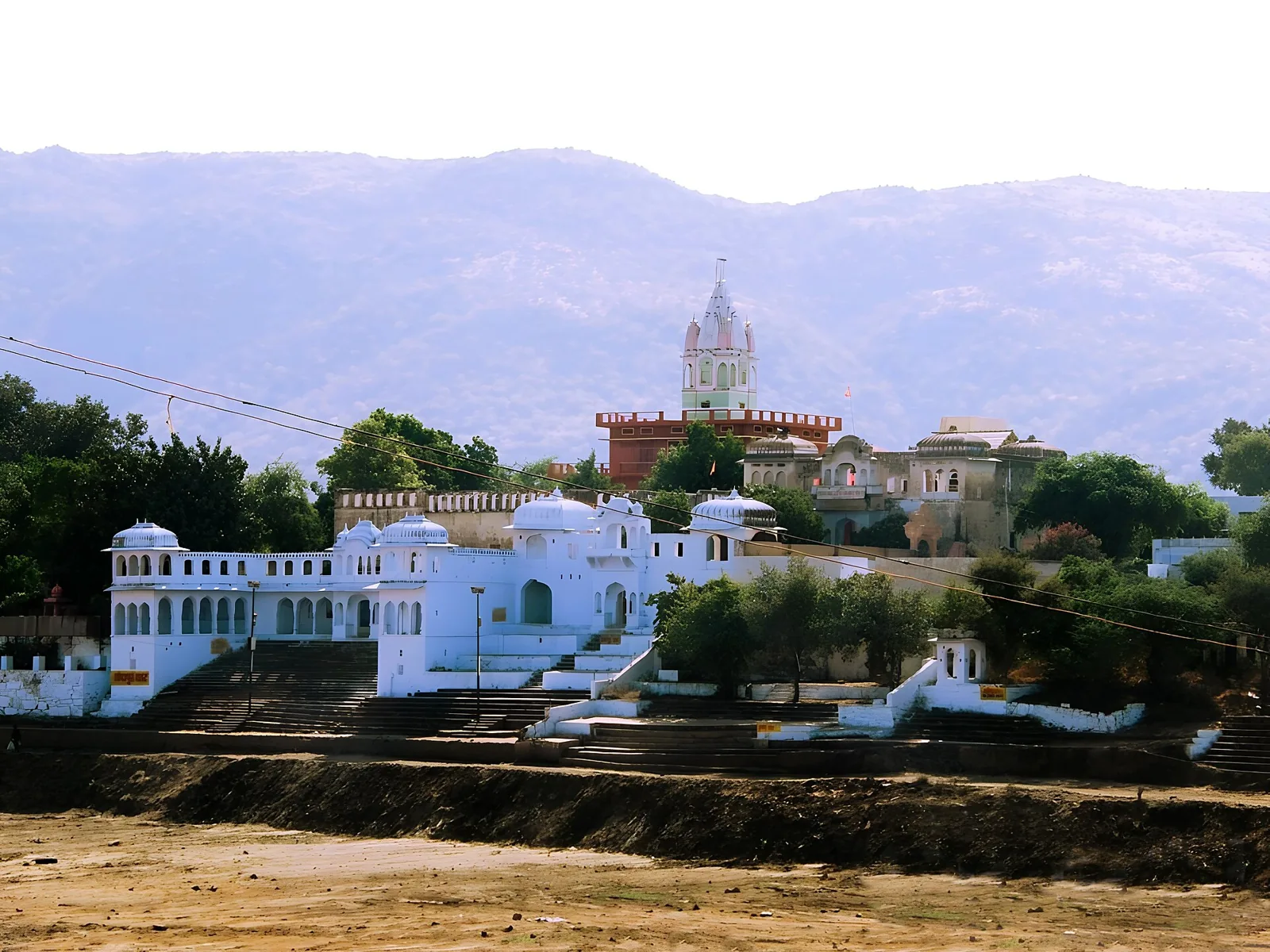
This is a driving day, and it can stay that way or turn into something more. Ajmer and Pushkar sit roughly halfway, and several writers like breaking the journey there: the holy lake at Pushkar is a gentler lunch stop than anything the highway offers. If your mind is on arriving early instead, skip the detour and keep going.
Reach Jodhpur in the later afternoon. Walk the stepwell, Toorji Ka Jhalra, built in 1740, which has been restored and has a small cafe beside it where the coffee is better than the food. Visitors who go in the evening say the blue lanes near the fort are nearly empty at that hour, while the Clock Tower area a few minutes away is a wall of scooters. Sleep early; the fort opens at nine and you will want to be one of its first visitors.
- Ajmer
- Pushkar
- Toorji Ka Jhalra
Day 4 · night in Jodhpur
Mehrangarh, the marble cenotaph and the blue lanes
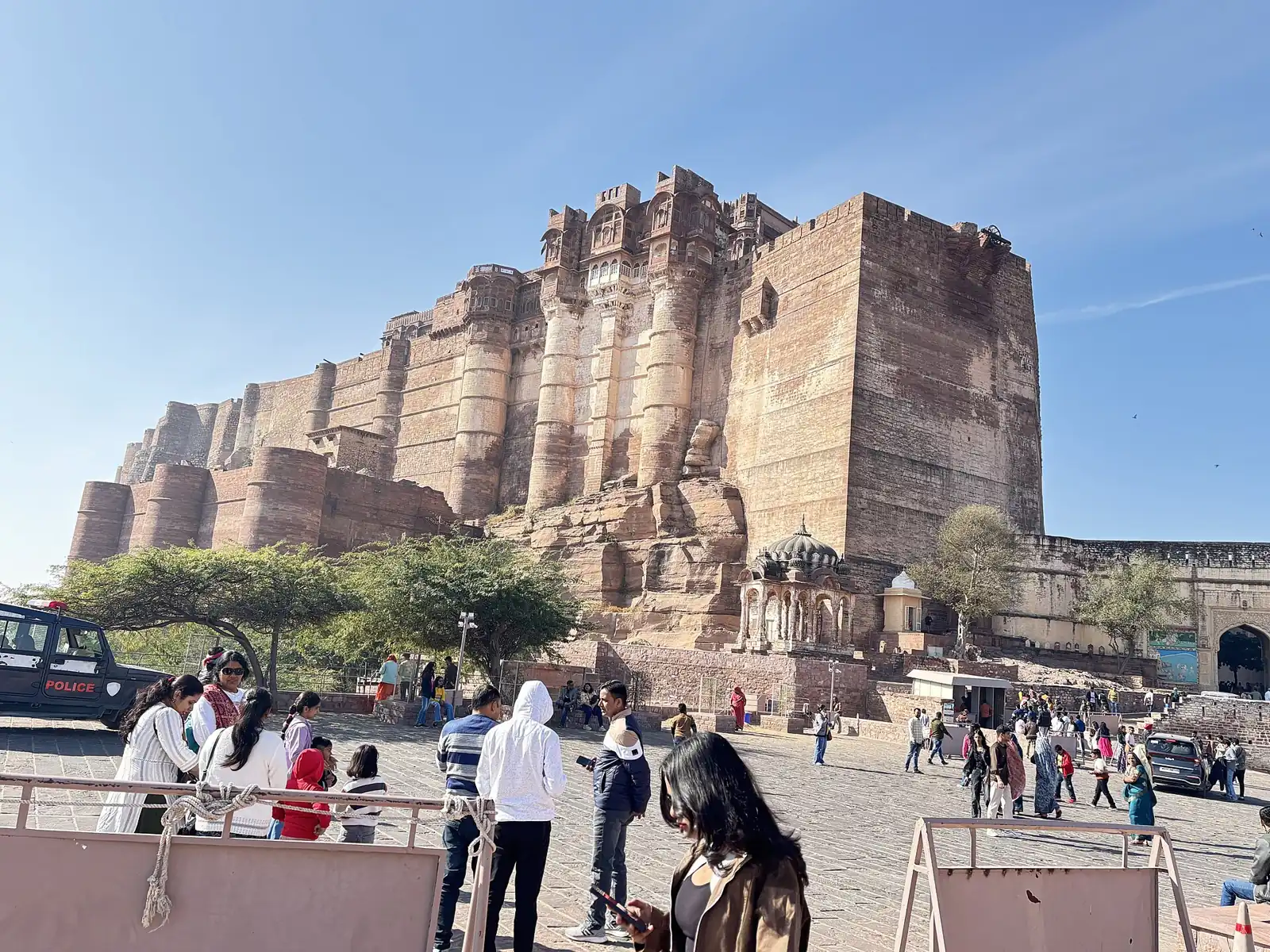
Mehrangarh is open every day from nine and ticket sales close at five. Go at opening. The walls climb about a hundred metres above the old city, the seven gates still carry cannonball scars, and inside, the Moti Mahal, Phool Mahal and Sheesh Mahal rooms are decorated with gold leaf and mirror. The guide from the ticket desk is paid per group and tells the stories behind each room. One solo traveller skipped the audio headset and felt the wall signs did the job; a local guide does it better still.
Ten minutes away on foot or by car is Jaswant Thada, a white marble memorial from the nineteenth century with lattice screens and a garden, and a good place to sit with a view of the fort's flank. In the afternoon the ground-level work begins. Ask your guide for the blue-painted lanes by the fort, not around the Clock Tower; travellers consistently report the first as calm and photogenic and the second as crowded. Autos here start at about double a fair price, so let the car and guide do the steering. Finish at Sardar Market for spices and mirchi vada, and have your dinner upstairs at a thali place if the group is hungry; one trip report singled out a vegetarian thali hall as the best of seven meals.
- Mehrangarh Fort
- Jaswant Thada
- Blue lanes
- Sardar Market
Day 5 · night in Udaipur
Over the Aravallis to Ranakpur, then Udaipur
Jodhpur to Ranakpur, 156 km, about three hours; Ranakpur to Udaipur, 93 km, about two and a half hours
Leave Jodhpur by about eight. The reason is the Ranakpur Jain temple, which is carved from pale marble and held up by 1,444 pillars, and which people can only enter as visitors in the middle of the day. Several accounts say early arrivals are turned back, and the usual window runs from about noon to five. A couple who drove down from Udaipur reached it just before the doors opened to visitors, and thought an hour inside was right.
Dress for it: adults need long trousers, and the entrance keeps loaners for those who forgot, although children can wear shorts. Inside, the carving is finer than the plain exterior suggests. Priests may offer to guide you and will expect a donation; an audio guide is also available. The two smaller temples on the same grounds are not worth the time after the main one, so eat lunch at a simple canteen and keep going. The road into Udaipur crosses the hills and the first sight of the water at dusk is an excellent way to end a long day.
- Ranakpur Jain Temple
- Aravalli road

Day 6 · night in Udaipur
City Palace, Jagdish Temple and a boat at sunset
The City Palace, begun in 1553 and extended by successive rulers, rewards a full morning. Travellers say it takes several hours, and that the Crystal Gallery and the balconies facing the lake are the parts to slow down for. Walk from there to Jagdish Temple; the steps are steep, three storeys of carving rise above them, and from the top you see the market streets and the palace wall together.
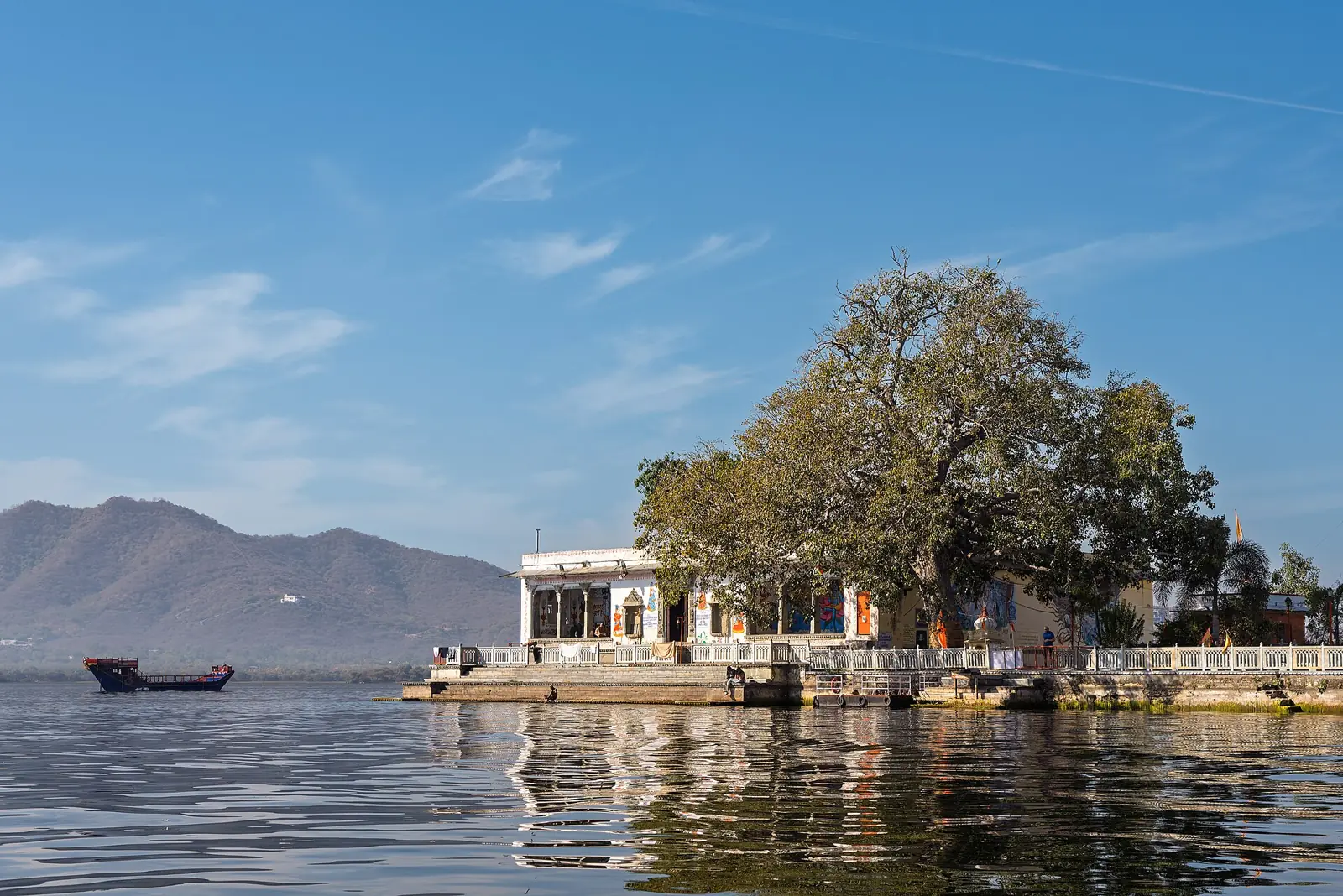
Boat rides on Lake Pichola are the thing people most often skip and then regret. In one ten-day trip report the Pichola cruise was dropped because day trips ate the city time, and the writers named it as their main miss. Book it for late afternoon so the light is on the palaces. For dinner, walkers along the ghats mention lakeside places where the view matters more than the menu; one family singled out an affordable lakeside restaurant that was good for a quiet last meal.
- City Palace
- Jagdish Temple
- Lake Pichola
- Lal Ghat
Day 7 · night in Udaipur
Kumbhalgarh and its wall, or a slow day in the lanes
Udaipur to Kumbhalgarh, about 85 km
For a day away from the lakes, drive north to Kumbhalgarh, a fifteenth-century fort built by Maharana Kumbha with a wall about 36 kilometres long that is often described as the second longest in the world. Plan for most of the day and bring sturdy shoes; the walls are walked, not just photographed. Eklingji temple and the Haldighati battlefield sit closer to the city and can be linked on the way back if you leave early.
If you would prefer a gentler day, stay in town and spend it in the old lanes, the Bagore Ki Haveli museum with its hundred-plus rooms, and the garden of Saheliyon Ki Bari. The haveli puts on a Rajasthani dance show in the evening with Ghoomar and Kathak. Either choice works; the only mistake is trying to do both and eating nothing but biscuits in the car.
- Kumbhalgarh
- Eklingji
- Haldighati
- Bagore Ki Haveli
Day 8 · night in Udaipur
Monsoon Palace, a last walk and the end of the road
The Monsoon Palace on its hilltop is the view people remember. A family that wrote about it called it their favourite part of Udaipur, though they also said the palace itself is less impressive than the City Palace, and that the road up has to be driven by the official drivers and feels precarious in places. Go for the panorama, not for the rooms, and aim for late afternoon, which matches the soft light that suits this city best.
Before that, the morning is yours for the leftovers: Fateh Sagar lake, Saheliyon Ki Bari if you skipped it, a last shopping lane for miniature paintings and puppets, or just a long breakfast by the water. Udaipur airport is about forty to fifty minutes from town and has few facilities, so check flight times when planning your last hours, and leave a margin for traffic.
- Monsoon Palace
- Fateh Sagar
- Saheliyon Ki Bari
When to go, and when the heat decides for you
Jodhpur's own tourism page lists January lows of about 5 degrees and highs near 30, while April hits 43 and May touches 45. Winter mornings are properly cold in the fort, so carry a layer from November to January. One writer who visited Amer in a 42 degree May said she would not do it again, and the official Udaipur page names September to March as the best period. One Jodhpur writer notes that December and January are the peak weeks for palace-hotel pricing.

What people say they got wrong
The pattern across these write-ups is consistent: too little time, an unchecked closing day, the boat ride skipped and the sweets bought on the final afternoon. The fix for each is boring and works. Start sights at opening time, ask about weekly closures before fixing the order of days, book the lake cruise on your first evening in Udaipur and not on the last, and buy namkeen and sweets in the city where you spot them.
One more lesson is geographic: the long drive between the western cities and Udaipur is easy by car but hard by plane. A family that tried flying between Jaisalmer and Udaipur reported delays of more than a day and strong advice to keep to the road.
For older parents
Mehrangarh has a lift, Amer is reached by jeep, and Jagdish Temple has steep steps that some will skip. The days with the longest drives are three and five; both have natural pauses, and the Ranakpur noon window makes the stop a welcome rest. Ask for ground-floor rooms and keep the afternoon of day two free.
What the price covers
- One car and driver from your pickup to the final drop
- 9 nights in hand-picked stays
- Breakfast and dinner every day
- Local guide at the main sights
- Tolls, parking and fuel
- Lunches
- Monument tickets, permits and activity fees
- Personal shopping
Questions people ask
Is eight days enough for Jaipur, Jodhpur and Udaipur?
It is enough for a relaxed pass through all three, with Jaipur getting a day and a half, Jodhpur one, and Udaipur three. Travellers who tried to add Jaisalmer or Pushkar at the same pace report feeling hurried, so the plan leaves them as optional stops.
Can the trip start from Delhi airport, Agra or Mathura instead of Jaipur?
Yes. The car meets you at any of those four pickup points and the longer drives from Delhi, Agra or Mathura to Jaipur become their own travel day, so day one still starts fresh in Jaipur.
Why does Ranakpur take so much planning?
Because visitors who are not worshippers are let in around noon, not early morning. Several travellers arrived at opening time and had to wait, so the drive from Jodhpur is timed to reach it at midday.
Is the Monsoon Palace worth it?
For the view, yes. Travellers who have been describe the panorama as the whole point. Inside, the rooms are modest by comparison with the big palace in town, and the access road is narrow, so late afternoon works best.
What should I wear?
Layers in winter, because mornings at the forts are cold and afternoons are warm. Long trousers for the Ranakpur temple, comfortable shoes with grip for the fort ramps, and a scarf or hat for the sun.
Does Laladham include a guide?
Yes, a local guide is part of the trip at the main sights. They are most useful at Amer, Mehrangarh and the City Palace, where a good one saves hours and keeps you away from shops that pay commission.
- Mehrangarh opening hours, ticket cut-off and guide rates: confirm on the museum site before travel (page read 15 Nov 2026 said 9 am to 5 pm daily).
- Ranakpur temple visitor hours for non-worshippers: blogs report about noon to 5 pm and sources disagree, so confirm the day before.
- Amer elephant and jeep arrangements and the evening light show timing change by season.
- Weekly closing days of museums and the Monsoon Palace road arrangements.
 3 days
 5 days
 5 days