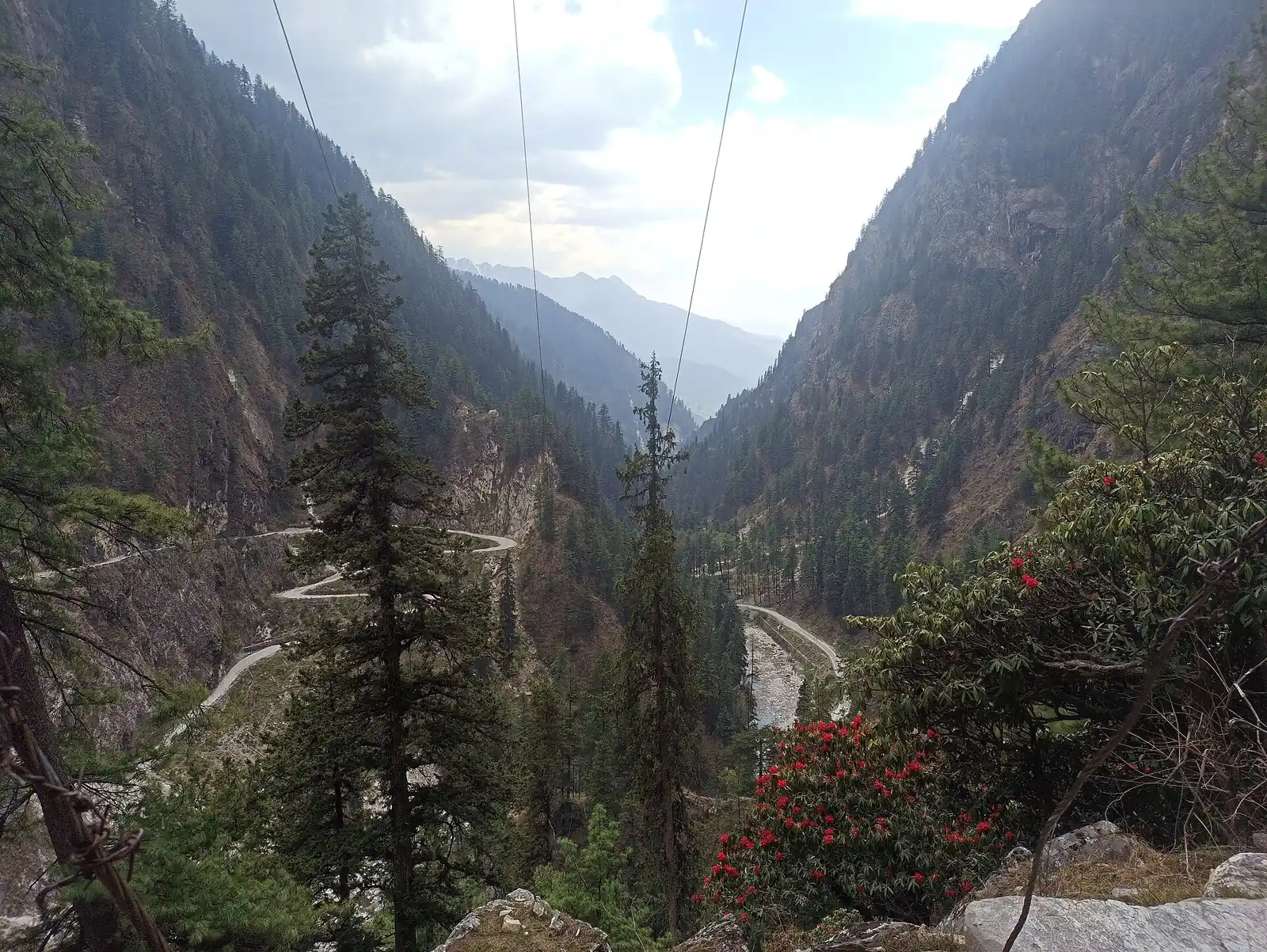
People who write about the Parvati Valley tend to split into two camps. One group says Kasol is the loud, crowded part and the real valley starts a few kilometres up the road. The other group came for the cafes and the river and left happy. Both are right, and the way to enjoy the place is to use Kasol as a base and spend the days in the quieter corners around it. That is how this plan is built.
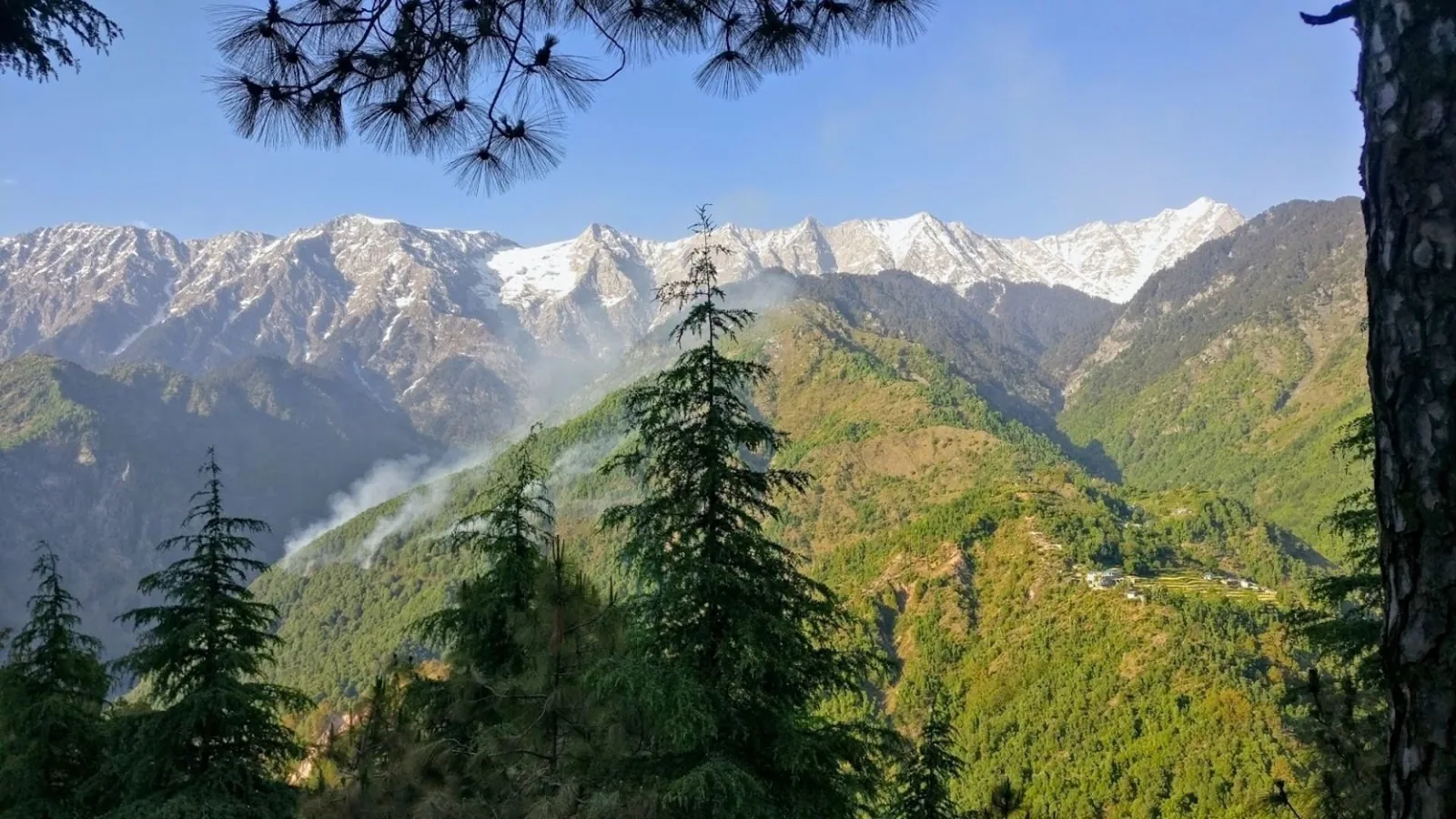
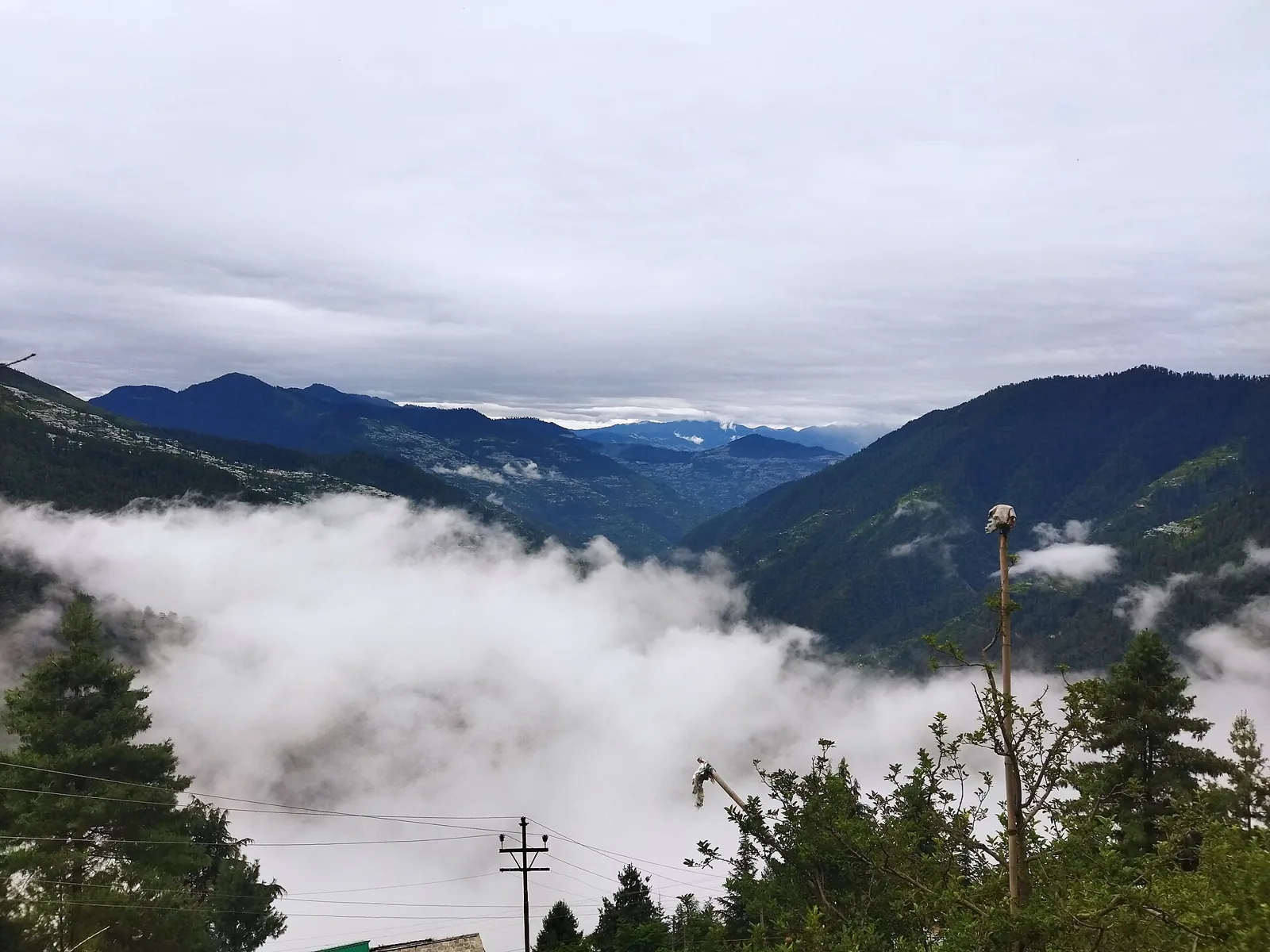
The valley is a narrow gorge cut by the Parvati river, with pine slopes, apple orchards and villages perched on spurs. From Bhuntar the road follows the river upstream. One press guide puts Kasol at about 1,640 metres and Bhuntar's airport about thirty kilometres behind you. One writer who knows the valley well says the road from the Bhuntar diversion is narrow but tarred, and that monsoon landslides can shut it for a good while, which is the main practical hazard of the whole trip.
It suits couples, friends in their twenties and thirties, and families who like river walks and slow mornings. It is not a good choice in the peak of the rains, or for anyone who needs the road to be reliable. Parents who dislike narrow hill roads should read the notes on older travellers below before booking.
From your pickup
Same trip, four starting points. Road times are real driving times; a long drive becomes its own travel day so nobody arrives wrecked.
Day by day
Day 1 · night in Kasol
Up the river road to Kasol
Bhuntar to Kasol, about 30 km, roughly an hour on a narrow road
Your car turns off the main Kullu road at the Bhuntar diversion and follows the Parvati upstream. Expect a narrow, winding lane with a handful of bad patches rather than anything frightening. Villages and orchards come and go, and the valley closes in the higher you climb. Sit on the river side if you can.
Check in and walk to the market. One writer who has visited several times in winter calls the cafes good but a little expensive and says to try a different one at every meal. Another described the bakeries as amazing after a bus ride from Delhi. Keep it unhurried tonight: the point of a first evening here is to hear the river and watch the light leave the slopes.
Carry enough cash to last the days here. Writers who know the valley say there is only one cash machine in Kasol, it is usually working but not always, and the next one is some way down the road at Jari. Nobody wants to spend a hill evening hunting for notes.
- Bhuntar road
- Kasol market
- Parvati riverside
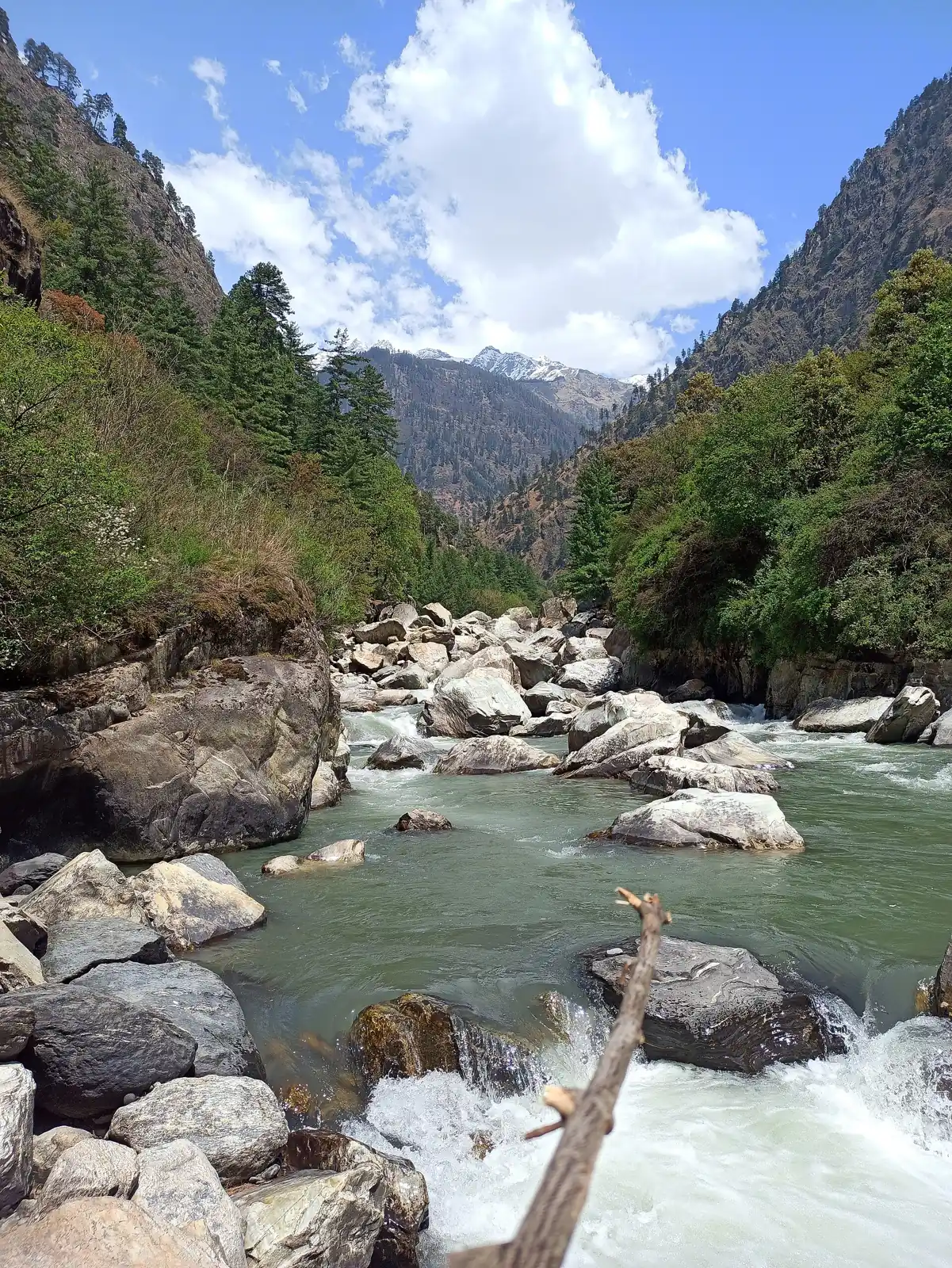
The Parvati river Day 2 · night in Kasol
Manikaran: the spring, the langar and the bridge back
Kasol to Manikaran, about 4 to 5 km, short ride
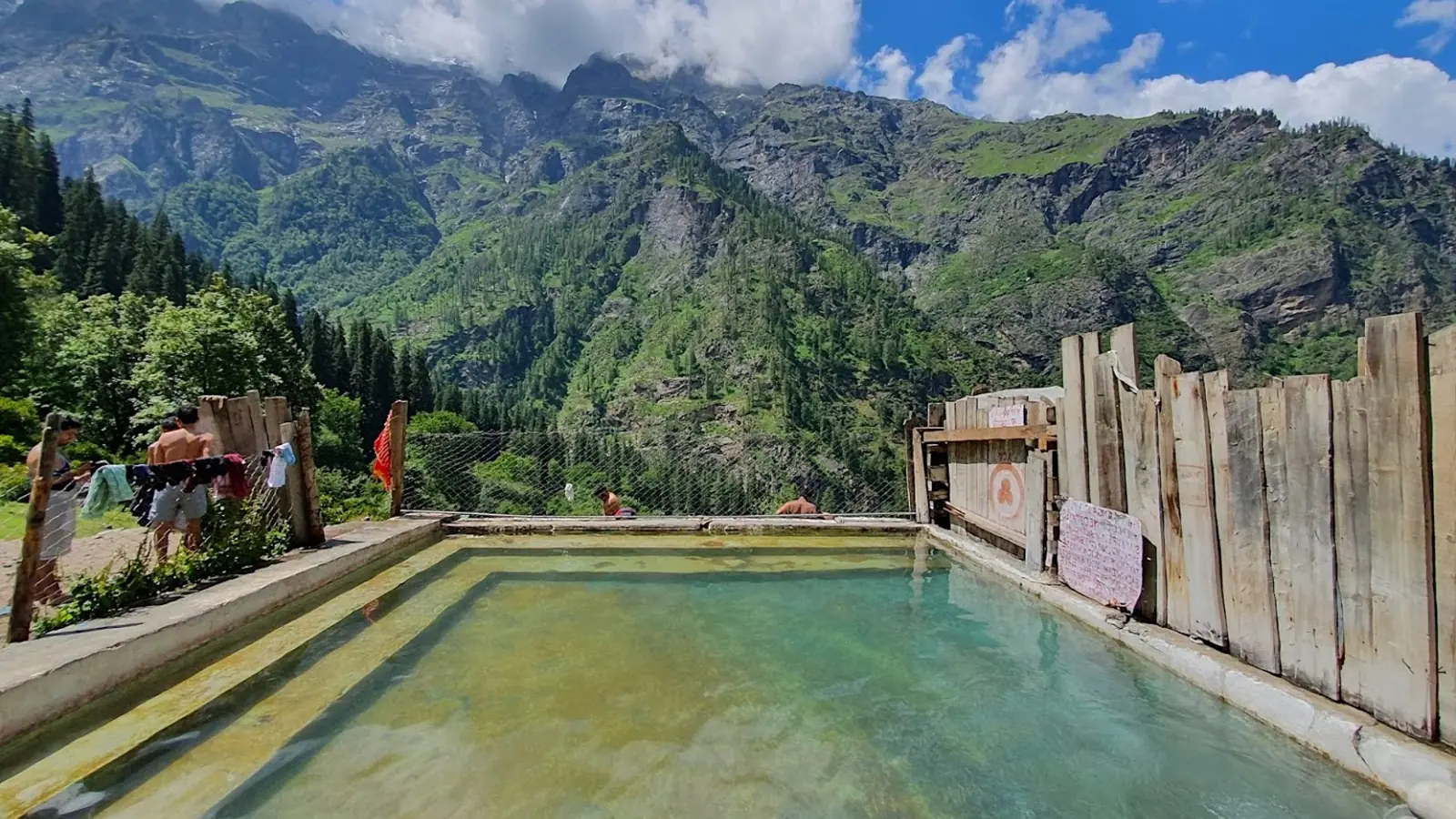
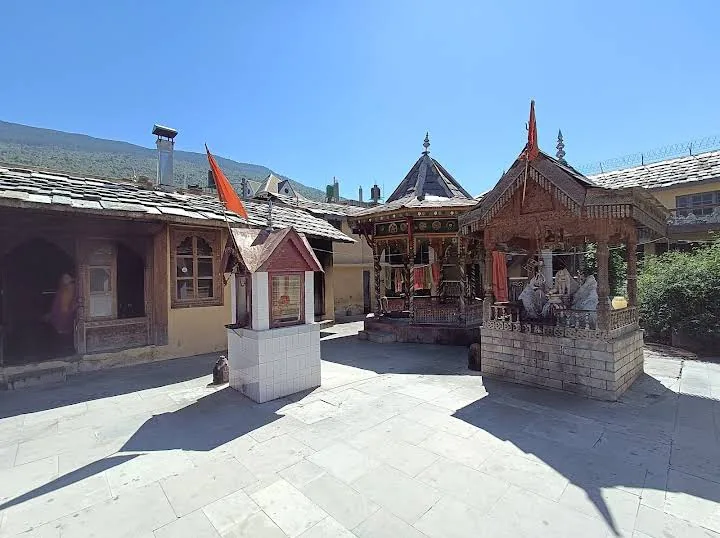
Go in the morning, before the lanes fill. Manikaran is a holy town for Hindus and Sikhs, and a place where the ground steams. The official pages describe the hot spring inside the gurudwara as auspicious, with water hot enough to cook rice, and there are Hindu shrines to Krishna, Rama and Vishnu in the lanes around it. A group of friends who went in June described eating the langar, cooked in the spring water, and then bathing in the hot pool, a combination they listed as the highlight of their first day.
Carry a scarf, since head coverings are the norm at a gurudwara, and ask at the entrance about the rules. There is a bathing area, and one valley guide says the town is worth a visit whatever your faith. A woman who joined a group trip in the cold said about an hour was enough to see the sadhus, temples and springs, though anyone who wants the langar and a soak will need longer.
Return to Kasol for the afternoon. This is the time for the river: sit on the rocks, soak your feet, and resist the urge to wade in. A local guide warns that the Parvati's current is far stronger than it looks. In the evening, eat at a different place from last night.
- Manikaran Sahib gurudwara
- Hot springs
- Kasol riverbank
Day 3 · night in Kasol
A full day up at Tosh
Kasol to Barshaini, then a steep road or walk up to Tosh; Tosh is about 20 km from Kasol
Start early. The road beyond Manikaran toward Barshaini is the stretch that landslides close first, and one guide cites a closure as recently as late February. Ask your driver and your host the evening before. If it is open, you drive on to Barshaini, and from there Tosh is a rough road or a roughly three kilometre uphill walk.
Tosh is a village of apple farms and pine forest, and on a clear day there are snow peaks above it. The Outlook Traveller guide mentions a temple to Jamdagni Rishi, and describes the place as quiet and known for apples. The village is quiet enough for a long lunch. Not everyone finds that peace: one account called the cafe scene at Tosh the most chaotic part of a group trip.
Leave in good time for the way back. Buses at the upper end of the valley thin out in the evening, which is the argument for having your own car. Reach Kasol by evening, and decide whether you want the optional dip into Chalal tomorrow.
- Barshaini
- Tosh village
- Jamdagni Rishi temple
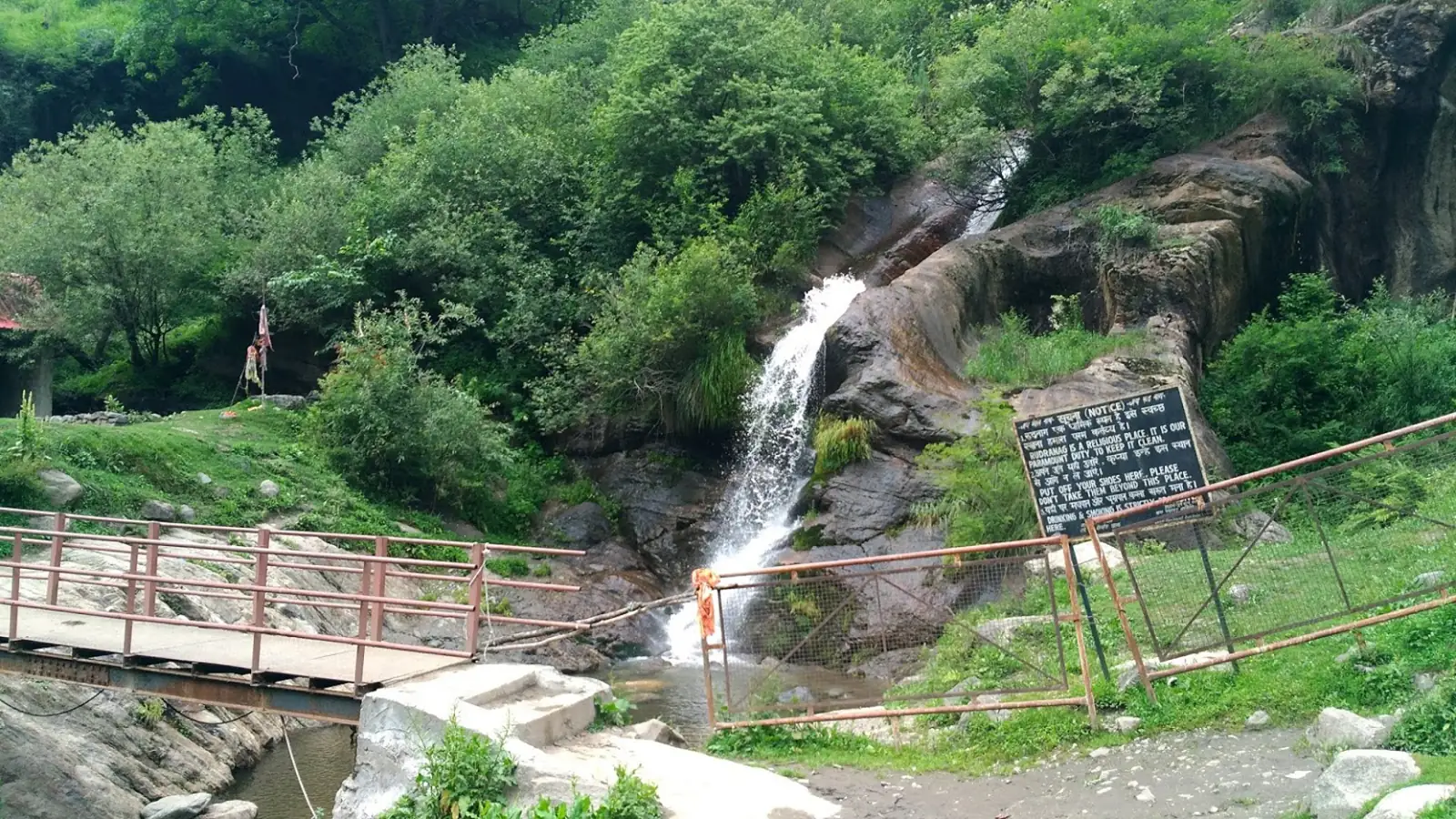
Rudranag waterfall on the Kheerganga trail Day 4 · night in Kasol
Chalal on foot, then leave without hurrying
Chalal is a short walk from the Kasol market, across the river on a footbridge and through a forest with no vehicles. One guide puts it at a quarter of an hour, another at twenty five minutes. It is calmer than Kasol and has riverbank campsites. A visitor on a group trip called the bridge a bit shaky and then sat by the rocks near the water, which is what most people do. A natural hot spring is reported near the bridge, so ask locally about access.
If you are still keen on the Kheerganga trek, the four days cannot hold it comfortably. The trail starts at Barshaini and one writer gives it twelve to fourteen kilometres each way, with four to five hours uphill. A guide says camping was banned in 2024 and that trekkers had to be down by early afternoon, but the author could not confirm the current rule. Treat it as a separate trip and check the rules on the spot.
Pack and take a last walk along the river, then begin the drive out. The car takes you back down the same valley road to Bhuntar, a drive to start before the afternoon traffic. Should a flight from Bhuntar be waiting, leave a long margin, because the road is narrow and landslides can hold up traffic.
- Chalal
- Chalal bridge
- Parvati riverside
When to go, and when the valley is loud
The tourism magazine's guide recommends the end of April to the end of October. Valley writers refine that: May and June weekends are the busiest and loudest, prices rise, and Kasol is packed. October and November are one writer's favourite, with fewer people, clear skies and cooler air, though some cafes close for the season. December to February brings snow, a bitter cold at night and limited food in upper villages. One woman reported about minus five on arrival in a cold season.
July to September is the greenest time but also the riskiest for road closures. If you have a fixed return date, avoid the middle of the monsoon.
What people get wrong
The first mistake is trying to see too much. A group of six friends planned Waichin, Malana, Tosh and Kheerganga in five days and ended up skipping Kheerganga altogether, which they named as their one regret. The second is wearing sandals on trails: the same group said trekking shoes were a must, even for moderate walks.
The third is treating Malana like any other village. Guides warn against touching people or the temple walls and against entering houses uninvited, and the group who went spent little time there because of those rules. It is not part of this plan.
The last is leaving plastic behind. One writer asks visitors to avoid bottled water and keep music low in the forest.
For parents and anyone who dislikes narrow roads
The drive from Bhuntar is slow but not steep in the way that high passes are. The real discomfort is the number of short bends and the chance of a delay at a slide. Manikaran and the river walks are easy. Tosh and Chalal both involve some uphill walking or an uneven path, and you can swap them for a quiet afternoon at the stay.
What the price covers
- One car and driver from your pickup to the final drop
- 5 nights in hand-picked stays
- Breakfast and dinner every day
- Local guide at the main sights
- Tolls, parking and fuel
- Lunches
- Monument tickets, permits and activity fees
- Personal shopping
Questions people ask
Is Kasol worth it if I do not drink or party?
Many people say yes, as long as you use it as a base. One guide calls Kasol commercial and suggests spending days in surrounding villages. The river, the walks to Chalal and the hot springs at Manikaran do not depend on any nightlife.
How far is Manikaran from Kasol?
Between about three and a half and five kilometres depending on the source, a short ride by car or bus. Give it a whole morning.
Can you camp at Kheerganga now?
A valley guide reported a ban on camping there and said the status could not be confirmed. Ask at the check post, and treat the trek as a day with an early start outside these four days.
Do I need a permit for Kasol?
One guide says most villages in the valley do not need a permit, but the Pin Parvati trek does. Rules change, so ask your driver or the local forest office before you set out on anything longer than a day walk.
Can we start from Jaipur or Agra?
Yes. Any of the four works. A Laladham driver collects you at whichever of Delhi airport, Agra, Mathura or Jaipur suits you and stays with you throughout. The long haul north is booked as a travel day apart from these four, and writers put Delhi alone at around ten to twelve hours.
What are the risks on the road?
Landslides, mostly. In the monsoon they can block the Bhuntar to Manikaran road and the one toward Barshaini for anything from hours to days. Check conditions in the morning and keep a spare day if you must reach a flight.
- Road status on Bhuntar to Manikaran and beyond to Barshaini, especially the Ghatigad stretch, after any rain or snow.
- Whether camping is allowed at Kheerganga and the check post rules on arrival and exit times.
- Permit requirements for any trek beyond a day walk (Pin Parvati needs a forest office permit).
- Bus and cab availability to Barshaini, and last return times.
- Cash machine availability in Kasol.
 4 days
 9 days
 5 days