Hanuman · देव पूजा
हनुमान पूजा (मंगलवार और शनिवार)
Hanuman Puja on Tuesday and Saturday
Hanuman puja on Tuesday or Saturday: red clothes, a lamp, sindoor mixed with oil, Hanuman Chalisa, boondi laddu, aarti and a simple day of restraint.
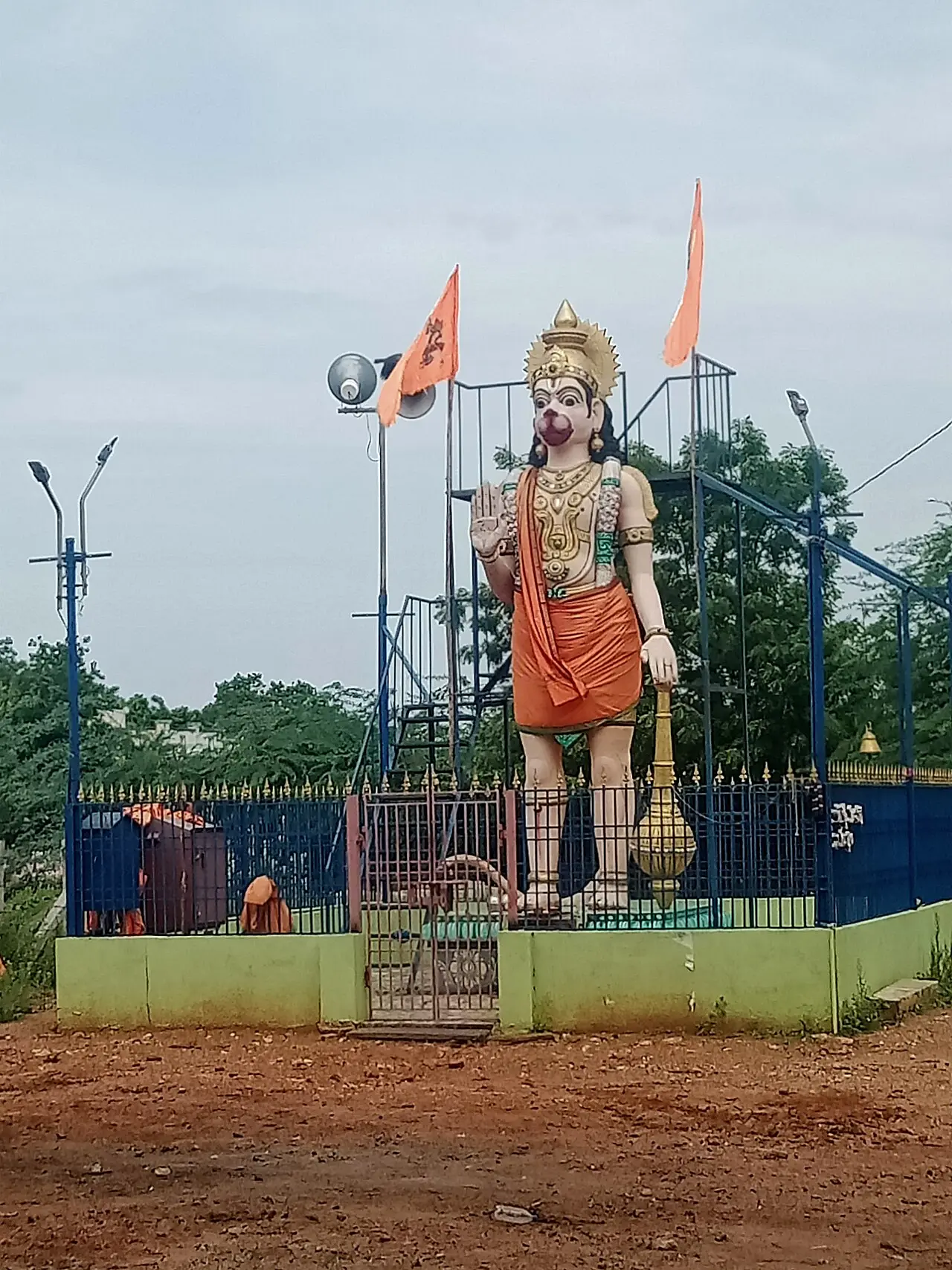
Every Tuesday and Saturday. One guide gives Brahma Muhurat, near midday, or the evening after sunset for people who work. Another says after sunrise or after sunset. A Tuesday vrat may be kept for a number of weeks by sankalp. Hanuman Jayanti is the big day, but the weekly puja follows the same steps.
Any devotee, man or woman. Guides say women may keep the vrat as well, and that no source consulted bars them from offering sindoor; some traditions ask women not to join the main rite during menstruation, so follow your family custom.
About 45 minutes for the puja, longer with the Chalisa repeated
सामग्री Samagri checklist
Puja thali
Offerings
तैयारी Before you begin
- Bathe early and wear clean red or orange clothes.
- Clean the puja corner and place the Hanuman image facing south, as one guide says, on a red cloth.
- Light a lamp with ghee or oil. Sources differ, with sesame oil called Hanuman's favourite and mustard oil second, and jasmine oil also used for the sindoor.
- Keep the day simple: fast fully, or take only fruit and milk until sunset, if your health allows.
- Avoid salt, onion and garlic on a vrat day, as the guide suggests.
पूजा विधि Step by step
आचमन Achaman, sipping water to purify
about 2 minutes
Sit on your asan facing east or north with a small cup (a copper or steel panchpatra if you have one) of clean water and a spoon. Pour a little water into your right palm and sip it three times, each time with one name of Vishnu, without a sound of slurping. Then wash the right palm, touch your lips, and touch water to the eyes, nose, ears and heart with the fingers, as your family does. Take only a small sip each time, not a mouthful. Do it before sankalp, and again whenever you leave the seat and return.
ॐ केशवाय नमः। ॐ नारायणाय नमः। ॐ माधवाय नमः।
Om Keshavaya namah. Om Narayanaya namah. Om Madhavaya namah.
Meaning: Salutations to Keshava, Narayana and Madhava, three names of Vishnu, one for each sip. Many Vedic households say 'svaha' in place of 'namah' for these three sips, and the Sandhya text does the same.
ॐ गोविन्दाय नमः
Om Govindaya namah
Meaning: A fourth name of Vishnu, said as the hand is washed after the three sips.
संकल्प Sankalp, the vow of intent
about 3 minutes
Sit facing east or north. In your right palm take water, a few whole rice grains (akshat), a flower and, if you like, a coin. Hold your right wrist with your left hand. Say the sankalp slowly: it names the cosmic time, the place, the Hindu year, month, fortnight, tithi, weekday and nakshatra, then your gotra, your name and the puja you are about to do. Where the blanks below say 'अमुक', fill your own details; for the panchang parts use a panchang for your city. At the end let the water fall on the ground or into a copper plate, then begin the puja. If you do not know your gotra, many priests say to use 'Kashyap' as the gotra of an unknown line; confirm this with your family priest.
ॐ विष्णुः विष्णुः विष्णुः। अद्य ब्रह्मणो द्वितीये परार्धे श्रीश्वेतवाराहकल्पे वैवस्वतमन्वन्तरे अष्टाविंशतितमे कलियुगे कलिप्रथमचरणे जम्बूद्वीपे भरतवर्षे भरतखण्डे अमुकदेशे अमुकनामसंवत्सरे अमुकमासे अमुकपक्षे अमुकतिथौ अमुकवासरे अमुकगोत्रोत्पन्नः अमुकनामाहं अमुकपूजनं करिष्ये।
Om Vishnur Vishnur Vishnuh. Adya Brahmano dvitiye parardhe Shri-Shvetavarahakalpe Vaivasvatamanvantare ashtavimshatitame Kaliyuge Kaliprathamacharane Jambudvipe Bharatavarshe Bharatakhande amuka-deshe amuka-nama-samvatsare amuka-mase amuka-pakshe amuka-tithau amuka-vasare amuka-gotrotpannah amuka-namaham amuka-pujanam karishye.
Meaning: Vishnu, Vishnu, Vishnu. Today, in the second half of Brahma's life, in the Shveta-Varaha kalpa, in the Vaivasvata manvantara, in the 28th Kali yuga, in its first quarter, in Jambudvipa, Bharata-varsha, Bharata-khanda, in this place, in this named year, month, fortnight, tithi and weekday, I of this gotra and this name will perform this puja. This is the commonly given template: the cosmic-time lines agree in the sources we read, but the wording differs a little between books (one source says 'second half of the second watch' in place of 'second half of Brahma's life'), and a puja often adds a line naming the wish, such as long life, health or prosperity. Use the line your priest gives.
Say that you are doing Hanuman puja on this Tuesday or Saturday, and name your wish if you have one.
गणेश स्मरण Remembering Ganesh
about 3 minutes
Say a short Ganesh mantra three times before beginning, so the worship starts without hurdles.
ॐ गं गणपतये नमः
Om Gam Ganapataye Namah
Meaning: Salutations to Ganapati
दीपक और आसन Lamp and seat
about 5 minutes
Light the ghee lamp, show incense and sit on a red aasan facing the image. Many light a lamp with five wicks as well and say the name of Panchmukhi Hanuman while doing so.
स्नान और तिलक Bathing and tilak
about 10 minutes
Sprinkle Gangajal on the image, or wipe it with a clean cloth. Apply a red chandan tilak and place the janeu. Offer betel leaf and red flowers one by one, saying his name.
सिंदूर और चोला Sindoor and chola
about 10 minutes
Mix sindoor into a small amount of oil. Sources vary on whether this is jasmine oil or sesame oil, so use your family's oil. Apply the paste on the murti with the finger, starting at the feet and moving up, a layer of chola for a murti in a temple. At home, a light touch on the picture frame or murti is enough.
हनुमान चालीसा Hanuman Chalisa
about 10 to 40 minutes
Sit upright and read the Chalisa slowly. Some families read it once, others 7, 11 or 21 times by sankalp. Counting beads helps if you read more than once. Follow with another Hanuman text if you wish, such as the Sunderkand on its own page.
मंत्र जप Mantra japa
about 10 to 20 minutes
If your family has a Hanuman mantra, chant it on a mala of rudraksha or tulsi. A mala of 108 is the common count. If you do not have a mantra of your own, keep silent for ten minutes and repeat his name.
नैवेद्य Naivedya
about 5 minutes
Place boondi laddu, banana or other fruit before him, with a little panchamrit. Ring the bell once and close your eyes for the offering.
आरती विधि How to do aarti
about 5 minutes
Aarti comes near the end of the puja, after the offerings. Stand in front of the deity with a thali holding a ghee lamp (or camphor), a small bell, a flower and a little water. Ring the bell with the left hand and wave the thali with the right, always clockwise: in front of the deity, the thali goes from your left to your right in a full circle. Many households do about four circles at the feet, two at the navel or belly, one at the face and then seven or so around the whole form, going from feet upward. Sources do not agree on these counts, so follow your family; the clockwise circle is the part all agree on. Camphor is lit last and waved the same way, and one verse (karpur-gauram or the nirajan verse) is said while it burns. Sing the aarti of the deity with everyone, clapping softly in time. Then take the aarti: hold your hands over the flame and touch them lightly to your eyes and forehead, and pass the thali to others. Walk once round the deity clockwise and bow. Afterwards set the lamp back in the shrine; whether it burns on or is put out gently depends on your family custom, and a lamp that goes out in the middle can simply be relit.
कदलीगर्भसम्भूतं कर्पूरं तु प्रदीपितम्। आरार्तिकमहं कुर्वे पश्य मे वरदो भव॥
Kadali-garbha-sambhutam karpuram tu pradipitam. Aratikam aham kurve pashya me varado bhava.
Meaning: Camphor born from the heart of the plantain, now lit, I wave in aarti: look on me and be a giver of boons. Two drikpanchang pages give the first line as 'kadali-garbha-sambhutam karpuram tu pradipitam'; the second line is as it is commonly printed.
Use the Hanuman aarti and show camphor.
प्रसाद Prasad
about 5 minutes
Share the laddu with everyone at home. If you can, offer a portion to monkeys. Some people also apply a touch of the sindoor on the forehead as prasad.
क्षमा प्रार्थना / पूजा समापन Kshama prarthana, asking forgiveness and closing
about 3 minutes
At the very end, after aarti and pradakshina, stand or sit with folded hands and ask pardon for every lack in the puja: wrong words, missed steps, thin devotion. This is not a formality; it is said that even a puja done with errors becomes complete by this prayer. Then offer a little water and flowers, say 'sarvam shri bhagavat arpanam' (all this is offered to the Lord), and take the water on the kalash as prasad. Do not rush away; sit a minute in silence. Close by saying the deity may go where he or she pleases (utthapan or visarjan) only if you called the deity into a fresh murti. A home murti or picture that lives on your altar is not sent away: you only bow and cover the offerings.
आवाहनं न जानामि न जानामि विसर्जनम्। पूजां चैव न जानामि क्षमस्व परमेश्वर॥ मन्त्रहीनं क्रियाहीनं भक्तिहीनं सुरेश्वर। यत्पूजितं मया देव परिपूर्णं तदस्तु मे॥
Avahanam na janami na janami visarjanam. Pujam chaiva na janami kshamasva Parameshvara. Mantra-hinam kriya-hinam bhakti-hinam Sureshvara. Yat pujitam maya deva paripurnam tad astu me.
Meaning: I do not know how to invite you, how to send you off, or how to worship; forgive me, O Supreme Lord. Whatever I have worshipped with lack of mantra, lack of action and lack of devotion, O Lord of the gods, let it be made complete. Two sources agree on this pair of verses; one prints 'tava archanam' (your worship) in the first line in place of 'pujam'.
आरती और विसर्जन Aarti and closing
Show camphor to the image three times, ring the bell, and sing the Hanuman aarti standing. Take the flame and put your hands to the eyes.
Flowers from the altar go into soil or running water. Do not keep stale food for the next day. The vrat is closed in the evening with a simple meal, and daan of red cloth, sesame oil or red masoor dal is given on this day.
क्या करें · Do
- Keep the body and the kitchen clean.
- Offer sindoor with oil to the image.
- Visit a Hanuman temple in the evening if you can, with bare feet.
- Keep a calm temper through the day.
क्या न करें · Avoid
- Do not use salt, onion or garlic during the vrat day.
- Do not argue or speak harshly.
- Do not show disrespect to a monkey or a stray animal.
- Do not skip the aarti.
परंपराएँ Variations and Braj
- Some households offer paan to Hanuman, and some temples apply chola on Tuesdays and Saturdays.
- Oil varies: sesame oil is named Hanuman's favourite by one source, jasmine oil by others, and mustard oil is second choice for the lamp.
- In some families Saturday worship is linked with Shani remedies, and the vrat on Tuesday is tied to Mangal.
- Hawan on a Tuesday is held to be unsuitable by one source, while a Tuesday vrat concludes with a havan in another.
Near Mathura-Vrindavan, many Hanuman shrines mark Saturday with sindoor and the sound of the Chalisa, and Kokilavan Shani Dham has a large Saturday crowd when seekers come to Shani.
प्रश्न Questions, answered
Why are Tuesday and Saturday for Hanuman?
Tuesday is the day of Mangal, the planet Mars, which is connected to Hanuman's strength, and Saturday is a day of Shani. Traditions link Hanuman worship to both days, though this comes from custom and not from one text.
Which oil should I mix with sindoor?
Guides differ. Jasmine oil is used by many, sesame oil is named by others. Use what your family has always used.
Can women offer sindoor to Hanuman?
No source found here forbids it, and one says women lead the sindoor offering. Some traditions ask that menstruating women stay away from the main rite. Follow your own family.
How many times do I read the Hanuman Chalisa?
Once is enough for daily puja. Seven, eleven or twenty-one readings are taken on a vrat or for a wish.
What should I offer as prasad?
Boondi laddu is most common, with banana, orange or other fruit, and panchamrit.
कुल की परंपरा सर्वोपरि है। Where your family custom differs, follow it, and ask your priest when in doubt.
Check locally
- Which oil (jasmine, sesame or mustard) your family uses with sindoor.
- Hanuman beej and mool mantras differ across sources, so none is printed here; take yours from your guru or family.
- Fasting rules for health reasons; ask a doctor if you are unwell, pregnant or old.
- The Brajnote on Saturday crowds is general, not from a cited source.
व्रत कथा Read the katha
Doing this in Braj? Seekers often bring a puja to Vrindavan, Govardhan or Mathura. A Laladham driver who knows the ghats and the timings is one message away.
Plan my trip