Chalisa · Hanuman
Hanuman Chalisa श्री हनुमान चालीसा
Tulsidas opens by cleaning the mirror of his mind with the dust of his guru's feet, then asks Hanuman for strength, wisdom and knowledge.
श्रीगुरु चरन सरोज रज, निज मनु मुकुरु सुधारि।
बरनऊँ रघुबर बिमल जसु, जो दायकु फल चारि॥
बुद्धिहीन तनु जानिके, सुमिरौं पवन-कुमार।
बल बुद्धि बिद्या देहु मोहिं, हरहु कलेस बिकार॥
जय हनुमान ज्ञान गुन सागर।
जय कपीस तिहुँ लोक उजागर
राम दूत अतुलित बल धामा।
अंजनि-पुत्र पवनसुत नामा
महाबीर बिक्रम बजरंगी।
कुमति निवार सुमति के संगी
कंचन बरन बिराज सुबेसा।
कानन कुंडल कुंचित केसा
हाथ बज्र औ ध्वजा बिराजै।
काँधे मूँज जनेऊ साजै
संकर सुवन केसरीनंदन।
तेज प्रताप महा जग बंदन
बिद्यावान गुनी अति चातुर।
राम काज करिबे को आतुर
प्रभु चरित्र सुनिबे को रसिया।
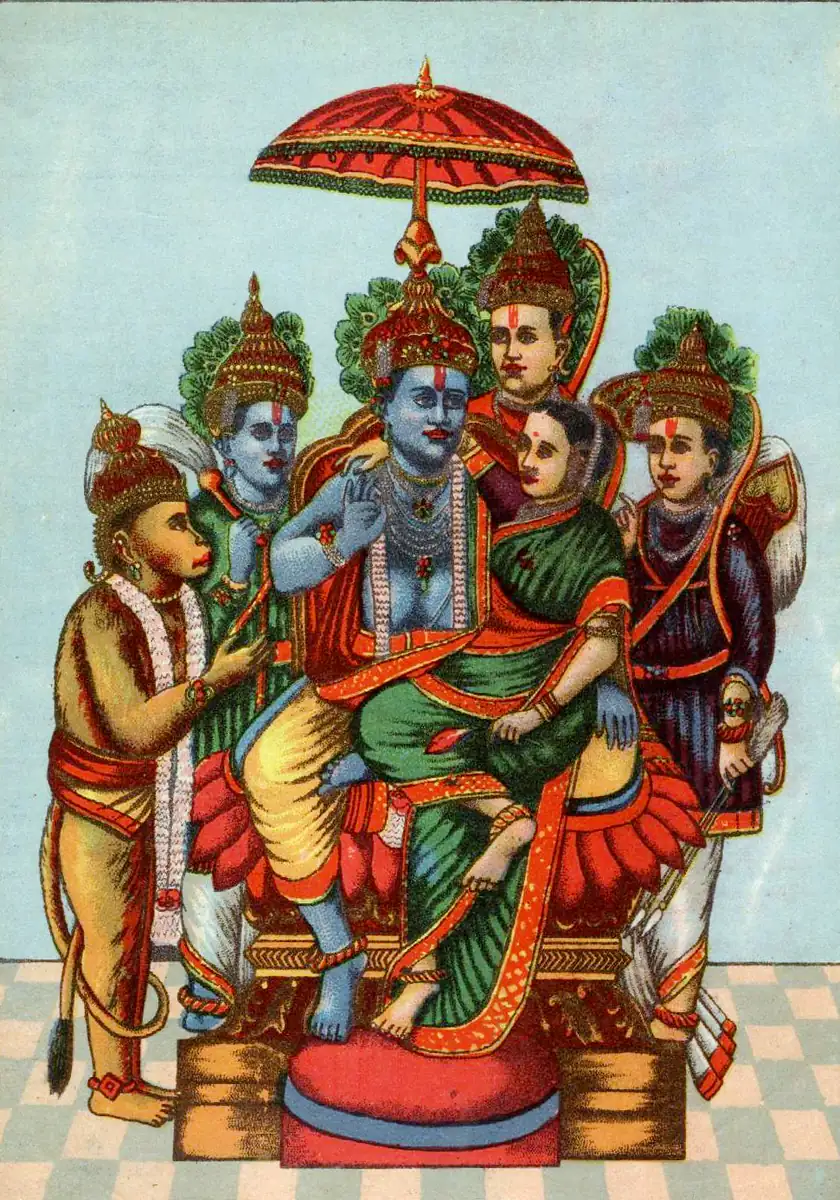
राम लखन सीता मन बसिया
सूक्ष्म रूप धरि सियहिं दिखावा।
बिकट रूप धरि लंक जरावा
भीम रूप धरि असुर सँहारे।
रामचंद्र के काज सँवारे
लाय सजीवन लखन जियाये।
श्रीरघुबीर हरषि उर लाये
रघुपति कीन्ही बहुत बड़ाई।
तुम मम प्रिय भरतहि सम भाई
सहस बदन तुम्हरो यस गावैं।
अस कहि श्रीपति कंठ लगावैं
सनकादिक ब्रह्मादि मुनीसा।
नारद सारद सहित अहीसा
जम कुबेर दिगपाल जहाँ ते।
कबि कोबिद कहि सके कहाँ ते
तुम उपकार सुग्रीवहिं कीन्हा।
राम मिलाय राज पद दीन्हा
तुम्हरो मंत्र बिभीषन माना।
लंकेस्वर भए सब जग जाना
जुग सहस्र जोजन पर भानू।
लील्यो ताहि मधुर फल जानू
प्रभु मुद्रिका मेलि मुख माहीं।
जलधि लाँघि गये अचरज नाहीं
दुर्गम काज जगत के जेते।
सुगम अनुग्रह तुम्हरे तेते
राम दुआरे तुम रखवारे।
होत न आज्ञा बिनु पैसारे
सब सुख लहै तुम्हारी सरना।
तुम रक्षक काहू को डर ना
आपन तेज सम्हारो आपै।
तीनों लोक हाँक तें काँपै
भूत पिसाच निकट नहिं आवै।
महाबीर जब नाम सुनावै
नासै रोग हरै सब पीरा।
जपत निरंतर हनुमत बीरा
संकट तें हनुमान छुड़ावै।
मन क्रम बचन ध्यान जो लावै
सब पर राम तपस्वी राजा।
तिन के काज सकल तुम साजा
और मनोरथ जो कोई लावै।
सोइ अमित जीवन फल पावै
चारों जुग परताप तुम्हारा।
है परसिद्ध जगत उजियारा
साधु संत के तुम रखवारे।
असुर निकंदन राम दुलारे
अष्ट सिद्धि नौ निधि के दाता।
अस बर दीन जानकी माता
राम रसायन तुम्हरे पासा।
सदा रहो रघुपति के दासा
तुम्हरे भजन राम को पावै।
जनम जनम के दुख बिसरावै
अंत काल रघुबर पुर जाई।
जहाँ जन्म हरि-भक्त कहाई
और देवता चित्त न धरई।
हनुमत सेइ सर्ब सुख करई
संकट कटै मिटै सब पीरा।
जो सुमिरै हनुमत बलबीरा
जय जय जय हनुमान गोसाईं।
कृपा करहु गुरुदेव की नाईं
जो सत बार पाठ कर कोई।
छूटहि बंदि महा सुख होई
जो यह पढ़ै हनुमान चालीसा।
होय सिद्धि साखी गौरीसा
तुलसीदास सदा हरि चेरा।
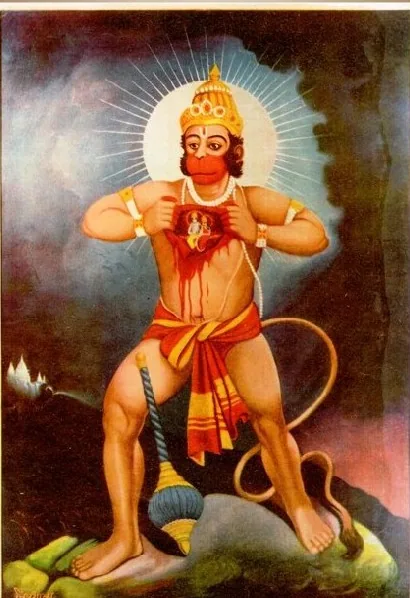
कीजै नाथ हृदय महँ डेरा
पवनतनय संकट हरन, मंगल मूरति रूप।
राम लखन सीता सहित, हृदय बसहु सुर भूप॥
What it means
Tulsidas opens by cleaning the mirror of his mind with the dust of his guru's feet, then asks Hanuman for strength, wisdom and knowledge. The forty verses walk through Hanuman's life as a servant of Ram: the golden body and the mace and flag in his hands, the tiny form shown to Sita and the huge one that burned Lanka, the herb that revived Lakshman, and the ring carried across the sea. Verses 16 and 17 remember how he united Sugriv with Ram and made Vibhishan king of Lanka. The middle verses guard the door of Ram's court and promise that fear and illness stay away where Hanuman's name is spoken. The last verses state the fruit of reciting it and end with Tulsidas asking Hanuman to make a home in his heart, and the closing doha places Ram, Lakshman and Sita there with him.
How it is sung
Most households recite it aloud in a steady, even pace, the opening doha slower and the forty chaupais in one rolling breath of a line each. Tuesday and Saturday are the usual days, and many people begin the morning with it before leaving home. At temples it is often sung together by the whole room after the evening aarti, with one voice leading each couplet.
Questions, answered
Who wrote the Hanuman Chalisa?
It is the work of Goswami Tulsidas, the sixteenth century poet who also wrote the Ramcharitmanas. The last verse carries his name, which is the usual way a poet signed a hymn.
How many verses does the Hanuman Chalisa have?
Forty chaupais, which is where the word chalisa comes from. Two opening dohas come before them and one closing doha follows, so the full recitation has forty-three couplets.
Which days are best for reading it?
Most families keep two weekdays for Hanuman, Tuesday and Saturday. Hanuman Jayanti is the big day, but many people read it every morning without waiting for a date.