It would be easy to describe the Rath Yatra as a big crowd and a big wooden cart. It is also a story of a god who gets ill, rests for fifteen days and then steps out to meet the people who are not allowed inside his temple. Understanding that story changes what you see in the street.
The festival belongs to the month of Ashadha, when the monsoon is arriving. A reference page gives 16 July for the 2026 yatra. For any other year, take the date from the temple's own calendar.
Why the god comes out
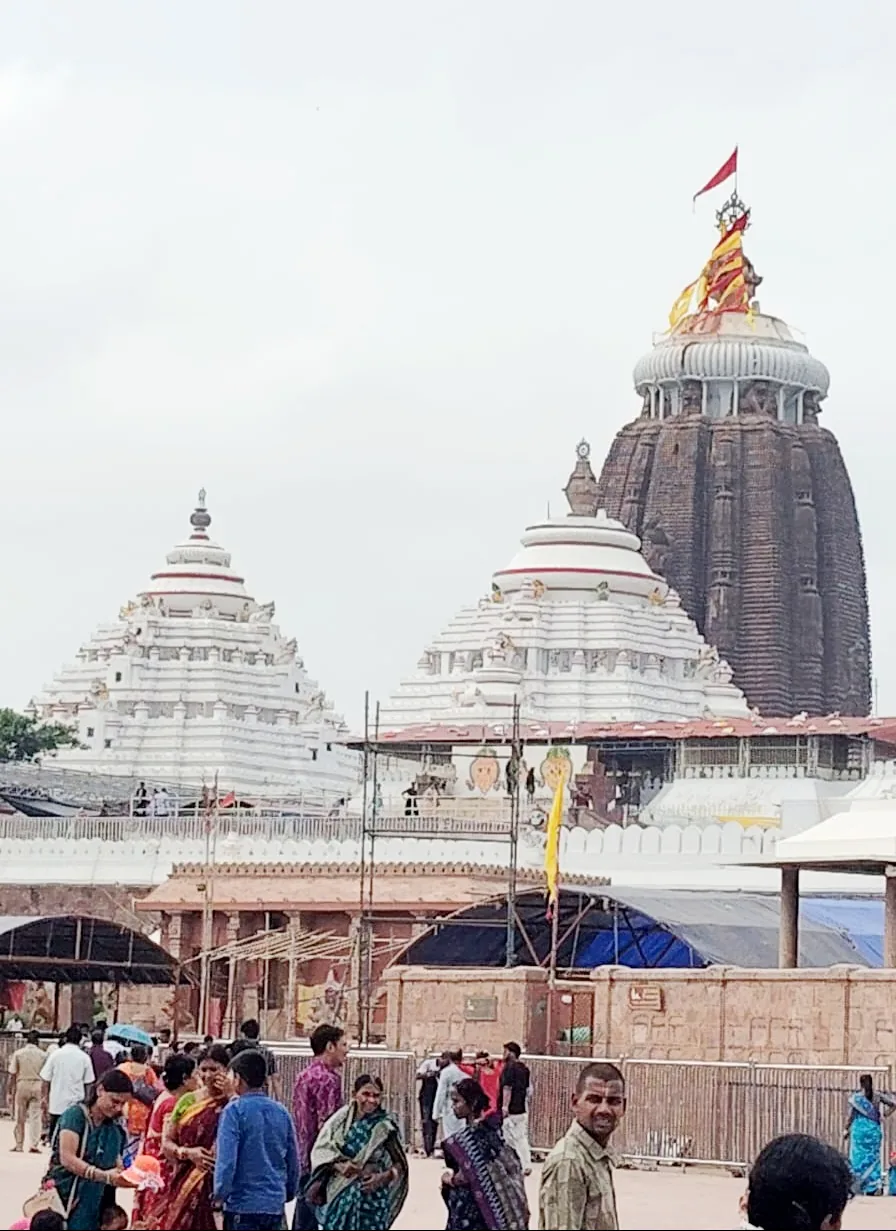
The Jagannath temple in Puri is open only to Hindus, and non-Hindus may not enter the premises. The yatra is the day when the god leaves his sanctum and rides the Bada Danda, the grand road of Puri, to the Gundicha temple, about three kilometres away, so that everybody, whoever they are, can see him. That idea is what draws such crowds.
The pilgrims call the festival by other names, Ghosa Jatra and Gundicha Yatra. For the people of Puri, it is a god's annual visit to his aunt's house, where he stays for some days before coming back.
Before the yatra: Snana, illness and rest
On Jyeshtha Purnima, the full moon about two weeks before, the deities are bathed in a ritual called Snana Yatra. After the bathing, they are said to fall ill, and for about fifteen days they rest in a private chamber, a period known as Anavasara, when the public cannot see them. Devotees go instead to the Alarnath temple at Brahmagiri.
The deities are shown again in their fresh forms on a day called Navayouvana, the day before the yatra begins. It is, for many families, as significant as the procession itself.
The three chariots
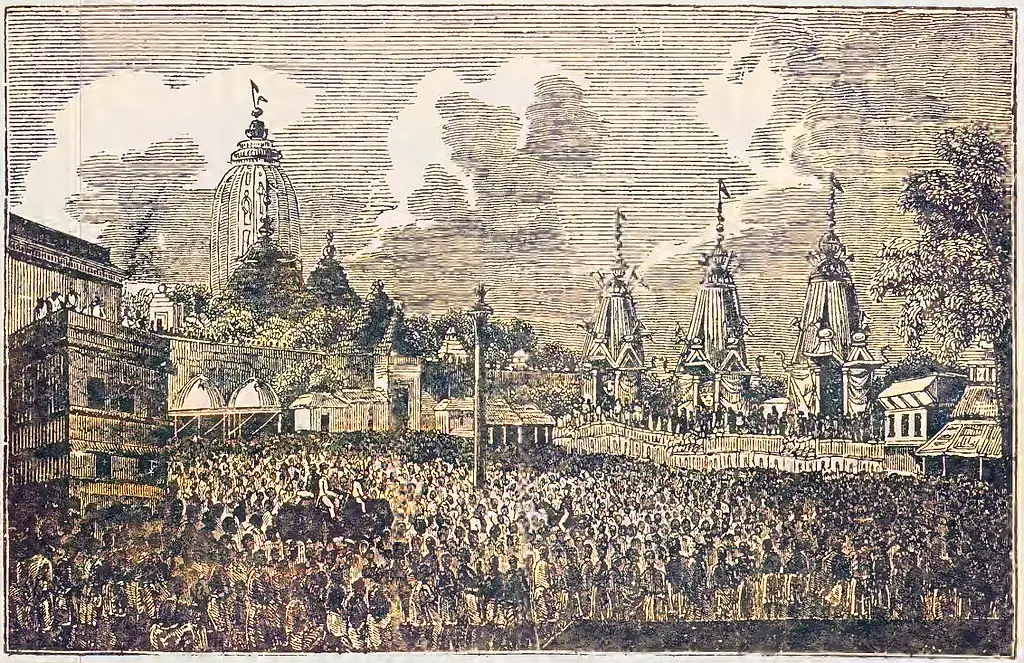
A new set of chariots is built every year, and Jagannath's takes about two months to build. Reference works put it at about fourteen metres high and eleven wide, and the chariots are pulled by ropes, not by animals. Tradition gives each its name: Jagannath's is Nandighosa, Balabhadra's is Taladhwaja, and Subhadra's is Darpadalana.
Before the chariots move, the Gajapati king of Puri performs Chhera Pahara, sweeping the road before the chariots with a golden broom. It is a statement that, in front of Jagannath, a king is a servant.
The pulling, the stay and the return
Anyone can touch the ropes, but the crowd is so large that most visitors take a rope at the edge and pull for a few minutes. The journey to Gundicha takes the day and sometimes more, and the chariots stop where the crowd stops them. The deities stay at Gundicha for days and are then brought back on the Bahuda Yatra, the return journey.
The festival ends with Niladri Bije, on Ashadha Trayodashi. The deities go back inside the main temple, and the story is that Jagannath offers rasgulla to the goddess Lakshmi, who is displeased at being left, so that she lets him in.
How to watch if you are not Hindu
The yatra is held on the street, so it is open to everybody, and this is the one day on which a visitor from outside the faith can stand a few metres from Jagannath. The temple itself, which is open every day from five in the morning to half past ten at night, remains closed to non-Hindus.
Try for a rooftop or balcony on the main avenue, and book weeks ahead, since the hotels of Puri fill. Carry water, a hat, and a small bag, and arrive hours before the chariots begin to move.
Puri beyond the festival
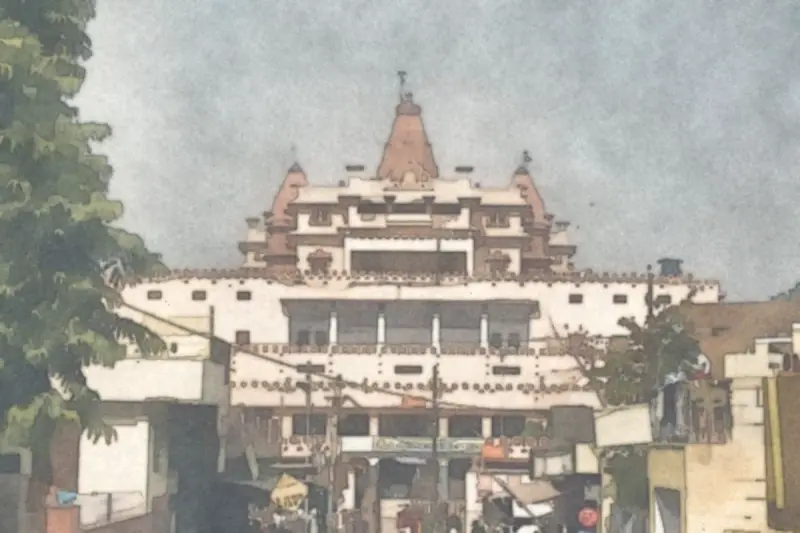
Puri is also a seaside town. The beach is a short walk from the temple, and the evenings by the water are an easy way to rest. The Sun Temple at Konark is a drive away up the coast, and many visitors add it, together with Bhubaneswar's old temples, to a longer Odisha trip.
Try the temple's mahaprasad, and the rasgulla of Odisha, which the Niladri Bije story has made famous.
Making the trip from Delhi
Puri is far from Delhi, so the plan matters more than the road. Laladham can pick you up in Delhi and run the complete trip: the airport or station transfer, flights or train tickets, a cab and driver in Odisha, a room in Puri near Grand Road, a good place to watch the chariots, and the return, with Konark and Bhubaneswar if you like.
The Rath Yatra week is the most crowded of the year in Puri. Write to us on the booking page with your dates and group size, and ask for a quote early.
Questions, answered
When is the Rath Yatra?
Ashadha Shukla Dvitiya, around June or July. A reference source gives 16 July 2026, and each year's date comes from the temple's calendar.
Can non-Hindus see Lord Jagannath?
They cannot enter the temple, but the yatra is on the road, so anyone can watch from the street.
How far do the chariots go?
Roughly three kilometres, to the temple at Gundicha.
What is Niladri Bije?
The closing rite, when the deities go home and the god offers sweets to a sulking Lakshmi.