The way to plan it is by driving time, because the distances between the headline stops are where itineraries quietly fall apart.
Jaipur: the five-hour start
Jaipur is about five hours from Delhi by road, and the Delhi to Jaipur train takes 4.5 to 5.5 hours, so it is the natural first stop. Jai Singh II founded the city in 1727. Amber Fort, a UNESCO-listed hill fort with a history from 1592, is the headline. The Hawa Mahal of 1799 has 953 latticed windows from which royal women watched the street unseen, the City Palace mixes Rajasthani and Mughal styles, and Jantar Mantar, built between 1728 and 1734, holds 19 astronomical instruments and the world's largest stone sundial.
Nahargarh gives the evening view, and its link to Jaigarh makes it a sensible pair. Jal Mahal can be seen from the ridge but is no longer open to tourists. Eat dal bati churma, mirchi bada and ker sangri, and ghevar if a festival is near.
The offbeat loop and what it really costs in hours
A seven-day loop for those who want less crowded stops runs Jaipur to Pushkar in about 3 hours, Pushkar to Bundi in about 4, Bundi to Chittorgarh in about 2, Chittorgarh to Kumbhalgarh in about 3, Kumbhalgarh to Ranakpur in about 1 and Ranakpur to Udaipur in about 2. That is roughly 15 hours of pure driving across the loop, which is why a driver you keep for the whole trip beats changing cars at each stop.
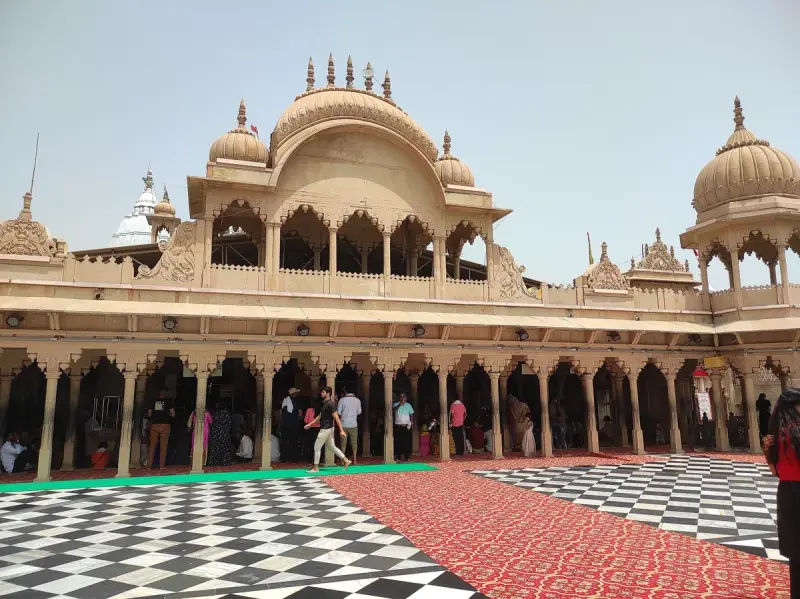
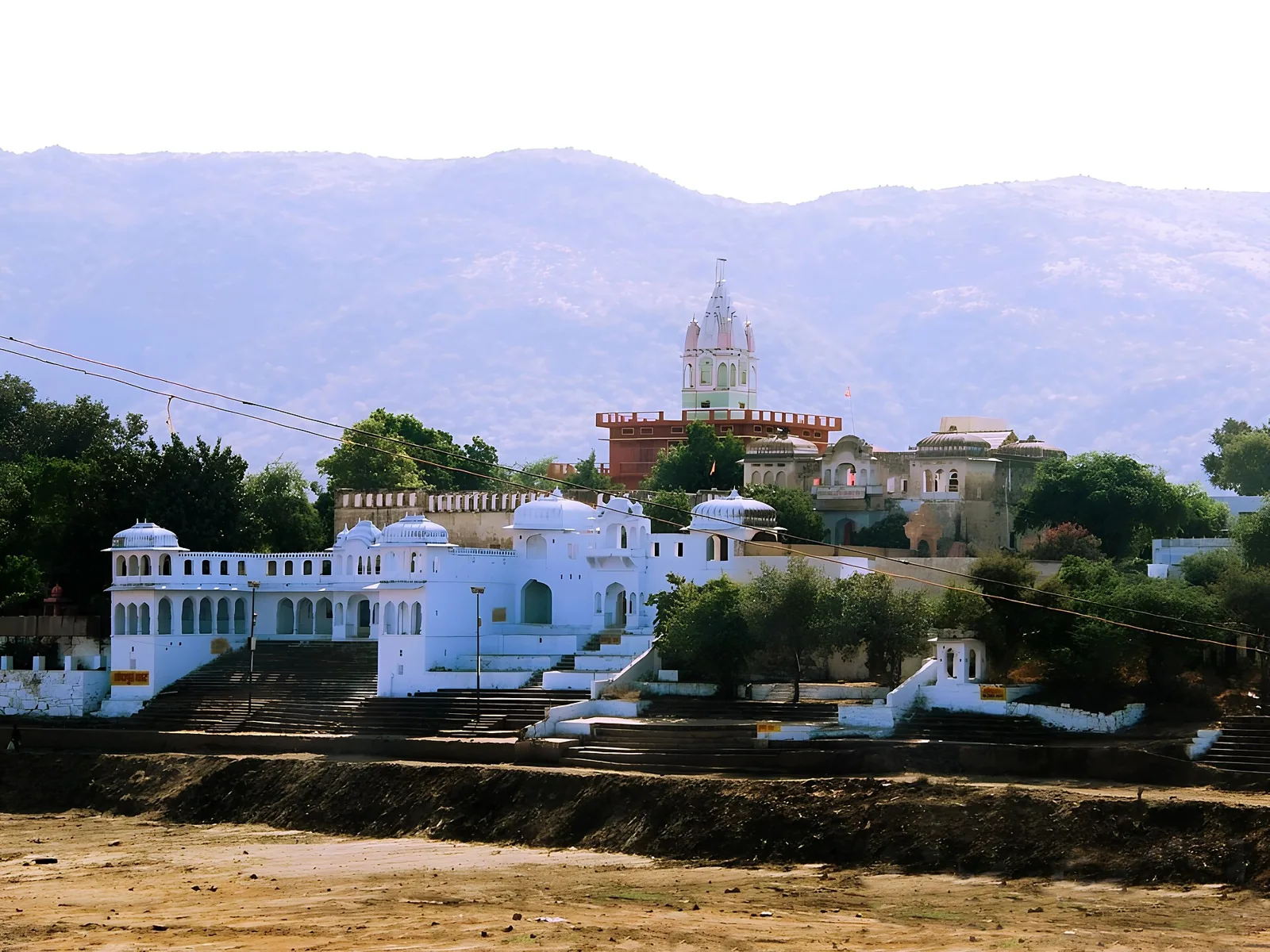
Pushkar's Brahma temple is the draw, and the Savitri temple on its hill gives the view. Bundi's Chitrasala murals and Taragarh viewpoint are the reward for the long leg. Chittorgarh has the Vijay Stambh, Kirti Stambh and Padmini Palace, with a light and sound show at the fort, and Kumbhalgarh's wall is one of the longest in the world. Ranakpur's Jain temple is carved in marble.
Udaipur and the water
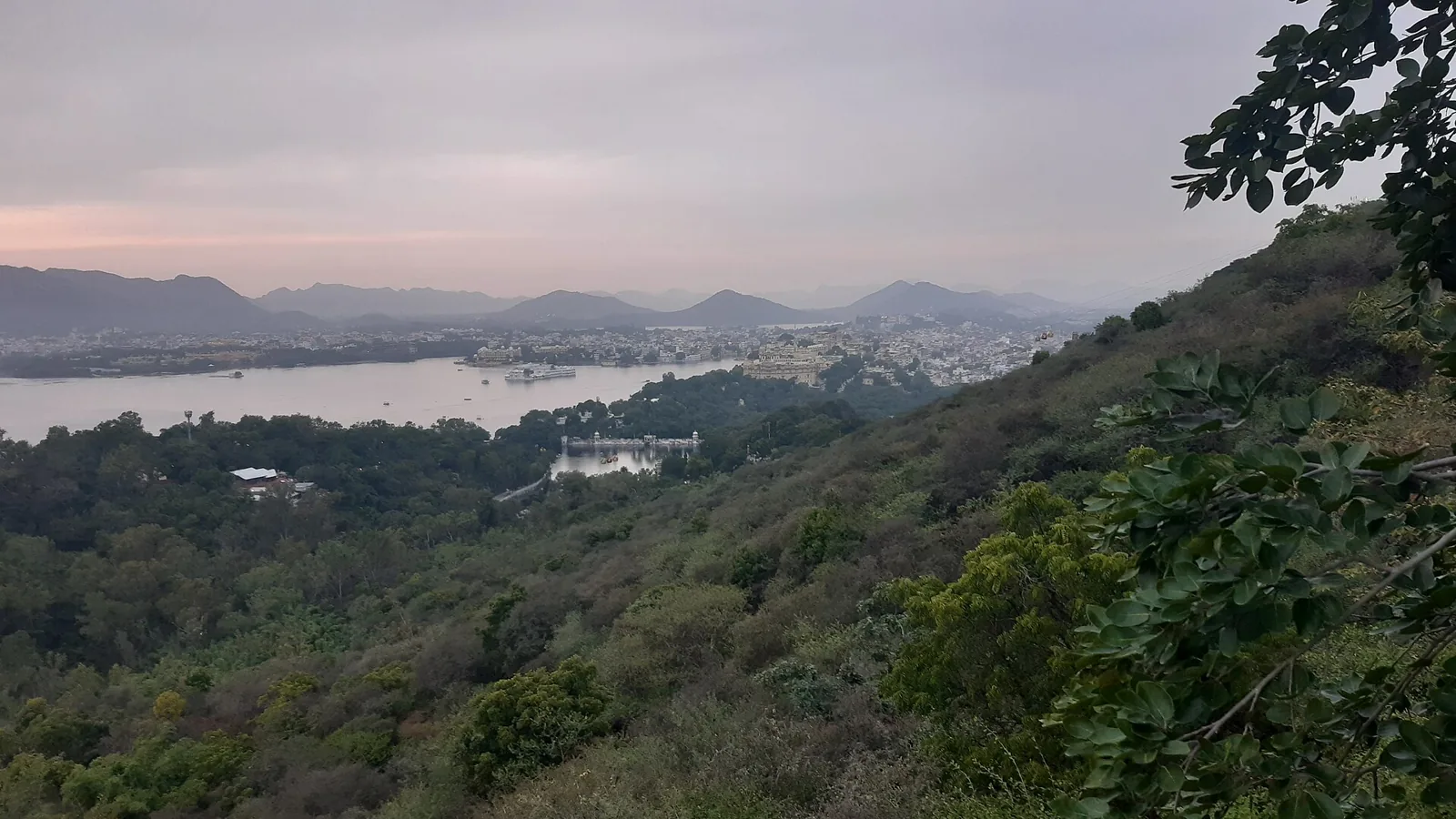
Udaipur is the white city of lakes. The classic evening is a boat on Lake Pichola, with the City Palace on one side and the lake palaces of Jagniwas and Jagmandir out on the water. Fateh Sagar is the second lake, and the Jagdish Temple and City Palace are the daytime stops. Direct flights reach Udaipur from many cities, which makes it a good place to end a loop.
Jodhpur: one fort, one long day
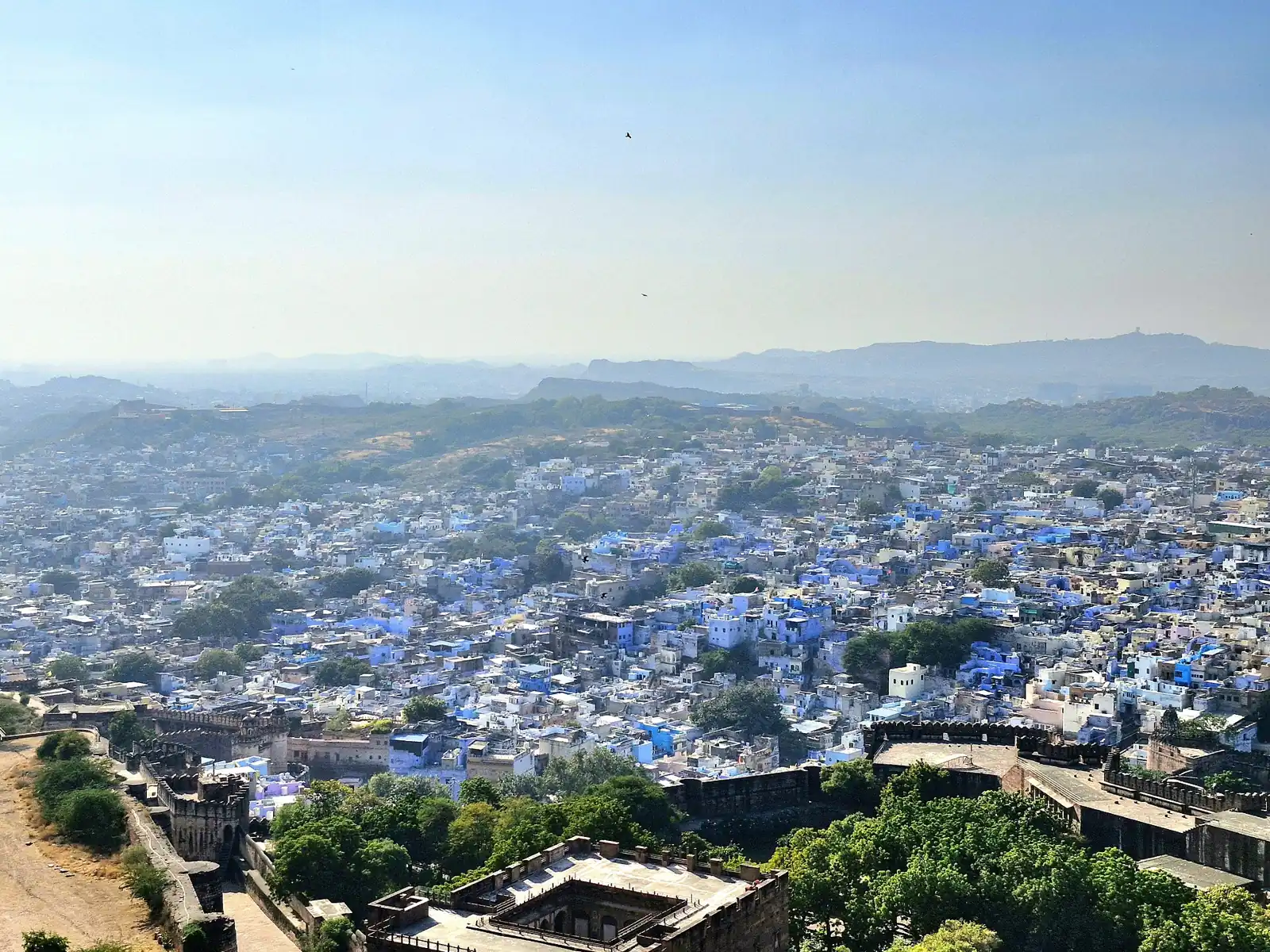
Mehrangarh sits on a rock above the blue city, with Jaswant Thada nearby and the clock tower market below. The Mehrangarh Museum Trust's own page gives the fort's hours and fees, which differ from many blog figures. Our [Jodhpur guide](/blog/jodhpur-travel-guide) covers the details, including the walk up through the lanes.
Jaisalmer: the living fort
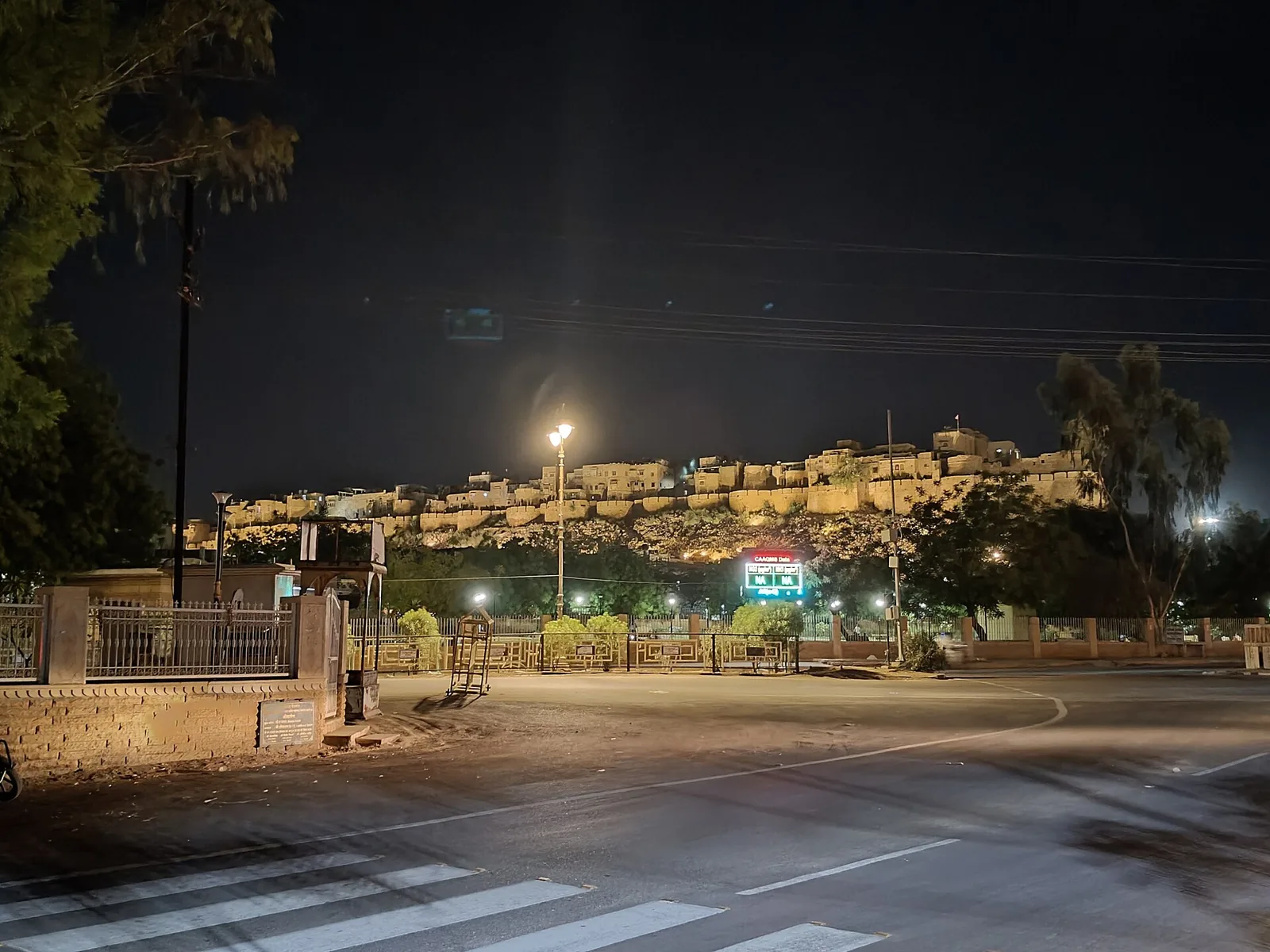
Jaisalmer Fort, begun in the 12th century on Trikuta Hill, is Rajasthan's one living fort, with nearly 3,000 people still living inside. Seven Jain temples are carved within the walls. Nathmal-ki-Haveli is famous because two architect brothers are said to have built it from opposite ends, so the halves match but are not identical.
Camel safaris and desert camps go out to the dunes, and the three-day Desert Festival brings puppet shows, camel races and folk dance, so check the dates before booking. November to March is the recommended window, with January ranging about 5 to 29 degrees and chilly mornings.
Wild Rajasthan
Ranthambore is the tiger park, Sariska is another, and Keoladeo near Bharatpur is a UNESCO bird sanctuary with over 370 species. Tal Chhapar holds blackbuck and raptors. Mount Abu, at 1,722 m, is the state's only hill station.
When to go, and where not to be in summer
Winter is the season, when the fairs also run. May is brutal: Jaipur touches 45 degrees and Jodhpur about the same. Pack layers, since the desert cools fast after dark.
A sensible first loop
Four to six nights is enough for Jaipur, Jodhpur and Udaipur, flying or training between them, and a week for the offbeat route. Jaisalmer asks for its own two or three days. Pick a pace you can sustain and leave one open afternoon in every city.
Let Laladham run it
Laladham picks you up in Delhi, from the airport, station, home or hotel, and plans the whole Rajasthan run: the Jaipur drive, trains or flights between cities, one driver for the loops, stays and fort timings. Ask for a quote on the [book page](/book).
Questions, answered
How far is Jaipur from Delhi?
About five hours by road, and 4.5 to 5.5 hours by train.
What is the best time to visit Rajasthan?
Winter, from the start of cold weather to March. Summer reaches the mid-40s, and winter nights in the desert turn cold.
How long does the offbeat loop take to drive?
About 15 hours of driving across Jaipur, Pushkar, Bundi, Chittorgarh, Kumbhalgarh, Ranakpur and Udaipur, spread over a week.
What is special about Jaisalmer Fort?
Families still live inside it, nearly 3,000 people among temples, shops and restaurants, which no other Rajasthan fort can say.
Which Rajasthan city is called pink, blue, white and golden?
Jaipur is pink, Jodhpur blue, Udaipur white and Jaisalmer golden.
Why do people go to Pushkar?
For its sacred lake, its Brahma temple, called the only one in the world on the tourism board's page, and its annual camel fair.