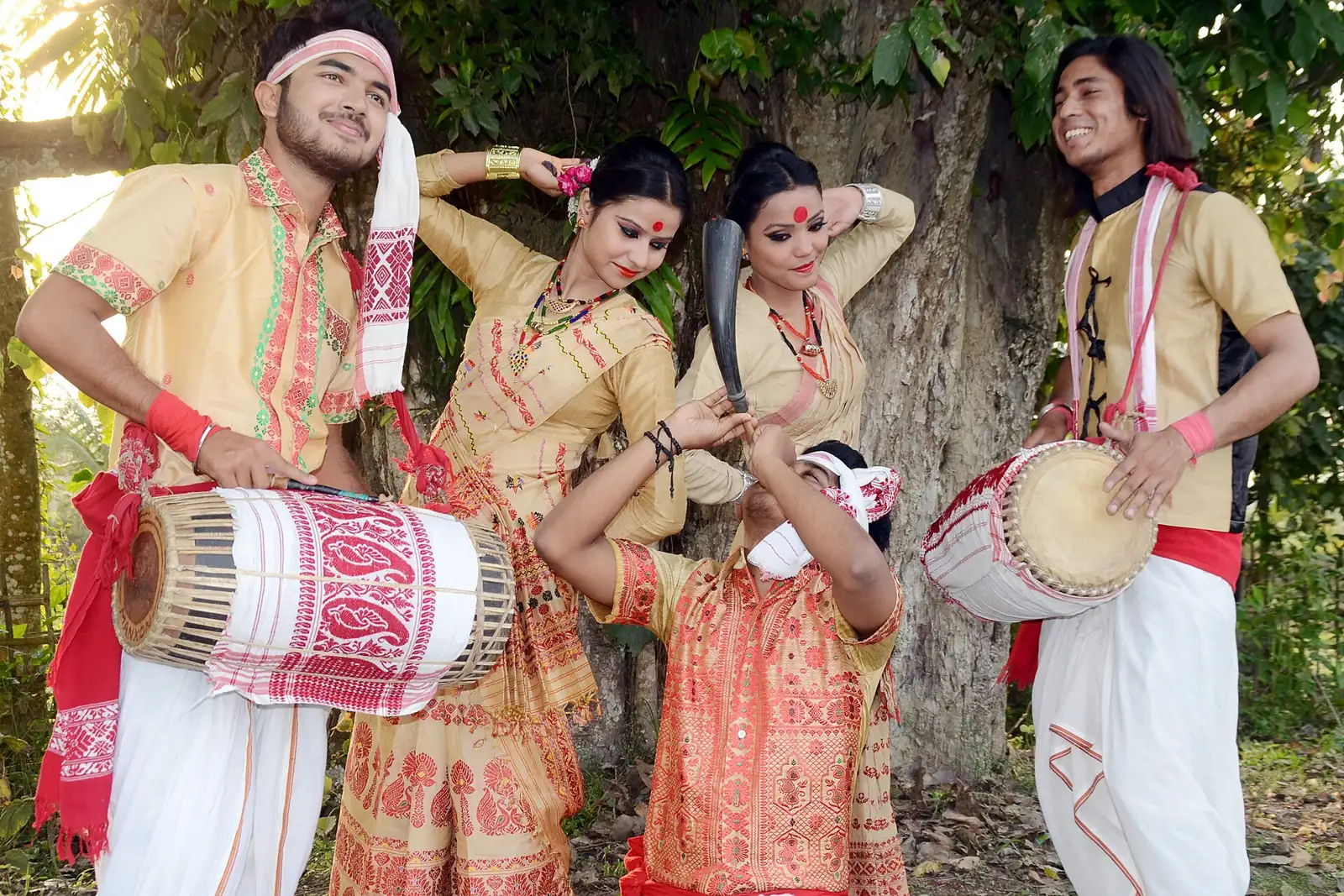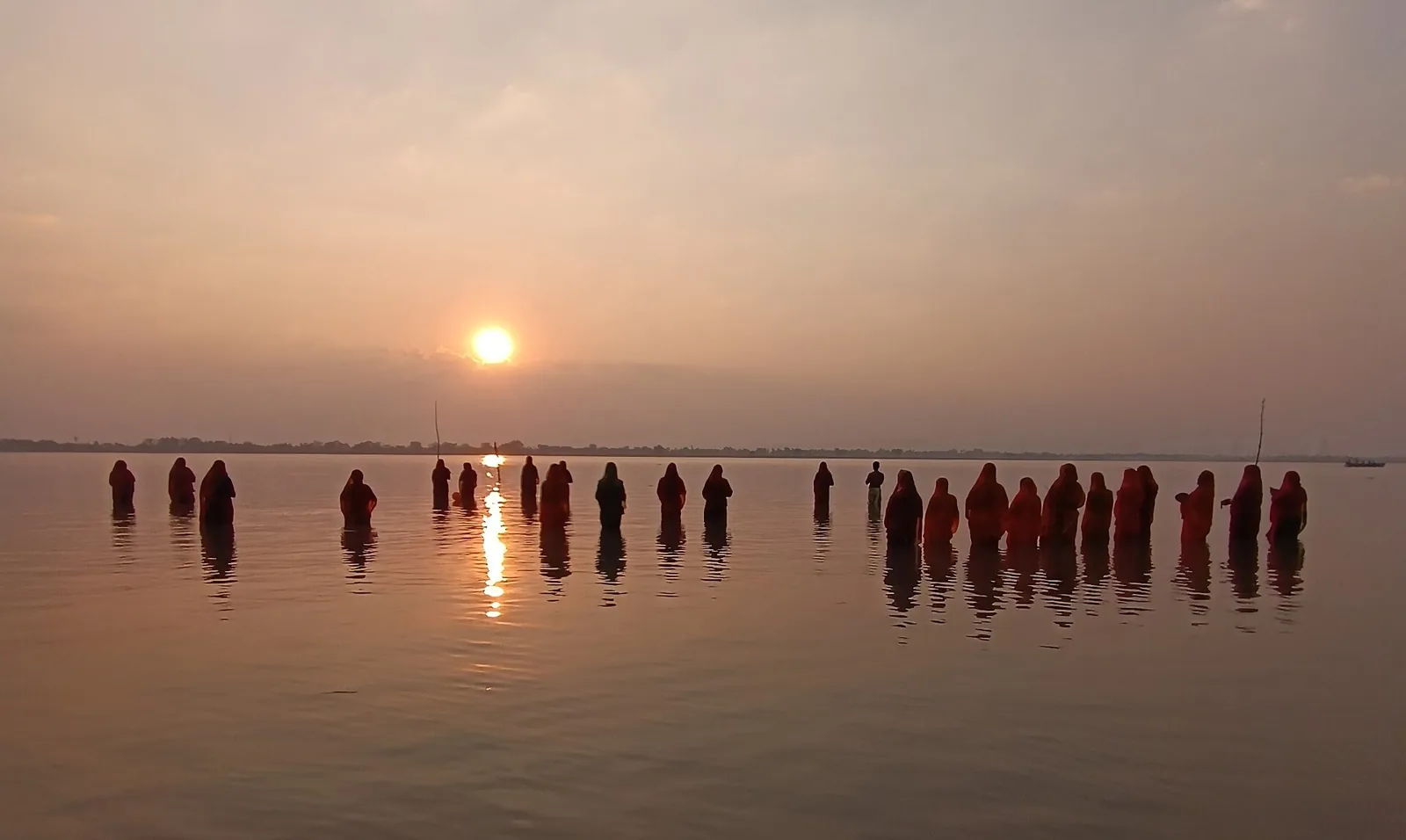
It is a festival without a single temple at its centre. It lives in the courtyard, on the banana leaf, on the water in a snake boat and in the streets of Thrissur where tigers dance. That is also why a visitor who comes just to see it often feels a little lost on the first day. Knowing the ten days helps.
Thiruvonam 2026 arrives in the last days of August, though the day itself is fixed by the star and the Malayalam month, so confirm it locally before you book.
The story of Mahabali and the three steps
It is said that Mahabali, an asura king, ruled so generously that his people knew neither hunger nor lies.
Local tradition
The gods feared how powerful he had become. Vishnu came to him as Vamana, a small boy, and asked for as much land as he could cover in three steps.
Mahabali agreed, though his teacher warned him not to. The boy grew until one step covered the earth and a second the sky. For the third there was no room, and Mahabali offered his own head. He was sent below, but was given a boon: once a year he may return to see his people.
Onam is the day of that return. In some versions of the story told in the north, Vamana is the hero. In Kerala, the kindness is on Mahabali's side, and the festival is about welcoming a ruler whose reign is remembered as just.
Atham to Thiruvonam: the ten days
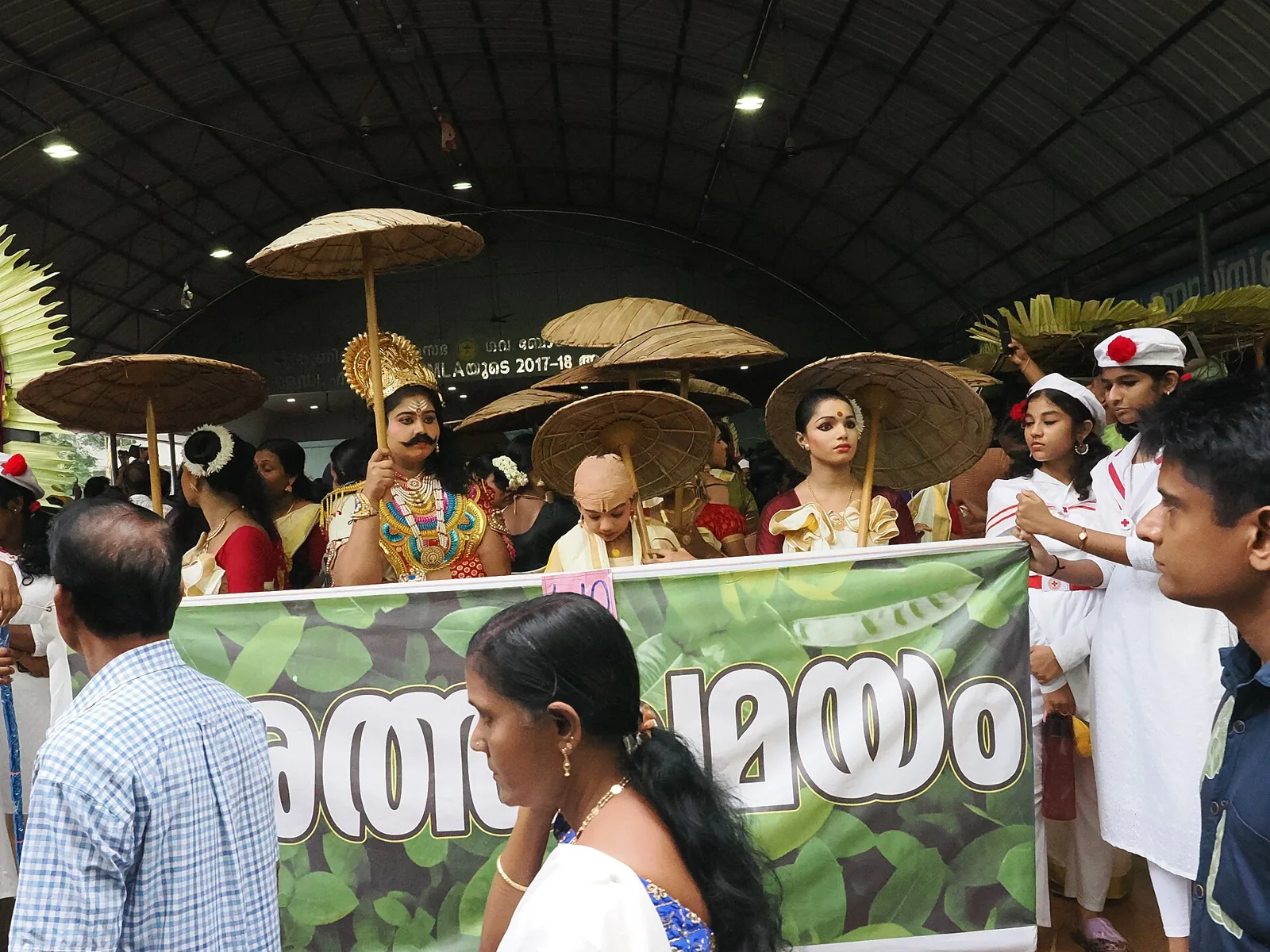
The ten days start on Atham, the day of the star Atham, and end on Thiruvonam. In Kochi's Thrippunithura, Atham is marked by the Athachamayam procession, a parade with decorated elephants, music and people in costumes, which was once the king of Cochin's procession to the Thrikkakara temple and is now open to all. The photograph at the top of this post is from that morning.
From Atham, each household makes a pookalam, a circle of flowers, in the courtyard or at the door. At the start it is small, a single ring or two of yellow and white petals. Each day another ring is added, so that by Thiruvonam the pattern has become a wide wheel with many colours. Families say it is done early before the day heats up, and often by the children.
The pookalam is not a rangoli in the north Indian sense. It uses fresh flowers and leaves only, usually no colour powder, and a small lamp is placed at its centre. Do not step in one without asking. If you see an unfinished one beside a house gate, walk around it.
Onasadya: the feast on a banana leaf
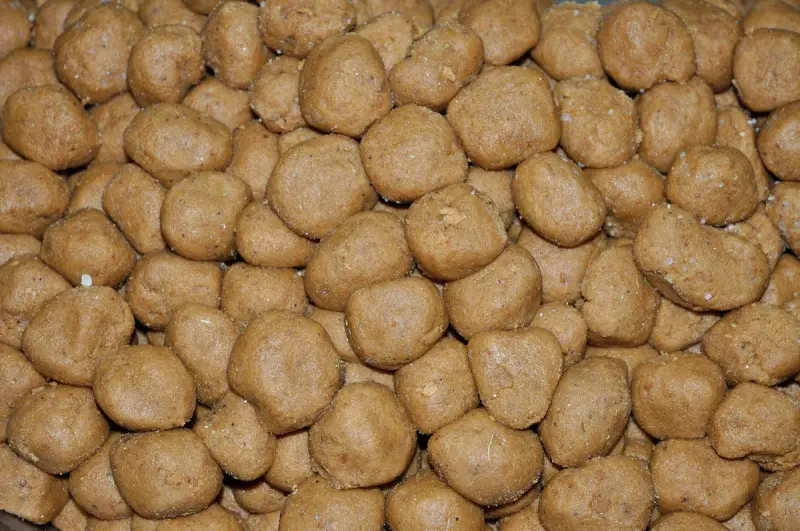
The Thiruvonam meal is the centre of the day. It is called sadya, and it is served on a fresh banana leaf with the tip pointing to your left. Rice goes in the middle, and around it a long list of small dishes: sambar, parippu with ghee, avial, thoran, olan, pachadi, kichadi, pickles, banana chips and sarkara upperi, then at least two payasams to finish.
People say there are twenty six or more dishes in a full sadya, but you will be guided course by course, and every dish is vegetarian.
Local tradition
Do not be afraid of the numbers. You sit on the floor or at a long table, eat with your right hand, and fold the leaf toward you when you are done to say that the meal was good.
Hotels and restaurants across Kerala serve a sadya on Thiruvonam day and the days around it. Reserve a table well ahead. If you are staying with a family, the invitation is a great privilege, and you should accept it without hurry.
Pulikali, boats and the other shows
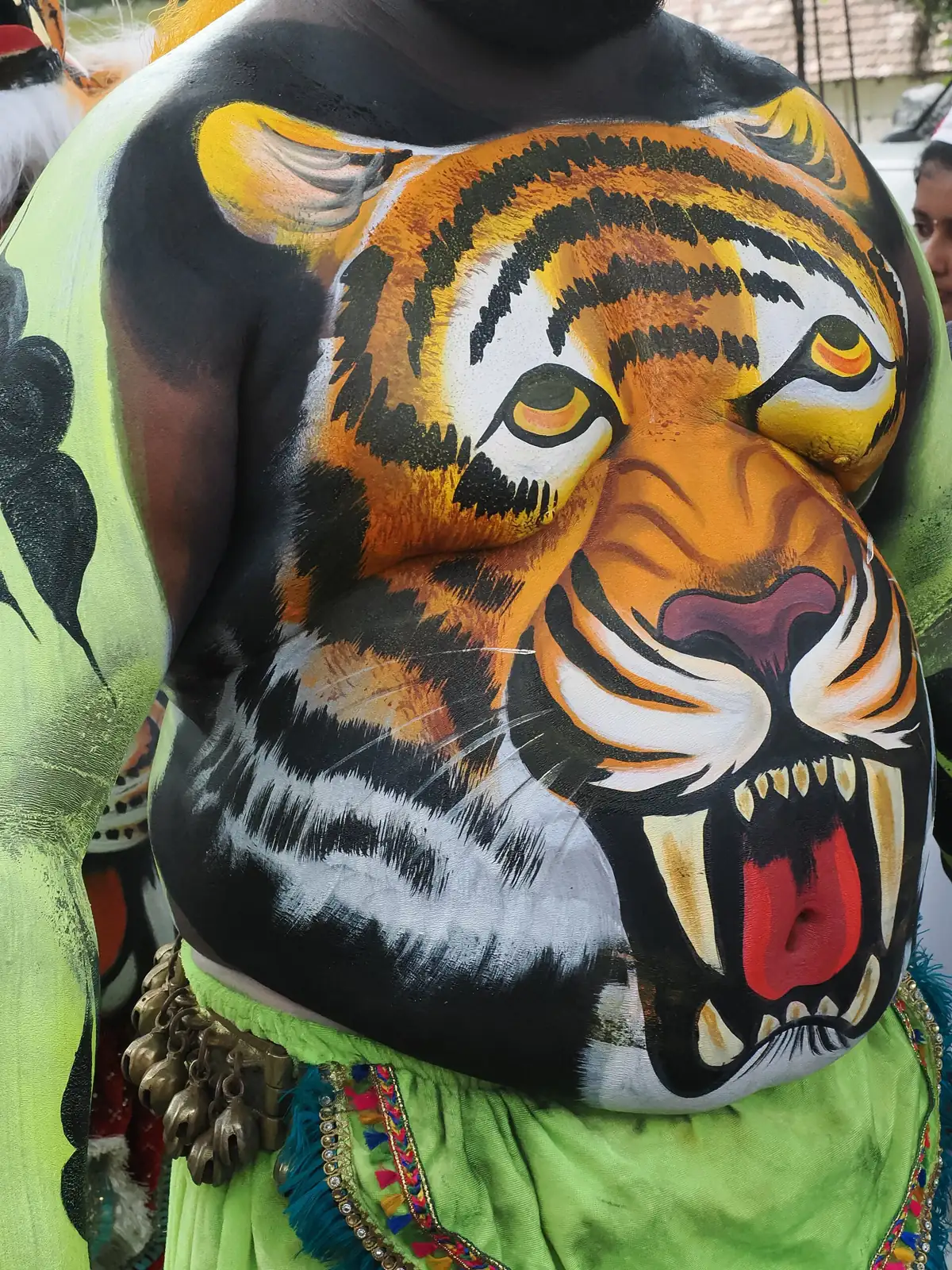
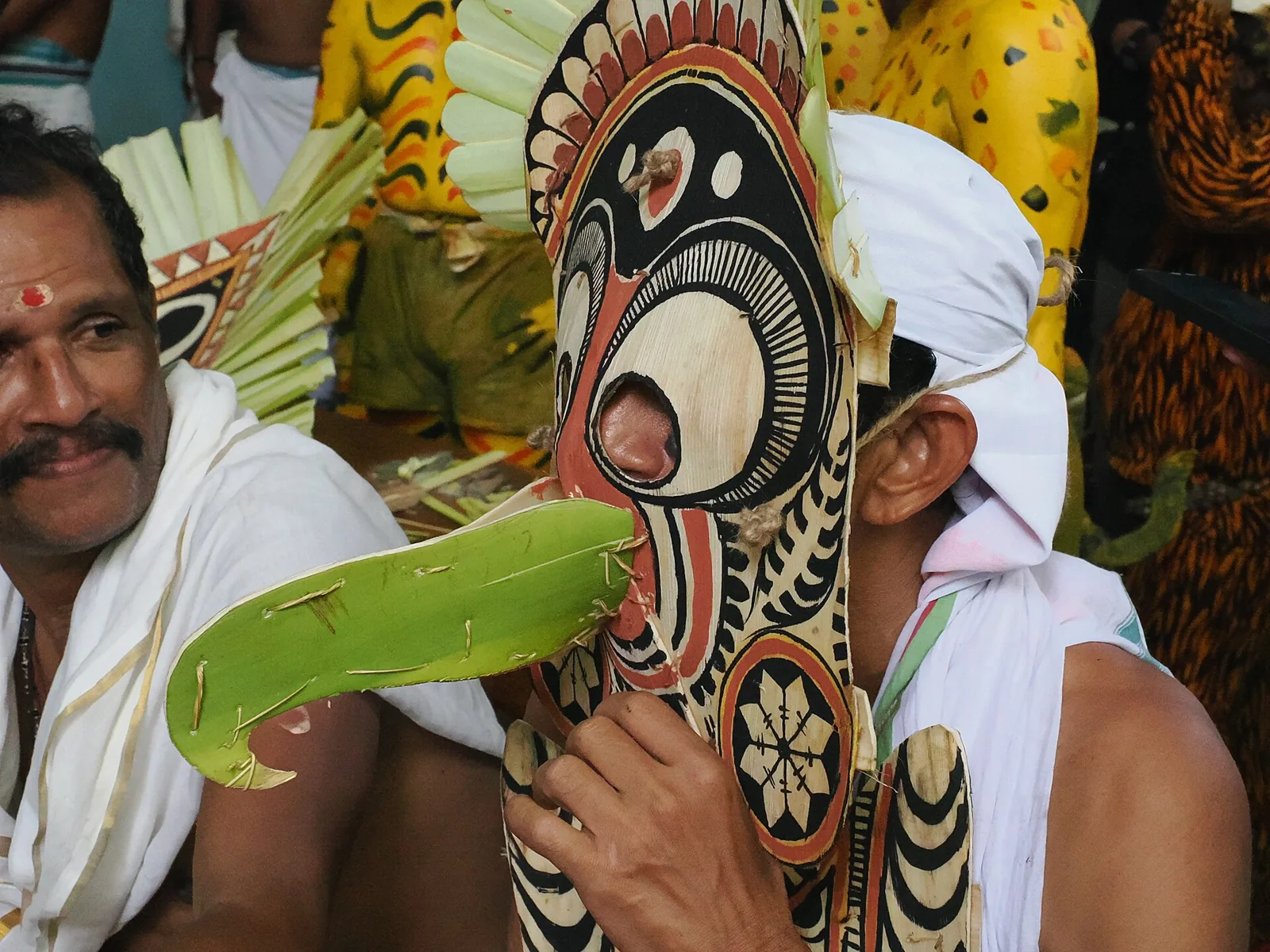
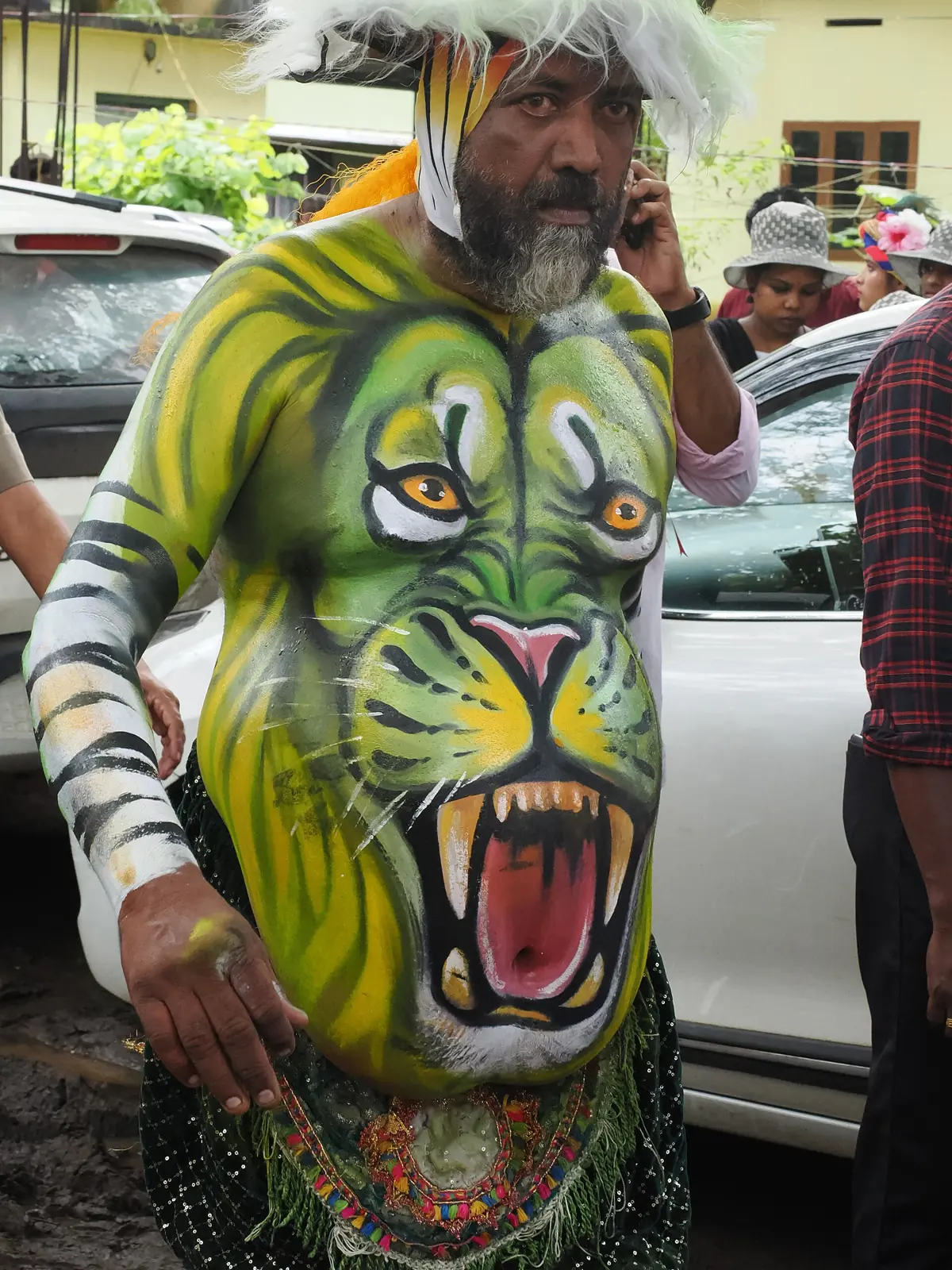
On the fourth day of Onam in Thrissur, the streets belong to the tigers. Pulikali is the tiger dance, where groups of men paint their whole bodies in stripes and yellow, a tiger or a leopard's face painted on the belly, and move through the town to the beat of drums. The painting takes hours, and you will often see dancers having it done on the roadside in the morning.
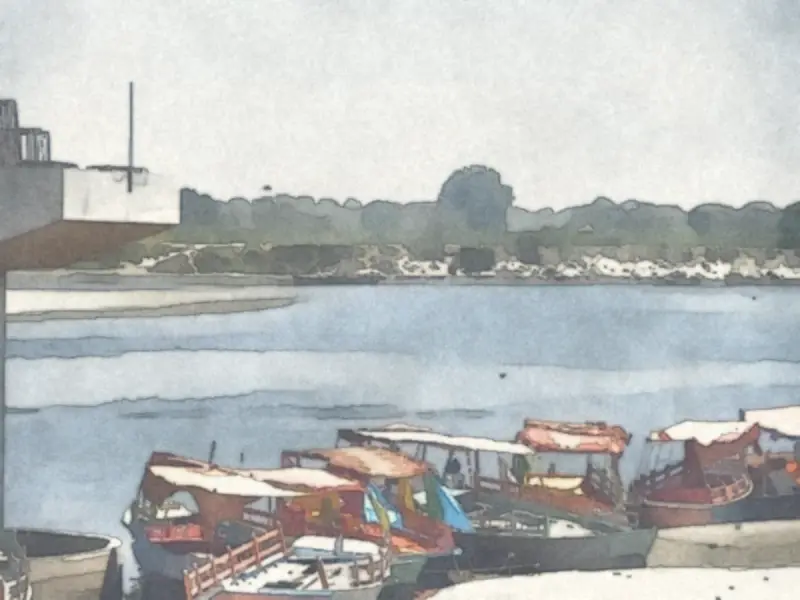
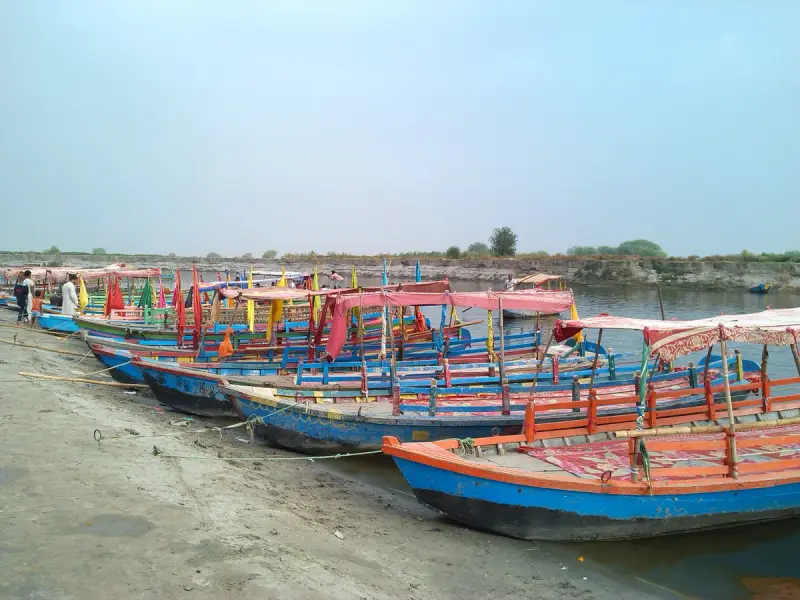
Elsewhere, there are Vallamkali boat races, with long snake boats and rowing songs, at several backwater towns in the days around Onam. The most famous races are tied to particular towns and dates, and these change from year to year, so check with Kerala Tourism before you plan around one.
Smaller games and dances keep the season going: the Thiruvathira kali, a women's group dance in a circle, and Kaikottikali. In many Malayali houses the women swing from ropes tied to tree branches, a custom that appears in old songs and still shows up in villages.
What to wear and how to behave
The traditional Onam dress is kasavu, the cream cotton with a gold border: a mundu for men and a set mundu or sari for women. Visitors are not expected to wear it, but many do for the day, and it is easy to buy in Kerala's shops before Onam. Dress modestly in any case.
Remove your shoes before entering a courtyard or a house. Take what is offered. A glass of water or a banana chip offered at a door is hospitality, not sale.
Planning the trip from Delhi
Kerala is far from Delhi, so it needs a plan. Flights to Kochi and Thiruvananthapuram fill early for Onam, and rooms near the boat races or Thrissur are gone months ahead. Think of it as a ten day trip: a few days in Kochi, one for Thrissur and Pulikali, a stay on the backwaters, and time on a beach or a hill station if you like.
Laladham can pick you up in Delhi and run the whole trip: the airport pickup, the flights or train, cabs and drivers in Kerala, houseboat and homestay stays, a sadya table on Thiruvonam, a good place to see Pulikali, and the way home. We can also join it with Rajasthan or Braj on a different leg. Ask for a quote from the booking page and tell us your dates, how many are travelling, and what you most want to see.
Questions, answered
When is Onam in 2026?
Late in August 2026. The day follows the Thiruvonam star, so get it confirmed locally before booking.
How many days does Onam last?
Ten days, from Atham to Thiruvonam. Many offices and shops in Kerala close for the main days.
Is Onam a Hindu festival only?
It began in Hindu tradition, but people of every religion in Kerala join in the flowers, the sadya and the boat races, and it is regarded as the state festival.
Is a sadya vegetarian?
Yes. A traditional Onam sadya has no meat or fish, though some restaurants serve a separate non vegetarian lunch on other days.