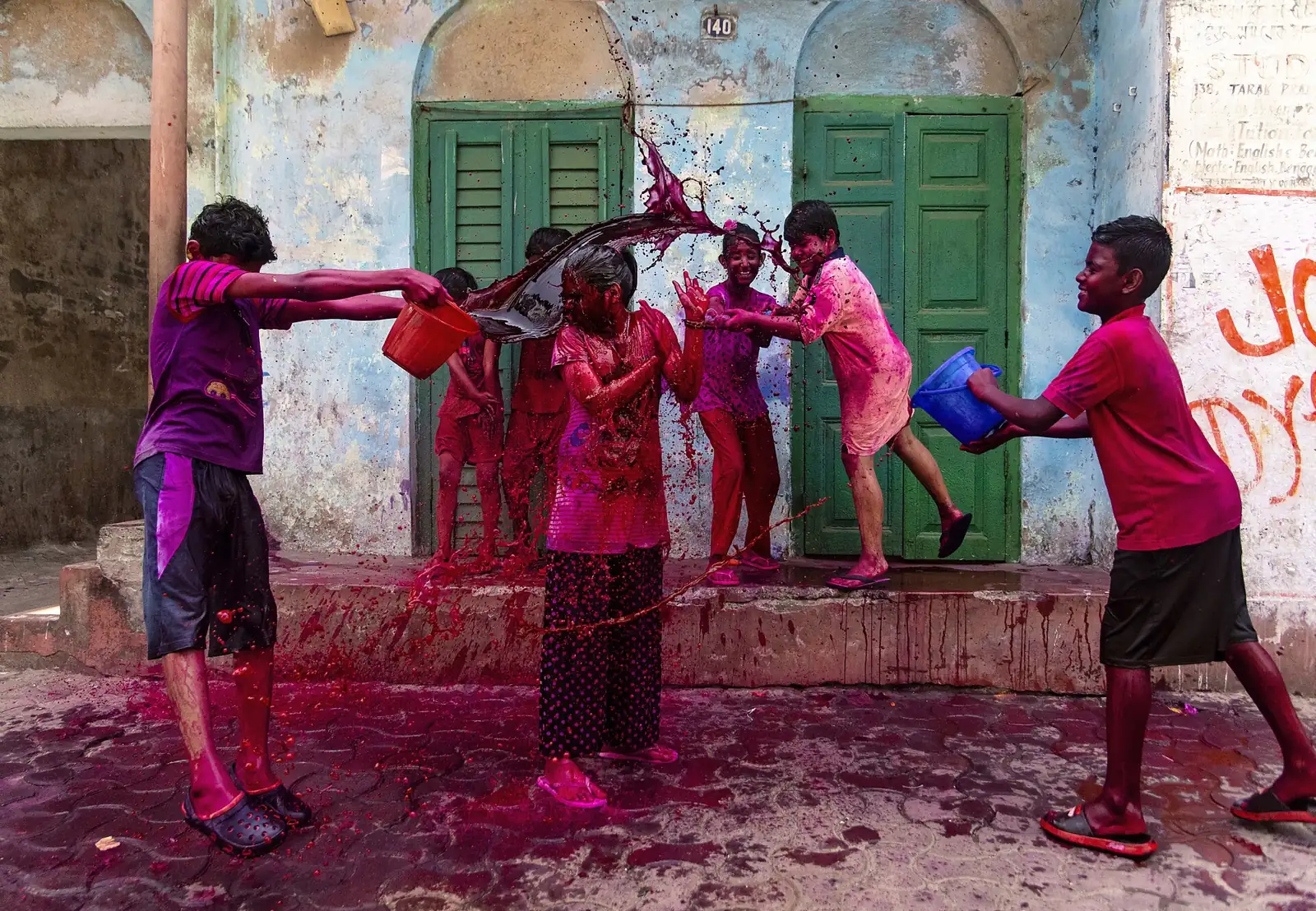
The next morning is another country. Shopkeepers lower their shutters to the street, children run with water guns, a neighbour you have never met smears a thumb of gulal on your cheek and says Holi hai. By noon the city is a different colour, and by evening everyone has a bath.
Holi is next in March 2027. Drik Panchang lists the bonfire on the evening of 21 March and the colours on 22 March, while the government holiday list shows 23 March, so confirm the day locally before you book. This post is for people who want to play it properly in Delhi: what it is, what to do the night before, and how to look after your skin, your eyes and yourself.
Two stories under one fire
The first story told at Holi is that of Prahlad, the boy devoted to Vishnu whose father Hiranyakashipu tried to kill him. His aunt Holika, who had a boon that fire would not harm her, sat in a blaze with the child on her lap. By the story, she burned and the boy lived. Hence the bonfire, called Holika Dahan.
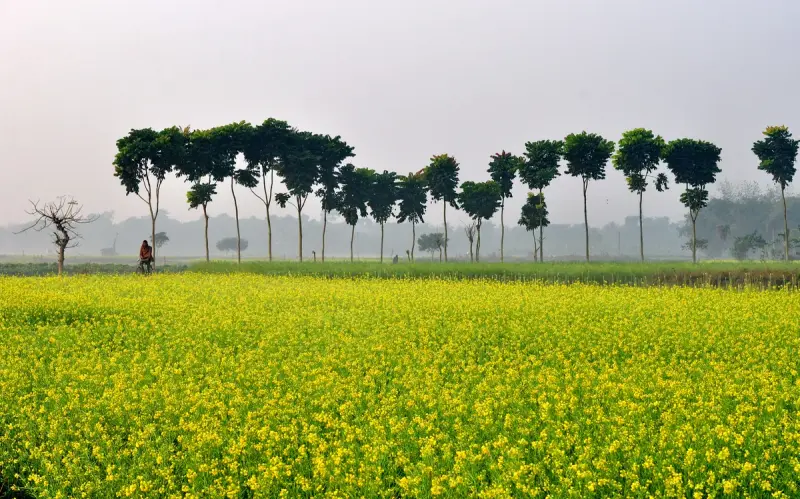
The second is the story of Braj. Little Krishna, dark as a rain cloud, worried that Radha would find him too different from her fair skin, and his mother Yashoda told him to colour her face however he liked. The painting above is of Radha at play with her companions, the way the Holi of Braj is remembered.
In Delhi both stories live at once. The night before is for the fire and the old tale of faith and fear. The day after is for colour, laughter and forgiveness.
The night before: Holika Dahan
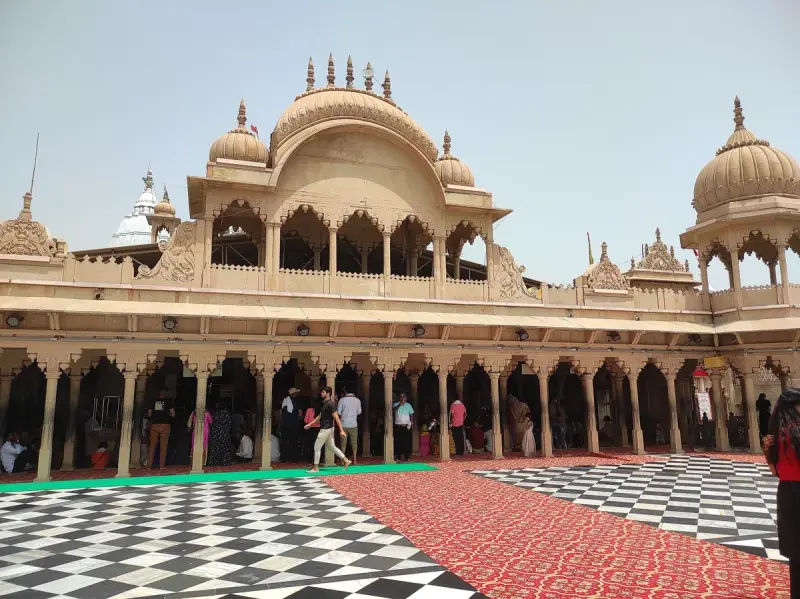
Colonies and temple grounds light their bonfire at the time set by the almanac for the evening, usually after sunset. Families bring a coconut, sugarcane, raw wheat ears or chickpea stalks, a handful of grain and a little water, and walk around the fire. The new wheat is roasted at the edge and shared.
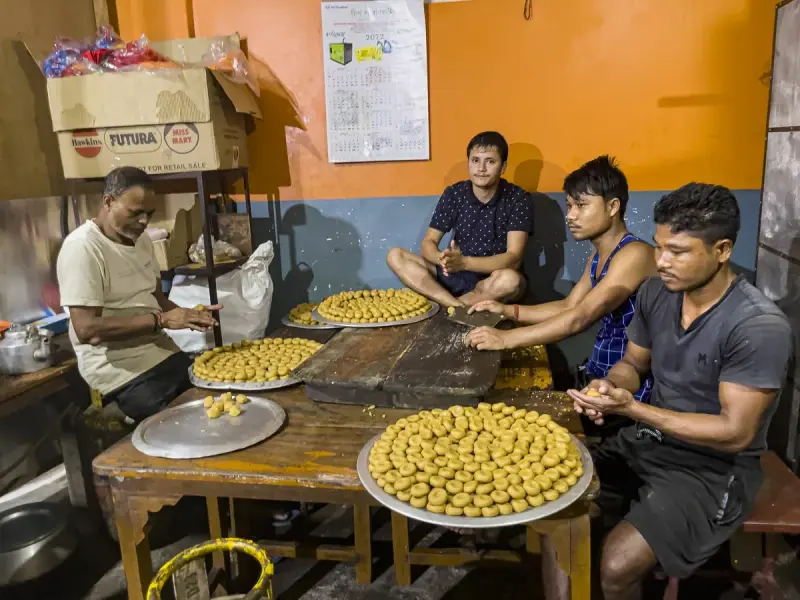
If you are invited to a bonfire by neighbours or colleagues, join in quietly, walk around clockwise if the others do, and stay a little back from the flames. The heat is greater than it looks, and sparks carry in a breeze.

Colour morning: the unwritten rules
Play before noon, and only with people who are in the mood. A person who is in a clean outfit and says no has said no. Women should be asked first and never be sprayed or touched without consent, and elders are given a pinch of gulal on the feet or the forehead.
Many people start with a gentle gulal on the cheeks. Water balloons, hose pipes and thick pastes come later and are usually reserved for friends. Dress in old white cotton clothes, because the colour will never wash out, and carry nothing that cannot get wet.
A common practice is to put coconut or mustard oil on skin and hair before you go out. It makes it easier to wash the colour away after.
Use only dry, herbal or skin safe colours and keep a small bottle of water to rinse your eyes
Glasses help. Contact lenses are better left at home that day
Wrap your phone in a zip pouch and carry a copy of your hotel name, not your passport

Where visitors can safely join in
The simplest way is through people: a host, a colleague, a guesthouse or a family who will take you into their colony. Several hotels and cafes in Delhi hold a Holi morning with music and organic colour, often with an entry ticket, and these are the easiest introduction for first timers and foreign guests.

On the street, the mood can be rougher than you expect. In some localities, men in groups throw colours with little regard for who is passing, and a few use hard, chemical paints. Avoid wandering alone through crowded areas, especially if you are a woman or a foreigner with a camera, and keep to the places where the people around you are known to you or to your host.
Metro and bus timings change on Holi, and many shops close for the day. Check the services the day before, and book your cab in advance.

Food of the day
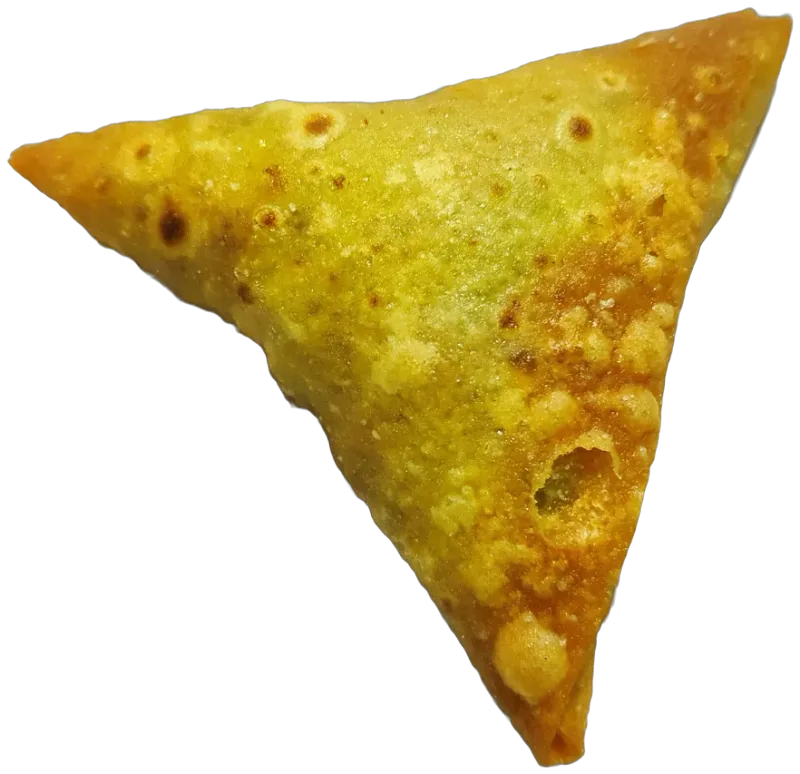
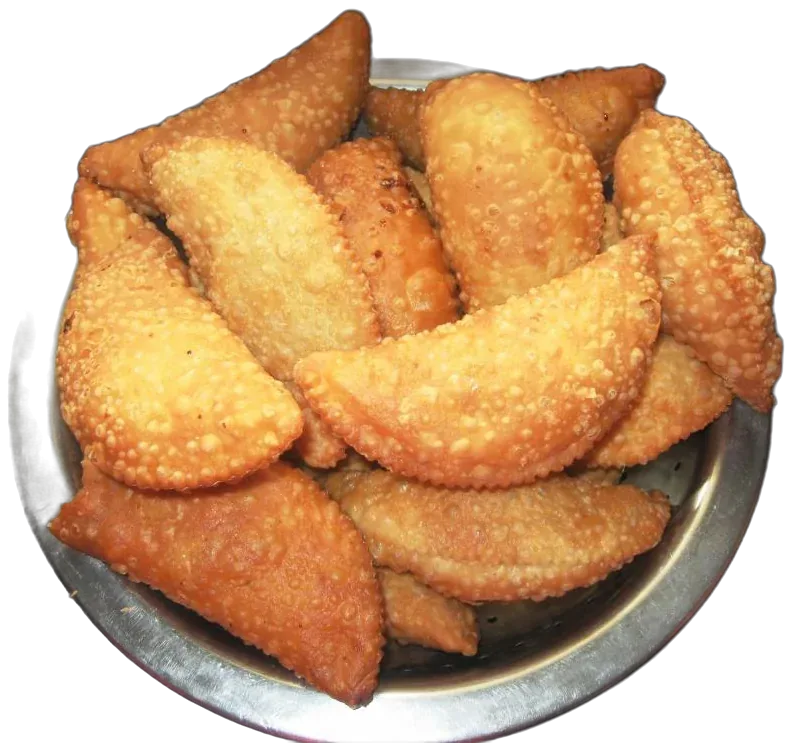
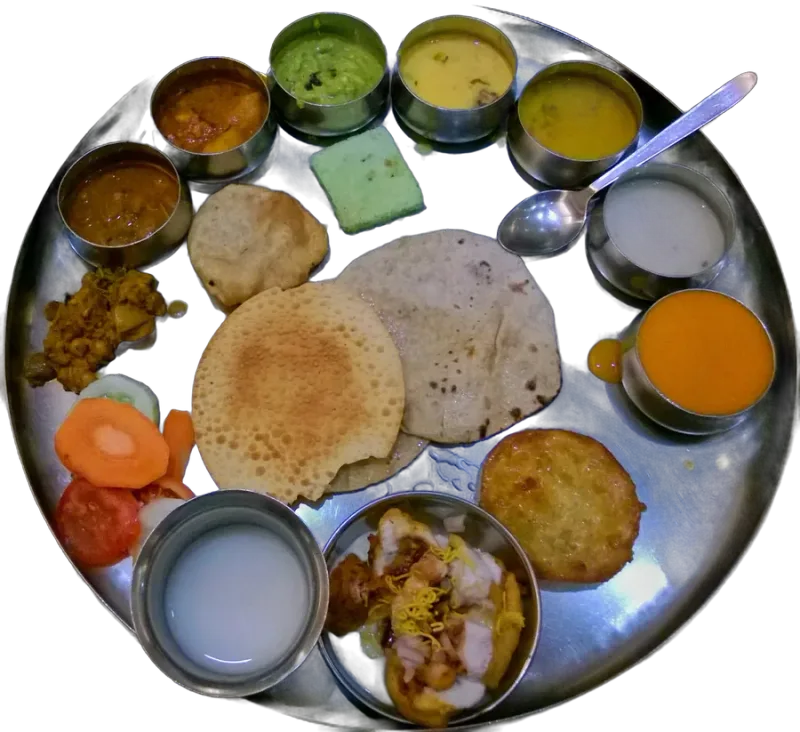
Homes make gujiya, a sweet fried pastry of khoya and dry fruit, along with dahi bhalla, kanji with mustard seed, papdi chaat and thandai. Everyone gets a plate of whatever is cooking. Thandai is sometimes laced with bhang, which is a serious matter if you have not tried it, and so ask whether it is the plain kind before you take a glass. Our post on thandai and bhang explains why.
Planning the trip from Delhi, and a Holi in Braj
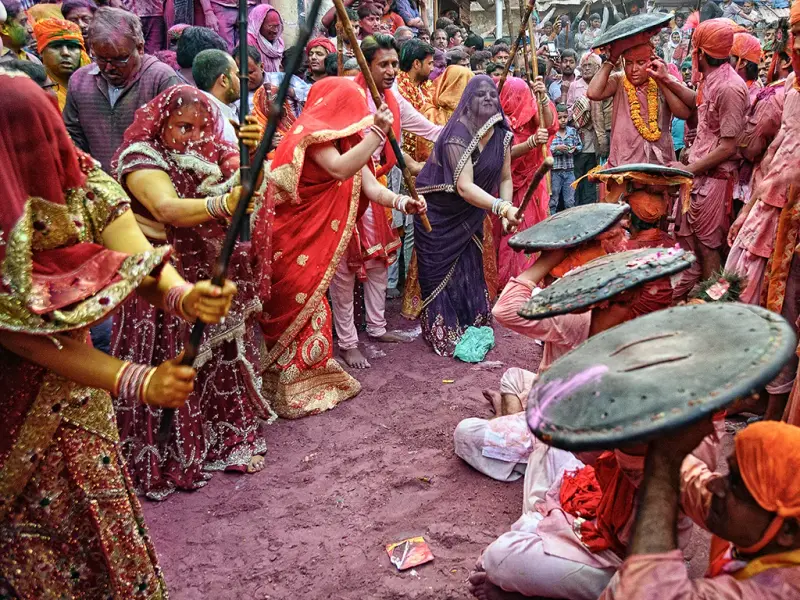
If you would like a Holi that is bigger than the colony kind, Braj is about three hours from Delhi and its celebrations stretch over days: Lathmar in Barsana and Nandgaon, flower Holi at Banke Bihari, Huranga at Dauji. The posts on this site go into each of them.
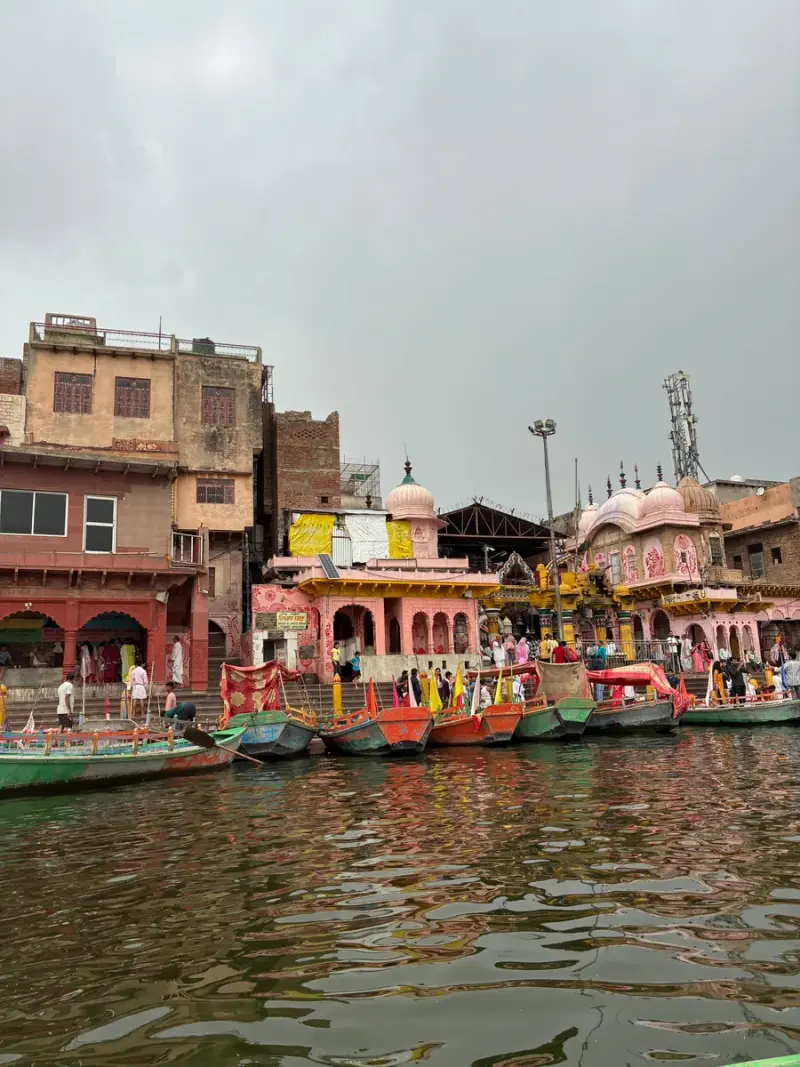
Laladham can pick you up in Delhi, from the airport, the station or your home, and run the whole trip: a cab and driver that know the road closures, a stay in Vrindavan or Mathura, a plan for which Holi to see on which day, and a clean and quiet return to Delhi. For a Holi elsewhere in India, we will plan that as well. Ask for a quote from the booking page and mention your dates, the group size and whether children or elders are travelling.
Questions, answered
When is Holi in 2027?
Drik Panchang gives 21 March 2027 for the bonfire and 22 March for the colours, but Delhi central-government offices mark 23 March. Confirm locally.
How do I remove Holi colour from skin and hair?
Oil before and a gentle wash after. Rinse warm with gentle soap and never scrub. The tint fades within a few days.
Is Holi safe for foreigners in Delhi?
Yes, in an invited group or at an organised event. Avoid wandering alone in crowded streets, and respect a person's right to say no.
What colours are safe?
Choose dry herbal gulal tested for skin, and avoid shiny paints, silver and oil colours, which can irritate the skin and eyes.
- Local tradition and Braj Holi accounts on this site