Vishnu · मासिक व्रत
श्री सत्यनारायण व्रत कथा (पाँचों अध्याय)
Satyanarayan Vrat Katha (all five chapters)
The full Satyanarayan katha in five adhyays: the poor Brahmin, the woodcutter, the merchant Sadhu and Kalavati, King Ulkamukh and King Tungadhwaj, with the vrat rules.
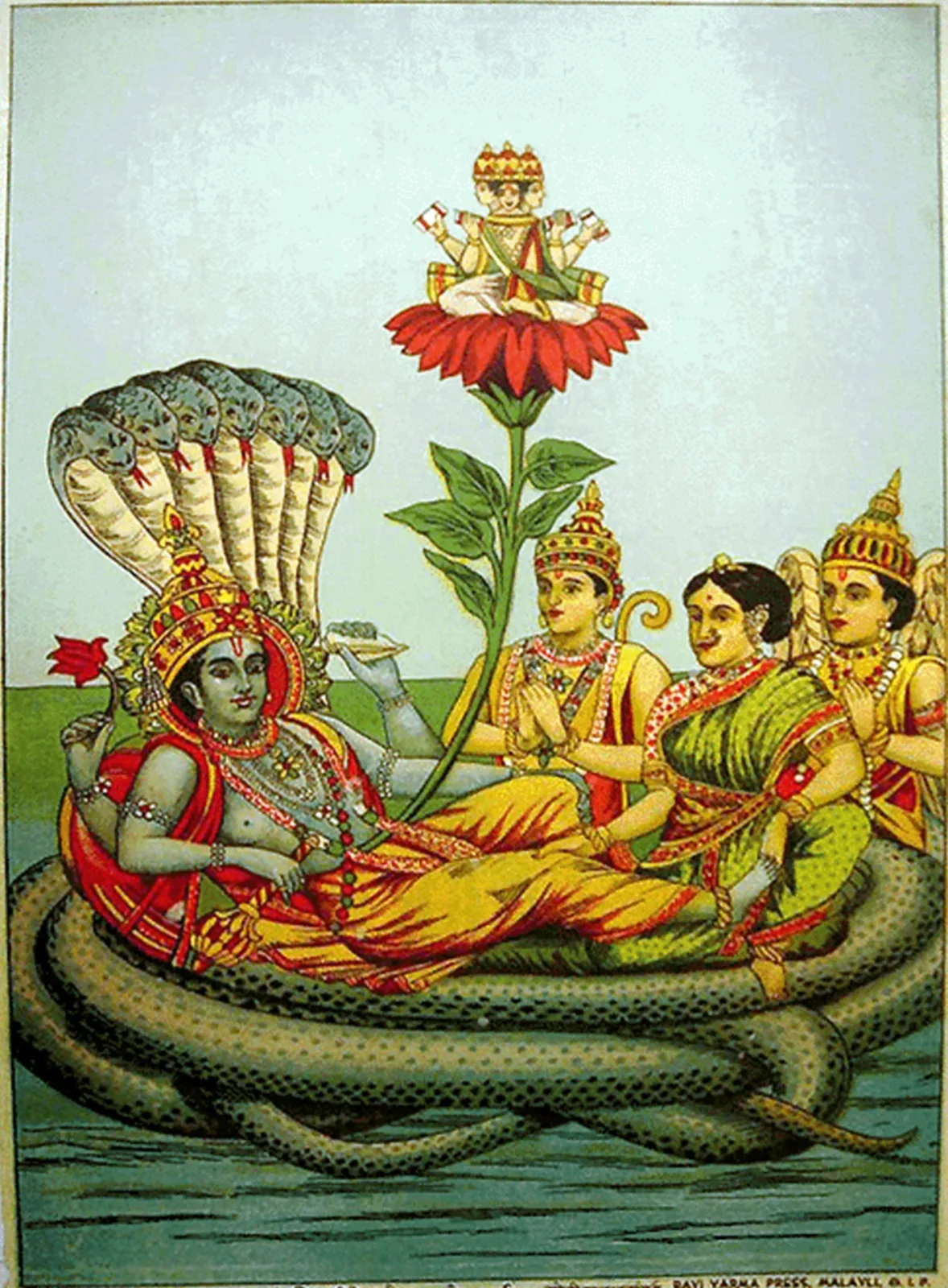
Most families hold it on Purnima, the full moon day, every month, and also on Ekadashi or on a Thursday. It is also done freely, whenever a wish is granted: a new home, a wedding, a new job, a birth. The evening is preferred. There is no fixed month. Check a panchang (drikpanchang.com) for your city to find the next Purnima and its timing.
Vishnu · Purnima is most loved; any auspicious day works
व्रत कथा The katha
Several pages credit the Bhavishya Purana (Pratisarga Parva) with an early form of this vow, while the printed five-chapter book traces itself to the Skanda Purana, Reva Khanda. Printed editions differ in small points, such as how the ascetic episodes are divided between chapters 3 and 4, and in the closing list of later births. This page follows the commonest printed chapter order. The vow was also known in some places as Satyapir puja.
कथा (हिंदी)
पहला अध्याय: कथा नैमिषारण्य से शुरू होती है। वहाँ शौनक आदि अट्ठासी हज़ार ऋषि बैठे थे और उन्होंने सूत जी से पूछा कि कलियुग में जिन लोगों ने वेद नहीं पढ़े, वे कौन सा सरल व्रत करें जिससे थोड़े समय में पुण्य मिले और मन की इच्छा पूरी हो। सूत जी बोले कि यही प्रश्न एक बार नारद जी ने भगवान से किया था। नारद मुनि लोकों में घूमते हुए देखते थे कि प्राणी अपने ही कर्मों का फल भोगते हुए दुख पा रहे हैं, और उनका मन करुणा से भर आया। वे विष्णुलोक पहुँचे, शंख, चक्र, गदा और कमल धारण किए नारायण की स्तुति की और पूछा कि बिना बहुत कष्ट उठाए मनुष्य अपने दुखों से कैसे छूटे। भगवान ने मुस्कुरा कर कहा कि एक दुर्लभ व्रत है, सत्यनारायण का व्रत, जो इस लोक में सुख देता है और परलोक में सद्गति। उन्होंने बताया कि संध्या के समय भक्ति के साथ, ब्राह्मणों और परिवार के बीच पूजा की जाए, केला, घी, दूध और गेहूँ के आटे का प्रसाद, यानी सवा गुना, शक्कर या गुड़ मिलाकर चढ़ाया जाए, पहले भगवान को भोग लगे, फिर सबको खिलाकर स्वयं खाया जाए, और भजन कीर्तन हो। यही पहले अध्याय का सार है: विधि सरल है, मन सच्चा चाहिए।
दूसरा अध्याय: काशी नगर में एक बहुत निर्धन ब्राह्मण रहता था जो भूख और प्यास से व्याकुल होकर रोज़ भटकता था। उसकी दशा देख कर भगवान स्वयं एक बूढ़े ब्राह्मण का रूप लेकर उसके पास आए और पूछा कि तुम दुखी हो कर क्यों घूमते हो। ब्राह्मण ने कहा कि मैं गरीब हूँ, भिक्षा पर जीता हूँ, कोई उपाय हो तो बताइए। बूढ़े ब्राह्मण ने कहा कि सत्यनारायण भगवान मनचाहा फल देते हैं, उनका व्रत करो, और पूरी विधि बता कर अदृश्य हो गए। उस रात ब्राह्मण को नींद नहीं आई। उसने ठान लिया कि सुबह व्रत करेगा। सवेरे वह भिक्षा के लिए निकला तो उसे उस दिन बहुत धन मिला। उसने परिवार के साथ विधि से सत्यनारायण का व्रत किया और उसका दारिद्र्य मिट गया, और वह हर महीने यह व्रत करने लगा।
दूसरा अध्याय (आगे): ऋषियों ने पूछा कि इस ब्राह्मण के बाद और किसने यह व्रत किया। सूत जी ने एक लकड़हारे की बात सुनाई। वह बूढ़ा लकड़हारा लकड़ी का गट्ठर सिर पर उठाए प्यासा चला आ रहा था। उसने ब्राह्मण और उसके रिश्तेदारों को पूजा करते देखा, गट्ठर नीचे रखा और पूछा कि यह क्या हो रहा है और इससे क्या मिलता है। ब्राह्मण ने उत्तर दिया कि यह सत्यनारायण का व्रत है, सब मनोकामनाएँ पूरी करने वाला, और मेरी सारी समृद्धि इसी की कृपा है। लकड़हारे ने चरणामृत लिया, प्रसाद खाया और घर गया। उसने निश्चय किया कि अगले दिन लकड़ी बेच कर जो मिलेगा, उससे सत्यनारायण की पूजा करूँगा। वह लकड़ी लेकर ऐसे नगर में गया जहाँ धनी लोग रहते थे, और उसे वहाँ लकड़ी का दाम चौगुना मिला। उसने केला, शक्कर, घी, दूध, दही, गेहूँ का आटा और सारी सामग्री ली, रिश्तेदारों को बुलाया और विधि से पूजा की। उसे धन, पुत्र और सुख मिला और अंत में वह बैकुंठ गया।
तीसरा अध्याय: अब राजा उल्कामुख की कथा आती है। वह सत्यवादी, संयमी और बुद्धिमान था, रोज़ मंदिर जाता और निर्धनों को दान देता था। उसकी रानी भी सती और पतिव्रता थी। एक दिन दोनों भद्रशीला नदी के किनारे सत्यनारायण की पूजा कर रहे थे। तभी साधु नाम का एक धनी वैश्य व्यापारी अपनी नाव लेकर वहाँ आया। उसने नाव किनारे लगाई और राजा से पूछा कि महाराज, यह क्या कर रहे हैं। राजा ने कहा कि हम संतान की कामना और घर की भलाई के लिए सत्यनारायण का व्रत कर रहे हैं। साधु ने विनती की कि मुझे भी यह विधि बताइए, मेरे घर में कोई संतान नहीं है, पुत्र या पुत्री हुई तो मैं भी पूजा करूँगा। घर आकर उसने पत्नी लीलावती को सब बताया और कहा कि संतान होगी तो व्रत करेंगे।
तीसरा अध्याय (आगे): भगवान की कृपा से लीलावती गर्भवती हुई और दसवें महीने एक सुंदर कन्या हुई जिसका नाम कलावती रखा गया। वह शुक्ल पक्ष के चंद्रमा की तरह दिन-दिन बढ़ने लगी। लीलावती ने कई बार याद दिलाया कि तुमने जो व्रत मानी थी, अब कर लो। साधु बोला कि कन्या के विवाह के समय करूँगा। समय आने पर उसने दूत भेज कर एक योग्य वर खोजा और विवाह कर दिया, फिर भी व्रत नहीं किया। इस बात से सत्यनारायण भगवान रुष्ट हुए और उन्होंने उसे भारी कष्ट का शाप दे दिया। साधु अपने दामाद के साथ व्यापार के लिए समुद्र के पार रत्नसारपुर नगर पहुँचा। वहाँ राजा चंद्रकेतु का राज्य था।
तीसरा अध्याय (और आगे): भगवान की इच्छा से उसी समय एक चोर राजा का खज़ाना चुरा कर भागा। सिपाहियों को पीछे आते देख उसने गठरी साधु और उसके दामाद के सामान के बीच छुपा दी और निकल गया। सिपाहियों ने वहाँ धन पाया तो दोनों व्यापारियों को चोर समझ कर बाँध लिया और राजा के सामने ले गए। राजा ने बिना पूछे दोनों को कैद में डाल दिया और उनका सारा धन छीन लिया। उधर घर पर लीलावती दुख में थी, चोरों ने बचा-खुचा धन भी ले लिया। भूख से बेहाल कलावती एक दिन एक ब्राह्मण के घर पहुँची, वहाँ सत्यनारायण की कथा और पूजा हो रही थी। उसने कथा सुनी, प्रसाद पाया और रात को घर लौटी। माँ ने देर का कारण पूछा तो कलावती ने सब बताया। लीलावती को याद आया कि यही व्रत तो पति ने मानी थी। उसने परिवार के साथ पूजा की और प्रार्थना की कि पति और दामाद सकुशल लौटें और उनकी भूल क्षमा हो जाए।
तीसरा अध्याय (समापन): भगवान प्रसन्न हुए। उसी रात उन्होंने राजा चंद्रकेतु को सपने में दर्शन दिए और आज्ञा दी कि जिन दोनों व्यापारियों को तुमने बंदी बनाया है, वे निर्दोष हैं, सुबह उन्हें छोड़ दो और उनका धन लौटा दो, नहीं तो तुम्हारा राज्य, धन और संतान नष्ट हो जाएँगे। सुबह राजा ने सभा में अपना स्वप्न बताया, दोनों को बुलवाया, नए वस्त्र पहनाए और जितना लिया था उसका दुगुना धन लौटाया। दोनों व्यापारी अपने घर की ओर चले।
चौथा अध्याय: साधु ने मंगल कार्य करके नाव से घर की यात्रा शुरू की। कुछ दूर चला तो भगवान दंडी संन्यासी का वेश लेकर आए और पूछा कि तुम्हारी नाव में क्या है। धन के घमंड में साधु हँसा और बोला कि दंडी बाबा, क्या कर लोगे, इसमें तो बस बेल और पत्ते हैं। संन्यासी ने कहा कि तथास्तु, जैसा तुम कहते हो वैसा ही हो, और जाकर समुद्र के किनारे बैठ गए। जब साधु ने नाव को ऊँची तैरती देखा और भीतर झाँका तो सचमुच बेल और पत्ते ही थे। वह मूर्छित होकर गिर पड़ा। होश आया तो रोने लगा। दामाद ने समझाया कि यह उन संन्यासी का शाप है, चलो उन्हीं की शरण लें। साधु उनके पास गया, पाँव पकड़े और अपने झूठ के लिए क्षमा माँगी। संन्यासी रूप भगवान ने कहा कि तुमने पूजा से मुँह मोड़ा, इसी से इतना दुख मिला। साधु ने वचन दिया कि अब सामर्थ्य के अनुसार पूजा करूँगा। भगवान प्रसन्न होकर अंतर्धान हो गए और नाव धन से भर गई।
चौथा अध्याय (आगे): साधु और दामाद ने साथियों सहित सत्यनारायण की पूजा की और नगर की ओर बढ़े। पास पहुँच कर उसने एक दूत भेजा कि घर में खबर कर दे। लीलावती ने समाचार सुना तो आनंद से सत्यनारायण की पूजा की और कलावती से कहा कि काम पूरा करके जल्दी आना, पिता और पति पास आ गए हैं। कलावती इतनी उतावली थी कि पूजा का प्रसाद वहीं छोड़ कर दौड़ी चली आई। यह देख कर भगवान फिर रुष्ट हुए, और घाट पर पहुँचते ही कलावती का पति नाव समेत जल में अदृश्य हो गया। कलावती यह देख कर रोती हुई गिर पड़ी। साधु व्याकुल हो कर बोला कि हमसे फिर कोई भूल हुई है, भगवान क्षमा करें। तब आकाशवाणी हुई कि कलावती प्रसाद छोड़ कर आई है, इसलिए इसका पति लुप्त हुआ है। यह घर जाकर प्रसाद ले और फिर लौटे तो इसे पति मिलेगा। कलावती घर गई, प्रसाद खाया और लौटी तो देखा कि पति वहीं खड़ा है। उसके बाद साधु ने परिवार और बंधुओं के साथ विधि से सत्यनारायण की पूजा की, और हर पूर्णिमा तथा संक्रांति पर करता रहा। इस लोक में सुख भोग कर अंत में वह स्वर्ग गया।
पाँचवाँ अध्याय: सूत जी ने कहा कि अब एक और राजा की बात सुनो, तुंगध्वज की। वह प्रजा को प्रेम से पालता था, पर प्रसाद का अनादर करके उसने दुख पाया। एक बार वह शिकार खेलता हुआ जंगल में गया, बहुत जानवर मारे और थक कर एक बरगद के नीचे बैठा। वहाँ ग्वाले अपने परिवारों के साथ भक्ति से सत्यनारायण की पूजा कर रहे थे। राजा ने देखा, पर अभिमान में न नमस्कार किया, न पूजा में बैठा। ग्वालों ने प्रसाद लाकर दिया तो उसे भी छोड़ दिया और नगर लौट गया। नगर पहुँचा तो सब कुछ उजड़ा हुआ मिला। उसने समझ लिया कि यह भगवान के प्रसाद का अनादर करने का फल है। वह उसी क्षण जंगल लौटा, ग्वालों के साथ विधि से पूजा की, प्रसाद खाया और भगवान की कृपा से उसका राज्य फिर वैसा ही हो गया। लंबे समय तक सुख भोग कर वह स्वर्ग गया।
पाँचवाँ अध्याय (फलश्रुति): जो मनुष्य इस दुर्लभ व्रत को करता है, उसे धन-धान्य मिलता है, गरीब धनी होता है, भय से छूटता है, निःसंतान को संतान मिलती है, इच्छाएँ पूरी होती हैं और अंत में बैकुंठ मिलता है। सूत जी ने बताया कि पुराने भक्त फिर किन रूपों में जन्मे: बूढ़ा ब्राह्मण शतानंद सुदामा बना और मुक्त हुआ, लकड़हारा निषादराज गुह बना, राजा उल्कामुख दशरथ बने, साधु वैश्य मोरध्वज हुआ, और तुंगध्वज स्वयंभू मनु बना। कथा यहीं पूरी होती है। प्रसाद लेकर, श्रद्धा से, भूल-चूक की क्षमा माँग कर सब उठते हैं और सत्यनारायण की आरती गाते हैं।
The katha (English)
Chapter 1: The katha begins in the forest of Naimisharanya, where Shaunaka and eighty-eight thousand sages sat with the storyteller Suta. They asked a plain question: in the Kali age, what simple vow can an ordinary person keep, someone who has not studied the Vedas, that brings merit quickly and grants a wish? Suta answered that Narada had once put the same question to God himself. Narada, wandering through the worlds, had watched creatures suffer the fruits of their own deeds, and his heart ached. He went to Vishnuloka, praised Narayan who holds the conch, discus, mace and lotus, and asked how people might be freed from sorrow without great hardship. Vishnu said there is a rare vow, named for Satyanarayan, that gives joy in this life and a good end in the next. He described it: worship in the evening with devotion, in company with Brahmins and relatives, with an offering of banana, ghee, milk and wheat flour, mixed with sugar or jaggery. First it is offered to God, then everyone is fed, and only then does the devotee eat, with songs and kirtan after. The lesson of the first chapter is that the method is simple and the heart must be honest.
Chapter 2: In the city of Kashi lived a very poor Brahmin who wandered about, tormented by hunger and thirst. Seeing his state, the Lord took the form of an old Brahmin and asked him why he roamed so unhappily. The man said he was poor, lived on alms, and wanted some way out. The old Brahmin replied that Satyanarayan gives whatever fruit one desires, told him the full method of the vow, and then vanished. The poor man could not sleep that night, and resolved to keep the vow at dawn. When he went out for alms the next morning, he received far more than ever before. With his family he performed the vow properly, his poverty melted away, and from then on he kept it every month.
Chapter 2, continued: The sages asked who else had kept this vow after that Brahmin. Suta told of an old woodcutter, old and thirsty, who came along with a bundle of firewood on his head. He saw the Brahmin and his relatives at worship, set his bundle down, and asked what it was and what it gave. The Brahmin said it was Satyanarayan's own observance, which fulfils every wish, and that his own good fortune came from it. The woodcutter took the charanamrit and the prasad, went home, and decided that next day he would perform the puja with whatever his wood fetched. He carried it into a town where wealthy people lived and was paid four times the usual price. He bought bananas, sugar, ghee, milk, curd, wheat flour and the rest, called his relatives, and worshipped in the proper way. He gained wealth, sons and comfort, and in the end reached Vaikuntha.
Chapter 3: Now comes King Ulkamukh, a truthful, self-controlled and wise ruler who went to the temple daily and gave to the poor. His queen was just as virtuous. One day the two sat on the bank of the Bhadrashila river worshipping Satyanarayan. A wealthy merchant of the Vaishya caste named Sadhu brought his boat to the bank and asked the king what they were doing. The king said they were keeping the vow of Satyanarayan, praying for children and for the good of the household. Sadhu asked to be taught it, saying he had no child, and promised that if a son or daughter came he too would do the puja. At home he told his wife Lilavati everything.
Chapter 3, continued: Through the Lord's blessing Lilavati conceived, and in the tenth month a lovely girl was born and named Kalavati. She grew like the moon in its bright fortnight. Lilavati reminded her husband again and again of the vow he had made, but Sadhu said he would do it at the girl's wedding. When the time came he sent a messenger, found a suitable groom, and married her off, yet he still did not keep the vow. Satyanarayan was displeased at the broken promise and laid a curse of heavy trouble on him. Sadhu and his daughter's husband sailed across the sea to trade and reached the town of Ratnasarpur, ruled by King Chandraketu.
Chapter 3, further on: At that very moment, by the Lord's will, a thief had stolen the royal treasure. Seeing the guards behind him, he slipped the bundle in among the goods of the two merchants and fled. When the guards found the treasure there, they bound both men as thieves and dragged them before the king, who put them in prison without asking questions and seized all their wealth. Back home Lilavati was in anguish, and thieves carried off whatever was left. Starving, Kalavati wandered one day into a Brahmin's house where the Satyanarayan katha was being told. She listened, received the prasad, and returned late at night. When her mother asked why, Kalavati told her. Lilavati remembered: here was the observance her husband had promised. She performed it with the family, praying that her husband and son-in-law would come home safe and their fault be forgiven.
Chapter 3, ending: The Lord was pleased. That night he appeared in a dream to King Chandraketu and commanded: the two merchants you imprisoned are innocent, release them at dawn and return their goods, or your kingdom, wealth and children will be destroyed. In the morning the king told his dream to the court, summoned the prisoners, dressed them in fresh clothes, and gave back twice what he had taken. The two men set out for home.
Chapter 4: After the rites of thanks, Sadhu started homeward by boat. Along the way the Lord came in the guise of a staff-bearing ascetic and asked what the boat carried. Proud of his riches, Sadhu laughed and said it held nothing but creepers and leaves. The ascetic answered, so be it, and went to sit by the shore. When the merchant found his boat riding high in the water and looked inside, there were only vines and leaves, and he fainted. The young man reminded him that this was the ascetic's curse and that they should seek his refuge. Sadhu went and fell at the stranger's feet, begging pardon for his false words. The Lord, in that form, told him his long suffering came because he had turned away from worship. Sadhu promised to worship according to his means, the Lord vanished, and the boat was full of wealth again.
Chapter 4, continued: The two men worshipped with their companions and sailed on. Near the city he dispatched a runner ahead. Lilavati heard the news, worshipped Satyanarayan with joy, and told Kalavati to finish her duty and hurry, since her father and husband had arrived. Kalavati was so eager that she left the prasad behind and ran to the river bank. The Lord was displeased again, and just as she reached the landing, her husband and his boat vanished beneath the water. She fell weeping. Sadhu cried out that some fresh fault had been committed, and begged forgiveness. A voice from the sky said that Kalavati had left the prasad, so her husband was hidden from her; if she went home, ate the prasad and came back, she would find him. She did so, and her husband stood there. After that Sadhu worshipped with his family and kin every Purnima and every Sankranti, enjoyed this world, and finally rose to the heavenly worlds.
Chapter 5: Suta then spoke of King Tungadhwaj, who ruled his people lovingly but suffered for scorning God's prasad. Once, hunting in the forest, he killed many animals and rested under a banyan tree. There some cowherds were worshipping Satyanarayan with their families. The king saw it but, in pride, neither bowed nor sat with them, and when they brought him the prasad he left it and walked off. Reaching his city, he found everything in ruins and understood why. He went straight back to the cowherds, worshipped with them properly then took the prasad himself; by the Lord's grace his kingdom was whole again. After many years of happiness he went to heaven.
Chapter 5, the fruit: Whoever keeps this rare vow, Suta said, gains grain and wealth, the poor grow rich, fear leaves, the childless are given children, wishes are fulfilled, and at last Baikunth is reached. He then named the later births of the old devotees: the Brahmin Shatananda was born as Sudama and was freed, the woodcutter became the boatman-king Guha, King Ulkamukh was born as Dasharatha, the merchant Sadhu as Mordhwaj, and Tungadhwaj as Svayambhuva Manu. The katha ends here. Everyone takes the prasad with respect, asks pardon for any slip, and rises to sing the aarti of Satyanarayan.
Traditional source: Skanda Purana, Reva Khanda tradition, as told in the common five-chapter printed Satyanarayan vrat katha books
क्या खाएँ · What to eat
- Prasad made of wheat flour or suji (sheera), ghee, milk, sugar or jaggery and banana, offered first to God
- Panchamrit and tulsi leaves as charanamrit
- A sattvik, homecooked meal after the puja, with no onion or garlic
- Fruit, milk or a single meal for those who keep a fast until the evening puja
क्या छोड़ें · What to avoid
- Onion, garlic, meat, fish, eggs and alcohol on the day
- Leaving the prasad untouched or carelessly (the katha itself warns about this, in Kalavati's and Tungadhwaj's stories)
- Postponing a vow once made, as Sadhu did
- Tasting the prasad before the offering and the katha are finished
नियम How the day is kept
- Bathe, wear clean clothes, and keep the home clean and quiet
- Set a chowki with a picture of Satyanarayan or a Shaligram, a kalash, and banana leaves
- Listen to or read all five adhyays, with family and neighbours called to sit
- Offer the prasad, then aarti, then share the prasad with everyone present
- Give dakshina or food to a Brahmin or the needy as you can
पारण और उद्यापन Breaking the fast
Where a fast is kept, it is broken in the evening after the puja, the katha, the aarti and the prasad. Sweet prasad goes round first, then the family eats a light sattvik meal. No special next-morning paran is required; the vow is complete once the prasad is shared and the katha has been heard to the end.
Nothing special is needed. Many families simply repeat the vow on a monthly Purnima, and some perform a larger puja with a feast at a wedding, a new home or after a wish is granted.
आरती और पूजा Aarti and puja
Sing the Satyanarayan aarti, Om Jai Lakshmi Ramana, after the fifth adhyay, waving a ghee lamp before the picture. Om Jai Jagdish Hare is also sung in many homes.
Om Jai Lakshmi RamanaSatyanarayan puja vidhi at homePurnima vrat
If you wish to hear the katha where Vishnu is worshipped for generations, Laladham can pick you up in Delhi and take you to Mathura and Vrindavan for a complete, unhurried trip. Plan this trip
प्रश्न Questions, answered
How many chapters (adhyay) are there in the Satyanarayan katha?
Five. The first has Narada and Vishnu, the second the poor Brahmin and the woodcutter, the third and fourth the merchant Sadhu with Kalavati and King Ulkamukh, and the fifth King Tungadhwaj and the list of later births.
Which day is best for the Satyanarayan katha?
Purnima is the most favoured day, and many families hold it every month. Ekadashi and Thursday are also named. It can be done on any day when you wish to give thanks, and the evening is preferred.
Which Purana is the Satyanarayan katha from?
The common printed book names the Skanda Purana, Reva Khanda. Some pages cite the Bhavishya Purana instead. Both are named by different sources, so this page says so openly.
What is the prasad of Satyanarayan?
A sweet of wheat flour or suji roasted in ghee with milk, sugar or jaggery and sliced banana, with tulsi leaves added. The katha itself tells us never to leave it or take it lightly.
Can the katha be heard without a priest?
Yes. A family can read the five adhyays at home. Many hire a pandit for the full puja, but the vow is described as simple, and the katha stresses honest intent over show.
तिथि और पारण का समय हर शहर में अलग होता है; अपने शहर का पंचांग (drikpanchang.com) देखें। कुल की परंपरा सर्वोपरि है। Dates change every year, so check a panchang for your city. If you are unwell, pregnant or on medicine, keep the fast in a lighter way.
Hear it in Braj. Laladham picks you up in Delhi and runs the complete trip, so you can keep your vrat where the stories happened.
Plan my trip