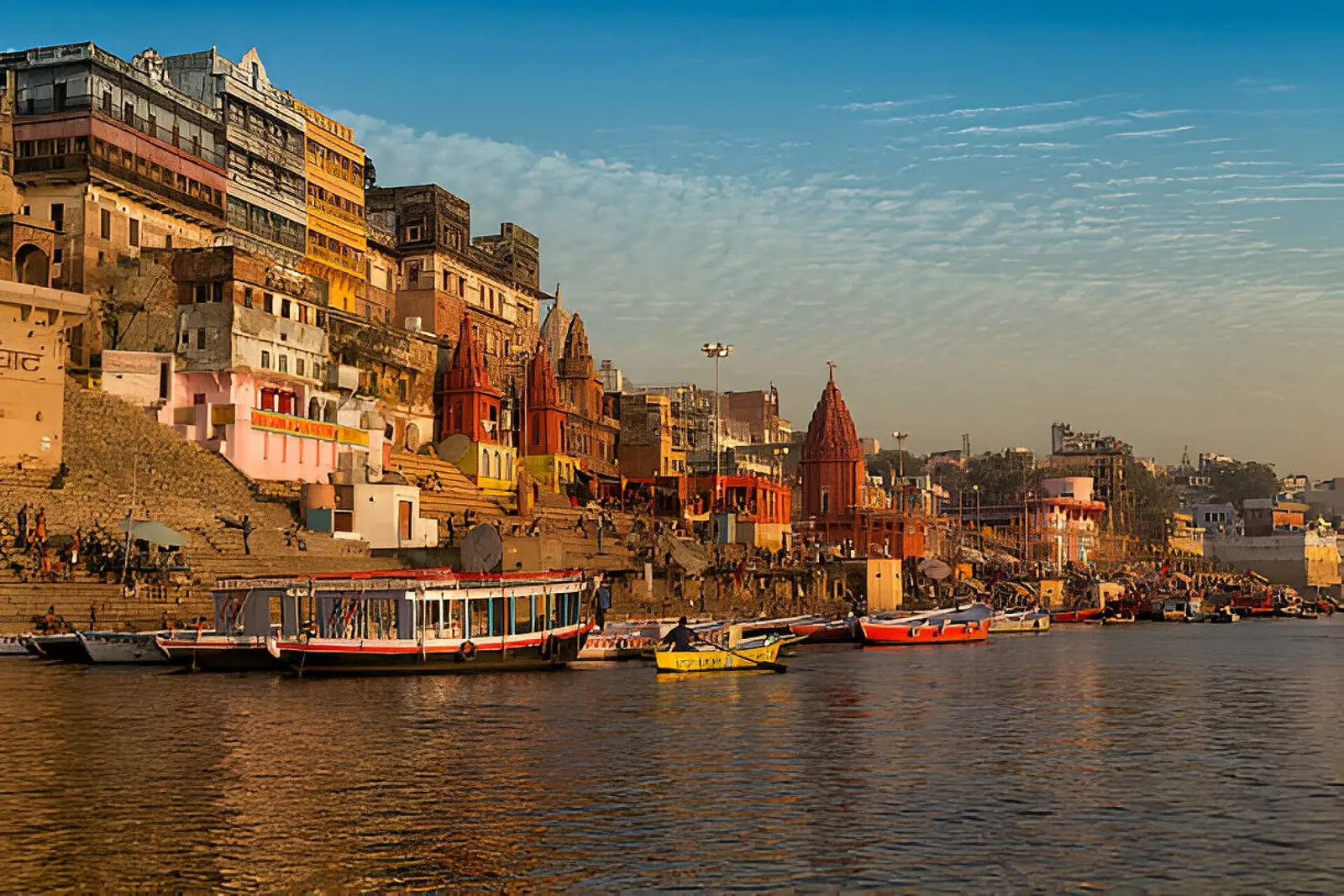
Most people who write about Varanasi start with the same warning: it is loud, crowded, smoky in places and nothing like a postcard. Most of them also end the same way, saying it stayed with them long after the flight home. The city rewards a slow schedule. Rush it into one day and you get the river at its most chaotic and none of the quiet that sits between the ceremonies.
This plan gives the city four days and builds them around light. The dawn hours belong to the water: a rowing boat from Assi Ghat, bathers in the mist, the east turning red over the far bank. The middle of the day is for lanes, temples, looms and a long lunch, the hours when the ghats are too hot and too busy to enjoy. Evenings go to the aarti. One full morning is kept for Sarnath, ten kilometres out, where the Buddha is said to have first taught, and where the pace drops sharply after the old city.
It suits couples, friends and families with children old enough to cope with crowds, and parents who can walk on uneven steps with some help. It is a harder choice for anyone who needs flat, clean, quiet surroundings. Flights are not part of this trip. You land at Varanasi airport, and from there a private car and driver, plus a local guide at the main sights, are yours through Laladham.
From your pickup
Same trip, four starting points. Road times are real driving times; a long drive becomes its own travel day so nobody arrives wrecked.
Day by day
Day 1 · night in Varanasi
Land, settle in, first evening at the river
Varanasi airport to the old city, about 25 km, 45 minutes to an hour depending on traffic
The airport sits well outside town, and one solo traveller who flew in described the ride into the centre as roughly forty minutes. Expect a bit more at rush hour. Your driver meets you outside arrivals, and the first hour is just a drive through the outer city before the lanes tighten around the old quarter.
Drop your bags, rest, drink some water and eat something light. Most old city stays are a short rickshaw ride or walk from the river, but the lanes near the river are too narrow for cars, so the driver parks at the nearest point and your hotel or guide walks you in the last stretch. This is normal and nobody should treat it as a problem.
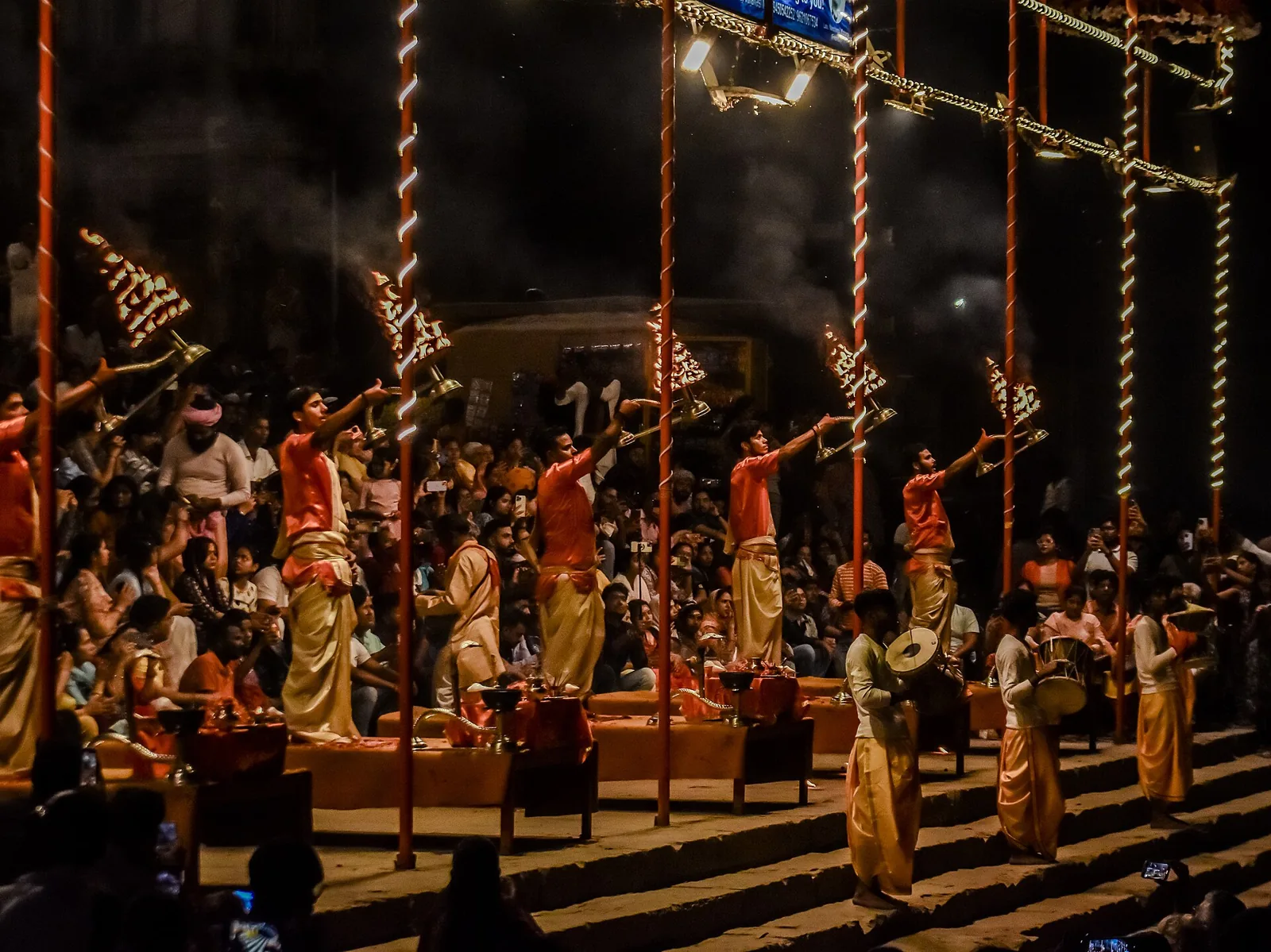
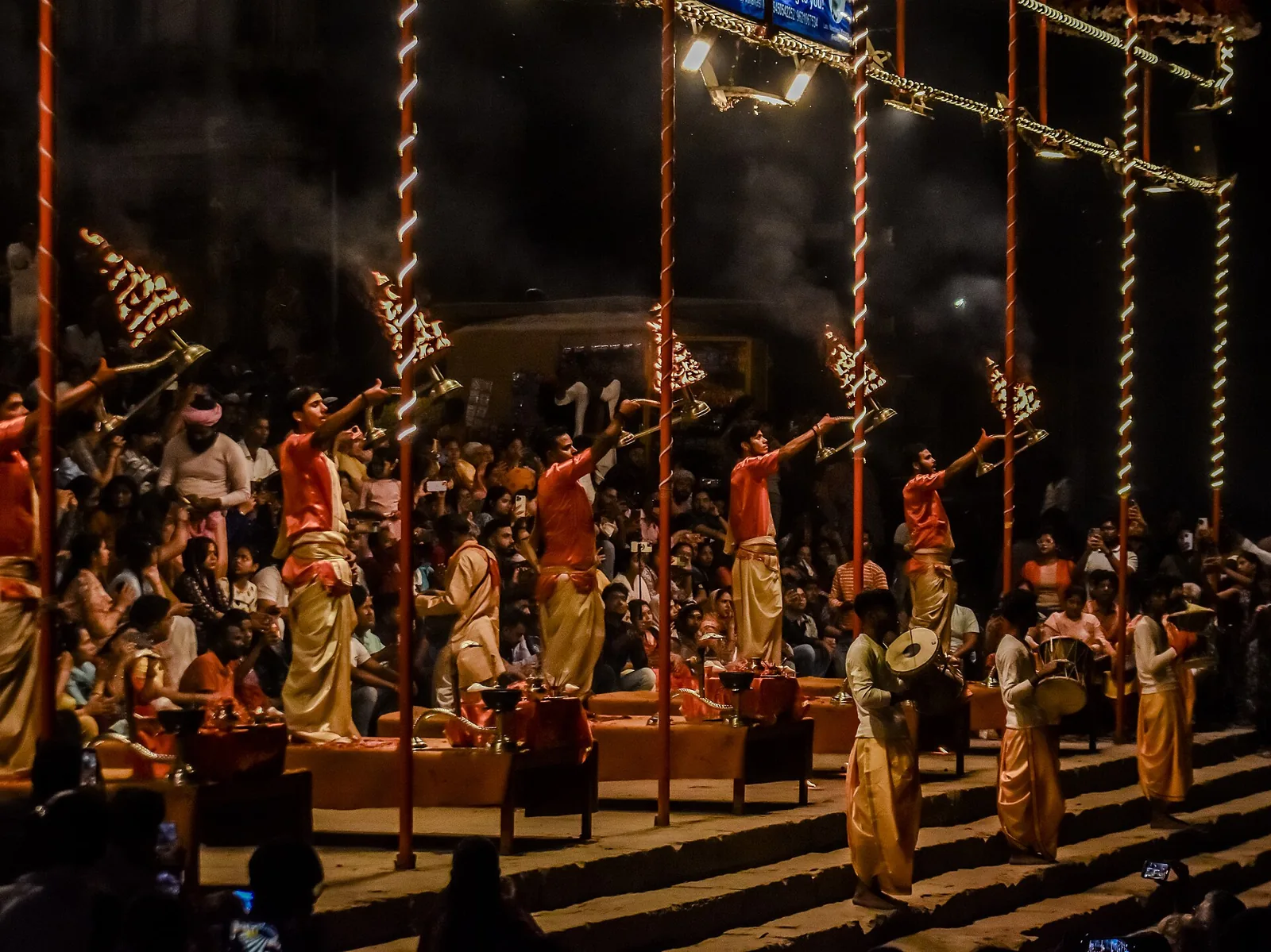
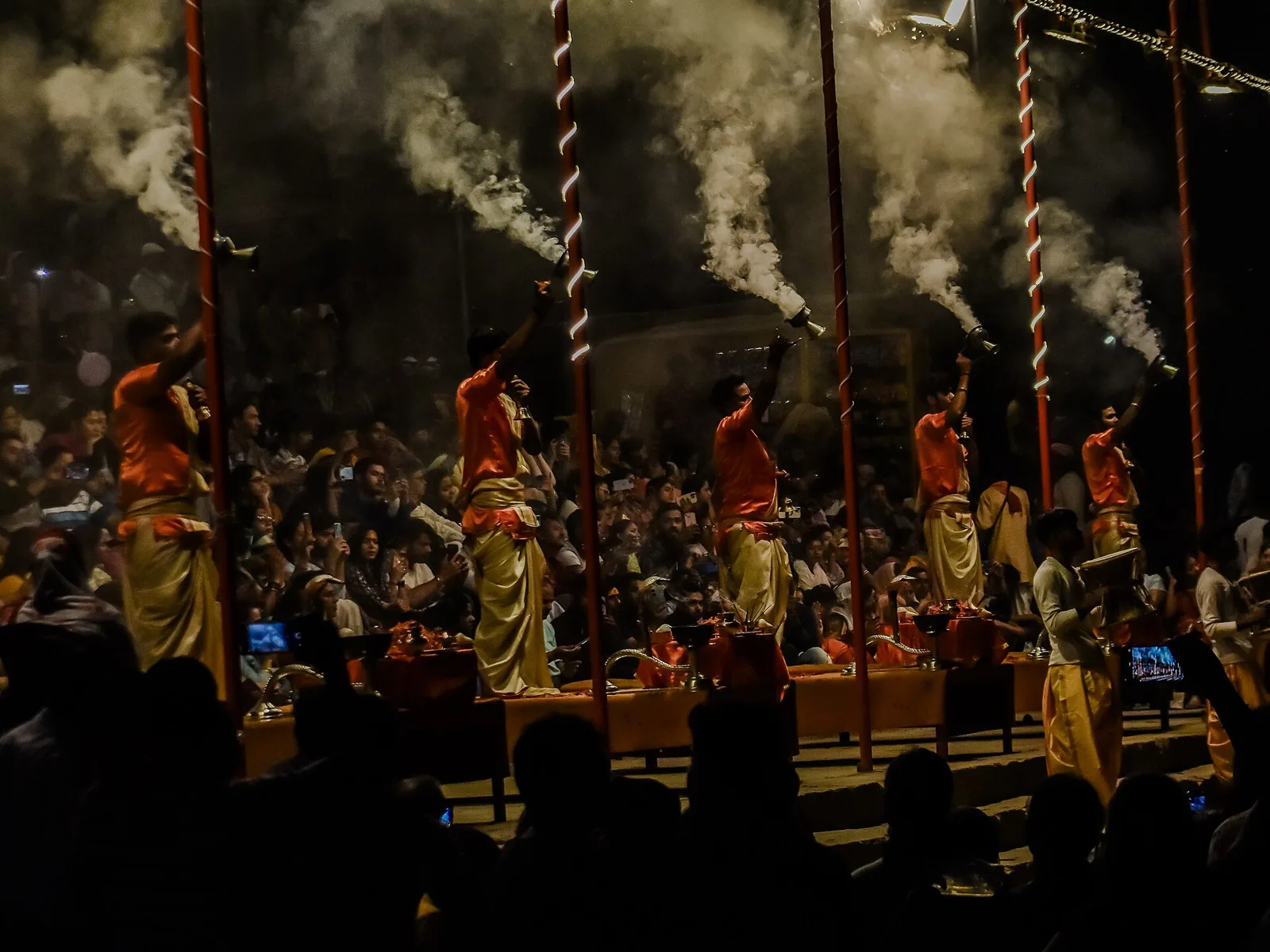
For the first evening, aim to be at Dashashwamedh Ghat well before the aarti begins. The official tourism line is to arrive an hour early, and two separate trip reports agree: one couple tried a boat on the first night and found it a bit far from the action, then came back the next evening around five and secured a spot right by the stage. On this first evening you may prefer the boat anyway, simply to see the whole riverfront lit up and to float a small lamp. The ceremony lasts three quarters of an hour and starts after sunset, so around half past six in summer and seven in winter. Getting out afterwards is the tough bit. People describe the steps emptying all at once with not a moment of calm, so let the crowd thin before you move.
- Varanasi airport
- Dashashwamedh Ghat
- Ganga aarti
Day 2 · night in Varanasi
Dawn boat, the ghat walk, the temple lanes
Be at the water before first light. Travellers who have done it put their alarms at four or half past, take a rickshaw through empty streets, and board a rowing boat at Assi Ghat, then drift north along the bank as the sky goes grey, then pink. The river here flows opposite to the way most people expect, which more than one writer mentions with surprise. In winter the morning is often misty, and one couple on a January trip got a red sun lifting straight out of the water in front of them. Bathing, laundry, small puja ceremonies, buffaloes being washed and children flying kites all share the same few hundred metres of bank.
Your boat will pass the burning ghats of Harishchandra and Manikarnika. Cremations go on day and night, a pyre taking about three hours, and the long-standing rule is no photographs. Those who describe it say the first minute is a shock and then it becomes strangely calm. Keep the camera down and keep your voice low. Touts on the steps sometimes offer to take you to a good viewing spot or to help with the cremation wood for a fee. Refuse politely and firmly.
Come back for breakfast. A solo traveller went straight to Shree Ram Bhandar around nine for aloo kachori with jalebi, and that matches the official food list: kachori sabzi in the morning, then lassi, thandai, tamatar chaat, chooda matar and litti chokha through the day. After that, the middle hours are for the temple lanes. Kashi Vishwanath opens in the small hours and the crowd is thinnest early, with queues on an ordinary day reported at somewhere between forty-five minutes and an hour and a half, and many hours on festival days and Mondays of the month of Sawan. The temple trust has an official booking option for a shorter queue, which your guide can explain. Afterwards, wander into the weaving alleys and sit down at a loom house. The same traveller found these power-loom lanes more compelling than a modern textile museum nearby.
Take a break in the heat of the afternoon, then return to the river for a second look at the ghats from the steps, and eat dinner somewhere that does not need you to climb back through the crowds. The restaurants near the ghats are mostly vegetarian and do not serve alcohol.
- Assi Ghat
- Harishchandra Ghat
- Manikarnika Ghat
- Kashi Vishwanath Temple
- Banarasi silk lanes
Day 3 · night in Varanasi
Sarnath in the morning, the university in the afternoon
Varanasi to Sarnath, about 10 km, 30 to 40 minutes
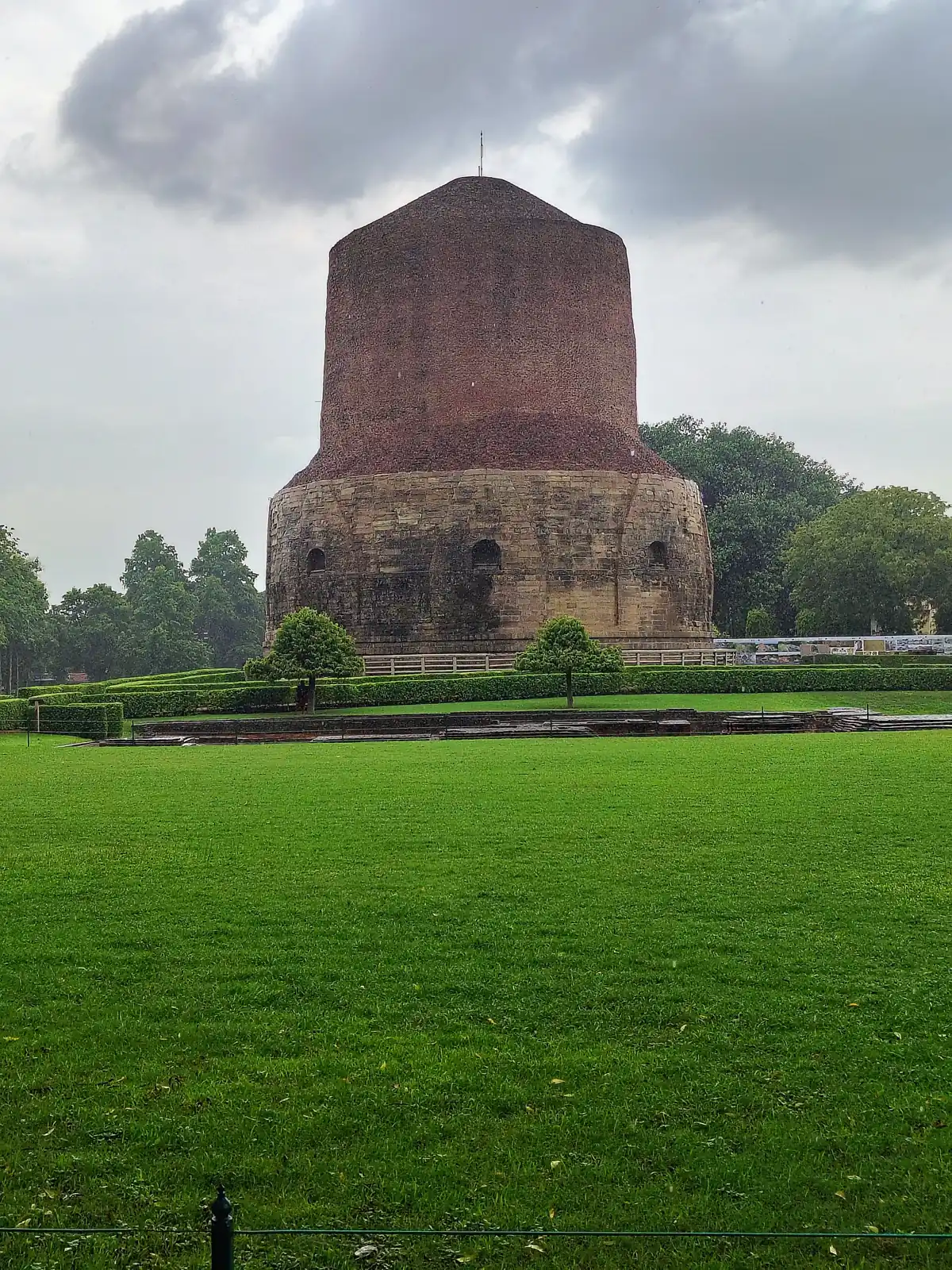
Sarnath is the exhale of the trip. The road out is short but takes thirty to forty minutes with traffic, and the change on arrival is sharp: lawns, brick ruins, bare trees, and no horns. The big drum of the Dhamek Stupa is the thing everyone photographs. Go around it slowly, then walk the ruins of the old monasteries. A traveller who has lived in India and visited Varanasi several times calls Sarnath a pleasant escape from the chaos, and that is exactly how it feels after two dawn starts.
Mulagandha Kuti Vihara is a modern Buddhist temple with prayer wheels, and one report says you spin them on your way in. Sellers near the gates can be persistent, and the same trip report mentions this, so decide in advance what you will say. The Archaeological Museum is the other reason to come. It opens at ten, shuts at five and is closed on Fridays, which matters for the day you plan this on. Inside, the Lion Capital of Ashoka stands in its own gallery, the one that became the national emblem. The other galleries hold Buddha images and carved lintels, and it is cooler inside than out for most of the year.
In the afternoon, drive back to the city and head for the Banaras Hindu University campus, which people describe as leafy and quiet, with Indo-Gothic buildings and the Bharat Kala Bhavan museum on site. This is the other calm place in Varanasi, and it is far less photographed than the ghats. End the day at Assi Ghat for the evening crowd, or take a short break at your stay and go to a smaller riverside aarti rather than the big one at Dashashwamedh.
- Sarnath
- Dhamek Stupa
- Sarnath Museum
- Mulagandha Kuti Vihara
- Banaras Hindu University
- Bharat Kala Bhavan
Day 4 · night in Varanasi
One more morning, then the flight home
Varanasi to the airport, about 25 km, allow 1.5 hours before your flight
If your flight is in the afternoon, use the morning for Assi Ghat. People who have done both aartis say the morning ceremony here is smaller and simpler than the evening one at Dashashwamedh, but the light at sunrise is the reason to be there. A cup of tea afterwards at a stall on the steps, a slow walk back along the ghats you saw from the boat on day two, and you will notice a lot more than you did in the dark.
With an earlier flight, the driver collects you at a time agreed the evening before. Leave generous time for the airport road, because traffic and fumes in this city are consistently the thing visitors complain about most, and a missed turn in the lanes is not fun with a bag. Silk shopping, if you want it, is best done on day two when you are walking through the loom lanes anyway. Allow time for a final glass of lassi.
- Assi Ghat
- Varanasi airport
Which season to pick, and which to avoid
The official line is that autumn is best, and the tourism board names October to March as the season. Winter mornings can be properly cold and misty, with temperatures dipping into single digits, so carry a wool layer for the boat. Summers are the opposite: May highs run past forty degrees and the steps of the ghats burn your feet by nine in the morning.
Dev Deepawali, the festival of lamps fifteen nights after Diwali, lights every ghat. It is also when the city is most crowded. Book early or pick the week around it, not the night itself, if you dislike crowds.
What other travellers say they got wrong
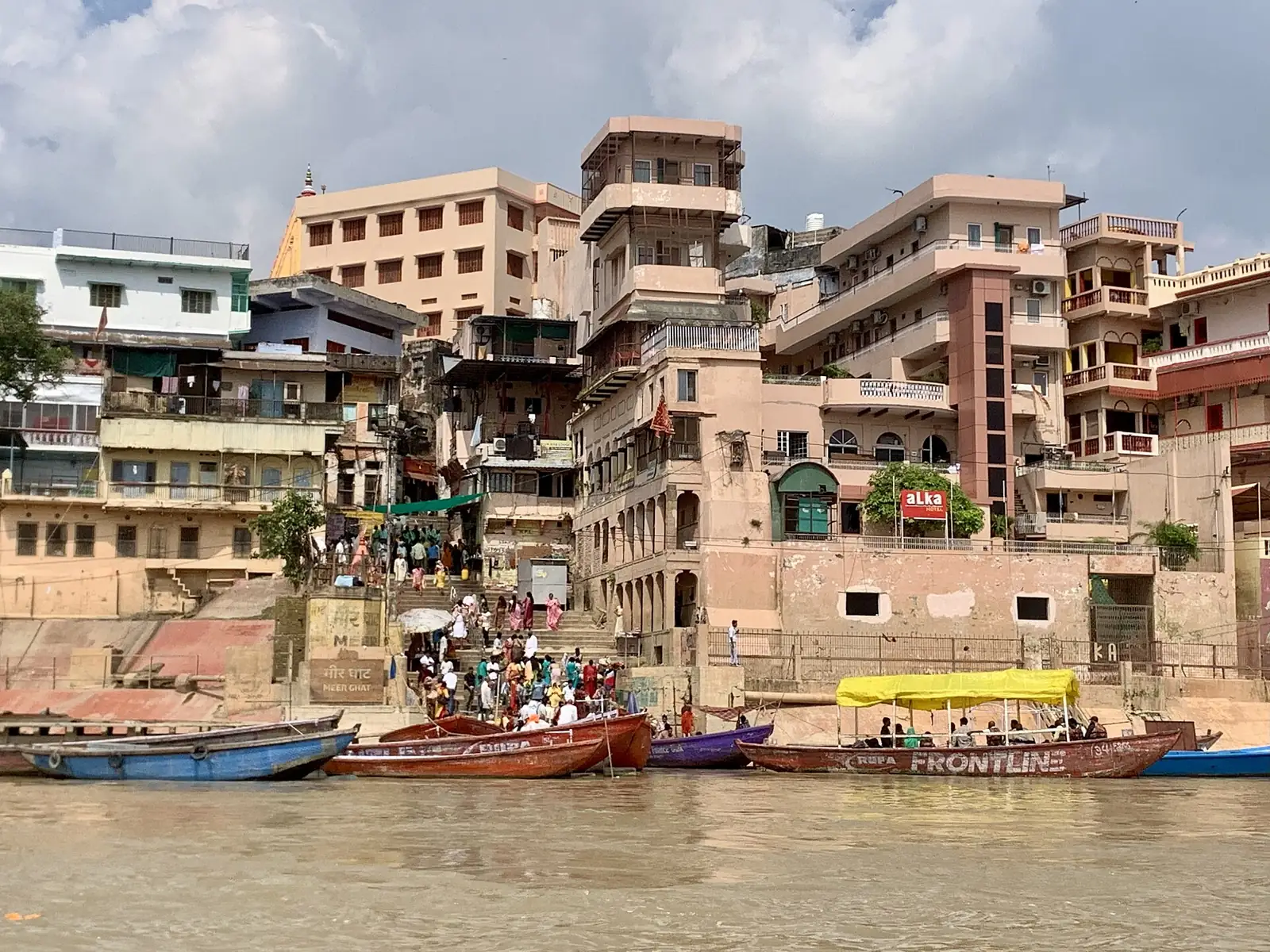
Almost every account mentions the same few things. Trying to fit everything into one day. Not taking a face mask on open rickshaws, because traffic fumes are worse than people expect. Taking a hotel with no power backup in the old town. Bathing in the river, which one writer advises against here, and recommends doing at Rishikesh or Haridwar instead.
Another common regret is going into Varanasi first in a long India trip. One writer who knows the country well suggests saving it for later, once you are used to the noise. If this is your first visit to India, plan a calm hour each afternoon and treat that as part of the trip.
Going with older parents
The ghats are a long run of steps with no handrails, and the lanes are uneven, shared with cows and bikes. Parents who cannot do steps can still see the aarti from a boat, and the dawn boat itself needs only one short climb down. Ask for a seat on the steps near the main stage in advance rather than a standing place. The temple queue is the toughest stretch; ask your guide about the arrangements for elderly visitors on the day.
What the price covers
- Car and driver from your pickup to the airport, and again from arrival to departure
- 3 nights in hand-picked stays
- Breakfast and dinner every day
- Local guide at the main sights
- Tolls, parking and fuel
- Flights and trains (we book them with you at the fare of the day)
- Lunches
- Monument tickets, permits and activity fees
- Personal shopping
Questions people ask
How many days do you really need in Varanasi?
Three full days is the figure most guides give, and four is more comfortable if you add Sarnath and want a slow morning. One night is possible but you end up missing either the dawn boat or the evening aarti.
Is the sunrise boat ride worth getting up for?
It is the single thing most travellers say they would not skip. Plan to leave around forty minutes before sunrise, since the best colour comes before the sun itself clears the far bank. Agree the route and the time with the boatman before you board.
Is it okay to watch cremations at Manikarnika?
You can watch from the boat or the steps, quietly, with no photographs. Travellers who did it say it felt less disturbing than they feared. Do not follow anyone who offers to take you closer for a fee.
Can we do this from Delhi, Agra or Jaipur?
This is a fly trip, so you reach Varanasi by air and your driver waits at the airport. Direct flights from Delhi are common, and your pickup city only decides where the first leg starts.
When is the Sarnath Museum closed?
The official page lists Fridays as the closed day, and the opening hours are ten to five. Put Sarnath on a different day if possible, and confirm before you go.
Is Varanasi safe for women travelling together?
Most reports say it is manageable in daylight and in groups, though touts are persistent and some solo women say they stopped walking alone in the evening. A driver and local guide take most of that stress away. Festival nights are best avoided.
- Sarnath Museum hours and the Friday closure, last read on the Incredible India page in November 2026
- Kashi Vishwanath darshan timings, booking and queue lanes on the temple trust portal, which change around festivals
- Evening aarti start time, which moves with sunset between summer and winter
- Ganga water level in the monsoon, when some ghats and boat routes close
 6 days
 5 days
 3 days