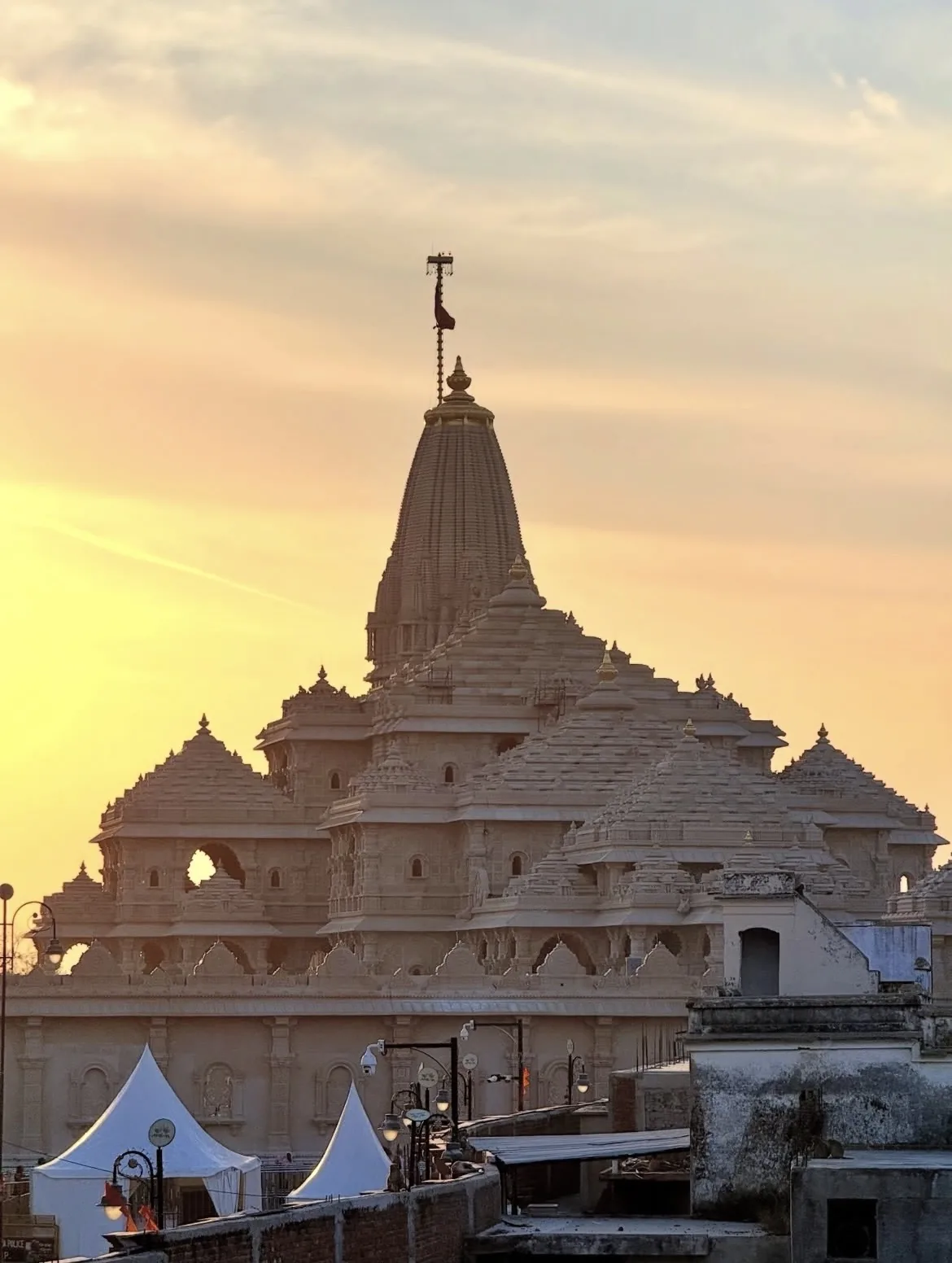
This is a line across eastern Uttar Pradesh that begins with a birth, passes a meeting of rivers, and ends with a city people go to for the last journey. Ayodhya is the newest of the three in how it looks: wide roads, bow-and-arrow street lamps and a temple complex still being finished. Prayagraj is quieter and more spread out, a place of river banks, an old fort and a garden or two. Varanasi is the opposite of tidy, and most people say it is the reason they made the whole trip.
Reports from people who did it recently say the same few things. Ayodhya needs planning, not luck, because the walk, the security and the lockers take real time. Prayagraj is rewarding if you go to the water and skip the rush. Varanasi is best on foot at dawn and again at dusk, and each hour of the day is a different city.
This route suits older parents and first-timers who want depth over speed. Plan for walking, steps, early starts and a few queues. It is not a trip for May or June.
From your pickup
Same trip, four starting points. Road times are real driving times; a long drive becomes its own travel day so nobody arrives wrecked.
Day by day
Day 1 · night in Ayodhya
Ram Lalla, the stone temple and the Saryu at dusk
Within Ayodhya, short drives and walks, vehicles stop well before the temple
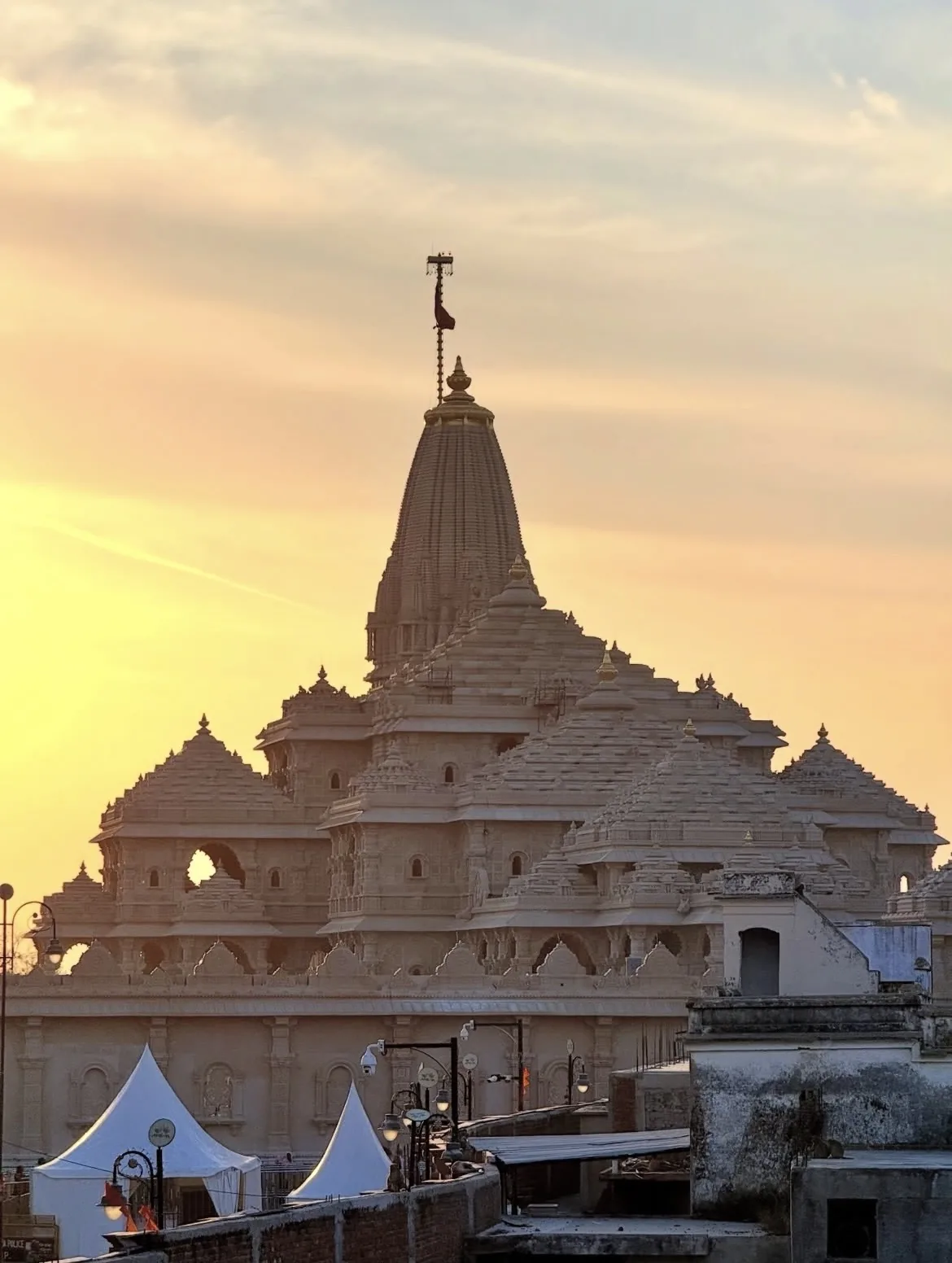
Plan the temple first and keep the rest of the day light. Recent visitors describe a long walk from where vehicles stop to the security check, with phones, cameras and large bags left in free lockers outside. One October visitor found a thin queue and reached the sanctum in under half an hour; a March visitor reached it in about twenty minutes. Both say the main temple is finished but the complex still shows building work, and the upper floors were not open to visitors. Darshan itself costs nothing. The temple trust's own website handles passes and slots, so ignore anyone selling a paid fast track.
Next go to Hanuman Garhi, up seventy-six steep steps. It is the stop travellers warn about most: the inside is packed and the road queue builds later in the day, and one writer says arriving late can cost two or three hours. Do it right away, while the lanes are still empty. Kanak Bhawan is a smaller, calmer temple. Dasarath Mahal and Sita's kitchen were closed for renovation when one visitor came, so ask your guide what is open.
At dusk walk down to the Saryu at Ram ki Paidi. The evening aarti is smaller than the Ganga aarti at Varanasi, with the riverfront being redone with Ramayana murals. Dinner can be at Shabri Rasoi, which one writer highly recommends for lunch.
- Ram Mandir
- Hanuman Garhi
- Kanak Bhawan
- Ram ki Paidi
- Saryu Ghat
Day 2 · night in Prayagraj
Nandigram, then the road to Prayagraj
Ayodhya to Prayagraj, about 160 km
If you have the energy, spend the morning at Nandigram, about fifteen kilometres out, where Bharat waited fourteen years. It has a meditation cave, a temple where Hanuman met Bharat, and stairs down to underground Shiva shrines that most visitors miss. One of them is a narrow cave where you squeeze through one person at a time, so wear clothes you can crawl in.
Prayagraj lies roughly 160 km away, and the day's driving is easy. A traveller who made it in March describes small towns with gateways named after deities and a haze that turned the sun into a red dot in the evening, so keep a mask and eye drops handy in winter. Check in, rest, and keep the late afternoon free.
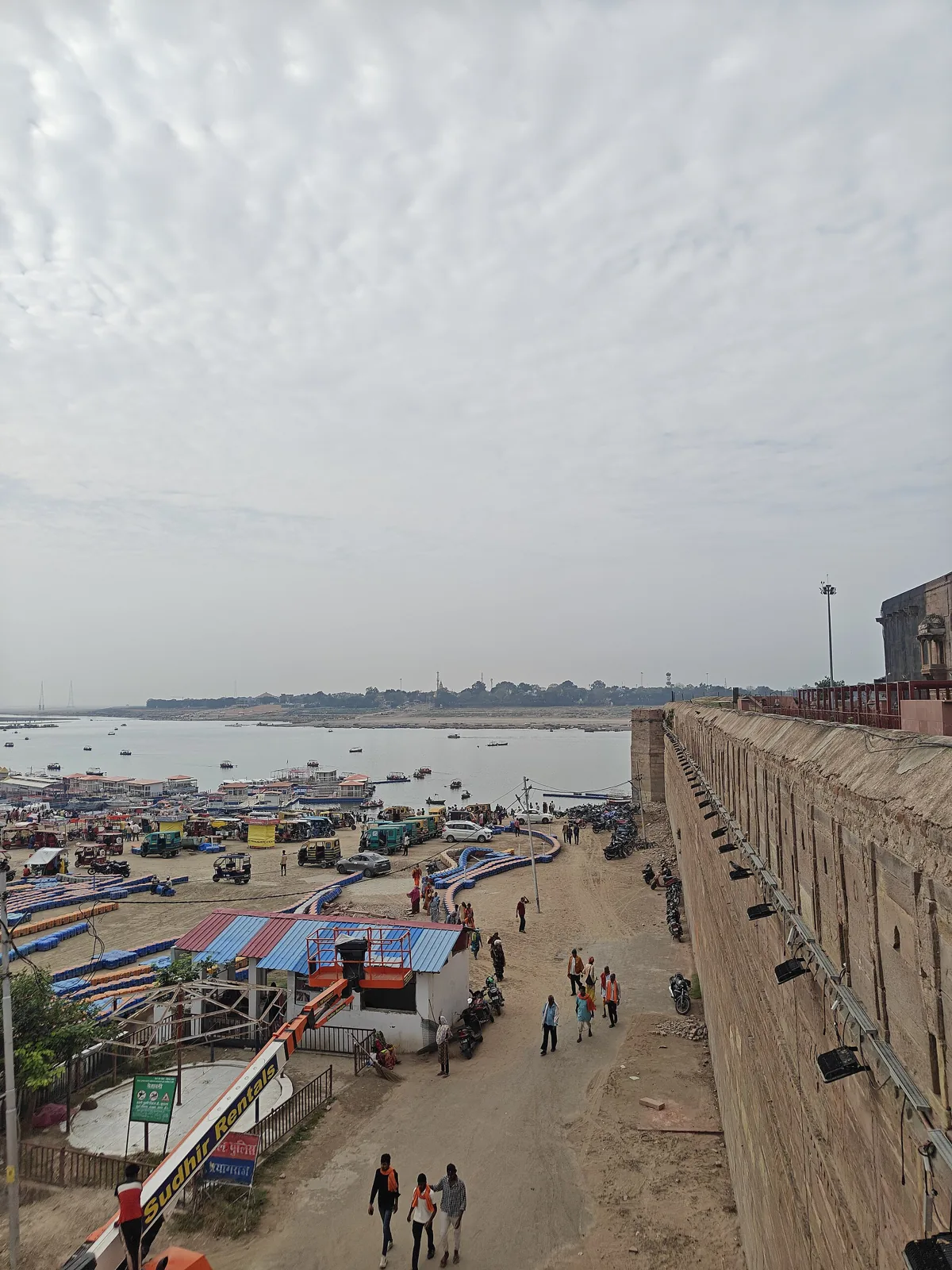
By sunset you can be at the Sangam. Boats are regulated and, according to one July diary, stop running by six, so go earlier than you think. The evening is for a plain meal and sleep.
- Nandigram
- Prayagraj Sangam
Day 3 · night in Prayagraj
Boat to the confluence, the fort and the reclining Hanuman
Within Prayagraj, short city drives
Start at the river in the morning light. The boat takes you from the bank to the exact meeting point, and the people who describe it best say the two rivers keep their own colours for a while: the muddy Ganga beside the greener Yamuna. One boatman on an older trip told the story of the kevat who refused payment for ferrying Rama across, and explained the invisible Saraswati as the third strand of a braid. Fix the price before you board, and ask about shared and private boats.
The Allahabad Fort stands over the Sangam and is visible from the water. Much of it is closed by the army, so you see the Patalpuri temple and the Akshayavat tree rather than the palaces. Do not make this a long stop.
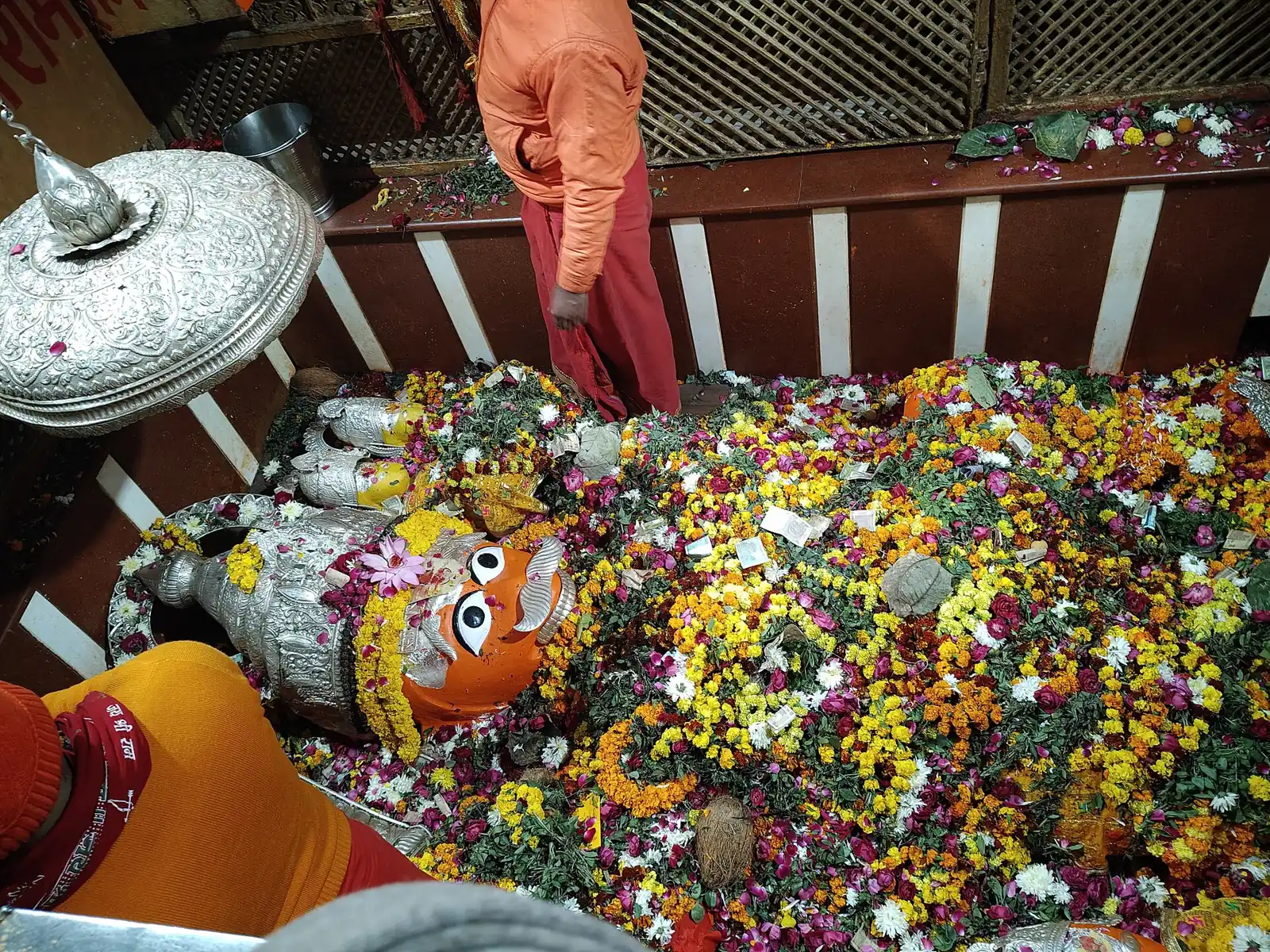
Bade Hanuman temple, with its reclining deity, opens in the late afternoon, and in the monsoon people say the river rises to touch it. Then Khusro Bagh, a walled Mughal garden with sandstone tombs, which a locals-tipped walker called a highlight. Anand Bhawan, the Nehru family home turned museum, fits an hour before dusk.
- Triveni Sangam
- Allahabad Fort
- Patalpuri Temple
- Bade Hanuman Temple
- Khusro Bagh
- Anand Bhawan
Day 4 · night in Varanasi
On to Varanasi, then the first evening aarti
Prayagraj to Varanasi, about 128 km
The drive to Varanasi is around 128 km, most of a morning, with a breakfast stop. The car will drop you as near the ghats as vehicles can reach, since cars cannot get to the water steps, and your guide will walk the last stretch with you.
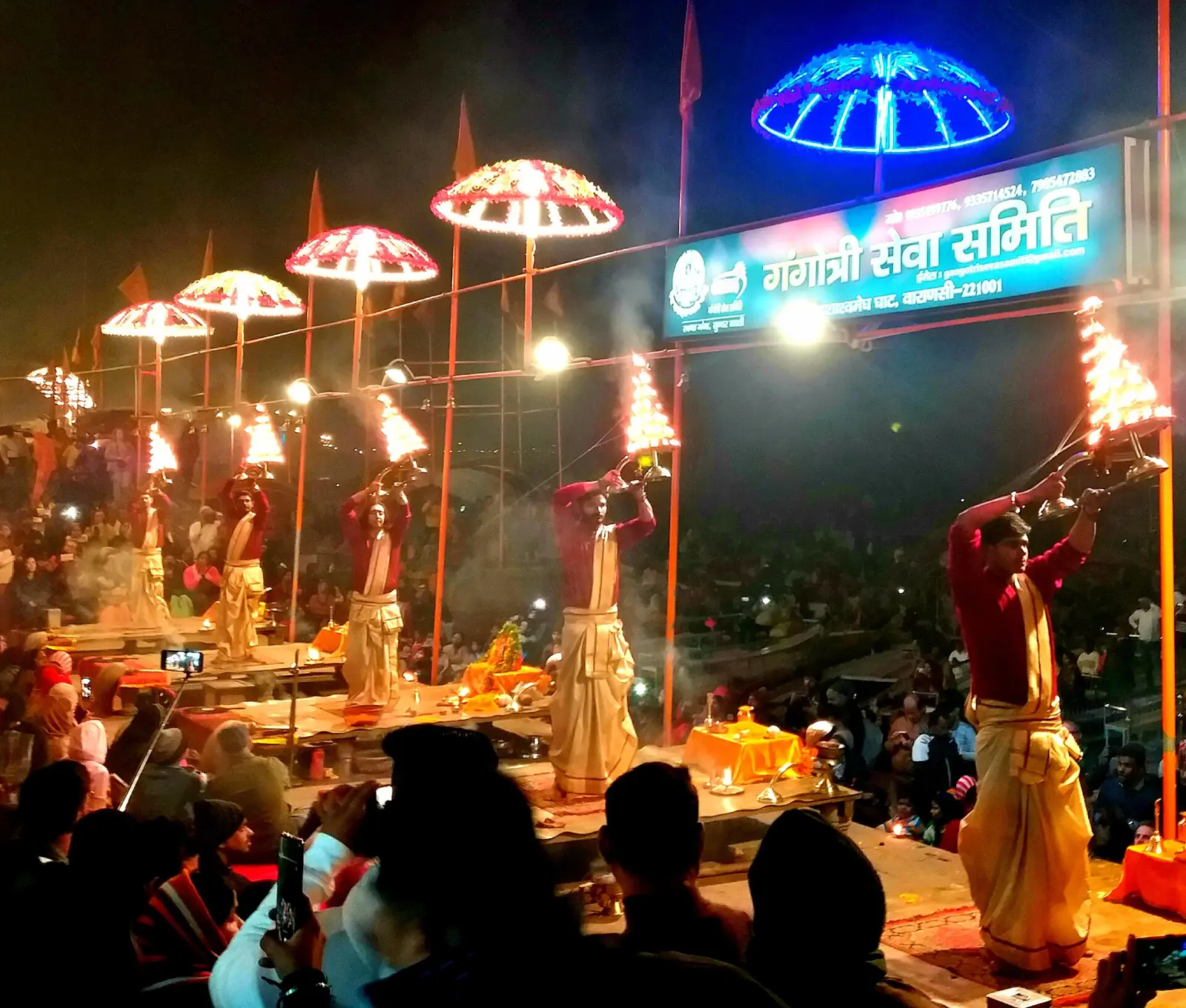
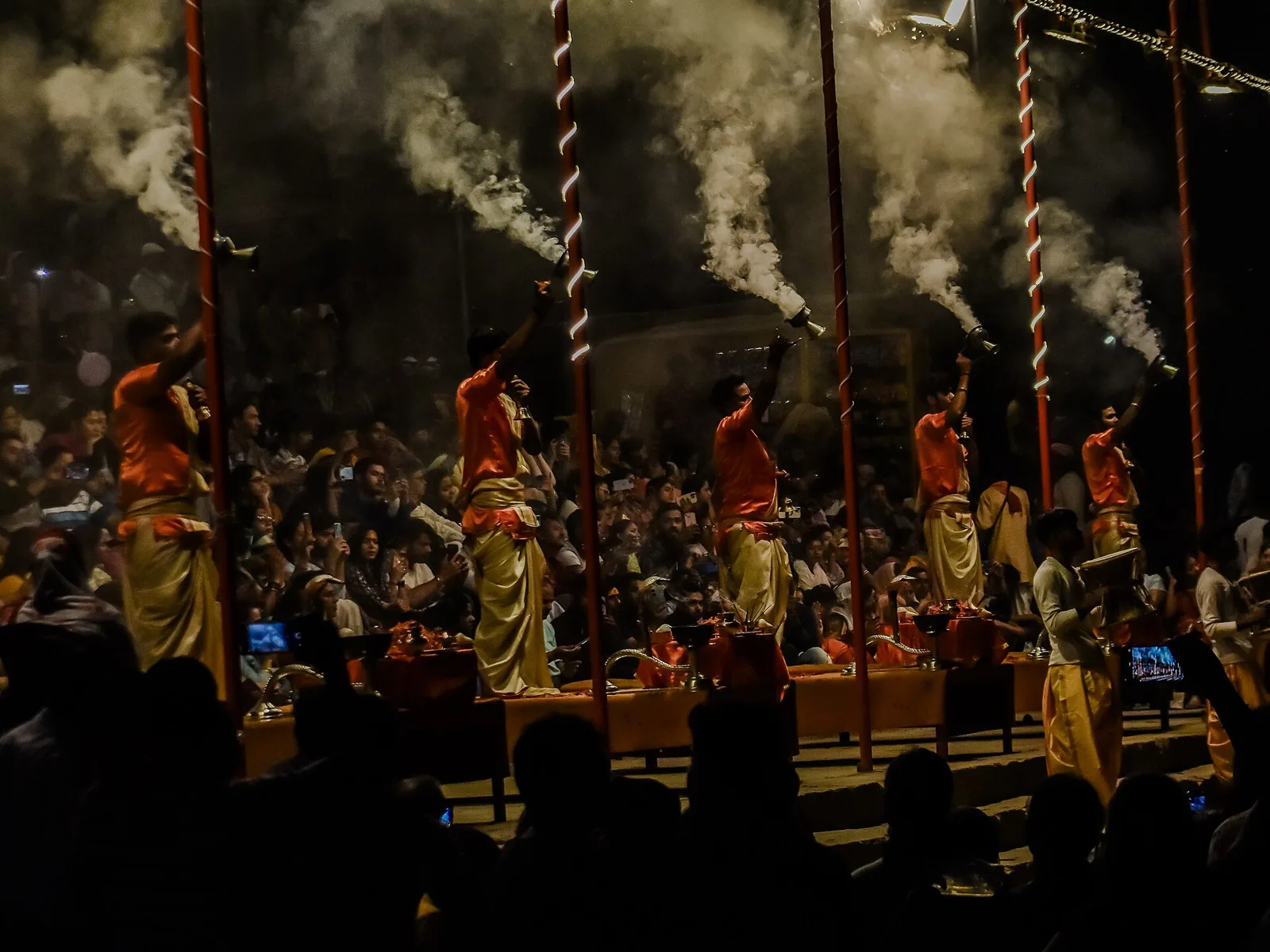
Settle in, rest through the afternoon and head to Dashashwamedh Ghat for the evening Ganga aarti, held every evening. Get there well before it starts, since the steps and the boats fill early. A boat gives you the view of the lamps without the crush; a seat on the steps puts you inside the sound.
Dinner is in the lanes. Kachauri Gali and Thatheri Bazaar are the names the tourism board gives for good places to start eating and browsing.
- Dashashwamedh Ghat
- Ganga Aarti
- Kachauri Gali
Day 5 · night in Varanasi
Sunrise on the water and the temple lanes
Within Varanasi, mostly on foot and by boat
The sunrise boat is the day's centre. One writer left around six and counted more than a hundred other boats racing the dawn; bathers, yoga, chanting and pundits go on regardless. She recommends a private rowing boat for flexibility, and asking the boatman to cross to the far bank, which most tourists miss. Her warning is blunt: some boatmen take you to a burning ghat without asking and a middleman pressures you for a wood donation. Say no, and stay in the boat.
After breakfast walk the ghats and then the lanes to Kashi Vishwanath. The temple has strict rules: shoulders and knees covered, shoes off, no phones inside. The temple trust runs a queue-less Sugam Darshan option for older visitors; ask us whether it can be arranged for your dates. At Assi Ghat the sunrise gathering of music and yoga is the other early option.
Afternoon: rest, then wander Vishwanath Gali for sweets and silk. Sankat Mochan and Bharat Mata temple are good short stops.
- Assi Ghat
- Kashi Vishwanath Temple
- Sankat Mochan Temple
- Bharat Mata Temple
- Vishwanath Gali
Day 6 · night in Varanasi
Sarnath and a slow last morning
Varanasi to Sarnath, about 10 km
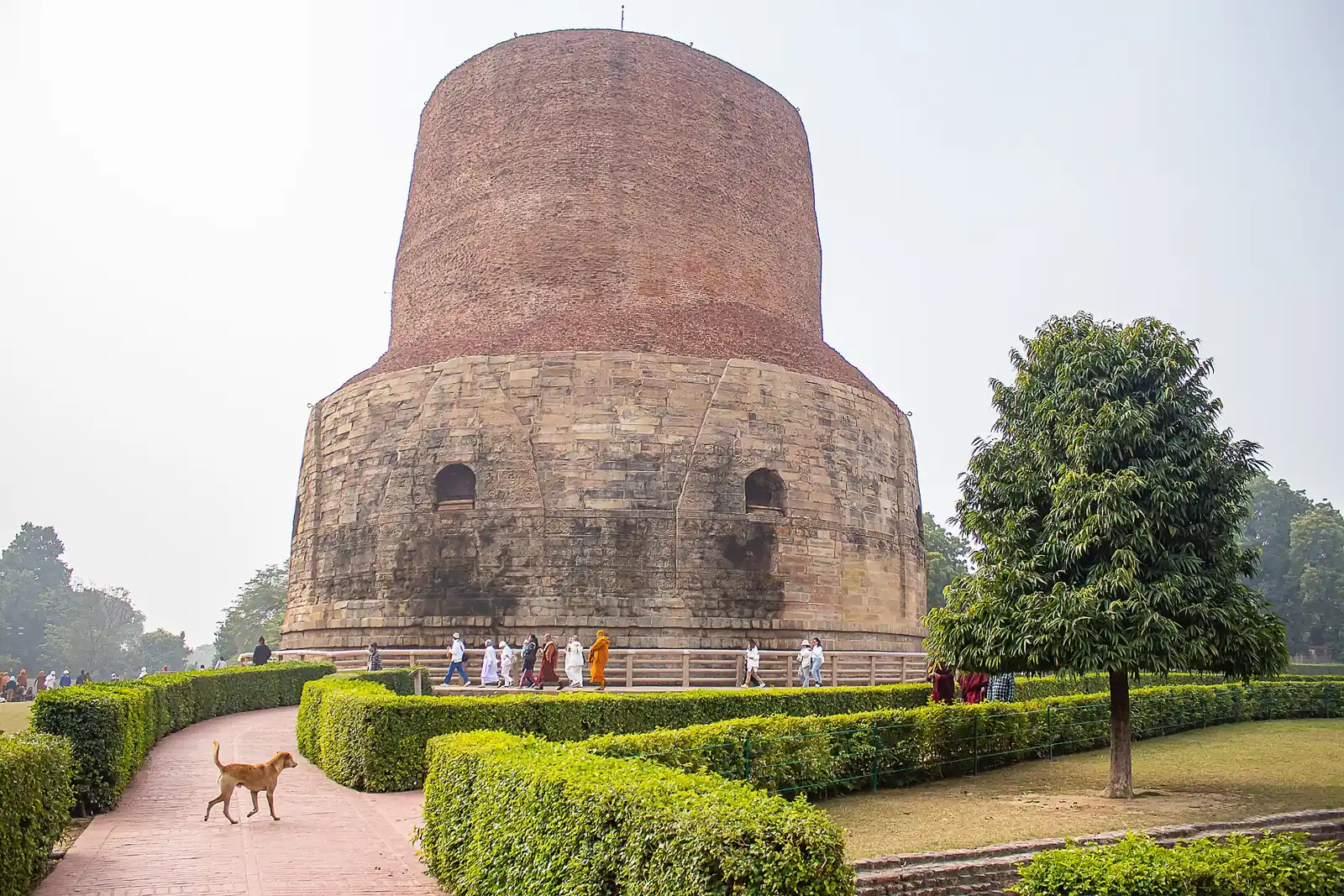
Sarnath is about ten kilometres from the city and takes a half-day. The Dhamek Stupa is a huge brick cylinder in a lawn with monastery ruins around it, and the museum holds the Ashokan lion capital. It is peaceful in a way the ghats are not, and a good counterweight to the last few days.
Come back for a last walk along the river. If your flight or onward train is in the evening, an unhurried lunch is better than a rushed ghat. Winter mornings often bring fog on the river, which can delay a sunrise boat, so keep this slot as a spare.
- Sarnath
- Dhamek Stupa
- Sarnath Museum
Month, haze and festivals
October to March is when the river and ghats are comfortable, and winter mornings often come with river fog. Air quality in winter can be poor in the whole region: a March traveller in Ayodhya found her flight delayed by low visibility. April to June reaches the mid-forties in Prayagraj and one July diarist met a sudden sandstorm by the river.
Avoid Ram Navami, Dussehra, Diwali and Kartik Purnima in Ayodhya if you want a smooth darshan. In Varanasi the same dates bring lamps along every ghat, and they also fill every hotel.
Mistakes to avoid
Booking a hotel near the Ram temple because it is near the temple: one October visitor said the room did not match the price, and budget rooms in the city are thin. Walking from the Prayagraj station by phone map, when locals know shortcuts that halve the time. Taking the first boat you are offered at the ghats. Skipping Nandigram because it is not on the standard list.
For older parents
This is the steps trip: Hanuman Garhi, the ghats, Saryu and the lanes. Pick the right hours, bring a walking stick, and take the e-rickshaws that run in Ayodhya instead of walking everywhere. Another visitor found the Sugam Darshan website not working at all, so confirm any special arrangement for elderly relatives before you travel. Laladham's driver and guide stay on hand to save parents the longest walks.
What the price covers
- One car and driver from your pickup to the final drop
- 8 nights in hand-picked stays
- Breakfast and dinner every day
- Local guide at the main sights
- Tolls, parking and fuel
- Lunches
- Monument tickets, permits and activity fees
- Personal shopping
Questions people ask
Do we need a pass for Ram Mandir darshan?
No fee is charged. The ordinary queue runs most days, and passes mostly matter for the aarti and fixed slots, which are booked on the trust's official site. Never pay a stranger who claims to sell a VIP ticket.
Is Hanuman Garhi hard for older people?
The climb is steep and the interior packs out. Visit early in the day, since the road queue grows later and can swallow hours.
Can we swim at the Sangam?
Many people take a holy dip, and a July visitor did it in a zone marked with buoys and police support. Strong swimmers should still stay in the marked area, and boats stop early.
Is the sunrise boat in Varanasi worth it?
Yes, most accounts call it the high point. Hire a private hand-rowed boat, fix the price first, and refuse any detour to the burning ghat.
Can we start from Delhi, Agra or Mathura?
Yes. Pickup is from Delhi airport, Agra, Mathura or Jaipur, and the long run to Ayodhya is added as its own day. Ayodhya is about 636 km from Delhi by road.
Do we need all six days?
Six gives each city a night and a half-day cushion. If you only want Ayodhya and Varanasi, skipping Prayagraj saves about a day but loses the river meeting.
- Ram Mandir darshan timings, aarti slots and pass rules on the temple trust's website
- Boat operating hours at the Prayagraj Sangam, which stop early under water police rules
- Which parts of Allahabad Fort are open to visitors
- Kashi Vishwanath queue and Sugam Darshan arrangements
- Air quality and river fog in winter
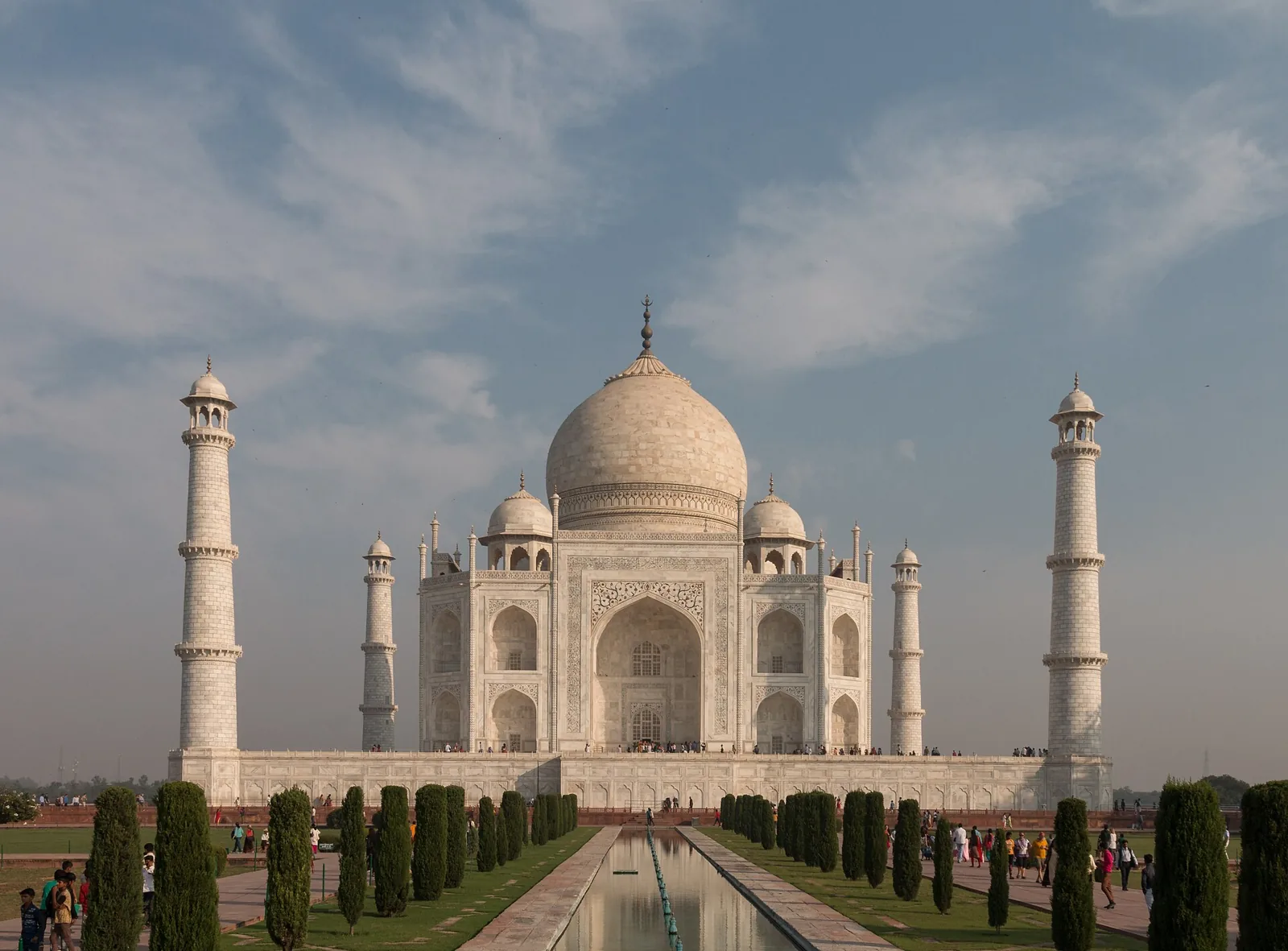 5 days
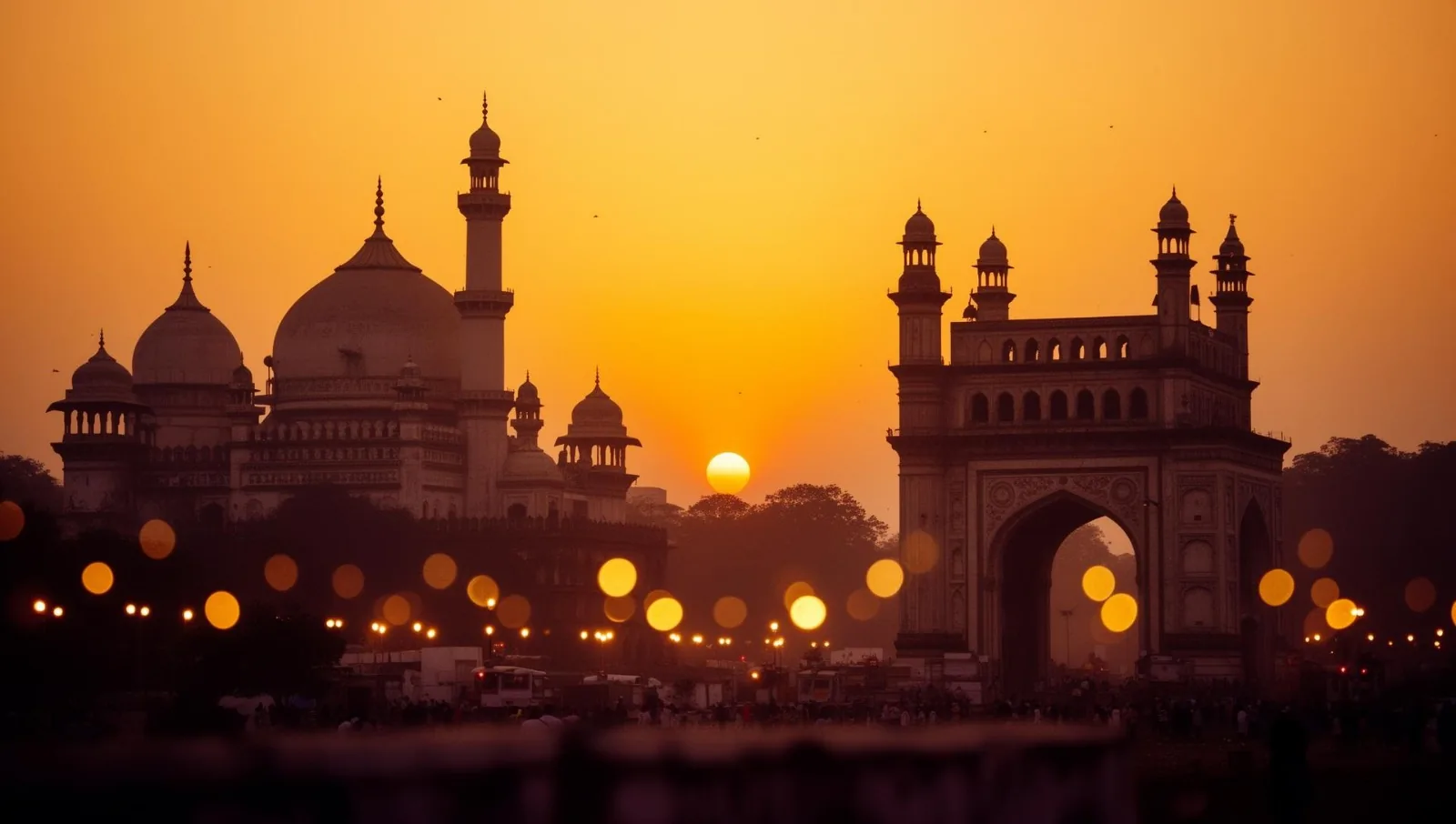 3 days
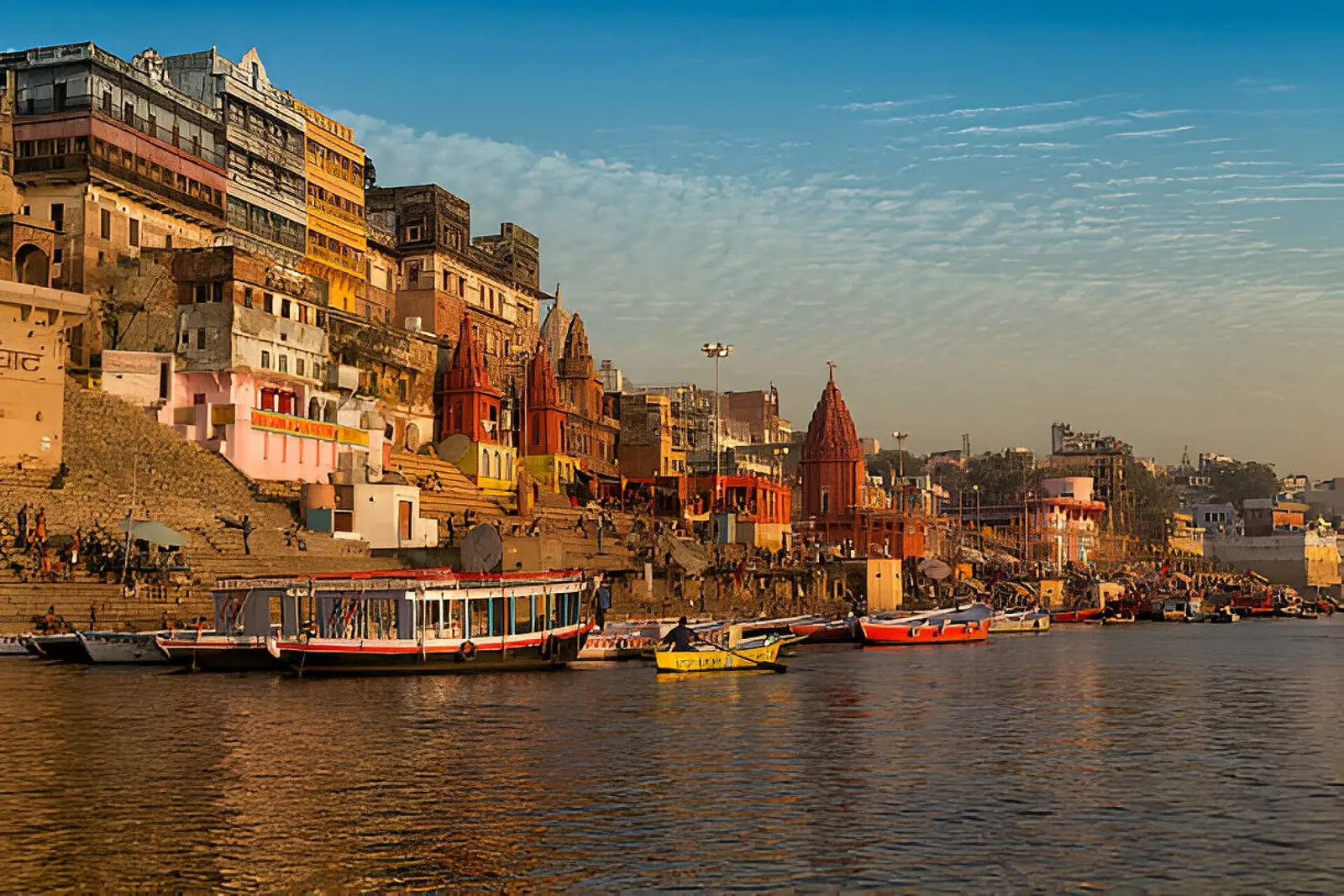 4 days