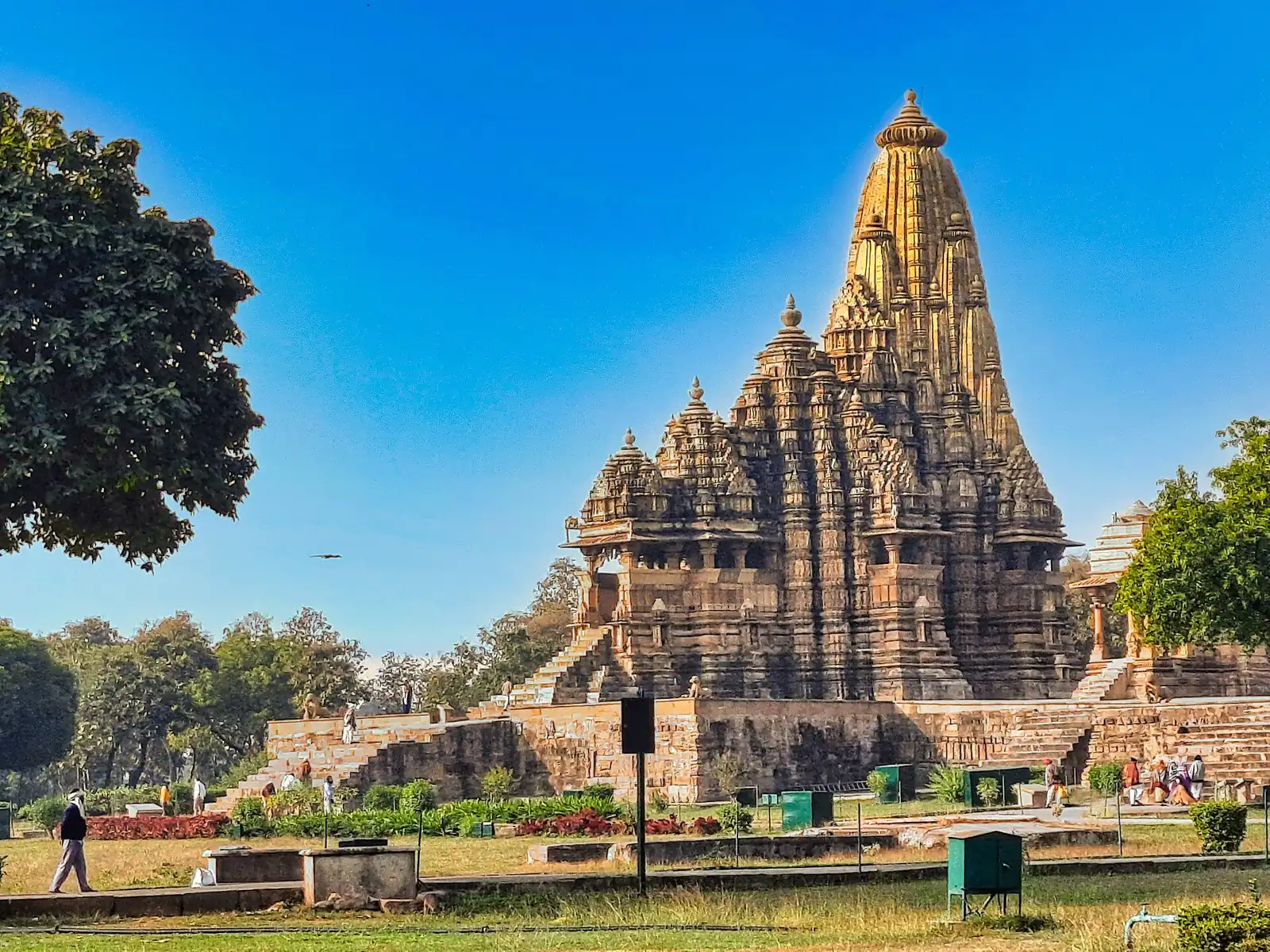
Three places in Madhya Pradesh form a natural line, and each asks for a different mood. Gwalior is a big, old, slightly worn city with a fort on a sandstone ridge. Orchha is a quiet town on the Betwa where Bundela palaces and cenotaphs stand in fields and a small temple is worshipped as a royal court. Khajuraho, the end of the road, is where the Chandela rulers left carved stone that the sun turns gold at both ends of the day.
The usual mistake in trip reports is time. One writer gave the Gwalior ramparts two half-days and still said the fort could take three or four days of first exploration. Another walked the Western Group at sunrise, was done before half past eight and said it was the best decision of the trip. Five days is enough to go slowly where it matters, to do the long road between Orchha and Khajuraho without a rush, and to sleep in each place instead of passing through.
It suits couples, families and older parents who like history and temples more than adventure, and who are happy to climb a few steps and walk on uneven stone. It is less suitable in May and June, when these towns are brutally hot.
From your pickup
Same trip, four starting points. Road times are real driving times; a long drive becomes its own travel day so nobody arrives wrecked.
Day by day
Day 1 · night in Gwalior
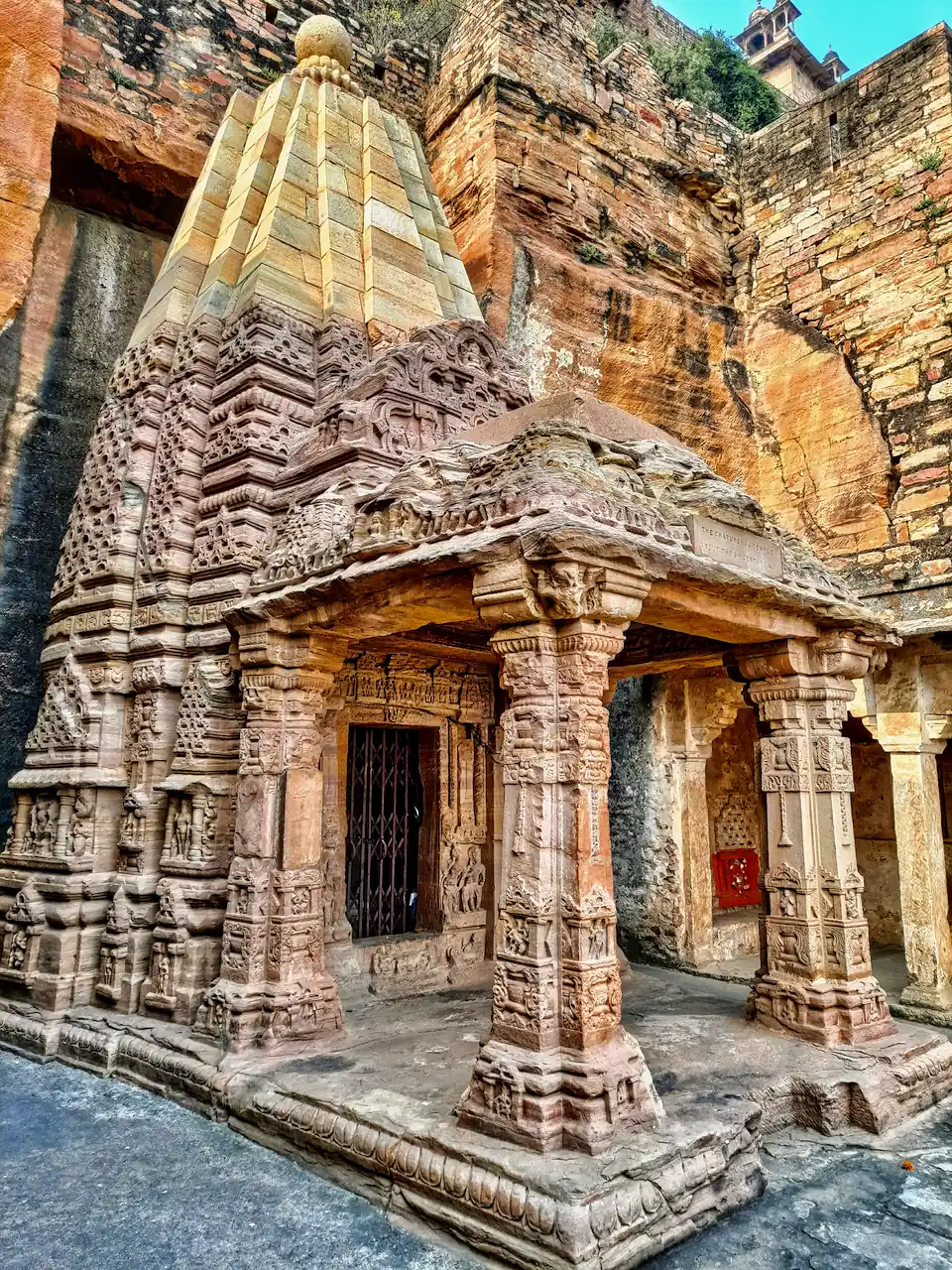
Gwalior Fort, from the cobbled ramp to the Jain cliffs
Within Gwalior, a few kilometres between city and fort
Go up early. The fort stands on a long sandstone ridge, and the approach most walkers take is the old north-east ramp, a cobbled road past the Hindola Gate with rock-cut figures on the right and a restored temple about halfway. With a car you ride most of it, but the gates still set the mood: you pass them one after another before the top opens out.
Man Mandir, the palace of Man Singh, is the heart of the morning. The blue and yellow tile work on the outer courts is faded and still striking, and the lower floors are dark enough that people who visited say a phone torch helps. Give it a full hour. Nearby, the Teli ka Mandir and the twin Sas Bahu temples sit close together, and the Gujari Mahal museum covers the older sculpture. One visitor thought the separate archaeological museum had finer pieces, so ask your guide which is open that day.
The long walk along the cliffs shows the Gopachal Jain figures carved into the rock, some very large. Finish at the Sikh gurdwara near the ramparts, then come down for a late lunch. The northern palaces close earlier than people expect, so keep them for the start of the visit, not the end. Evenings are for a slow walk through the old bazaar and a plate of kachori from one of the sweet shops the tourism board names.
- Gwalior Fort
- Man Mandir Palace
- Teli ka Mandir
- Sas Bahu Temples
- Gopachal Jain Sculptures
- Gurudwara Data Bandi Chhor

Day 2 · night in Orchha
Tansen's tomb, then south to Orchha
Gwalior to Orchha, about 120 km, around three hours
Gwalior is a UNESCO City of Music, and the morning is for it. Tansen's tomb is a plain shaded enclosure with a tamarind tree that locals say sweetens the voice, and near it is the lattice-screened tomb of Mohammad Ghaus. If a music museum interests you, the Sarod Ghar keeps instruments and portraits. Ask about the Jai Vilas Palace before you plan around it, because listings disagree on which weekday it closes.
After lunch the road runs south to Orchha, around 120 km and between two and a half and three and a half hours depending on traffic. Check in, rest, and walk down to the river.
Late afternoon is the time for the chhatris, the fourteen Bundela cenotaphs on the Betwa. The light turns them honey-coloured, and the stretch along the water is free to walk. People who stay for sunset bring something to sit on and linger until the sky goes. The evening ends quietly: dinner in the small lanes near the market.
- Tansen's Tomb
- Tomb of Mohammad Ghaus
- Sarod Ghar
- Bundela Chhatris
- Betwa River
Day 3 · night in Orchha
A palace morning and a king's evening aarti
Within Orchha, short drives
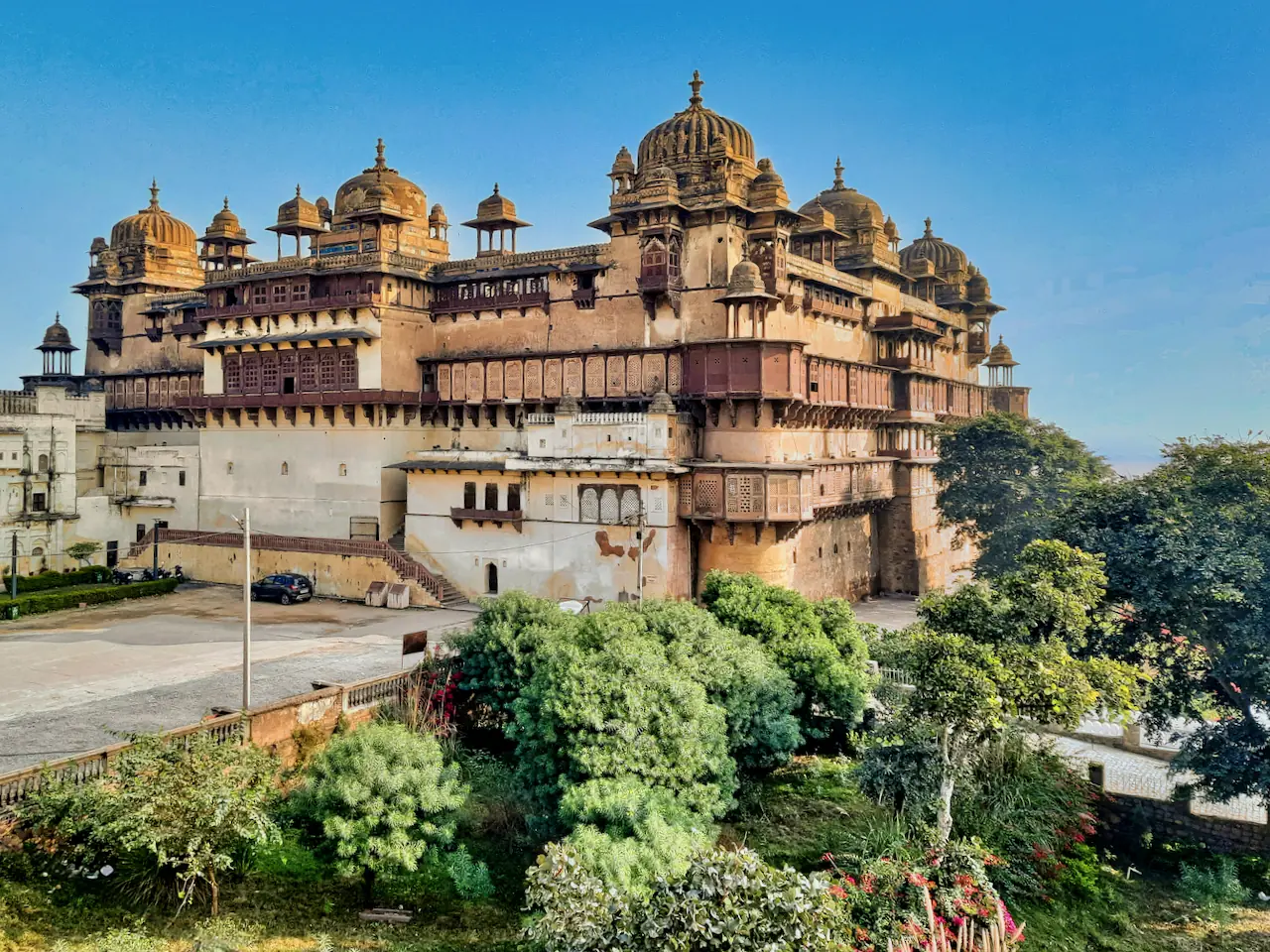
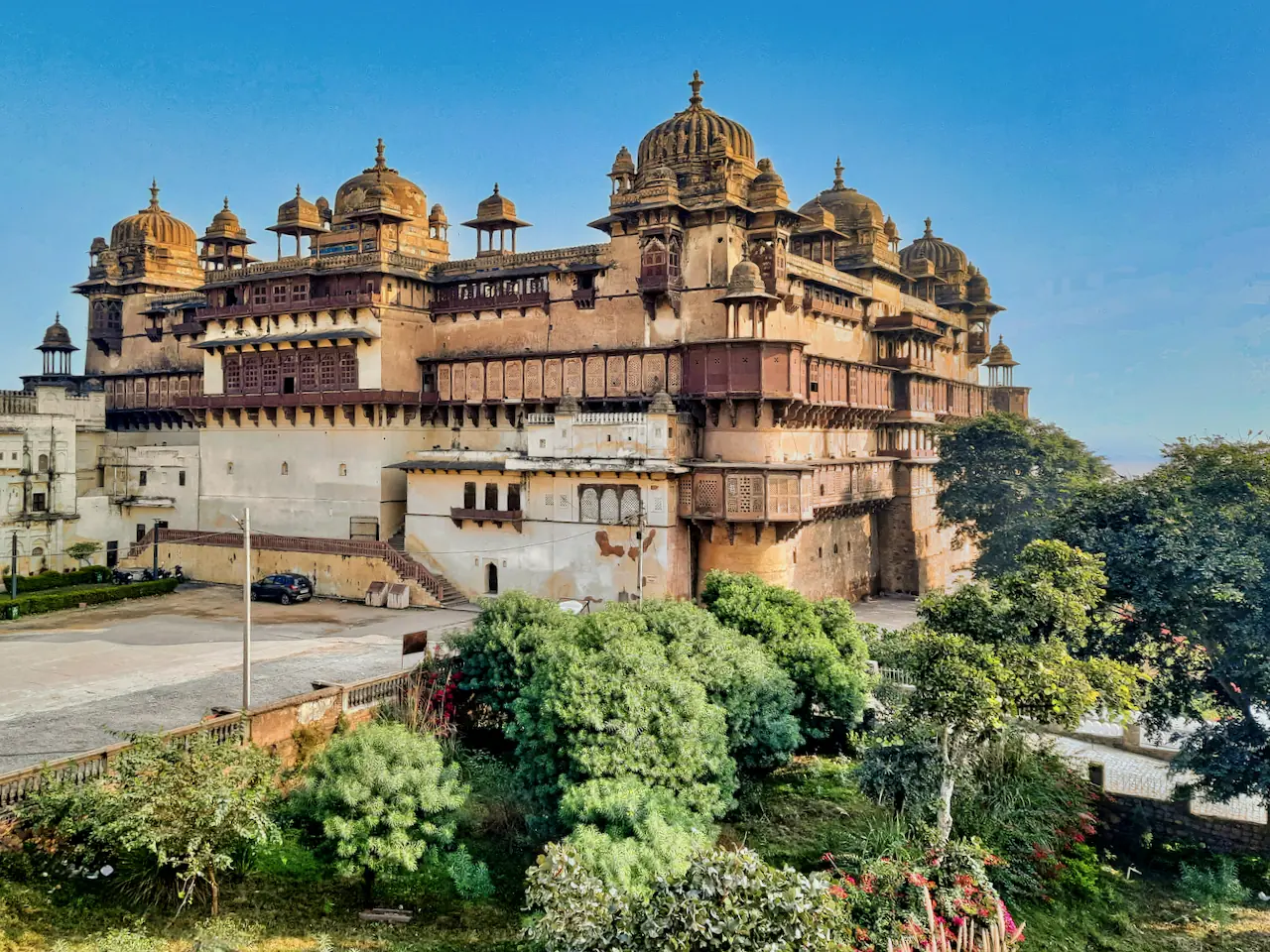
Orchha's fort complex holds the Raja Mahal and the Jahangir Mahal side by side. The Jahangir Mahal was built in the seventeenth century for a Mughal emperor's visit, and the stone elephants at the gate set the scale. Monument tickets are sold only at the palace, which one traveller noted. The same writer warned that parking in town is paid once for the whole day, and that attendants may try to charge you again at each site.
Keep the middle of the day light. The Laxmi Narayan temple on the edge of town has painted vaults, and the Chaturbhuj temple is a climb up broad steps that rewards you with a view of the town's spires.
The big moment is the royal shrine of Rama. Orchha says its deity is a king, not only a god: the legend is that a queen brought Rama from Ayodhya, the idol was meant for the tall Chaturbhuj temple but was first set in her palace kitchen and would not move, and so the kitchen became the temple. Police give a guard of honour, and the evening aarti includes a gun salute. Timings differ by season and by source, and the temple closes in the afternoon, so ask the hotel for the day's schedule. Visitors say the place gets very crowded on weekends and festival days.
- Orchha Fort Complex
- Raja Mahal
- Jahangir Mahal
- Laxmi Narayan Temple
- Chaturbhuj Temple
- Ram Raja Temple

Day 4 · night in Khajuraho
The long road to Khajuraho and a golden sunset
Orchha to Khajuraho, about 175 km, around four hours
Leave Orchha early. The drive to Khajuraho is around 170 to 180 km, and trip reports give a range from roughly four hours up to a bit more. A family that left at six reached Khajuraho by half past ten, even with a diversion for roadworks. Fuel stops are sparse on this stretch, so a full tank before leaving is common advice.
Rest and eat first; the main temple garden is at its best late. The ticket covers every temple, the compound closes around half past six, and one writer who stayed for the last hour said the light made the Lakshmana temple glow. It is a large fenced garden of temples: Kandariya Mahadev, the tallest, with its crowded towers; Chitragupta, with fine wall carving; the old Nandi and Vishwanatha pair; the Varaha with its monolithic boar. Expect about two hours.
In the evening the light and sound show uses the Western Group as a backdrop. Writers describe the show as dim for photography, so enjoy it and keep the phone away.
- Western Group
- Kandariya Mahadev Temple
- Lakshmana Temple
- Chitragupta Temple
- Varaha Temple
Day 5 · night in Khajuraho
The eastern temples, then a waterfall or a slow morning
Within Khajuraho, Raneh Falls about 21 km out
If you left the Eastern and Southern groups for today, begin with the Jain cluster, where Parsvanatha, Adinath and the newer Shantinath temple stand about seven hundred metres from the Vamana and Javari temples. One walker found those two neighbours richly carved, and the Dulhadev has an octagonal plan unlike anything in the main compound.
Go back to the main compound once more if you want to walk it without a camera or guide. Those who came early say the garden is almost empty at opening time and feels like a different place.
Raneh Falls, about twenty kilometres away, is the usual afternoon extra: a canyon of crystalline rock on the Ken river. One traveller called it absolutely wonderful, though the same area reached 45 degrees on the day he went. Pick the first half of the day in hotter months. Panna National Park is the other long outing, but it is a separate half-day at least.
- Eastern Group
- Jain Temples
- Dulhadev Temple
- Raneh Falls
Best months and the heat
October to March suits all three towns. Fog is common in winter around Gwalior, and one winter visitor found it hid the view from the fort on both days, so plan the fort for the second half of the morning if the haze is thick. In April the Khajuraho temples are fine at sunrise and brutal at noon, with 45 degrees at nearby waterfalls on one reported day.
Festival timing matters. Orchha is crowded during Ram Vivah in the month of Kartik, around Diwali and for Ram Navami. Khajuraho's dance festival is held around February, and Gwalior's Tansen Samaroh begins on 25 December: rooms book out, but these are the best times to hear live music.

What people skip and regret
The most common regret is arriving at the big compound at midday with a tour group. The second is underestimating Gwalior Fort. Others wish they had checked which Orchha ticket counter was open and looked at the parking rules.
What people do not regret leaving out: Datia and the Chambal side trips are rewarding but long, and trip reports say the roads there are rough.
With older parents
Gwalior Fort and the high temple at Orchha involve stairs, and cobbles are uneven. Ask for a drop-off at the top gate and take a seat where the temples give one. The temple garden at Khajuraho is level ground, so it is the easiest day. Laladham's driver stays with you from pickup to the end, which makes the three transfers painless.
What the price covers
- One car and driver from your pickup to the final drop
- 6 nights in hand-picked stays
- Breakfast and dinner every day
- Local guide at the main sights
- Tolls, parking and fuel
- Lunches
- Monument tickets, permits and activity fees
- Personal shopping
Questions people ask
How many days do we really need for Gwalior, Orchha and Khajuraho?
Five days is a comfortable minimum with a night in each town and a spare half-day at Khajuraho. Fewer than that turns two long drives into the whole trip.
What is the best time of day for Khajuraho's Western Group?
Opening time or the last hour before closing. One writer was out by 8:15 with hardly anyone around, and another watched the Lakshmana temple turn gold at sunset.
Is the Ram Raja temple open all day?
Not reliably. The tourism page says sunrise to sunset, while other sources list a midday closure. Confirm the day's schedule locally, and expect the evening aarti to be crowded.
Can we do this trip from Agra or Delhi?
Yes. Laladham can collect you from any of its four pickup points, and the run to Gwalior is added in front as a travel day. Agra is the closest, with Gwalior about 120 km along the highway.
Do the Khajuraho temples need a guide?
Not strictly, and some travellers go without. A guide helps to read the carving and the layout, though, and your trip includes one at the main sights.
Is the road from Orchha to Khajuraho good?
Reports vary. Roadworks and uneven patches have been mentioned, and one old review warned about few fuel pumps. Allow a generous half-day and set off early.
- Ram Raja temple darshan and aarti timings, which differ between the tourism page and other listings
- Gwalior Fort opening hours and which museums are open on the day
- Jai Vilas Palace weekly closing day
- Khajuraho light and sound show timings and whether it is running
- Dance festival and Tansen Samaroh dates
 5 days
 6 days
 4 days