Plan around them and everything else here, the palaces, the cenotaphs on the river, the cracked old temples, slots in easily.
Why the guard of honour is real
The temple is described in Madhya Pradesh's tourism material as the only one in the country where Ram is worshipped as a king. The story goes that King Madhukar Shah, a devotee of Krishna, and his queen Ganesh Kunwari, a devotee of Ram, quarrelled about which to follow. He sent her to Ayodhya to bring her deity home. Months of prayer brought no sign until she nearly ended her life in the Saryu; Ram appeared and agreed to come, on three conditions: the journey on foot, in Pushya Nakshatra; treatment as a monarch wherever he settled; and a temple wherever he first sat.
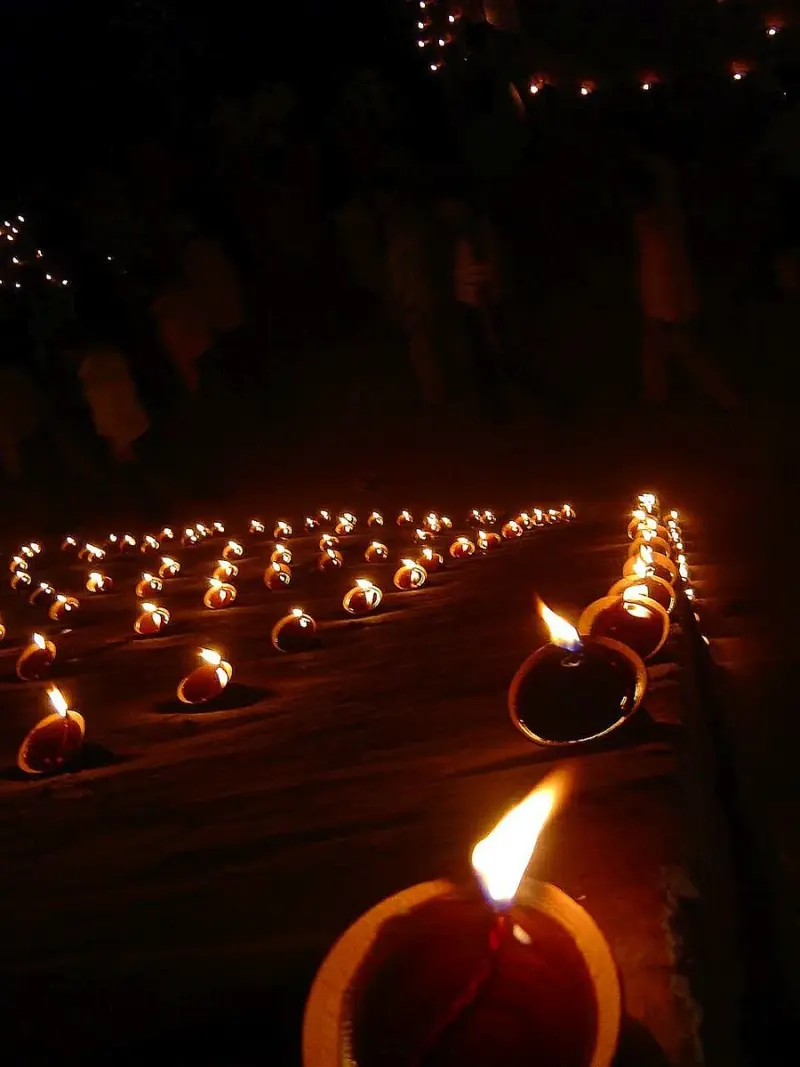
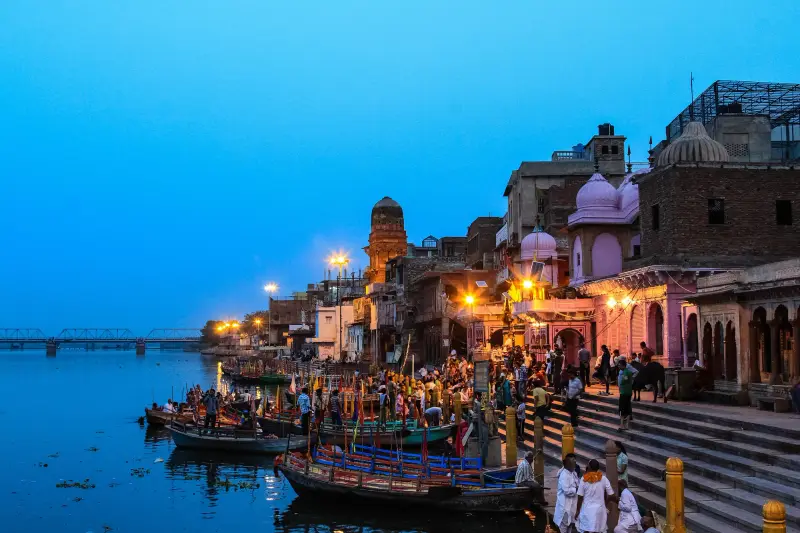
Madhukar Shah gave up his crown, and Ram was crowned. A grand temple, the Chaturbhuj, had been started for him but was left unfinished, and the idol stayed in the palace kitchen, which was thought pure. That kitchen became the Ram Raja Mandir. Guards fire a gun salute during the evening aarti, and after it the idol is carried to another temple, in a re-enactment of the return to Ayodhya.
Timing the darshan
The state tourism page gives sunrise to sunset daily, but traveller guides list split sessions: roughly 9 to 1 and 7 to 9:30 in winter, and 8 to 12:30 and 8 to 10:30 in summer, with aartis about 9, 1, 7 and 9:30 in winter. It closes to ordinary visitors in the afternoon. Confirm the day's timings in town, since they follow the religious calendar.
Expect phone limits at the gate, a ban on sanctum photography in most cases, and a shoe stand outside. Cover shoulders and knees. Quiet days see a darshan queue of 30 to 60 minutes, and Ram Navami, Vivah Panchami and Diwali are far longer. For the salute, get there early. Distinguished guests are welcomed with paan and ittar rather than sweets.
The fort complex
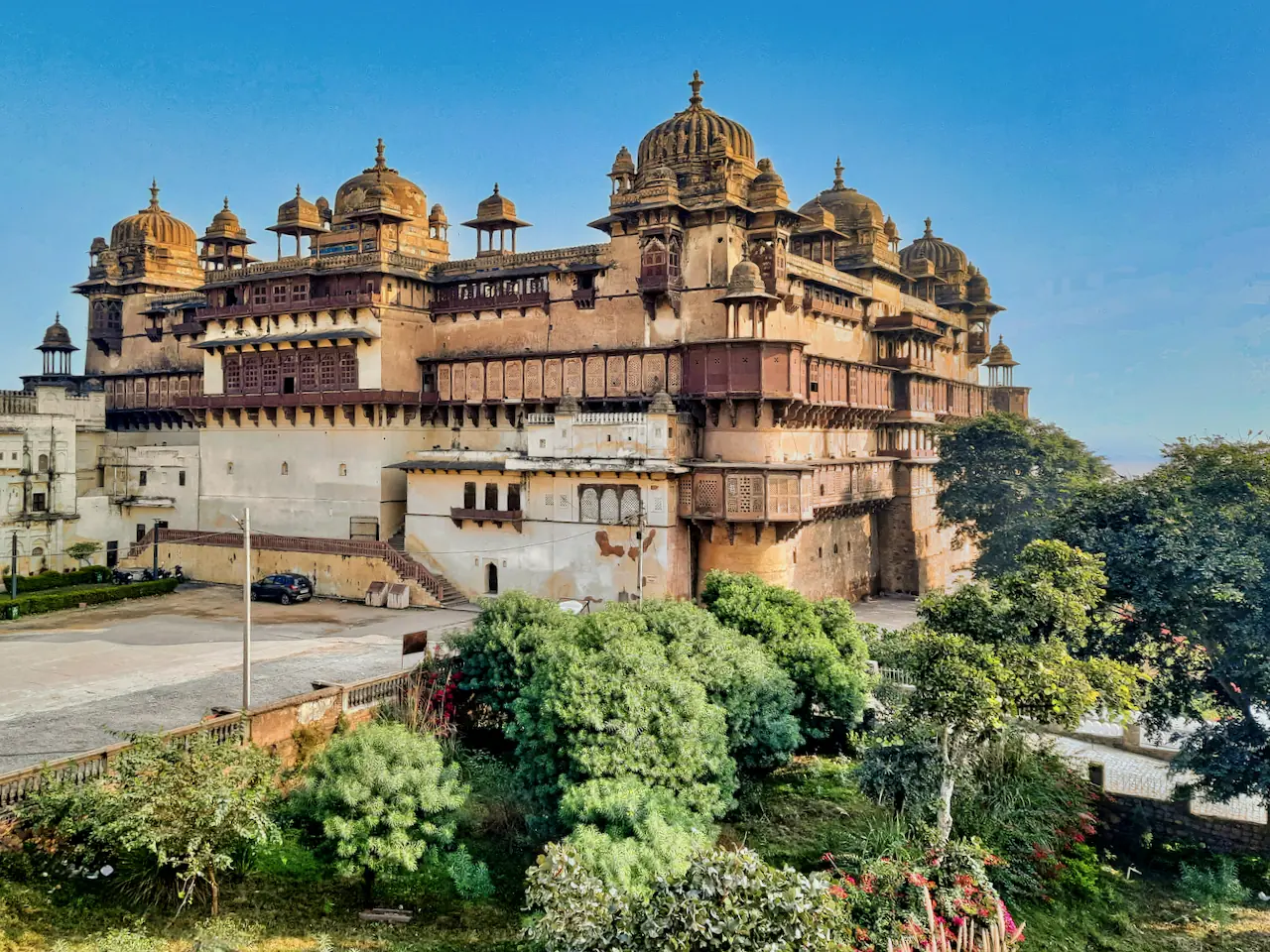
Raja Mahal, built by Madhukar Shah in the 16th century, has a durbar hall of tall arches and pillars and murals of mythological scenes. Next door the Jahangir Mahal was built by Udait Singh to welcome the Mughal emperor, mixing Mughal and Rajput forms, and its courtyard is the best photograph in town. Reckon on one and a half to two hours across both, with entry fees. Both are listed from sunrise to sunset, with lights after dark.
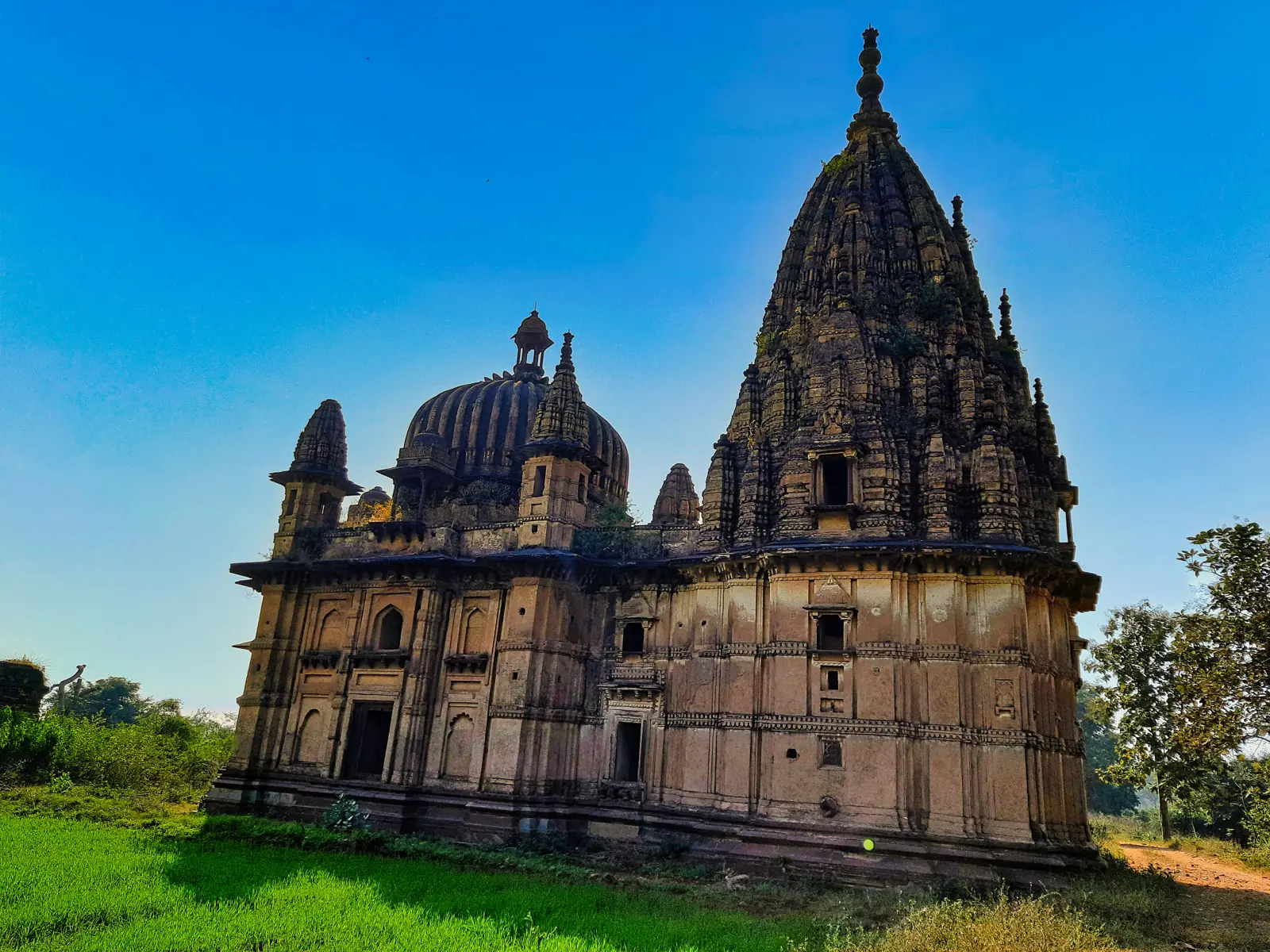
Chaturbhuj and the steep steps
The unfinished Chaturbhuj rises over the town on a high base, and its steps are steep, so keep this for the morning or late afternoon, and allow 30 to 45 minutes.
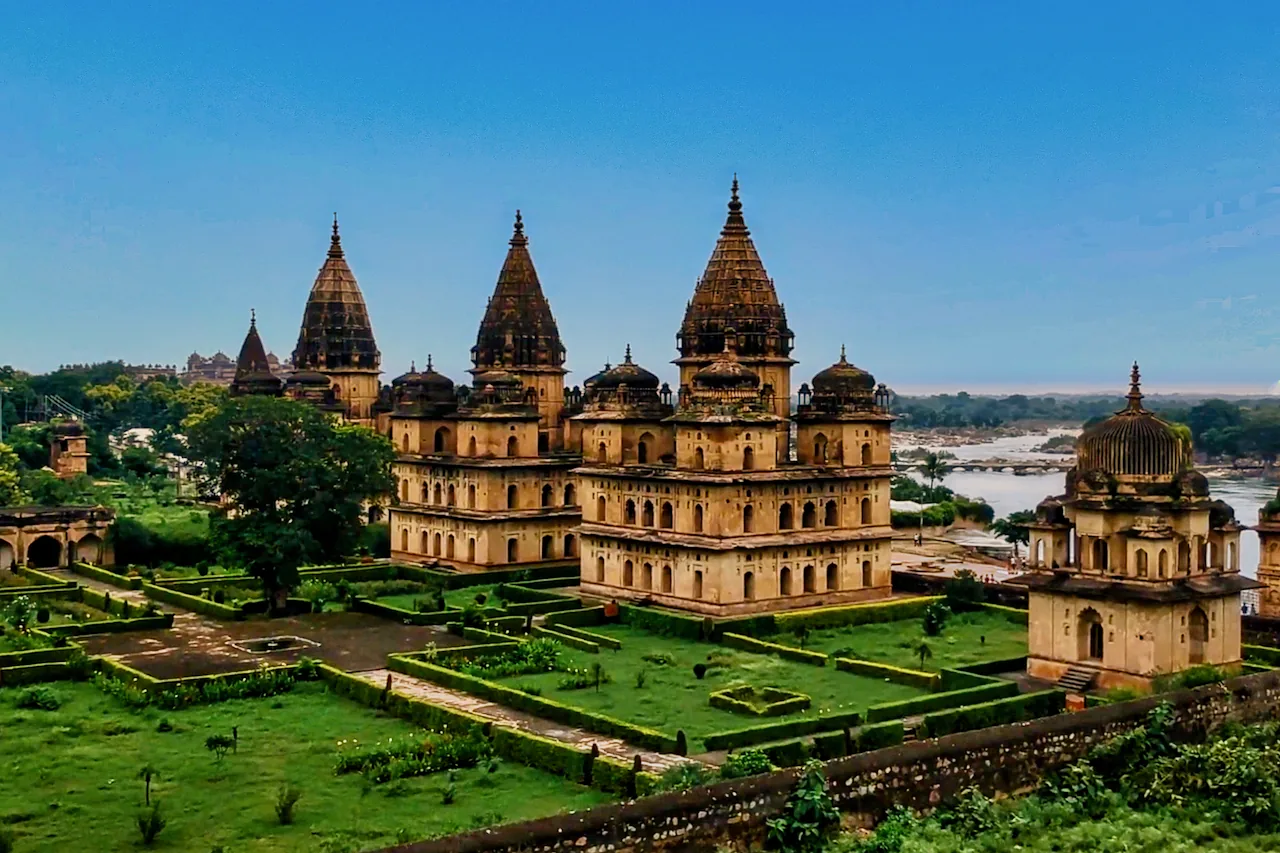
The cenotaphs and the river
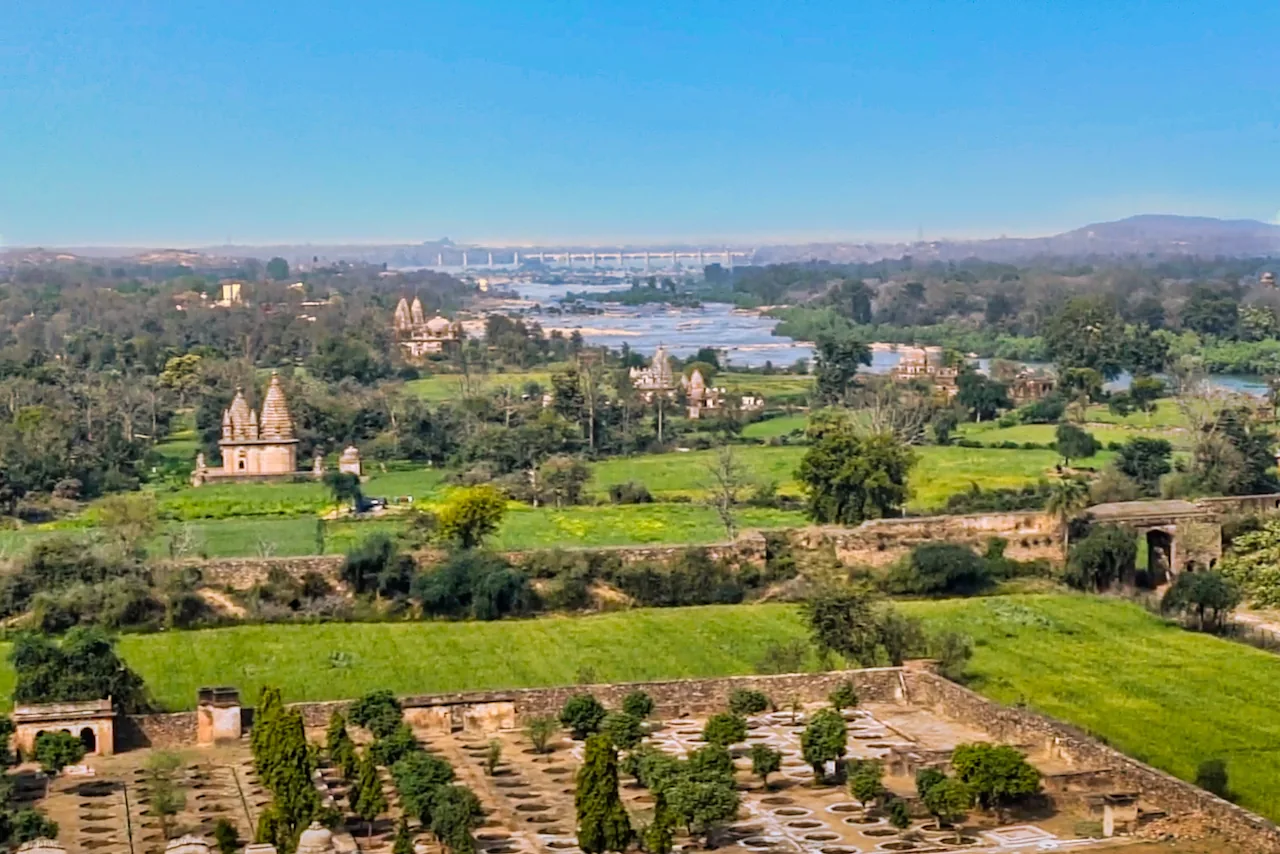
Fourteen Bundela chhatris stand along the river, each honouring a ruler and his consort, with domes and carved facades. They are also nesting sites for a rare long-billed vulture, so go quietly. The sanctuary gateway is across the Betwa near them, and rafting on the river is mentioned by the tourism department, though no operator is listed. Avoid the unsafe banks in the monsoon.
Late afternoon suits the river walk, once the palace visit is done.
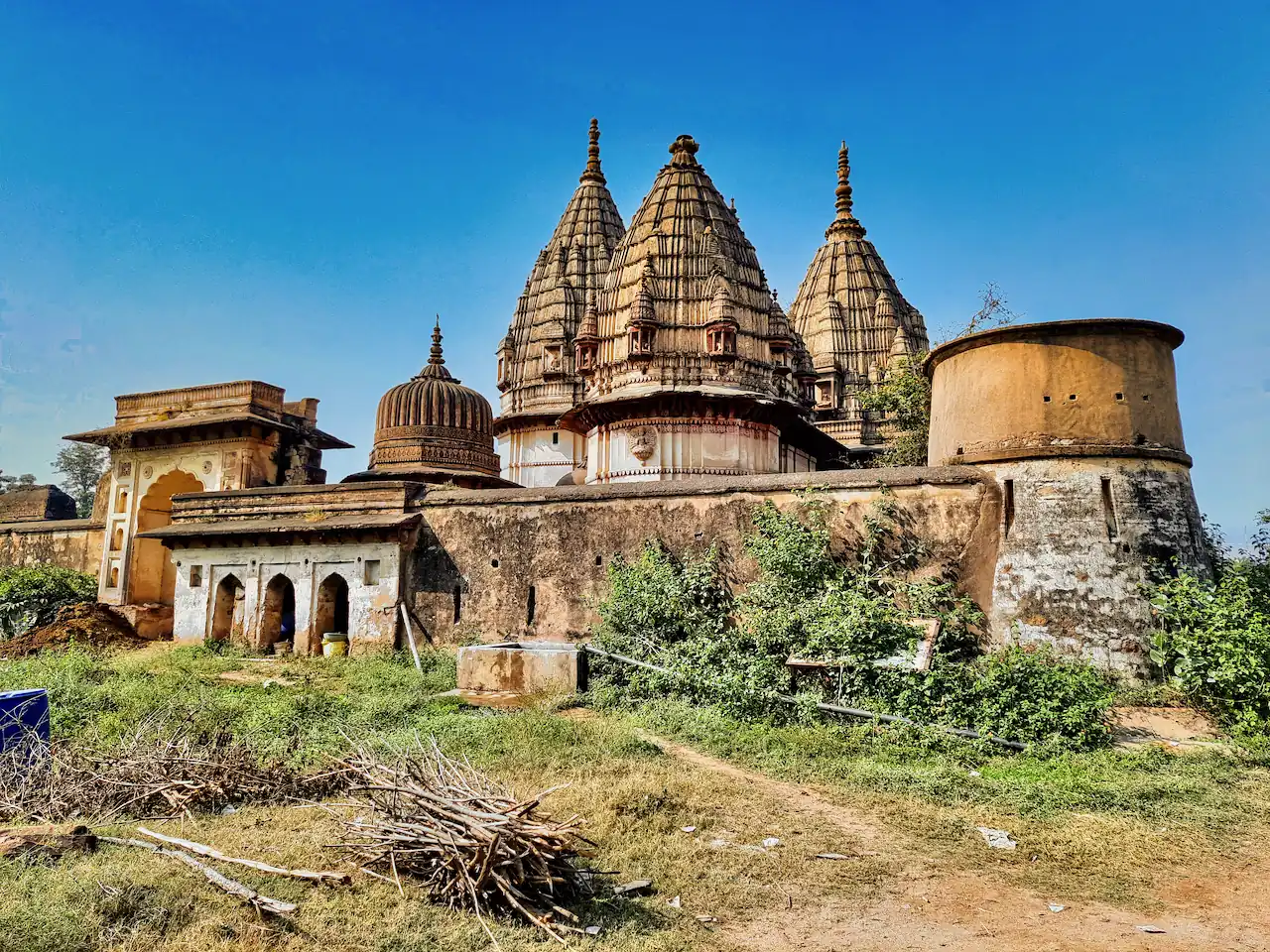
Laxminarayan temple and its murals
A kilometre or two from the centre, the Laxminarayan temple is the quiet stop, known for its painted murals. Allow 30 to 45 minutes. After the crowded palace it feels almost private, and it fits well before the evening session.
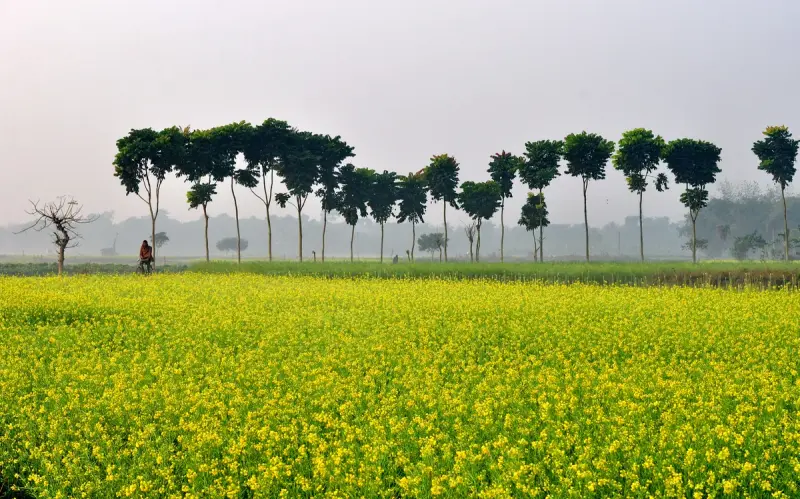
Season and the road in
Orchha swings from about 3 degrees in January to 45 in May, so November to February is the comfortable window. Festival peaks are Ram Navami, the Ram Vivah festival in Kartik with its horse performances, and Diwali. Jhansi is 16 to 20 km away, 30 to 45 minutes. Gwalior is about 120 to 130 km, Khajuraho 170 to 180 km and about four hours. Stay one night, or two to slow down.
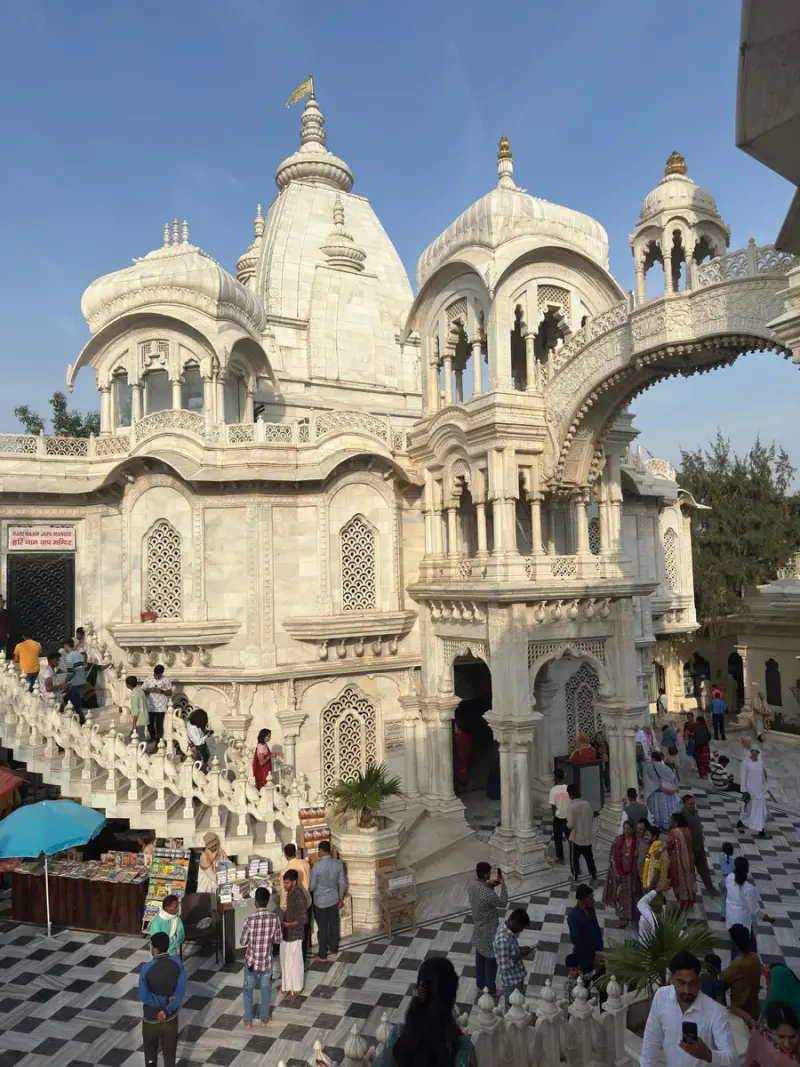
Let Laladham run it
Laladham picks you up in Delhi, from the airport, station, home or hotel, arranges the train to Jhansi or Gwalior and a driver for Orchha, and times the day around darshan and aarti. Ask for a quote on the [book page](/book).
Questions, answered
When is Ram Raja open for darshan?
State tourism lists daylight hours, while traveller guides describe split morning and evening sessions that change with the season. Confirm locally.
Why is there a guard of honour?
Ram is worshipped here as the king of Orchha, so uniformed police salute him as a monarch.
Can I photograph inside the temple?
Rarely inside. The sanctum and rituals are normally off limits to cameras, and phones can be held back at the entrance; exteriors are fine.
How far is Orchha from Jhansi and Khajuraho?
Jhansi is about 16 to 20 km, roughly 30 to 45 minutes. Khajuraho is about 170 to 180 km.
How many days does Orchha need?
A single night covers the temple, fort and cenotaphs. Two nights let you add the Laxminarayan murals and the river at an easier pace.
When should I visit?
November to February. Summer touches 45 degrees, and Ram Navami and Diwali bring large crowds.