Read enough trip reports on this loop and a pattern appears. People love the three cities, and they resent the version of the trip that turns into a car window. One solo traveller who raced through all three cities wrote that a guide hustled him through Humayun's Tomb in fifteen minutes when he wanted much longer. Another visitor, travelling with her grandmother in April, said Agra was the hardest stop of all because of the heat and the pushy sellers, and that the Jaipur day was the one she remembered best.
So this plan is deliberately light on the things that cause regret. Delhi gets a full day but not a frantic one. Agra is split so the Taj happens at the quietest hour and the fort at a gentler one. The drive to Jaipur is long, and we treat it as a day with two stops rather than a transfer. Jaipur then gets a whole day on foot and in the car, ending where the plan began, with the bazaars lit up.
It suits first-time visitors, parents who want the famous sights without a gruelling pace, and anyone who would rather keep one driver and one car for the whole loop. It will feel full if you are hoping for beaches or mountains. And it is a poor fit for May and June, when people who went report heat in the mid forties and a trip spent between air conditioners.
From your pickup
Same trip, four starting points. Road times are real driving times; a long drive becomes its own travel day so nobody arrives wrecked.
Day by day
Day 1 · night in Delhi
Old stones and a slow Delhi day
Start with the tomb gardens, not the traffic. Humayun's Tomb is a sixteenth century garden mausoleum with an octagonal plan, and it works best in the first hours when the red sandstone is soft and the lawns are nearly empty. Give it a full hour. The solo traveller mentioned above spent only a quarter of that and wished he had planned the day around it instead.
From there go to Old Delhi in the late morning, when the lanes of Chandni Chowk are awake but not yet shoulder to shoulder. A rickshaw ride is the easy way in. Be firm with any helper who offers to take you to a spice or silk shop: the same writer described a so-called tour of the spice market that was really a sales pitch, and bought tea only to get out. Jama Masjid and the Red Fort are close by, though the fort can shut to visitors around national days for security, so ask your guide to check the morning of.
Afternoon belongs to the wide avenues of New Delhi: India Gate and the National War Memorial, then a late stop at Qutub Minar. More than one account calls the Qutub site the favourite part of Delhi, and one solo traveller asked his guide to step back there and spent two hours wandering alone. Golden hour on the old minaret is worth the extra drive. Dinner is simple tonight, because the Agra road starts early.
- Humayun's Tomb
- Chandni Chowk
- Jama Masjid
- India Gate
- National War Memorial
- Qutub Minar

Day 2 · night in Agra
Down the expressway to Agra, and the fort in good light
Delhi to Agra, about 200 km, roughly four hours on the expressway
Leave after breakfast, not at dawn. The expressway is quick, and a traveller who drove it reported just under four hours, though the real surprise came at the far end: roadworks inside Agra turned the last stretch into gridlock and his arrival slipped to about four in the afternoon. We build the afternoon so that a late arrival costs you nothing. Lunch happens on the way, and the driver knows which halts are clean.
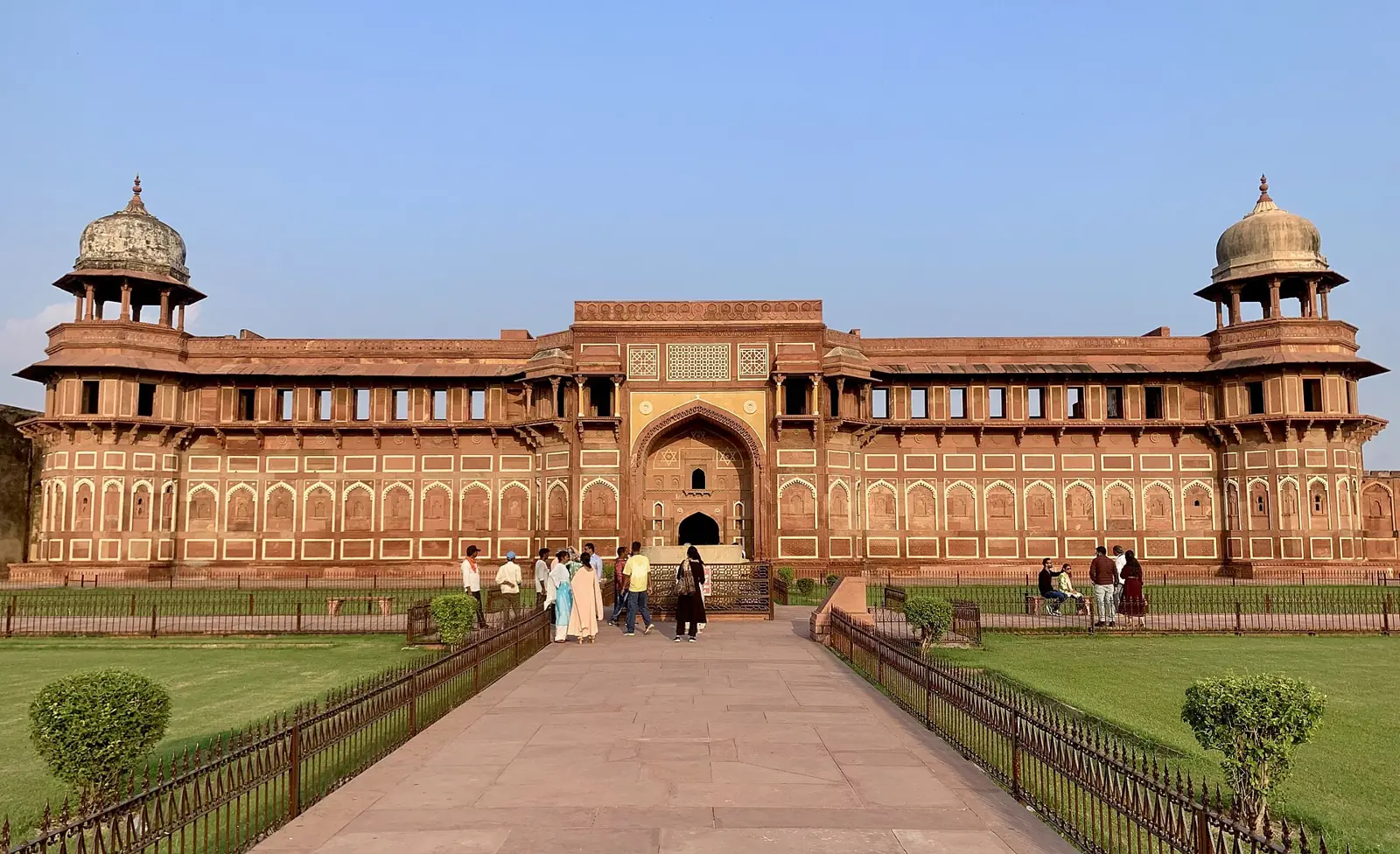
Agra Fort is the right first stop because it is far calmer than the Taj. People who go in the evening describe wide courtyards, a zigzag entrance that was designed to slow charging elephants, and only about a quarter of the fort open to visitors, the rest being army ground. The white marble pavilions at the river end look across to the Taj in the haze, which is the first hint of tomorrow.
Expect to be offered a visit to a marble inlay or carpet workshop. The workshops are real crafts, and watching the inlay is interesting, but several writers describe being pressed to buy and in one case being asked to leave when they refused. Tell your driver on arrival that you want fewer shop stops. Early dinner and bed: you will want to be up in the dark.
- Agra Fort
- Khas Mahal
- Musamman Burj
- Marble inlay workshop
Day 3 · night in Jaipur
Taj at first light, then the long road to the Pink City
Agra to Jaipur via Fatehpur Sikri and Abhaneri, about 250 km direct, eight to ten hours with stops
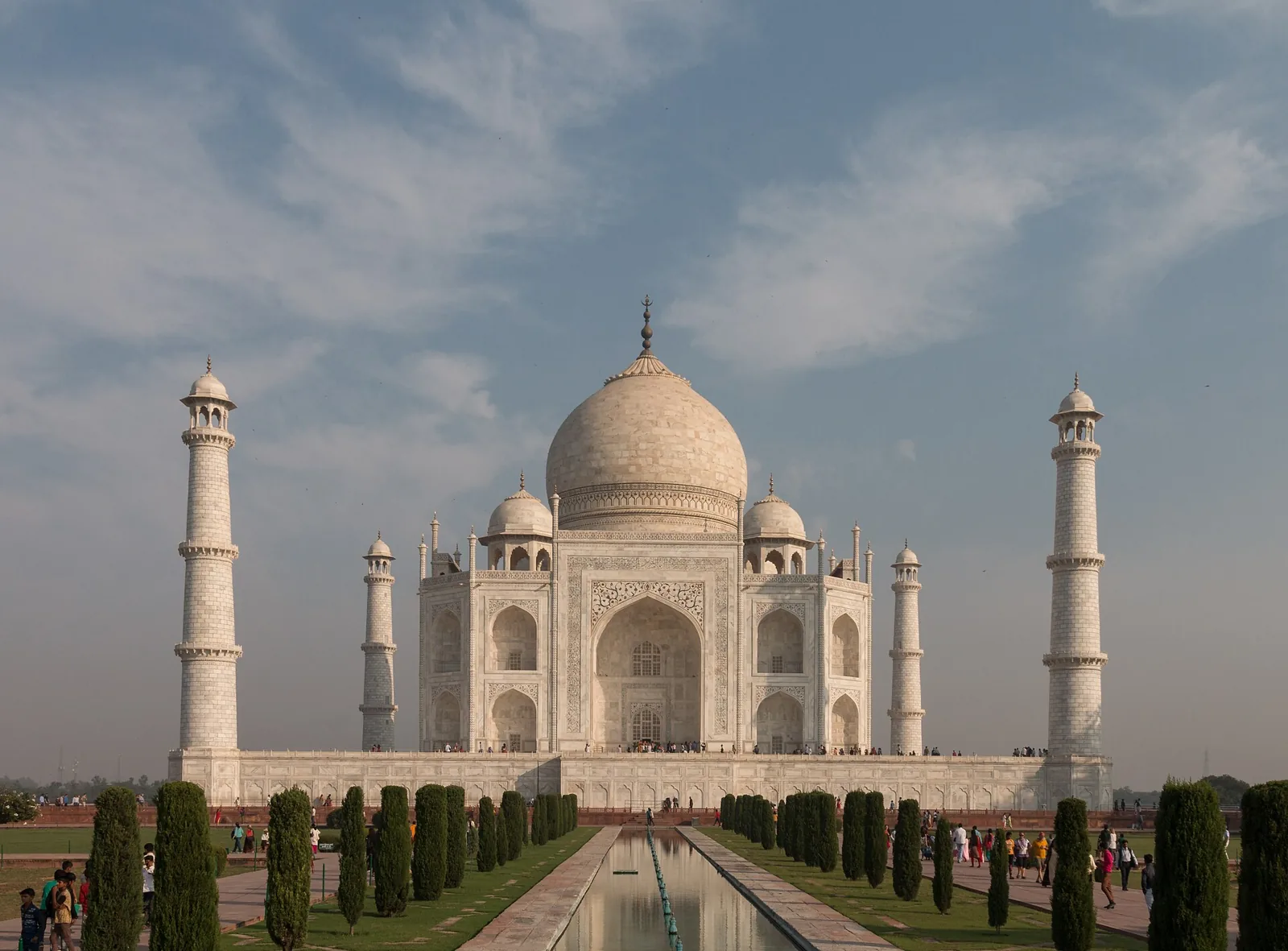
The gates open half an hour before sunrise and the lines begin before that. A photographer who stood at the west gate said the first group through got about twenty minutes with the forecourt almost empty, then the crowd arrived roughly ten minutes after opening. A woman who visited in April warned that the west gate queue was long and that she wished she had known the gates differ; the east gate security took five to ten minutes. Ask your driver which gate suits the day and be at it early. Plan two hours inside, and bring water and a hat even at dawn.
You will be offered guides and photographers at the gate. Roughly three thousand guides work the entrances, one visitor wrote, so agree a price before anyone starts shooting and buy tickets through the official channel. The marble gets hot quickly in the morning sun. Come out, have a proper breakfast, and check out by ten.
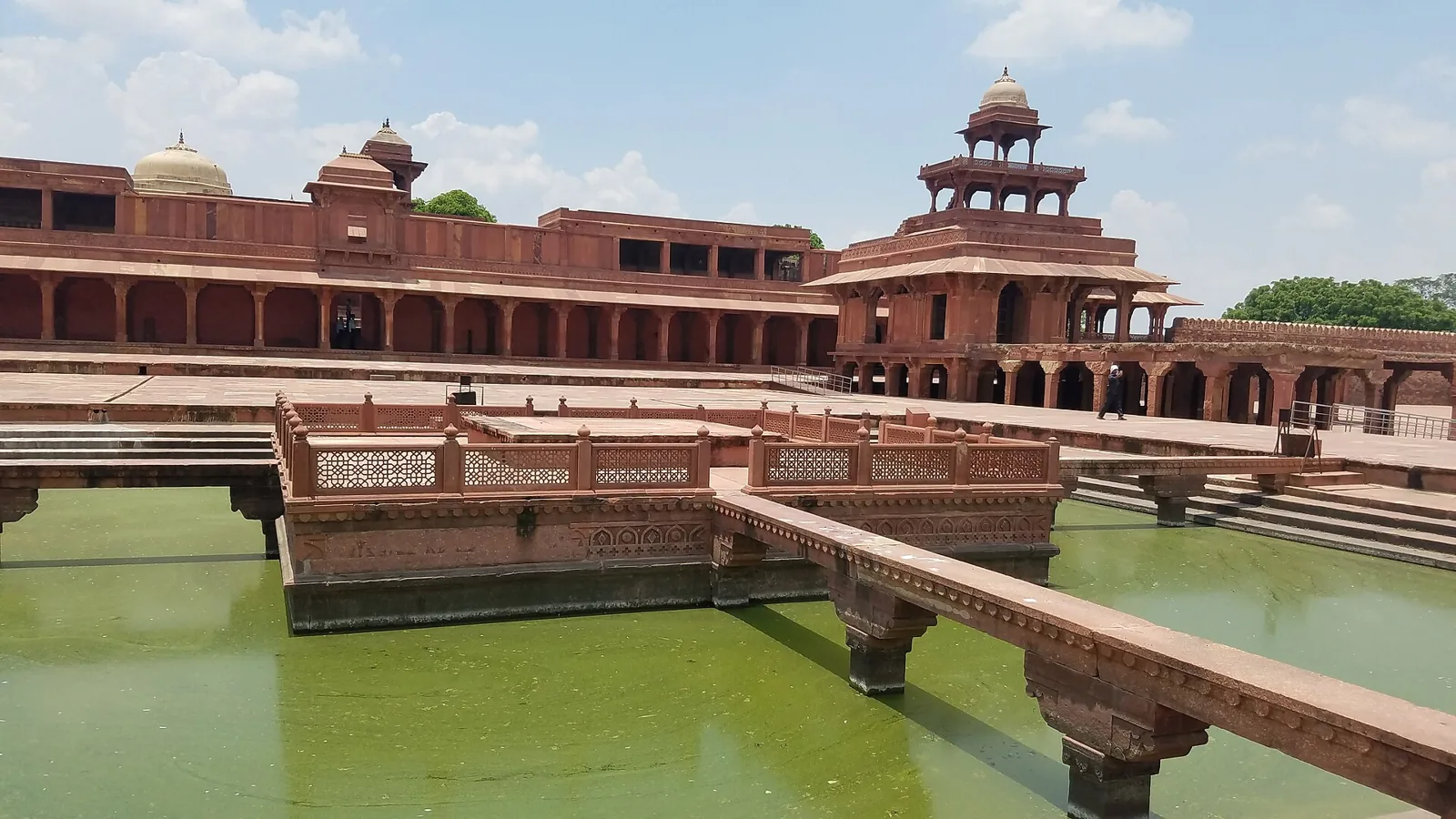
Then the road. The abandoned capital is about an hour from Agra and takes two to three hours with a guide, who is worth paying here because the red sandstone city makes more sense once someone explains who lived where. Akbar built it as his capital in the 1570s and left it within about fifteen years, and the Buland Darwaza and the mosque courtyard are the pieces nobody forgets. Hawkers outside the gates are persistent. The second stop is Chand Baori, the deep stepwell near Abhaneri. A late start can mean you miss it, since it closes early, so tell the driver that it matters. Jaipur by evening, roughly two hours after the stepwell, with the city lights coming on.
- Taj Mahal
- Fatehpur Sikri
- Buland Darwaza
- Chand Baori at Abhaneri

Day 4 · night in Jaipur
Amber at opening, then the old city and its bazaars
Amber is the heavy hitter and heat is the enemy, so go first. The fort is a UNESCO site on a hill north of town and builds around courtyards, carved halls and the mirror work of the Sheesh Mahal. Reports from visitors agree: you arrive at opening, the tour groups come an hour later, and the steepest bit is the final climb up the ramps. Some visitors still ride up on elephant back. Welfare concerns about that are widely written about, so most travellers we have read choose the jeep or walk the old paved path.
Back in the walled city, stop at the Hawa Mahal from the street. Built in 1799 with 953 small windows, it is more striking as a facade than as a building, and several guides note the interior is small. The City Palace nearby is the one to do properly: the Peacock Gate, the courtyards of Mubarak Mahal and Chandra Mahal, and the textile and weapon galleries. Jantar Mantar sits next door, a field of eighteenth century stone instruments including the largest stone sundial in the world. Take a guide, because the instruments are puzzling alone, and carry a hat, because there is little shade.
Late afternoon is for the bazaars. Johari Bazaar for jewellery, Bapu Bazaar for mojari and block-printed cloth, Tripolia for bangles. Have your guide set expectations on rates before you walk in, and drink something cold between rounds.
- Amber Fort
- Sheesh Mahal
- Hawa Mahal
- City Palace
- Jantar Mantar
- Johari Bazaar
- Bapu Bazaar
Day 5 · night in Jaipur
Nahargarh view and a loose last morning
This is the day the rushed itineraries lose. Begin late, after the first cup of tea, and drive up to Nahargarh Fort for the panorama over the city and, on a clear day, the Jal Mahal floating in its lake. The water palace itself is not open to visitors, so the view from the hill is how most people see it. The fort ramparts are windy and cool in the morning, and the sculpture courtyard inside is a quiet spot to sit.
After that your time is yours. Some people use it for Galta Ji, the temple complex in a gap in the hills where monkeys line the pools, or a museum, or a second walk through a bazaar they liked yesterday. Others spend a final hour at the stalls choosing a textile they have been thinking about. If you have an evening flight or train, the plan is to keep the afternoon free and hand you back at the airport or station with room to spare.
Because the loop finishes in Jaipur, the same car drives you back to your pickup, and that drive is already counted in the trip length shown for each pickup: Agra and Mathura are close enough to reach the same evening, while Delhi gets a travel day of its own. If Jaipur is your pickup, the trip simply ends at your door.
- Nahargarh Fort
- Jal Mahal viewpoint
- Galta Ji
When to go, and when the heat takes over
The official temperature tables for Agra and Jaipur tell the same story that trip reports do. December sits around the high twenties by day, and May and June push into the mid forties. One visitor in April reported over forty in Delhi and forty-four in Agra and was ill on the Taj morning, needing rehydration salts. Another woman guessed it was over a hundred Fahrenheit while she queued.
October to March is the sensible window, with the cold months the most comfortable and the busiest. In December and January fog is common, and it delays the expressway and flattens the Taj photographs. If you must go in summer, start earlier than you think, rest at midday and move the fort visits to late afternoon.

What people get wrong
The most common regret is too many places per day. A second is trusting a stranger who says the Taj is closed, or that a shop is government run. A third is paying a first quote for marble or carpets. And the Taj is shut every Friday, so if your Agra day lands there, the plan has to be moved by a day, with the garden on the far bank as the consolation view, where more than one writer found a crowd-free look at the dome.
- Book your Taj ticket on the official channel, not from anyone at the gate.
- Keep small notes for tips, shoe covers and the odd photographer.
- Tell the driver early which stop is the priority on the Jaipur road.
For parents and older travellers
Both the Taj and the red sandstone capital involve a lot of walking on hot stone, and Amber has ramps and uneven steps. Slower travellers do best with a morning shift, shade and water at every stop, and the jeep up at Amber. The plan above leaves the afternoon of day 5 open so a tired parent can rest while the rest of you explore.
What the price covers
- One car and driver from your pickup to the final drop
- 5 nights in hand-picked stays
- Breakfast and dinner every day
- Local guide at the main sights
- Tolls, parking and fuel
- Lunches
- Monument tickets, permits and activity fees
- Personal shopping
Questions people ask
Is five days enough for this loop?
It is enough to see each city's headline sights without feeling chased, provided you accept that one of the days is mostly a drive. Travellers who tried it in three or four days usually describe a long blur of car seats. If you can spare a sixth day, most reports say to give it to Agra, so the Taj and Fatehpur Sikri do not share a morning.
What is the best time of year for the Golden Triangle?
The cool months, October through March, are the standard answer, and the temperature tables on the Agra and Jaipur tourism pages back it up. Winter fog slows the roads. April to June is hot enough that people who went then report planning every day around shade.
Is the Taj Mahal open every day?
No. It is closed on Fridays, and on other days it runs from just before sunrise to just before sunset. If your Agra morning falls on a Friday, we move the days around, and the far-bank garden is the usual stand-in for a view.
Do we have to visit the shops the drivers suggest?
No, and you can say so before the trip starts. Several travellers wrote about marble, carpet and spice stops that turned into sales pressure, and one was asked to leave after refusing. Tell your driver you would like fewer shop stops. Looking at a craft demonstration is fine, and buying is entirely optional.
Can we start this from Jaipur or Agra instead of Delhi?
Yes, the car can meet you at Delhi airport, Agra, Mathura or Jaipur. Sights and order stay put, and only the first travel day changes with where you begin. The booking page shows it.
How long does the Agra to Jaipur day really take?
The direct road is about 250 km and around five hours. Add the old Mughal capital and the stepwell near Abhaneri and the day stretches past eight hours. Guides that cover this drive warn that a start after nine in the morning risks missing the stepwell, so the plan leaves right after the Taj.
- Taj Mahal is closed on Fridays; sunrise and sunset change the daily opening time.
- Agra Fort, Fatehpur Sikri, Amber and Chand Baori timings and closing days.
- Red Fort can shut for security around national days.
- Ticket windows and online booking options for monuments, which change.
 3 days
 6 days
 5 days