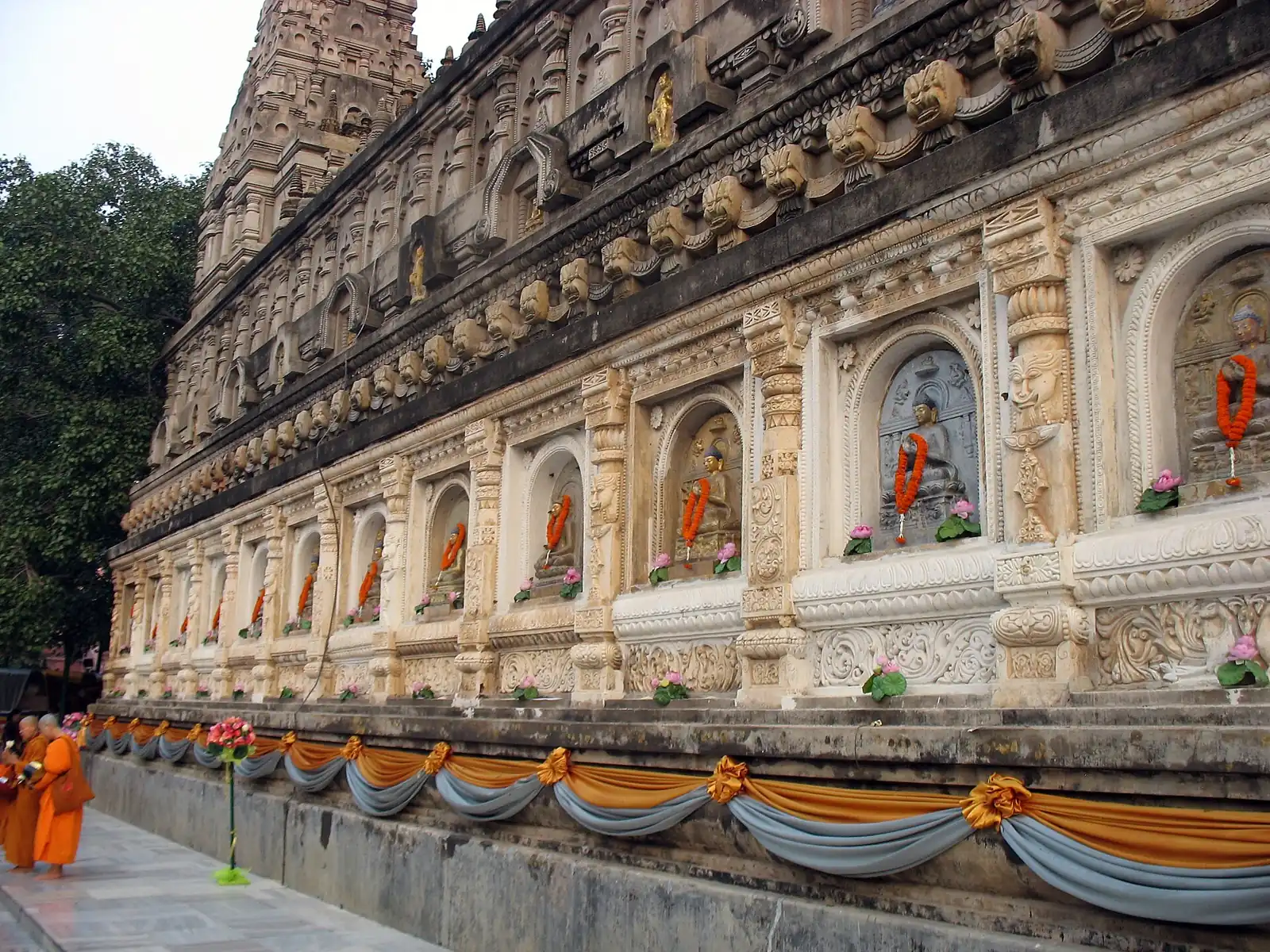
Bihar's Buddhist circuit rewards people who go slowly and early. The reports we read are consistent on that point: one traveller found the temple gate still shut at a quarter to five and monks waiting outside for someone to unlock it, then spent an hour in meditation as the light came up. Another, years earlier, slept through the morning puja and spent a long hot afternoon regretting it. The lesson in both is the same. Bodh Gaya is best before breakfast, and the heat of the middle day is for resting.
The route runs in a straight line. Two days around Bodh Gaya, around the temple, the monasteries and the tall seated figure. Then a drive of roughly seventy kilometres to Rajgir, where the sights are scattered over hills and the ropeway saves effort. Finally the ruins of Nalanda, which one writer called a fitting end to the circuit. Several of the people we read wished they had stayed longer at Rajgir, so we give it a full night.
It suits quiet, curious travellers, older parents who enjoy temples and gardens, and anyone who wants a few days away from the louder tourist routes. It is not a beach holiday and not a nightlife one. You book your own flight into Gaya; Day 1 starts when you land, and a car and driver stay with you until you fly out.
From your pickup
Same trip, four starting points. Road times are real driving times; a long drive becomes its own travel day so nobody arrives wrecked.
Day by day
Day 1 · night in Bodh Gaya
Arrival and a first walk around the Mahabodhi complex
Gaya airport to Bodh Gaya, about 7 km, around 20 minutes
The airport is close to the temple town, so you are at your stay within half an hour. Rest through the glare of the afternoon, then go to the temple in the late afternoon. The management site lists the main shrine as open from 5:00 am to 9:00 pm, with evening chanting between six and seven, so a visit just before dusk lets you catch the sound without the early-morning rush.
Phones, cameras and bags are generally left outside, and visitors who went said interior photos are not possible. Walk the paths slowly, find a quiet corner near the tree, and read the signs for the smaller sites: the Vajrasana, the Animesh Lochana Chaitya, the walking path and the lotus lake beside the temple. A traveller who went in 2008 reported the Mahabodhi grounds becoming a film set one evening, so unplanned events do happen.
Dinner is at the stay. Sleep early; tomorrow starts in the dark.
- Mahabodhi Temple
- Bodhi tree
- Muchalinda Sarovar
- Evening chanting

Day 2 · night in Bodh Gaya
Dawn chanting, the great statue and the monasteries
Local drives within Bodh Gaya, a few kilometres in all
Be at the gate before five. The sutta chanting and meditation session at half past five is the main reason to rise this early, and a visitor in 2024 described sitting in the main hall while the chanting ran, then meditating under the tree for an hour afterward. Leave phones and valuables at the service point when asked. Afterwards, wander the lake path as the sun comes up.
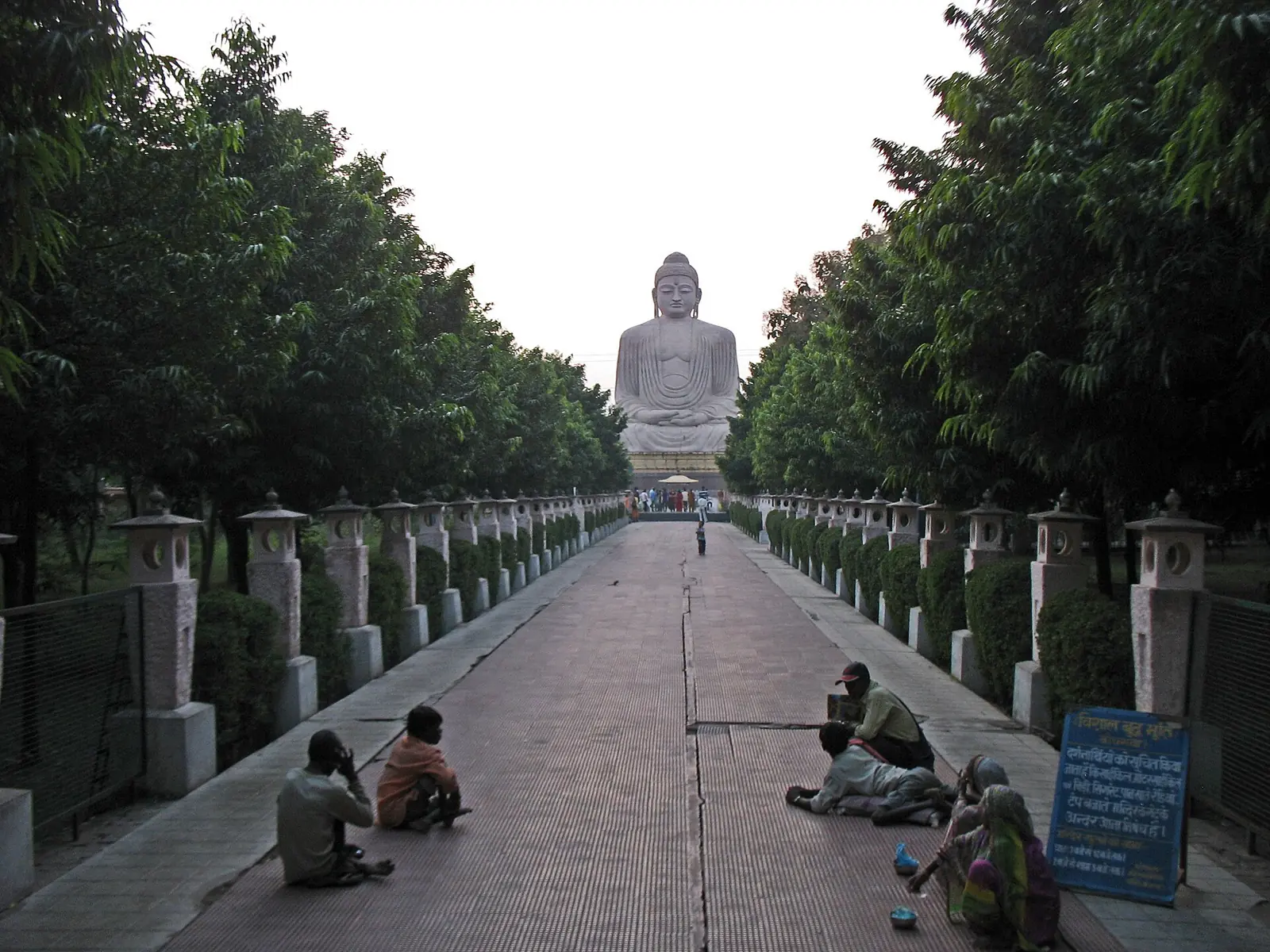
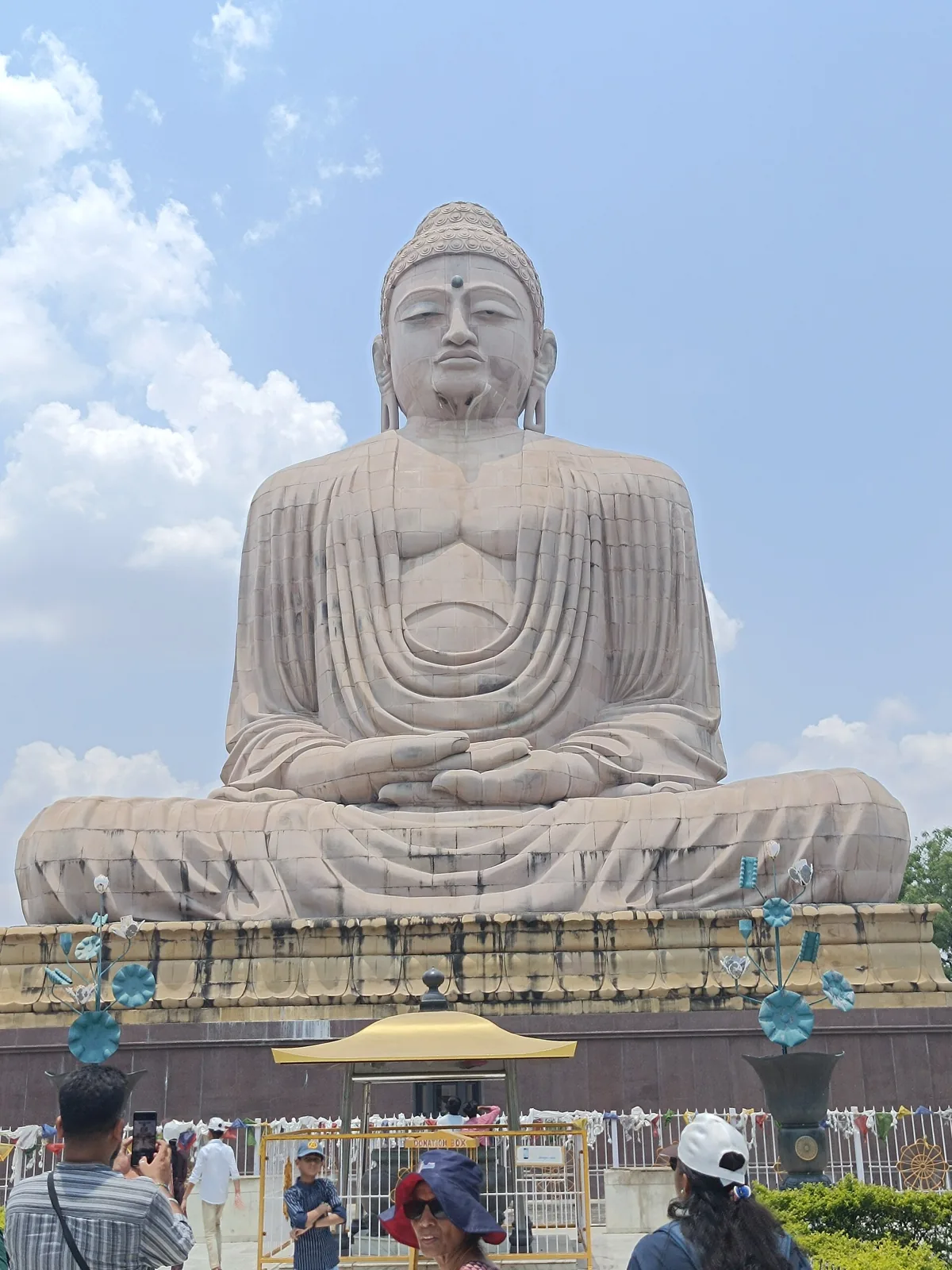
Later in the morning, the offering of kheer at ten is a small ceremony that visitors mention. Then go on to the Great Buddha statue, about 25 metres tall, which the Dalai Lama unveiled in 1989 according to one traveller. The stone path in front can become painfully hot by early afternoon, so go before noon or after four, and carry a bottle of water in case you need to cool your feet.
The monasteries built by different Buddhist countries sit close together, and you can see two or three at an easy pace: ask the guide which ones have murals or are quiet that day. Take the afternoon off. A late visit to Sujata village is an easy short drive for those with energy left.
- Dawn chanting
- Great Buddha statue
- Monasteries
- Sujata village
Day 3 · night in Rajgir
Over to Rajgir: the ropeway, Vulture Peak and a bamboo grove
Bodh Gaya to Rajgir, about 78 km, roughly two hours
Leave after breakfast. The road is decent in stretches and slow in others; one blogger who visited in 2019 noted extensive roadworks on Bihar's roads, and it is worth building an hour of slack into the day. Rajgir's attractions are spread across hills, so the car matters more than at Bodh Gaya.
The ropeway up to the Vishwa Shanti Stupa takes about seven minutes, according to a magazine guide, and runs in two sessions with a midday break, so plan around that. From the stupa a downhill walk of about half an hour leads to Gridhakuta, or Vulture Peak, wrapped in prayer flags. The same blogger found a Japanese family of three generations meditating there and suggested sitting down and staying a while. Do not stay till dark: she warned that the paths are unlit.
Venuvan, the bamboo grove in the valley, is quiet and a good late-afternoon stop. For the hot springs, the same guide suggests Brahma Kund before five in the morning or after seven in the evening, and warns that there is no separate enclosure for women, so many families skip it.
- Vishwa Shanti Stupa ropeway
- Vulture Peak (Gridhakuta)
- Venuvan
- Brahma Kund

Day 4 · night in Gaya
Nalanda's ruins, then the flight home
Rajgir to Nalanda about 12 km, then Nalanda to Gaya airport roughly 100 km, three hours
Reach Nalanda when the site opens; the Bihar tourism page gives opening from nine. One solo traveller's suggestion is sound: see the ruins first and the museum across the road afterwards, and take time to look at the big old trees that make the brick courtyards feel older still. The university flourished for four centuries from the fifth century, and the red brick monasteries and the stepped stupa make the scale easy to read. A guide, rather than an unofficial helper outside, makes the difference here.
There is a small horse tonga for the last stretch from the main road in some accounts, and the car makes that unnecessary. You will probably spend about two hours on site. The museum is closed one day a week in the 2017 magazine piece, so check.
Then the drive to the airport. It is long, about three hours, so we advise a flight in the afternoon or evening. If you are flying out of Patna instead, tell us at booking and the last day changes.
- Nalanda Mahavihara ruins
- Nalanda Museum
- Gaya airport
How the days are shaped around the sun
Every first-hand account we read has the same pattern. People who did the temple at dawn came away moved; people who tried it at noon complained about heat, crowds and burning stone underfoot. Bodh Gaya is on stone and pavement, and the cool season, from about October to March, makes everything easier. April to June is too hot for the long outdoor days this plan needs.

Respect, rules and what to wear
The main sites are active places of worship. Cover your shoulders and knees, expect to leave shoes outside and keep your voice down near the tree. Phones and cameras are usually not allowed inside the temple. If the chanting hall is full, sit rather than stand, and do not photograph monks without asking.
What we leave out
The caves at Barabar, Dungeshwari and the Hindu ghats at Gaya are all interesting and all add hours of rough road. A trip report we read called Bihar's roads patchy, and a four day plan has no spare time. We put the two hill sites of Rajgir and Nalanda in instead, and leave the caves for a longer stay.
What the price covers
- Car and driver from your pickup to the airport, and again from arrival to departure
- 3 nights in hand-picked stays
- Breakfast and dinner every day
- Local guide at the main sights
- Tolls, parking and fuel
- Flights and trains (we book them with you at the fare of the day)
- Lunches
- Monument tickets, permits and activity fees
- Personal shopping
Questions people ask
Is Bodh Gaya enough for a first Buddhist circuit?
For most people, yes: it holds the tree, the temple and a cluster of monasteries from several countries. Rajgir and Nalanda add the teaching hills and the university ruins, and together they make a complete short circuit.
Do I need to book the chanting sessions?
The temple's own site lists them as part of the daily routine, with no booking mentioned. Timings can change on festival days, so ask at the gate or phone the temple committee before you plan around one.
Can older parents manage the Rajgir hills?
Mostly yes, because the ropeway removes the steep climb. The walk from the stupa down to Vulture Peak is gentle but uneven, and one blogger found no lighting on the paths, so go in the early afternoon and return before dark.
Which airport is better, Gaya or Patna?
Gaya is the closer one, only a few kilometres from Bodh Gaya, and it is the plan here. Patna is a longer road away, so choose it only if the flights suit you better.
What is the best month for this trip?
Most writers agree on November to March. Winter mornings can be foggy and cold, so carry a light jacket for the pre-dawn temple hours.
How does the pickup work from Agra, Mathura or Jaipur?
You fly from Delhi on your own ticket and Laladham takes you to the airport if you start in Agra or Mathura, while Jaipur guests fly from their home airport. At Gaya the driver meets you at arrivals and stays for the trip.
- Mahabodhi temple opening hours and chanting times (the management site shows 5:00 am to 9:00 pm, but also carries an old notice)
- Rajgir ropeway timings and its maintenance closures
- Nalanda site hours (the state page says 9 am to 6 pm) and the museum's weekly closing day
- Rules on phones and cameras at the temple
 4 days
 3 days
 3 days