Shekhawati is where Rajasthan's merchant families spent their money. Rich on caravan trade, they covered the walls of their town houses with paint: gods, trains, English gentlemen, a horse and an elephant. A traveller who reached Mandawa by accident on a self-drive trip to Bikaner and Jaisalmer wrote that it was the surprise of the whole journey. Another warns it is fading, with many houses neglected and some frescoes scraped for the gold in them. Both are true, and that mixture is exactly why people go.
The second half is a different kind of place. Bikaner is a walled desert city of rose-red sandstone, a fort with its own museum and a restored aeroplane, and an old quarter of carved merchant mansions. Between them, in the neat middle of the trip, sits a shrine where thousands of rats run over your feet and nobody minds.
This is a slow, rural, off-the-circuit route. It suits couples, photographers, curious parents and anyone who has already seen Jaipur and wants something quieter. It does not suit anyone who needs every attraction to be polished, because the walls here peel and the lanes are narrow. Cooler months are the only sensible ones: summer heat in this part of Rajasthan is severe.
From your pickup
Same trip, four starting points. Road times are real driving times; a long drive becomes its own travel day so nobody arrives wrecked.
Day by day
Day 1 · night in Mandawa
On foot through Mandawa
Mandawa looks like any small town at first, and those who have walked it agree that the history hides in the side lanes. Start soon after breakfast with a local guide, because the lanes twist and many doors belong to private owners. One visitor hired a guide for half a day and found the main value was navigation and getting doors opened, not scholarship, so ask him to concentrate on showing you rather than telling you.
The old mansions were built by merchants who grew rich on the caravan routes. Look for the double haveli with two identical wings, built as mirror images so that two sons would not quarrel; a house where natural-colour gods share a wall with a painted elephant and horse; and Murmuria, where European lifestyle scenes sit beside Indian ones. Many are in poor condition. A golden gate in a lane and a roof where real gold was once used and then scraped off tell the story of what has been lost.
Some people see the lanes by camel cart with the driver as guide, which is slower and more fun than walking in the afternoon. Keep a break from about midday: after two or three hours of frescoes the houses start to blur, and one travel writer warns that the whole region can feel repetitive if you stay long. The evening is for tea on a rooftop and the quiet streets.
- Mandawa
- Murmuria Haveli
- Chowkhani Double Haveli
- Mandawa lanes
Day 2 · night in Mandawa
Nawalgarh, Dundlod and the villages
Mandawa to Nawalgarh and Dundlod, about 40 km out and back
Nawalgarh and Dundlod both lie within about forty kilometres of Mandawa, and are among the other towns where people go for painted houses. Going back to the same base is a deliberate choice: a writer on the region says the north-south roads are better than east-west ones, and that it is easier to stay put and drive out than to keep packing.
Several of the houses are restored and run as small museums with a modest ticket. Others are private and look closed; here a guide who knows the caretaker is worth more than any book, and visitors report that a small informal tip to the keyholder usually does the job. A solo woman is advised not to go in alone, so keep your driver or guide close.
Dundlod is the quieter of the two. Come back to Mandawa in the late afternoon and rest, because tomorrow is a long road. If you still have energy, take a last walk to the lanes you skipped yesterday.
- Nawalgarh
- Dundlod
- Painted haveli museums
Day 3 · night in Bikaner
The road to Bikaner
Mandawa to Bikaner via Fatehpur and Ratangarh, about 190 km, roughly three and a half hours
Leave after breakfast. The road through Fatehpur and Ratangarh is described by a self-drive writer as very good, and Fatehpur makes a sensible stop on the way: its havelis are called some of the best kept in Shekhawati by one blogger, though another says most are not looked after. Give it an hour, and ask about the cultural centre in a restored haveli there, which charges a small fee.
Mahansar, off to one side, is a small town with a story of a family that lost its fortune when opium ships sank. Add it only if you left early; the land opens out as you go west.
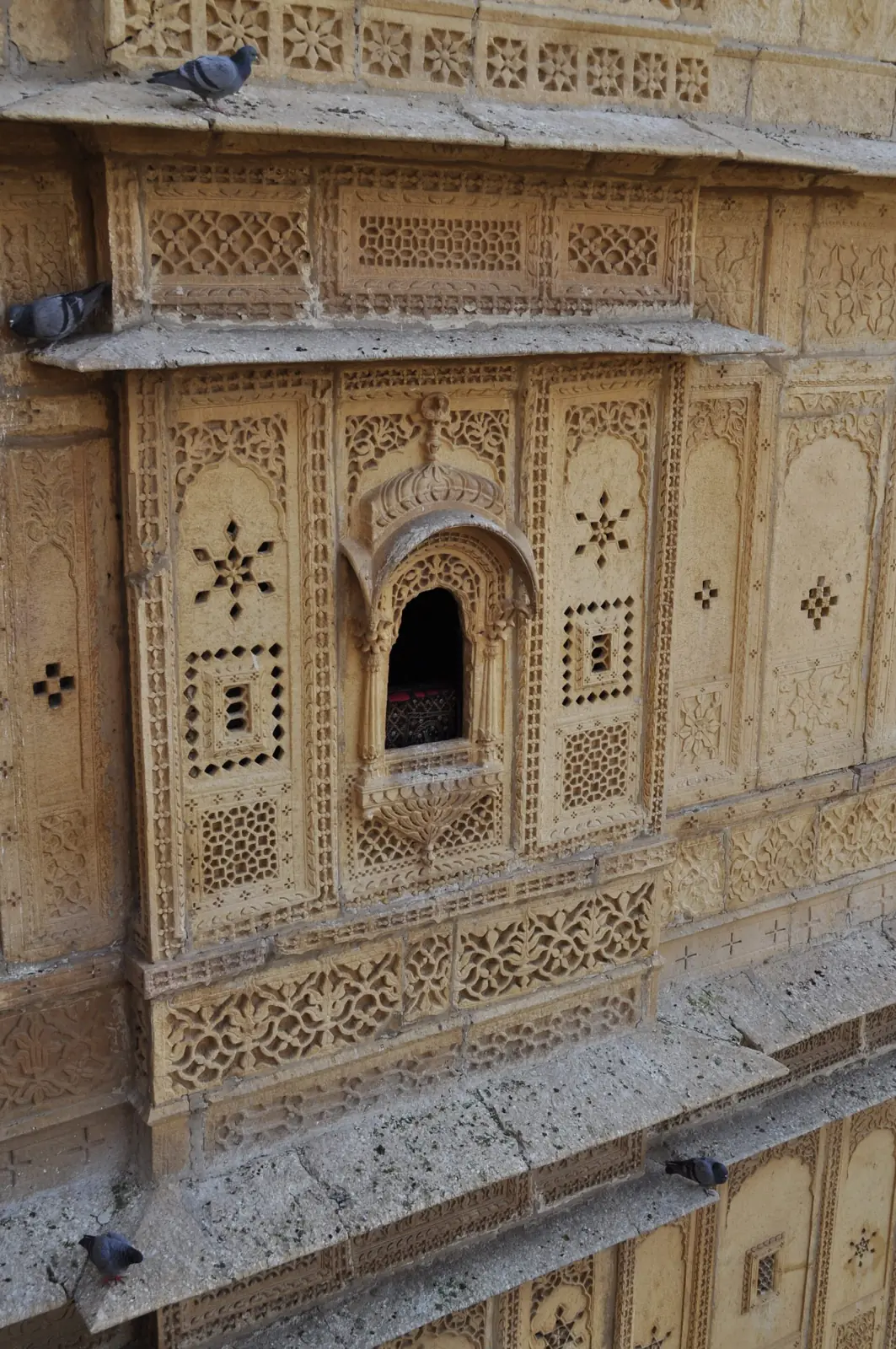
Arrive in the afternoon and walk the old city towards the red-sandstone Rampuria havelis. The streets are narrow and congested, so a small car struggles, and this is a place to leave the car with the driver and walk. The carved balconies and golden work are the highlight of the old quarter. Eat a plate of bhujia and a kachori while the light turns copper.
- Fatehpur
- Mahansar
- Rampuria Havelis
- Bikaner old city
Day 4 · night in Bikaner
Junagarh, the Bhandasar temple and Deshnok
Bikaner to Deshnok and back, about 30 km each way
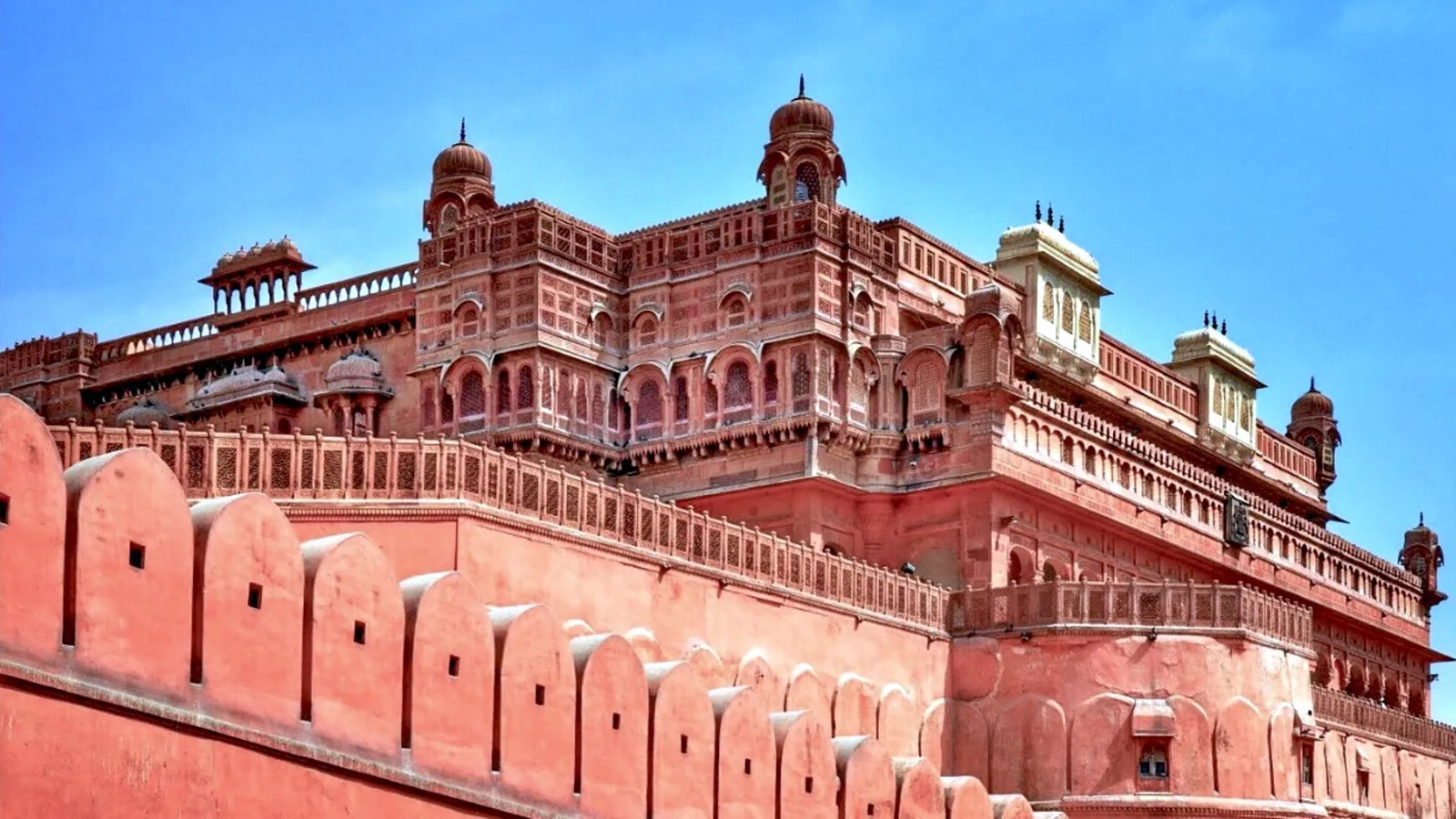
Be at Junagarh Fort when it opens. The fort was built in the sixteenth century in rose-red sandstone, and inside you find palanquins, old weapons, paintings and an aeroplane from the First World War. Allow most of the morning, since staircases and courtyards are long, and wear flat shoes.
After the fort, see the Bhandasar Jain temple, built in 1428 before the city existed and now looked after by the Archaeological Survey of India for its paintings. The Ganga Museum is a good indoor stop for anyone who likes art. Lallgarh Palace is still a royal home, so what you see is the museum wing and the royal railway coach at the entrance.
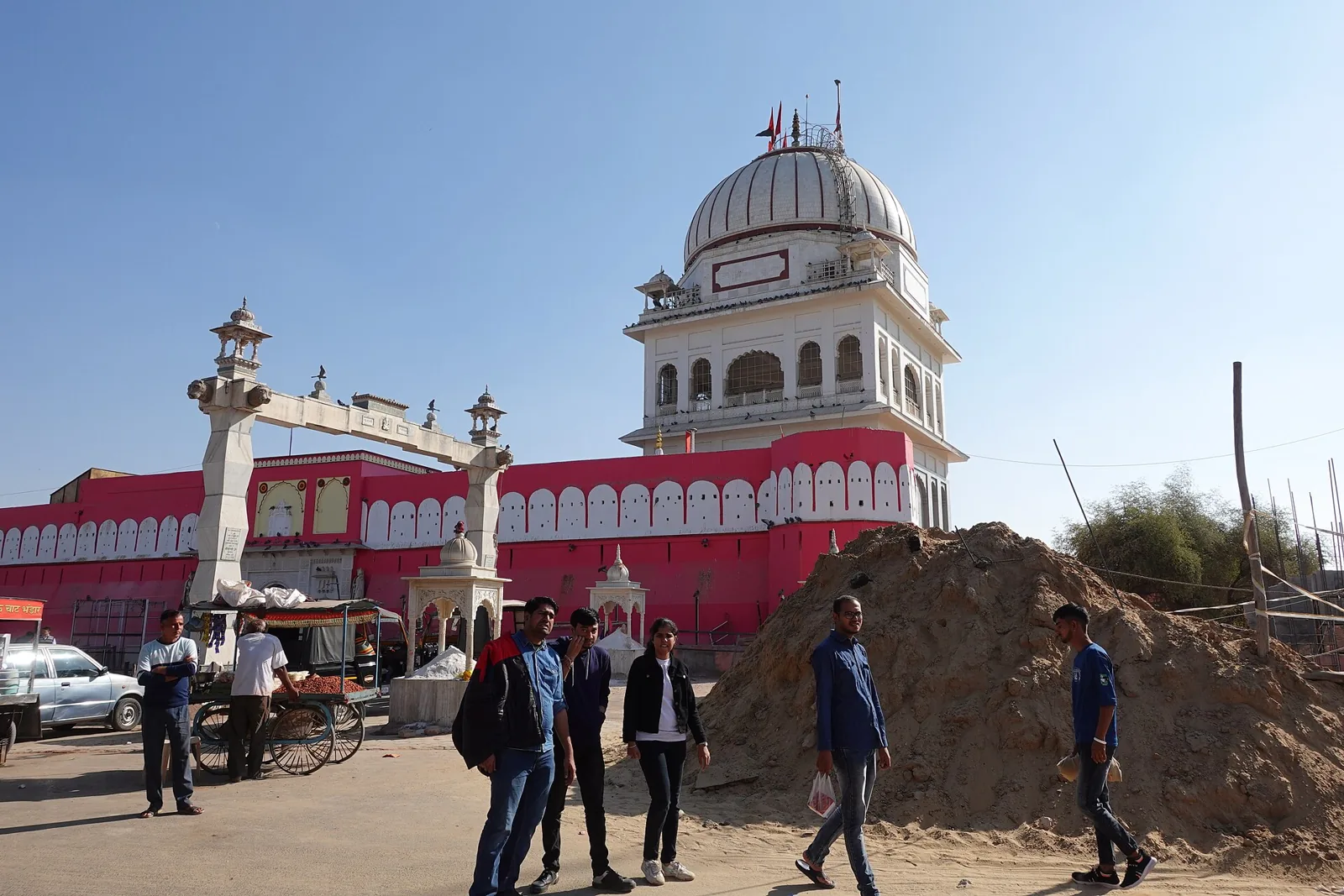
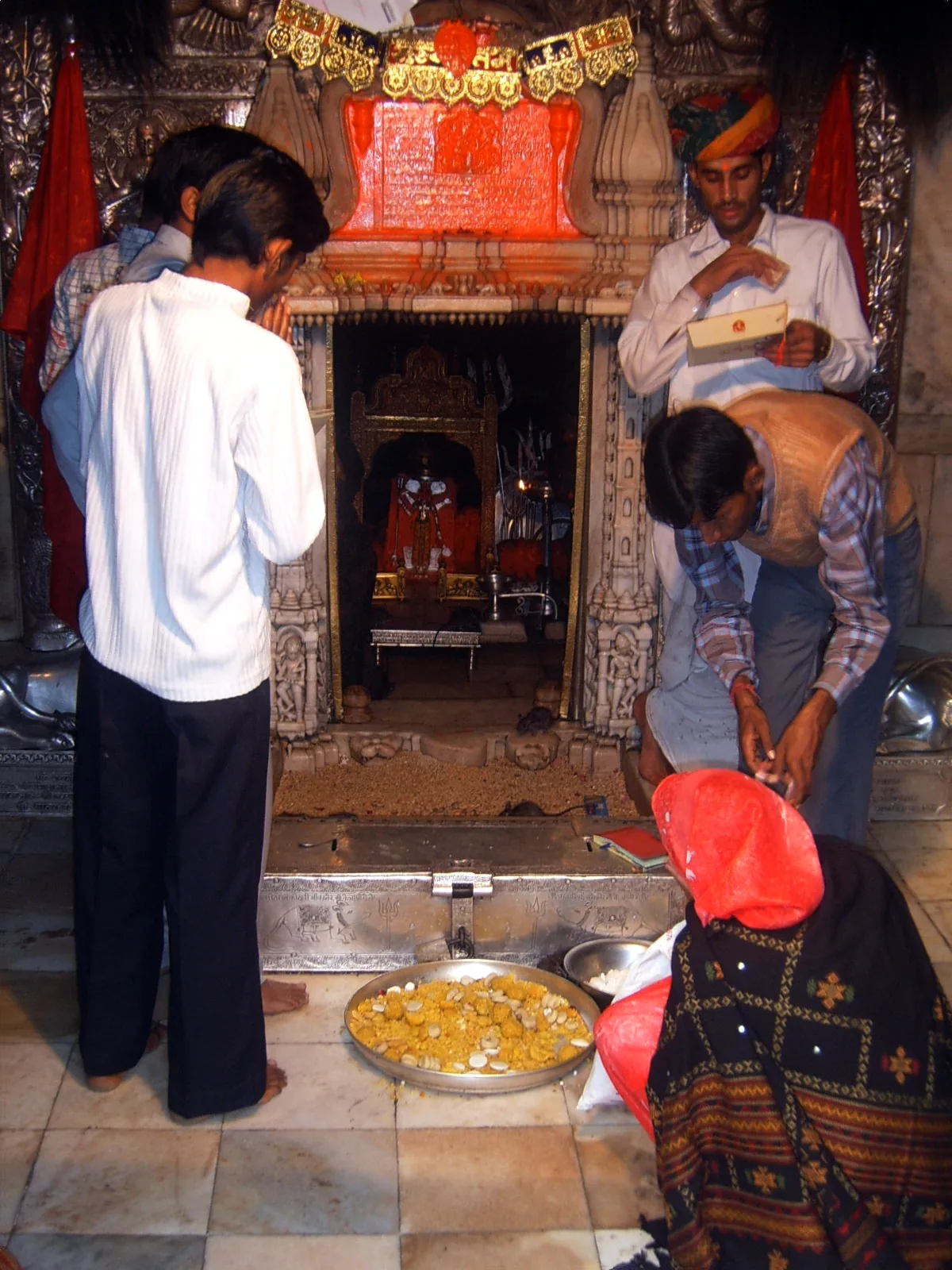
In the afternoon drive out to Deshnok and the Karni Mata temple. It is a shrine to a fourteenth-century mystic, with more than twenty-five thousand rats living in it, and they are considered sacred. Do not expect to be bitten; do expect to be among them, barefoot. Offerings of milk, grains and sweets are made to them. A white rat is thought lucky. Come back to Bikaner by evening, and finish the trip with whatever camel-milk sweets or ghewar are on offer.
- Junagarh Fort
- Bhandasar Jain Temple
- Lallgarh Palace
- Karni Mata Temple, Deshnok
Why four days is about right
One writer who covered Shekhawati suggests two days for the main towns and two to three if you have a car and driver, and warns that the houses begin to look similar after a weekend. That is the reasoning behind two nights in Mandawa and the rest in Bikaner. If you love frescoes you can add Ramgarh and Mukundgarh, which one blogger mentions, but the plan keeps room for the fort and the old city.
Bikaner itself deserves more than one afternoon. Junagarh, the old havelis, the temple at Deshnok and the camel research centre are enough to fill a second day, and that is why the last day is quite full.
Seeing the havelis properly
A guide helps most with the private ones. Several travellers say caretakers will open a locked house for a small tip, which works better with a local at your side than without. Restored museum houses charge a modest ticket, but prices change, so the exact amounts are left for you to check.
Go in the morning for softer light and cooler lanes. Expect peeling plaster, pigeons and dust: the art is real but fragile, and the best photographs come from standing still and looking at one wall for a few minutes. Do not touch the paintings.
When to go and what to bring
October to early March is the window that both the tourism ministry and the bloggers agree on. Summer can reach about 45 degrees and the lanes become an oven. Winter nights are cold in the desert, so carry a jacket. If your dates allow, the Bikaner Camel Festival in January and the fairs held at that shrine in the Navratri months of March and October add colour, and also crowds and higher prices.
Bring flat shoes that come off easily, a hat, a scarf for the temple and some small notes for tips and ticket counters.
What the price covers
- One car and driver from your pickup to the final drop
- 5 nights in hand-picked stays
- Breakfast and dinner every day
- Local guide at the main sights
- Tolls, parking and fuel
- Lunches
- Monument tickets, permits and activity fees
- Personal shopping
Questions people ask
Is Shekhawati worth it if I have already seen Jaipur?
Many people say yes, because it is the opposite of the palace circuit: small towns, few visitors, houses you walk into. Expect decay as well as beauty. If you only like restored, polished monuments, spend the extra days in Jaipur instead.
Do I need a guide in Mandawa?
It helps. The lanes twist, some houses are private and a guide can get the caretaker to open them. One visitor noted that most guides are self-taught locals who will not give much history, so use them for access and read up beforehand if you want dates.
Is the rat shrine comfortable for children?
Children are often more at ease than adults, though it is barefoot, crowded and smells strongly. If your child is nervous about animals, stay on the outer verandah and watch from there.
How far is Bikaner from Mandawa?
About 190 km by road, and one self-drive writer put it at around 3.5 hours without stops. With the Fatehpur stop, plan on most of the day.
Can this start from Jaipur or Delhi?
Yes. Jaipur is the nearest of our four pickup cities and Delhi airport is the farthest. The drive to Mandawa from any of them is its own travel day, added before day one. Nobody has to hurry to make the morning start.
Can I do the camel desert camp near Bikaner?
A traveller in the region spent a night in a dune camp about twelve kilometres out of the city, with camel ride, sunset and sunrise. It is an optional extra that we can arrange in place of the evening in town.
- Haveli museum tickets and opening hours at Mandawa and Nawalgarh: they vary by house and change often.
- Junagarh Fort timings and closing day: sources disagree, so confirm before you go.
- Karni Mata temple rules on footwear and photography, and fair dates in Navratri.
- Road condition between Mandawa and Bikaner: reported very good, but verify in monsoon.
 3 days
 5 days
 5 days