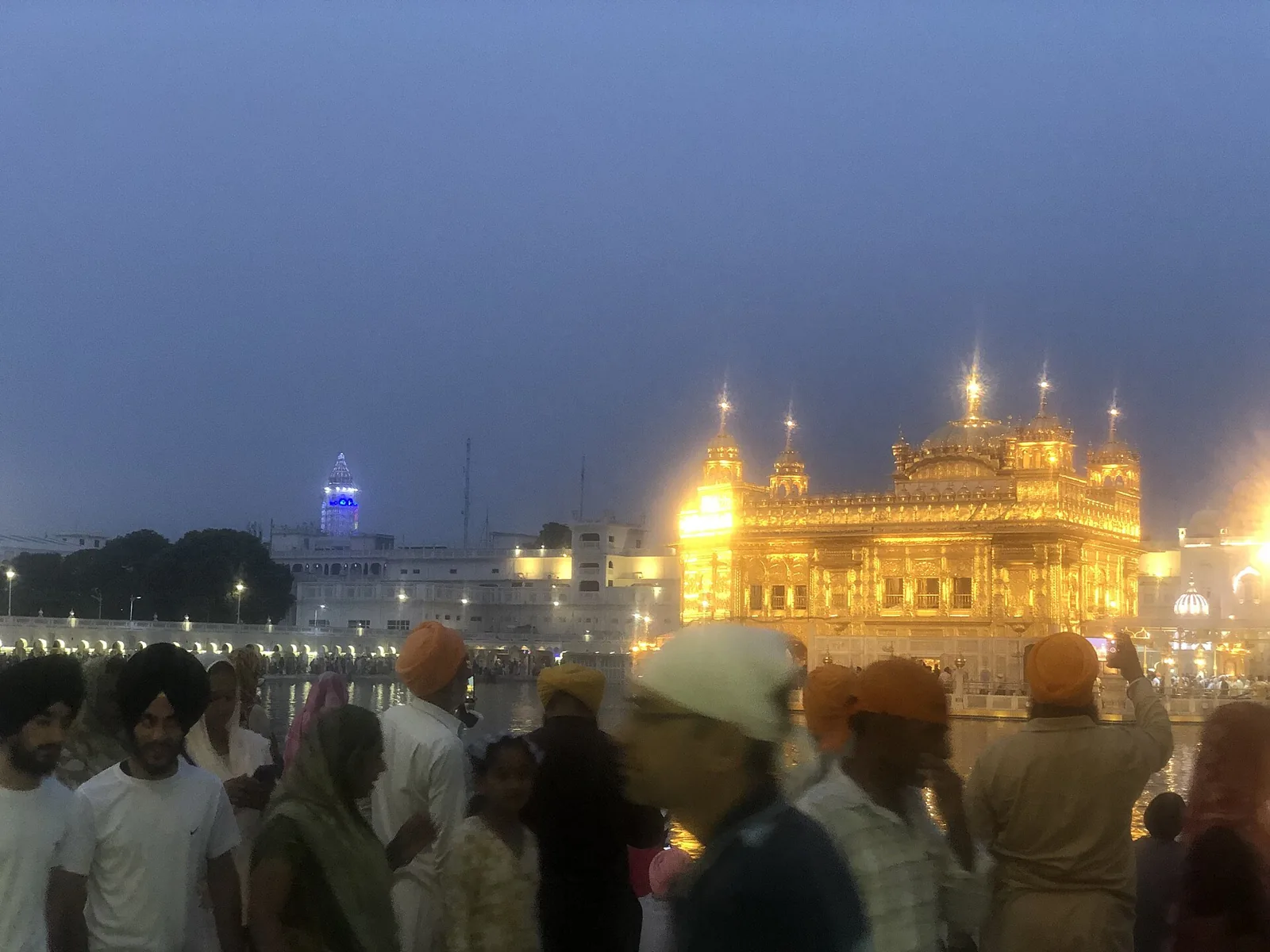
Amritsar rewards people who stay for more than one night. A single day lets you see the Golden Temple once, in whatever light you happen to arrive in, and then rushes you to the border. Almost every account we read from people who did it slowly says the same thing: the temple changes completely between the small hours, the afternoon and the evening, and it is worth seeing at least twice.
Around the temple the city is intense and fed by the langar, the free kitchen that runs day and night. Within walking distance are a garden where a massacre took place in 1919 and a museum of Partition built from what families carried across. Thirty kilometres out, the Attari-Wagah gates close the day with a ceremony of drums, shouting and high kicks.
This trip suits families and older parents because the days are built from short walks on marble and flat ground. It is also a good first Punjab trip for first-time visitors who want food, faith and history in one place.
From your pickup
Same trip, four starting points. Road times are real driving times; a long drive becomes its own travel day so nobody arrives wrecked.
Day by day
Day 1 · night in Amritsar
The Bagh, the museum, and the temple after dark
Short city drives or walking, under 2 km between sights
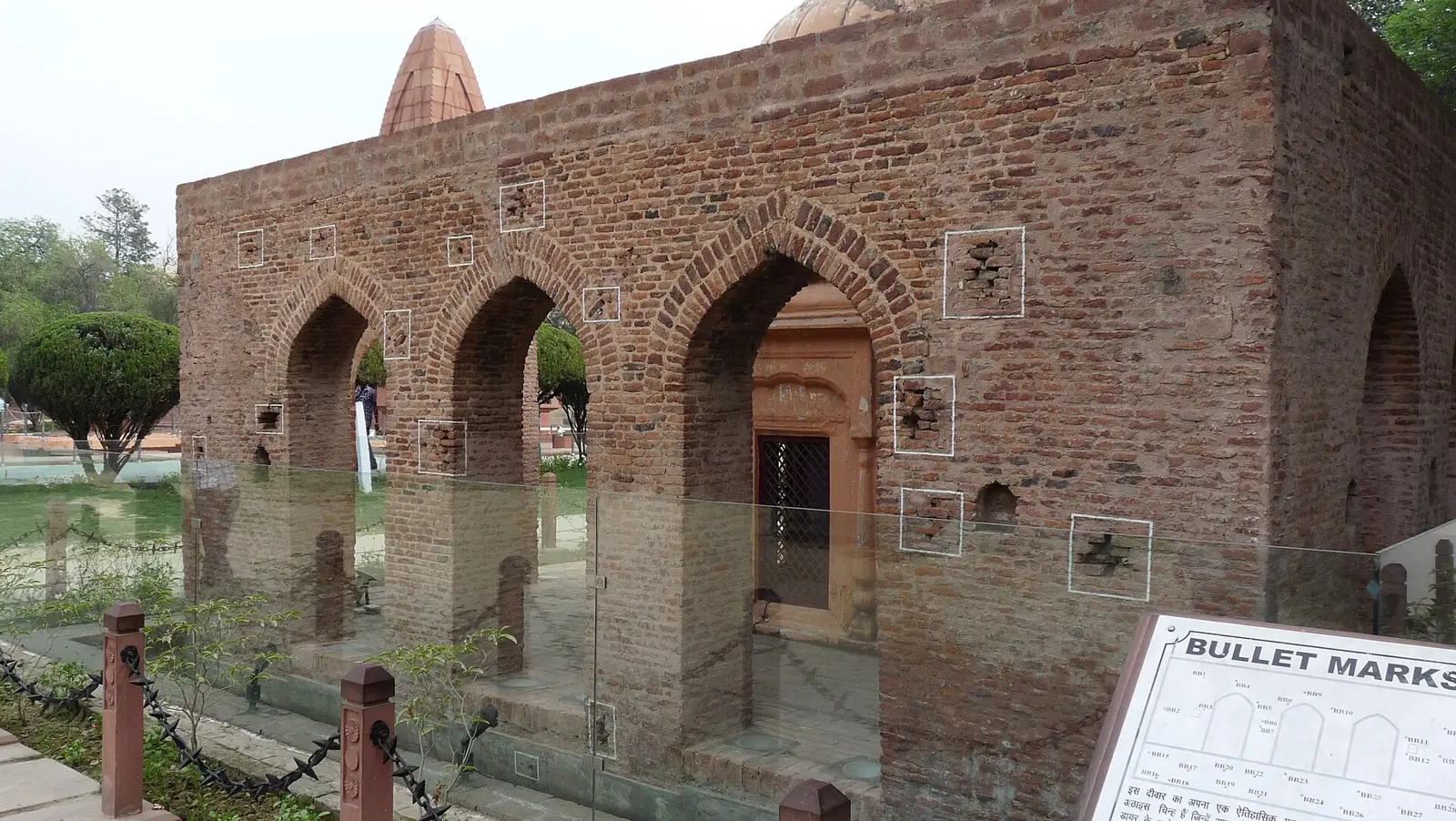
Begin with Jallianwala Bagh, which is a short walk from the temple. Visitors describe a quiet walled garden where the brick walls still show bullet marks, a well, and galleries whose footage is harder to take than the memorial itself. Official figures put the dead at 379, while many historians believe the true count was far higher, and your guide will explain where the numbers come from. Go in the later part of the afternoon if you want fewer people.
The Partition Museum is in the old town hall, which was once a British headquarters and a jail. It holds trunks, rope beds and utensils donated by families who crossed in 1947, more than a hundred oral interviews, and fourteen galleries ending with a tree where visitors write on green leaves. People who tried to squeeze it into an hour regret it; one visitor with only a few hours said she could have spent days. Mondays are the weekly closure, so tell us if your dates fall on one.
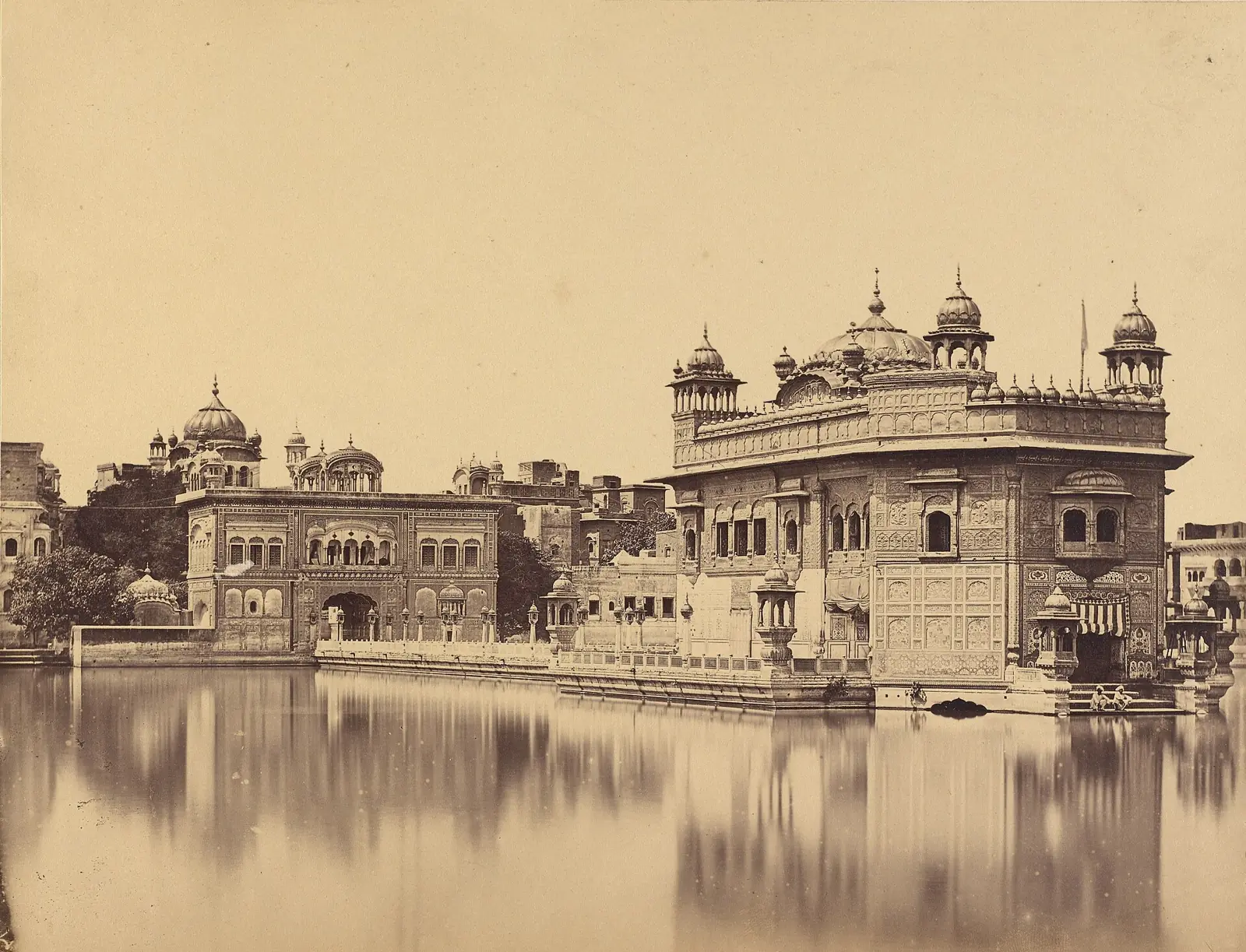
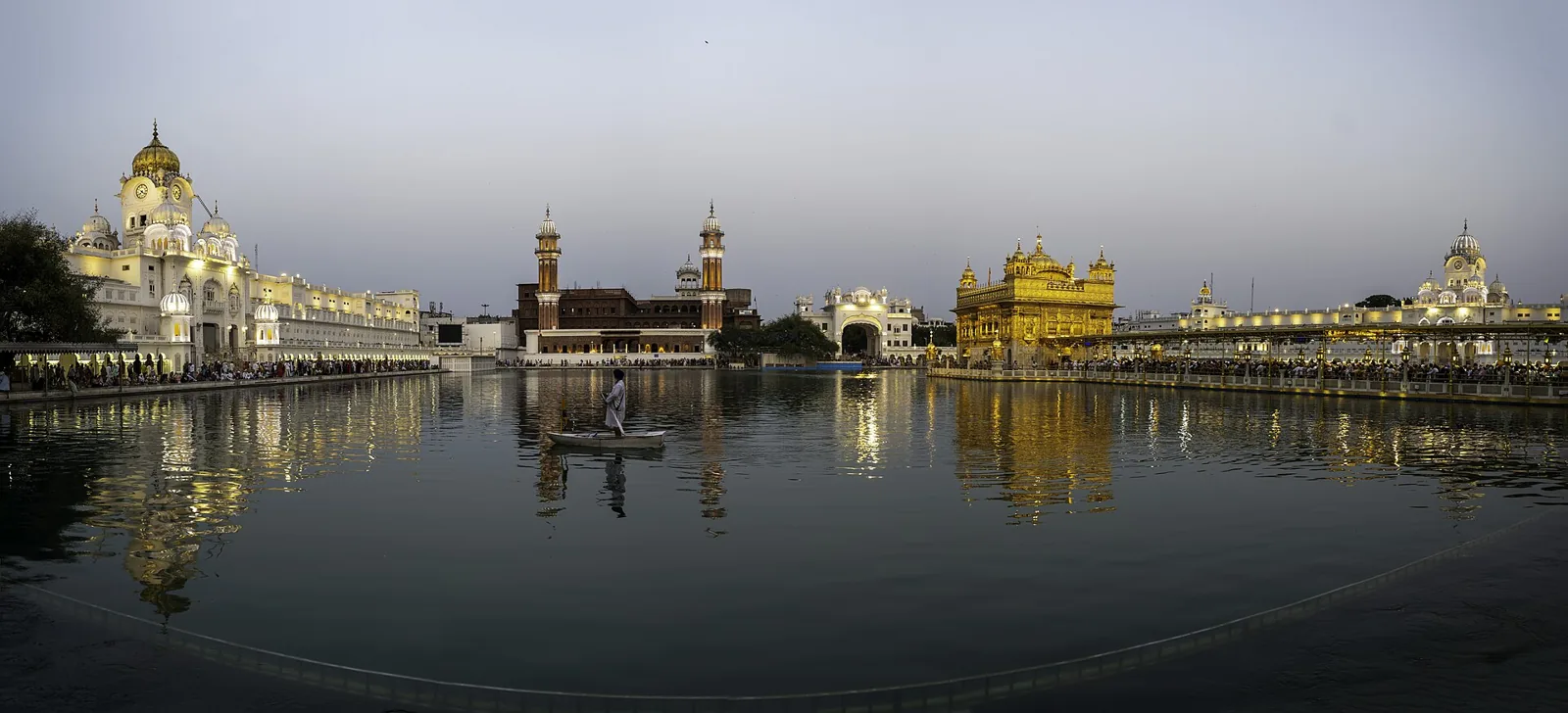
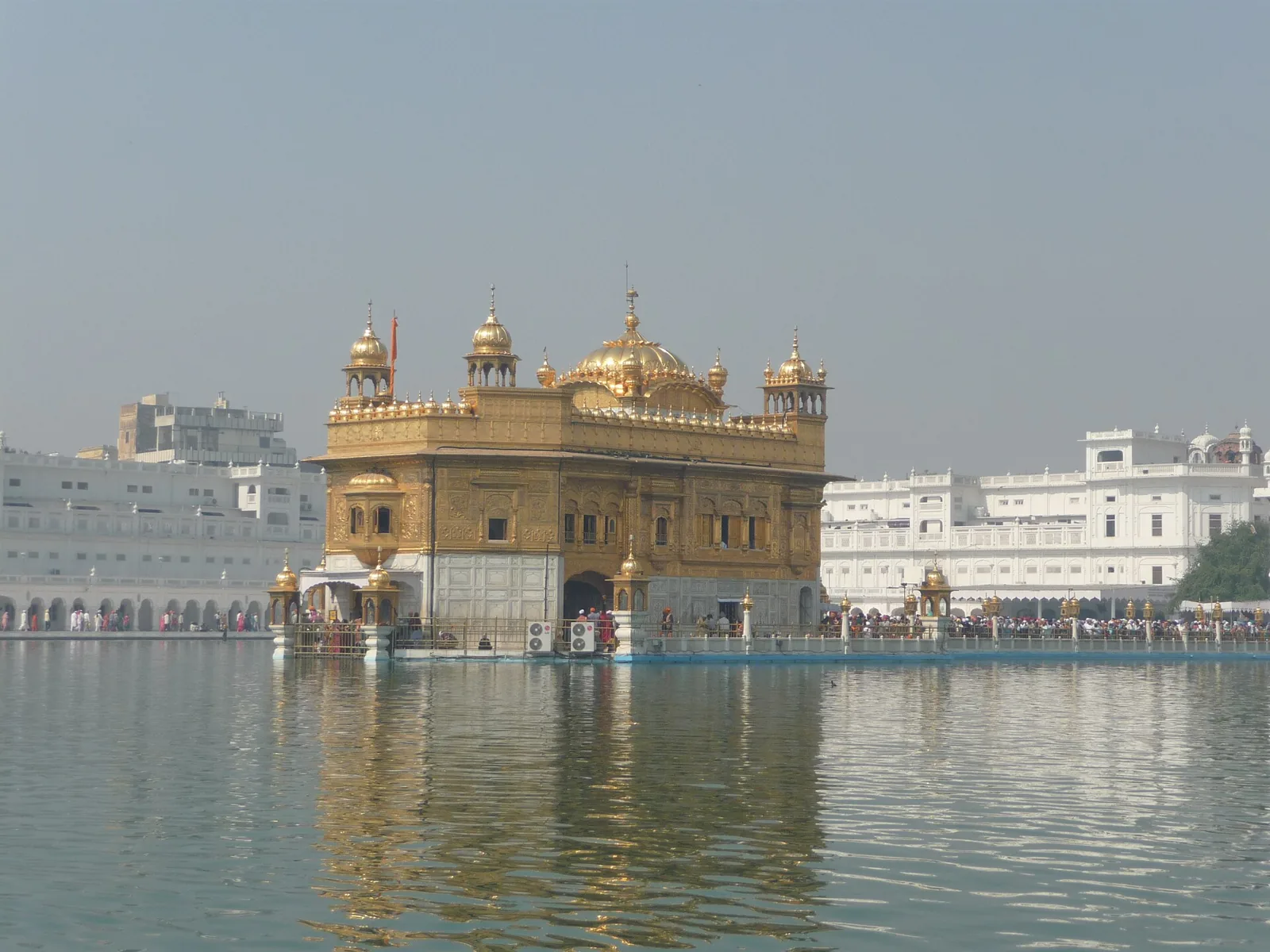
At dusk walk to Harmandir Sahib. Leave your shoes at the counter, cover your head, and enter through the north gate where the dome's reflection in the water is at its best. Travellers say sunset is the busiest time and the most beautiful as the sky turns, while later at night the crowd thins and the lit dome sits on the water. Walk the marble path around the sarovar at your own pace. You can join the queue for the inner shrine or simply sit by the water.
- Jallianwala Bagh
- Partition Museum
- Harmandir Sahib
- Amrit Sarovar
Day 2 · night in Amritsar
Before-dawn temple, langar and the border at sunset
Amritsar to Attari-Wagah, about 30 km, roughly 45 to 60 minutes each way
Day two starts when the city is still dark. The scripture is carried to the sanctum in the early hours, around half past four according to one writer, and the courtyard in that hour is cool, clean and calm in a way the daytime never is. Volunteers look after shoes, hand out water and kada prasad, and nobody hurries you. Sit for a while before you join the queue, and let the courtyard fill around you slowly. Writers who have seen it at every hour describe this as the calmest stretch of the day.
Then eat at the langar. It runs round the clock and serves between fifty thousand and a hundred thousand people a day, cooked, served and washed up by volunteers; you sit on the floor and everyone gets the same plate. One writer called her meal there unforgettable, and a couple who came alone on their first visit admit they did not even find the langar that time. Afterwards, walk the Hall Bazaar for phulkari cloth and jootis, and eat kulcha for lunch.
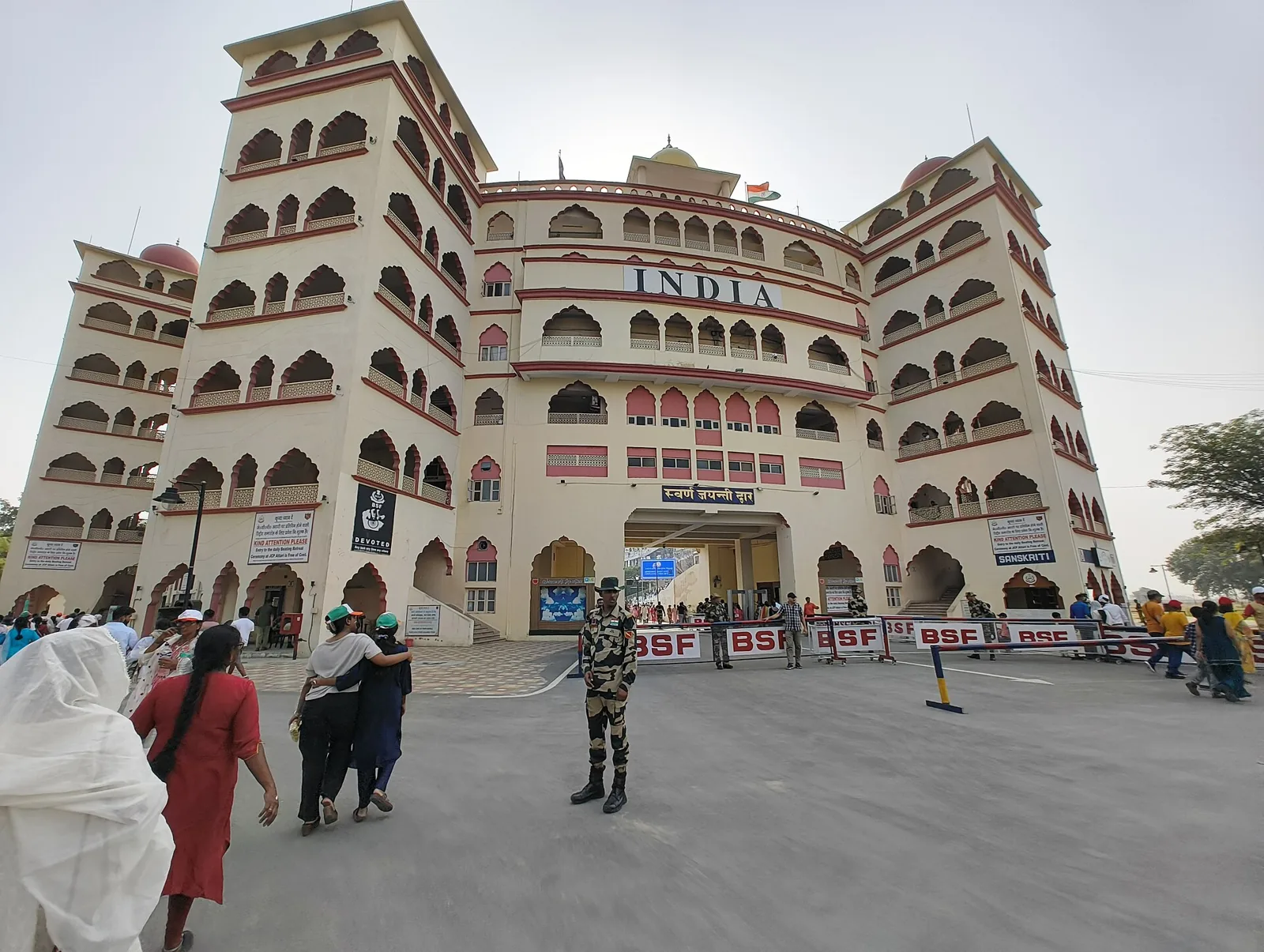
Leave for Attari-Wagah after a rest, about thirty kilometres and roughly an hour by road. Seating is on concrete steps and is first come, first served, and one traveller who arrived at four on a day with a busy crowd found every seat taken. Allow a long lead time, leave your backpack behind, and carry water. The build-up is half the show, with music, women and children running with the flag, and then the sudden finish. Since April 2025 the format has changed: the Border Security Force suspended the handshake and kept the gates closed. Dinner is back in town.
- Harmandir Sahib
- Langar Hall
- Hall Bazaar
- Attari-Wagah border
Day 3 · night in Amritsar
Slow breakfast, one more look, and the town's food
Local drives; Tarn Taran about 45 minutes out
Leave the last day open. Writers who packed three days of sights into two kept saying the thing they wanted was time to sit. Start with kulcha at breakfast and a glass of lassi from the stalls beside the temple, then take a second slow circuit of the sarovar in day light. The golden reflection looks different from the opposite bank, and the light is gentle before the crowds build.
If you want a longer outing, Tarn Taran Sahib is about forty-five minutes away, with a large pool and an evening ritual. Others spend the time at Gobindgarh Fort or the Durgiana Temple, which has a gold-covered dome and a marble path round its own water.
Eat as much as the day allows. Writers recommend the kulcha at the older shops, singhara fish, faluda-kulfi, and makki di roti with sarson da saag. Pack the afternoon with the bazaars if you need gifts, or return to the temple for the last evening, when the crowd lightens after about nine. Your guide at the main sights can help choose among the dhabas, since the older ones sell out early.
- Harmandir Sahib
- Tarn Taran Sahib
- Gobindgarh Fort
- Durgiana Temple
- Hall Bazaar
Temple etiquette that people forget
Heads are covered for everyone, men included. Shoes come off at the entrance, where volunteers look after them, and volunteers inside also offer drinking water and a spoon of sweet kada prasad. The tourism page lists no dress rules at all, so ask your guide before you enter instead of guessing. Wear things you can remove easily, keep your bag small, and carry thin socks for marble that can be scorching in summer. Your guide can also tell you where cameras are and are not welcome.
When to go
October to March is the sensible window. December and January can be very cold early in the morning, which matters for the before-dawn visit, but visitors say the courtyard stays peaceful. Festivals such as Guru Nanak Jayanti, Diwali and Baisakhi are the most atmospheric times and also the most crowded, so book stays well ahead for them.
In summer the city turns hot and the border seating is baking concrete. One sleeper-bus traveller who arrived in winter caught a cold and lost two days to fever, which is a good reason to rest well on the first night and layer up for the pre-dawn visit.
Honest notes on Wagah
Opinions split. One writer found it spectacular and comic, another found the crowd's rivalry petty given real tensions, and a third said the lead-up was worth far more than the final moment. Expect noise, flags and a very short finish. If you dislike crowds, spend that evening at the temple instead, and nobody will think less of your trip.
What the price covers
- One car and driver from your pickup to the final drop
- 4 nights in hand-picked stays
- Breakfast and dinner every day
- Local guide at the main sights
- Tolls, parking and fuel
- Lunches
- Monument tickets, permits and activity fees
- Personal shopping
Questions people ask
Can older parents manage this trip?
Yes, nearly all the walking is on level paving. The border stands are concrete steps, so choose a seat near the aisle or skip that evening.
How long should we queue for Harmandir Sahib?
It varies a lot. Late afternoon and early evening are usually shorter than midday, and the small hours are quietest. Allow time for the langar on top of the queue.
Is the Wagah ceremony still worth doing?
Many visitors still enjoy it, though the format was scaled back in April 2025, with no handshake and the gates closed. Check the current start time because it shifts through the year.
Can we start this trip from Delhi or Jaipur?
Yes. Our car can meet you at any of four starting points, and the long road to Amritsar is added as its own day. One group who drove it themselves planned to arrive at eight and reached at eleven, so leave plenty of room.
What do we wear at the Golden Temple?
Cover shoulders and legs, bring a scarf or cap for your head, and wear shoes that slip off easily.
Is the Partition Museum worth the time?
Yes. One visitor felt she could have stayed for days, and the doors are shut every Monday.
- Attari-Wagah ceremony start time and format, which changed in April 2025 and moves with the season
- Golden Temple queue and any entry restrictions on festival days
- Partition Museum hours (listed 10 to 6, closed Mondays and public holidays)
- Jallianwala Bagh opening hours
 4 days
 3 days
 6 days