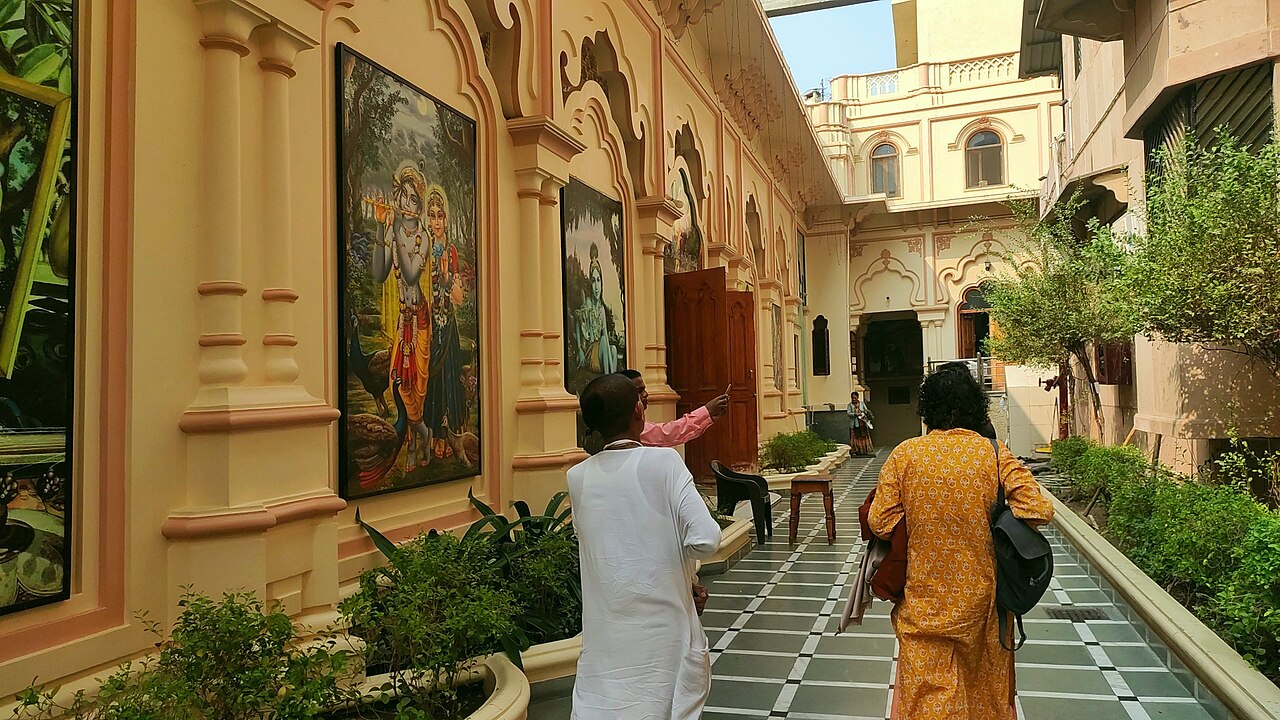
A pilgrimage should not be closed to anyone, and in Braj many places do welcome the wheelchair. But the old lanes, the ghat steps and the hill temples were built centuries before ramps were thought of, and honest planning is the best kindness.
This guide says plainly what we know, what we do not, and what to ask before you set out.
The short answer first
ISKCON Vrindavan is the best-accessible big temple, with mostly flat marble floors and wheelchair-friendly paths. Prem Mandir is mostly flat and wheelchairs can enter, though some galleries involve stairs. Krishna Janmabhoomi in Mathura has a ramp and a lift in parts of the complex, but the Garbha Griha, the birth cell, has stairs.
Most other temples and ghats have steps, narrow lanes or uneven ground. We could not verify step-free access at them, so we do not claim it.
If you are choosing between places, begin with ISKCON in the evening for the aarti and kirtan, add Prem Mandir for the lights, and keep the day's remaining energy for one old-town temple reached with help. This arrangement gives a full experience of Vrindavan without forcing a wheelchair through the hardest lanes.
How it works on the ground
Cars cannot enter the old lanes of Vrindavan. At Banke Bihari, tell the police at the gate that you are with a disabled visitor, as a wheelchair or a shorter path is sometimes arranged, though not promised. Private cars are stopped one to one and a half kilometres short on busy days, so a wheelchair needs an e-rickshaw or a long push.
In Mathura, Dwarkadhish has many steps and is not step-free, and Vishram Ghat has steps to the river, though the aarti can be watched from the top. At Govardhan, the roads are wheelchair-possible but the kund steps are not. Barsana's temple is at the top of roughly 200 or more steps, so a vehicle road, if available, should be asked about.
Ground reality: floors, lanes and lifts
Temple floors are marble or stone, and the surface is hot in summer and cold in winter. Shoes come off, so wheelchair users should carry socks. Lanes are crowded and uneven, with open drains and sudden steps. Toilets are available at ISKCON, near the Prem Mandir gate and at the Janmabhoomi entrance, but not at many smaller shrines.
Please remember that these facts come from our guide data and general reports, and conditions change. Corridor works at Banke Bihari are reported, and rules may differ from what you read.
Weather matters too. Rain makes marble slippery, and summer heat makes the stone painful to touch, so carry a mat or thick socks. In winter fog, mornings are slow and cold, so keep a blanket in the car. Ask your driver to park as near as the rules allow, and arrange the pick-up point in advance by phone.
Common mistakes and the calm fix
The first mistake is to assume that a famous temple has a ramp. Ask first. The second is to plan too many stops. Two accessible places a day, with rest between, make a better pilgrimage than six hurried ones.
The third is to forget the vehicle. Ask for a car with a boot big enough for a folding wheelchair, and for a driver who is willing to help with transfers. The fourth is to arrive without a helper, since the lanes need two pairs of hands.
Do not be shy about asking for help. Temple sevadars and police at the gates are often kind when asked politely, and a quiet word at the start of the queue can make the difference between a long wait and a short path. Offer thanks, and a small donation to the temple, if you can.
A checklist before you go
Run through these points with your stay and your driver.
Hotels and homestays vary a great deal. Ask whether the ground floor has a step at the entrance, whether the bathroom door is wide enough, and whether there is a lift. Photos sent by WhatsApp are more reliable than a general description.
- Fold-up wheelchair, or a lightweight transit one, and a spare cushion.
- Ask each temple office about ramps, lifts and the best gate.
- Choose a stay with a ground floor room and a bathroom you can enter.
- Plan two or three stops a day, with a rest after lunch.
- Carry medicines, a doctor's number and a card with a contact in your pocket.
- Tell the police at crowded gates before you join the queue.
Related guides and a lala:Cab helper
Read our senior citizen guide, the ISKCON and Prem Mandir pages and the parking notes. lala:Cab can arrange a car with space for a wheelchair, a patient driver and a guide to ease each gate. We will tell you honestly if a place is not suitable, rather than promise what we cannot.
Questions, answered
Which Vrindavan temple is best for wheelchairs?
ISKCON Vrindavan, with mostly flat floors. Prem Mandir is also mostly flat.
Is Krishna Janmabhoomi accessible?
Parts have a ramp and lift. The Garbha Griha has stairs. Check locally.
Can a wheelchair go into Banke Bihari?
The lanes are crowded and narrow. Tell the police at the gate, as a path is sometimes arranged.
Is Barsana accessible?
The temple is up about 200 or more steps. Ask whether a vehicle road is open.
Timings, entry rules and fees change. Please confirm on the day with the temple or your driver.
- Ramps and lifts at each temple
- Banke Bihari wheelchair arrangement at the gate
- Barsana vehicle road
- Corridor works and new rules
- lala:Cab guide pages: ISKCON Vrindavan, Prem Mandir, Krishna Janmabhoomi, Banke Bihari
- Local verification pending for each site
Walking this path soon?
If you would like a driver who knows the lanes and the timings, the lala:Cab app is there when you are ready. No advance, no pressure.