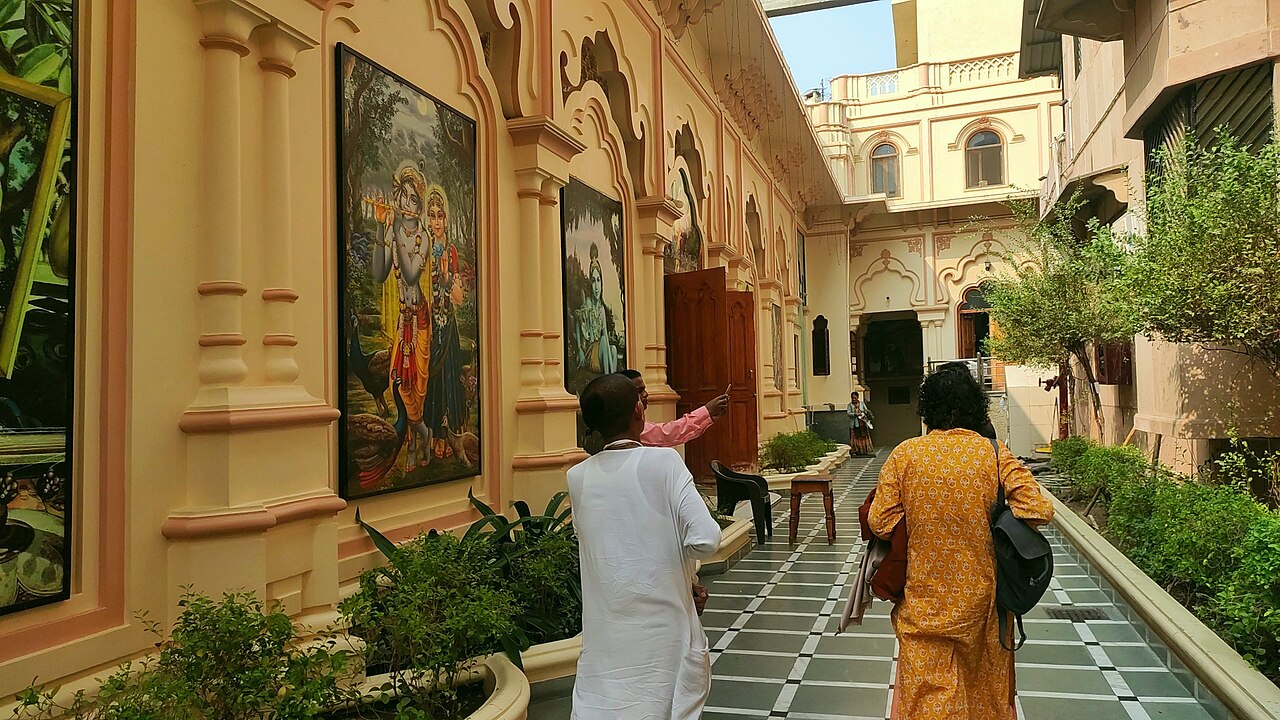
For many families, the yatra to Braj is a journey made for a parent or grandparent. It is a gift, and sometimes the last wish of someone who has waited all their life to see Vrindavan. The place, however, was not built for easy walking, and a little planning turns worry into peace.
This guide is for those travelling with elders. It names the easiest temples, the things that tire, and how to keep dignity in every step.
The short answer first
Choose fewer places, go early, rest in the afternoon, and prefer temples with level floors. ISKCON Vrindavan is the best-accessible big temple here, with mostly flat marble floors and wheelchair-friendly paths. Prem Mandir is mostly flat and wheelchairs can enter, although some galleries involve stairs.
Plan on two or three darshans a day, not six. An elder who sees two places well will carry the memory longer than one who is hurried through six.
How it works on the ground
The old lanes of Vrindavan are narrow, crowded and uneven, and cars cannot enter them. At Banke Bihari, tell the police at the gate that you are with an elder or a disabled person. A wheelchair or short path is sometimes arranged, but it cannot be promised.
In Mathura, Krishna Janmabhoomi has a ramp and a lift in parts of the complex, though the Garbha Griha has stairs. Dwarkadhish has many steps and is not step-free. Vishram Ghat has steps down to the river as well, so a seat at the top is a kinder way to see the aarti.
At Govardhan, an e-rickshaw circuit is a good alternative to walking the 21 km parikrama. Agree the full fare for the circuit, not a per-person rate. At Barsana, the climb is roughly 200 or more steps, so ask whether a vehicle road is open or watch from below.
At night and in the early hours, steps and lanes can be dark. Carry a small torch, and remember that the lanes near Banke Bihari are narrow even in daylight. A person on each side of the elder is better than one person in front.
Accessible temples and what to ask
The most comfortable stops are ISKCON Vrindavan, Prem Mandir and the Krishna Janmabhoomi complex, where facilities such as toilets are at hand. ISKCON has clean public toilets inside the complex, and Prem Mandir has toilets near the gate.
Many other temples have limited toilets, steps and uneven floors, so ask your driver or the lala:Cab team in advance. Whether any temple offers a doli, a carried chair, to the sanctum is a point to check locally, as we could not confirm it.
Common mistakes and the calm fix
The first mistake is the full-day marathon. Break the day in two: temples in the morning, rest at the stay in the afternoon, and one gentle evening visit. Most temples close for an afternoon rest anyway.
The second is the wrong season. Summer heat is hard on elders, and the best months are October to February, when walking is comfortable. In fog season, allow extra time on the road and keep the first day light.
The third is forgetting the small things: medicines in hand luggage, water, a walking stick, a cap, and a folding stool for queues. Monkeys snatch spectacles and snacks, so hold glasses with a strap.
Ask the stay for a ground-floor room, or a room with a lift, and a bathroom with a seat. Many old dharamshalas in Vrindavan have stairs only, so this is worth confirming before you book. For long road legs, such as the 175 km from Delhi airport, plan a tea stop every hour and a half, and have the driver choose a place with clean toilets.
Doli, wheelchairs and e-rickshaws
A wheelchair is usually the simplest answer, with a family member pushing. Carry a lightweight foldable one in the car if the elder is unsteady. Where the lanes are rough, an e-rickshaw for the last stretch saves much effort.
We could not confirm any doli service at the Braj temples, so we make no promise. If a local boatman or porter offers one, fix the price first.
A short checklist
Keep this list nearby.
- Medicines, ID and the doctor's number in hand luggage.
- A foldable wheelchair or stick, a cap and a shawl by season.
- Water, light snacks and a small cushion for queues.
- A fixed meeting point and a phone number on a card in the elder's pocket.
- Two or three stops a day, with the afternoon free.
Related guides and a lala:Cab helper
A driver who is patient and a guide who knows where the benches are can change the whole journey. lala:Cab can plan a senior-friendly route, with step-free stops and a slow pace, and help at the gate when needed. Read about ISKCON and Prem Mandir first, since they are the easiest places to begin.
Questions, answered
Which Vrindavan temple is best for wheelchairs?
ISKCON Vrindavan is the most accessible big temple, with mostly flat floors. Prem Mandir is also mostly flat.
Is Banke Bihari suitable for elders?
The lanes are crowded and narrow. Tell the police at the gate about your elder, as a short path or chair is sometimes arranged.
How many temples should seniors visit in a day?
Two or three, with an afternoon rest.
Which season suits senior citizens?
October to February, when the weather is cooler.
Timings, entry rules and fees change. Please confirm on the day with the temple or your driver.
- Wheelchair and ramp availability at each temple
- Any doli service at the sanctums
- Lift and ramp status at Krishna Janmabhoomi
- Temple timings
Walking this path soon?
If you would like a driver who knows the lanes and the timings, the lala:Cab app is there when you are ready. No advance, no pressure.