Radha Bihari Misthan Bhandar (Banke Bihari temple market)
Mathura peda and khoya sweets. The shop's own claim is a sweet shop here since 1965
The beating heart of Vrindavan: a deity so alive that the curtain keeps closing to protect you from his gaze.
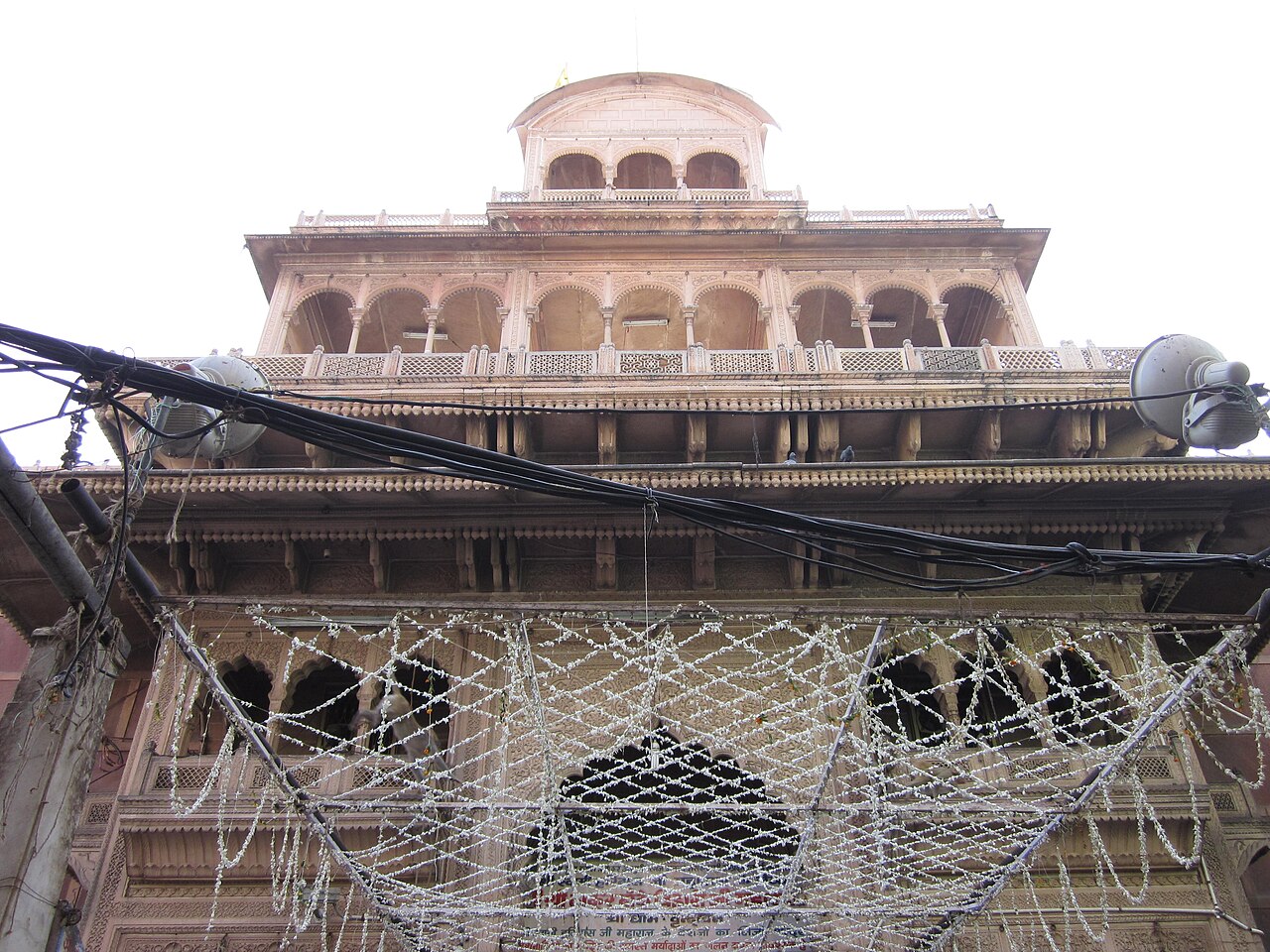
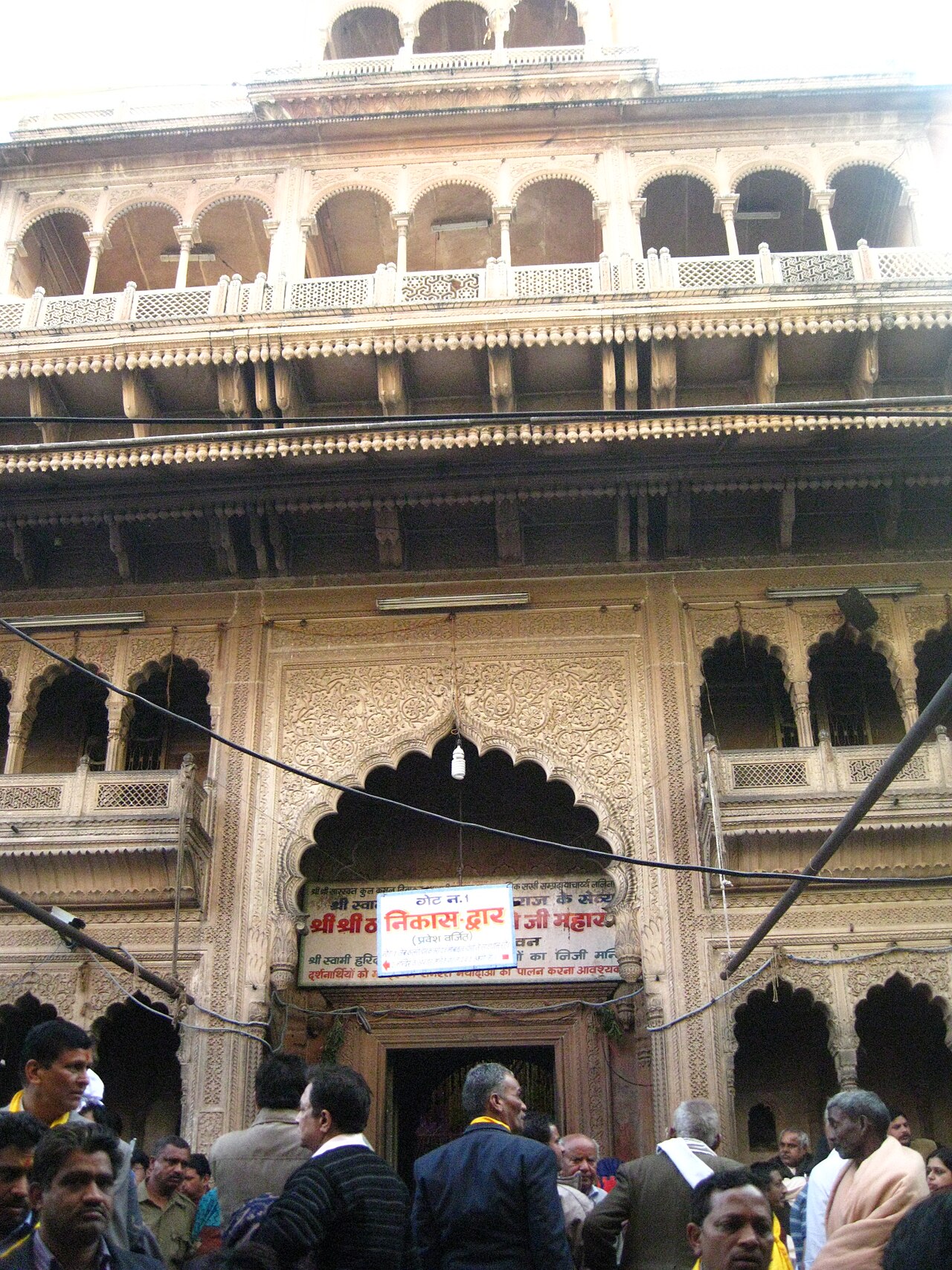
Swami Haridas was a master singer who lived in the groves of Nidhivan and sang only for Radha and Krishna. He had no wish for a temple. His disciples said the Divine Couple came to listen. One day, the story goes, Haridas asked them to dig where he pointed, and from the earth rose a single dark-and-golden form in which Radha and Krishna stood merged as one. That is Banke Bihari, the one who is 'bent in three places' (head, waist and knee) like the flute player of the Rasa dance.
The tradition says the form was too radiant for ordinary eyes, which is why a small curtain is drawn across the deity every few moments during darshan. It is not a ritual of hiding, it is a protection. Devotees tell of a mystic who fell into a trance at the gaze and had to be rescued.
The deeper reference is the Rasa Lila, when Krishna steps into the circle of gopis (Srimad Bhagavatam 10.29 to 10.33, the five Rasa chapters). Haridas's devotion, and the Sakhi (Haridasi) sampradaya he founded, is the Vrindavan of Nikunj Vihar: love as play, without rules and without fear. lala:Cab's way fits here: you do your part, arrive with an open heart, and let the Lord handle the rest.
| Summer darshan | Roughly 7:45 am to 12:00 pm, and 5:30 pm to 9:30 pm (after Holi) |
|---|---|
| Winter darshan | Roughly 8:45 am to 1:00 pm, and 4:30 pm to 8:30 pm (after Diwali) |
| Aarti | Shringar aarti (morning, after the deity is dressed); Rajbhog aarti (midday); Shayan aarti (evening, about 9:15 to 9:30 pm in summer); Mangala aarti only on Janmashtami |
| Closed | Closed for the afternoon rest, usually 1 pm to 4:30 pm. Timings shift on festival days. |
| Dress code | Modest clothes covering shoulders and knees. Leather belts and bags are often questioned at the gate. Take shoes off and leave them at a stand. |
| Photos and phones | Photography and videos inside the sanctum area are not allowed, and phones are widely restricted near the deity. The rule is enforced at the entry by police and sevadars. Not verified from an official notice. Leave the phone and big bag in the cab or at your stay, and carry only a small purse. |
| Also | Only one entry and one exit lane open on busy days; they can change without notice |
| Also | Do not hand money to anyone who promises quick darshan; there is no VIP route for the public |
| Also | Elderly and disabled visitors: tell the police at the gate, a wheelchair or a short path is sometimes arranged. Check locally |
Third-party travel sites disagree on exact times. Trust the temple office and the day's notice at the gate.
Cars are not allowed into the old lanes around the temple. The cab parks in a municipal or private lot on the outer roads and you continue on foot or by e-rickshaw.
Charge: About Rs 50 to 100 for a car in an ordinary day lot; higher on weekends and festivals. Check locally.
Drop: Your driver drops you at the nearest permitted point on the approach road and waits at a lot, or collects you by phone call after darshan.
Walk: About 10 to 20 minutes on foot through lanes, or a short e-rickshaw hop.
Town-wide parking and transport rules: Vrindavan guide.
| From Mathura Junction | About 13 to 14 km, 30 to 45 minutes |
|---|---|
| From Banke Bihari, Vrindavan | You are here |
| From Delhi Airport (IGI) | About 175 km, 3 to 3.5 hours via the Yamuna Expressway |
Distances and drive times are approximate and vary with traffic and diversions.
Best time: Weekday mornings right at opening, or winter evenings. Avoid Sundays, full-moon days and festival weeks.
Crowds: The lanes can be one of the most crowded corridors in India. The wait can be 30 minutes on a quiet day and several hours on a peak day. Hold hands in your family and fix a meeting point.
Monkeys: Vrindavan's monkeys snatch glasses, caps, phones and prasad bags. Remove spectacles and secure them, carry nothing loose in the hand, and never feed or stare at them.
Footwear: Paid shoe stands are available near the entry lane; take a token and keep it safe. Many pilgrims leave shoes in the cab and walk barefoot with socks.
Toilets: Limited. Use facilities at your stay or the cab stop before you enter the lanes.
Accessibility: Many lanes and stairs and no step-free route in the old lanes. Sevadars sometimes help the elderly at the gate. Check locally.
Mathura peda and khoya sweets. The shop's own claim is a sweet shop here since 1965
Khasta bedai and kachori with aloo sabzi, from a generations-old stall
Urad-dal kachori in desi ghee, potato-pumpkin sabzi, fresh curd
Kachori; one source gives Rs 25 each, which may be stale
Hot jalebi, peda, chaat, rabri, kulfi. Liveliest in winter evenings
This list comes from desk research in published guides and listings. We have not visited these places for this guide. Walk and drive times are rough, and opening hours, prices and onion/garlic policy can change, so check locally before you go.
Photography is not allowed near the deity and phones are widely restricted at the entry. This has not been verified from an official notice, so leave the phone in the cab if you can and check locally.
No. Cars stop on the outer roads; the last stretch is on foot or by e-rickshaw. Your lala:Cab driver will tell you the lot in use that day.
By tradition the gaze of Banke Bihari is so intense that a curtain is drawn at intervals so devotees are not overwhelmed.
Banke Bihari has no daily mangala aarti. It happens once a year, on Janmashtami.
Last checked: 2026-10-23. Sources for timings, parking and rules:
Radhe Radhe. Walk with love, we will take care of the road.
Book a cab for Banke Bihari Temple