Govardhan Restaurant (opposite the Daan Ghati temple)
Thali, snacks and sweets, affordable
Walk around the hill Krishna lifted. The Giriraj circuit takes about 6 to 8 hours on foot, or 2 to 3 hours by e-rickshaw.
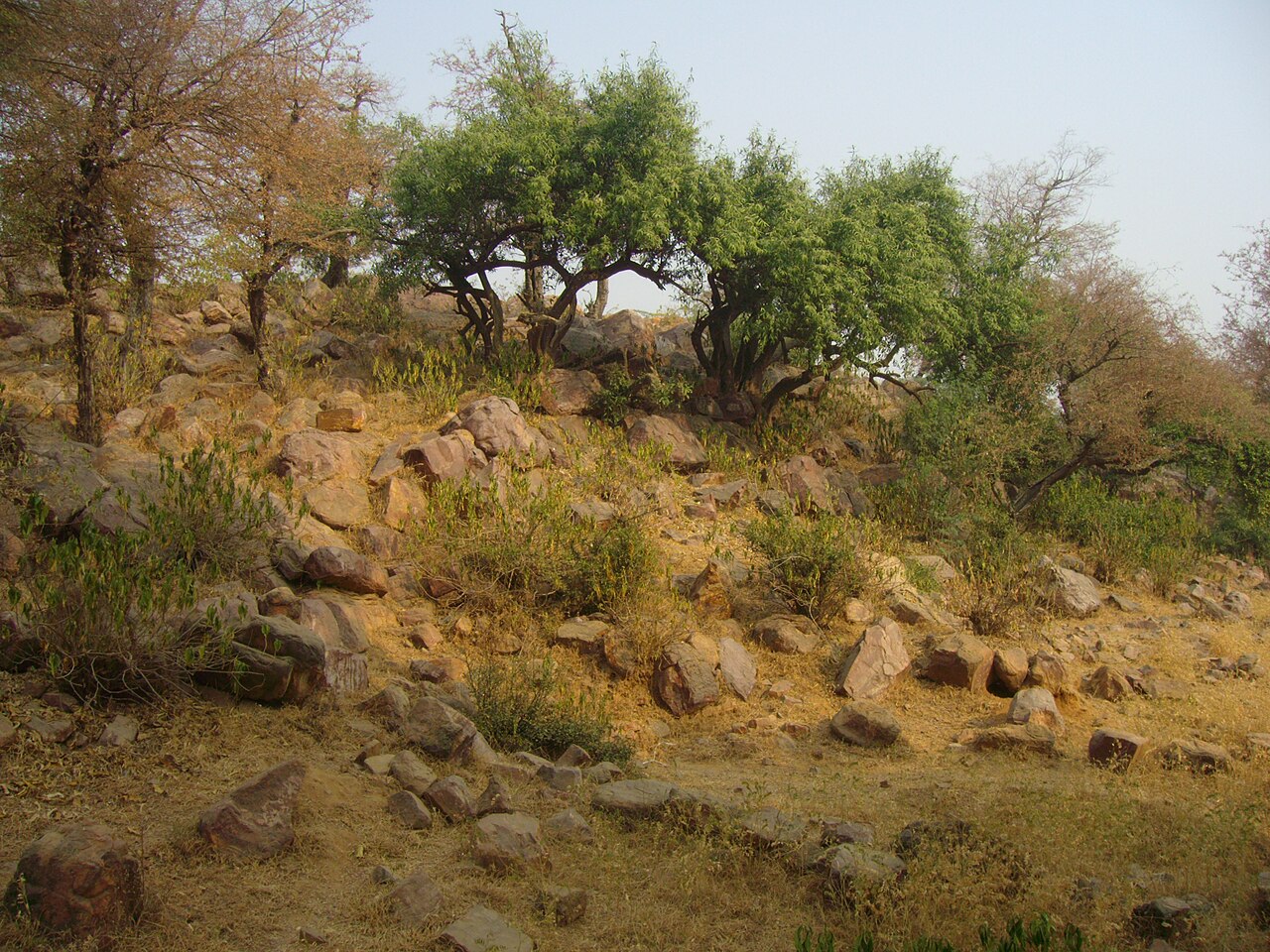
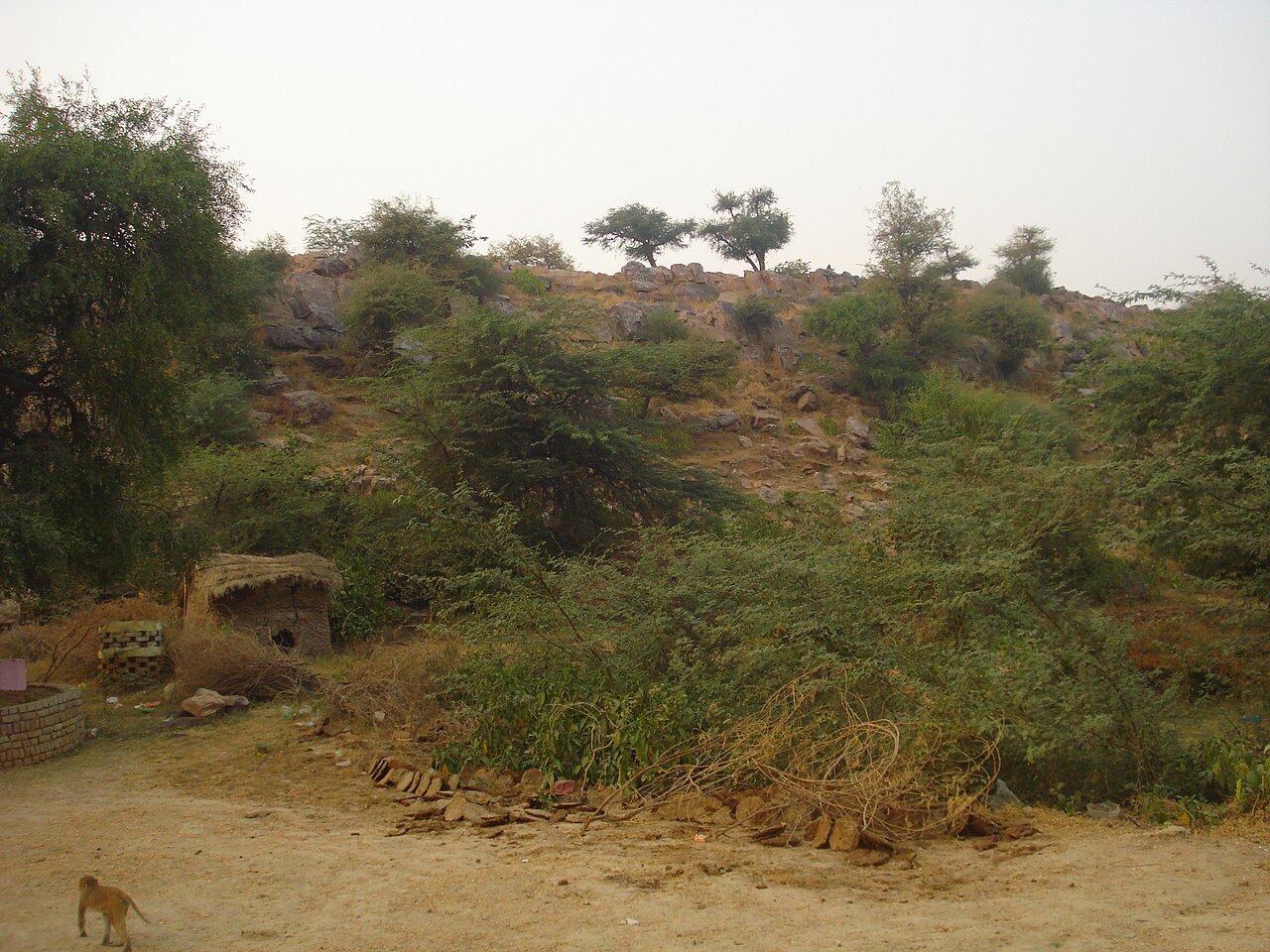
Every year the people of Braj prepared a great sacrifice for Indra, the king of rain. Young Krishna asked why. His father Nanda explained it was tradition. Krishna said that their real support was the hill Govardhan, which gave grass to the cows, and that they should honour the hill and the cows. The villagers agreed and offered a mountain of food to Govardhan. Krishna appeared as the hill itself and ate it.
Indra was furious and sent a storm for seven days. Krishna lifted the hill with the little finger of his left hand, and everyone sheltered underneath with their cattle. Indra finally gave up, bowed and Krishna was crowned Govinda by Indra and the cow Surabhi (Srimad Bhagavatam 10.24 to 10.27).
The Garga Samhita (Giriraja Khanda) is entirely devoted to the glory of Giriraj. The hill is said to be shrinking by a mustard seed a day, because of a curse by Sage Pulastya, according to local and Puranic tradition. Today it is a low ridge about 8 km long.
The parikrama is an act of surrender: you walk, barefoot if you can, you say 'Giriraj Maharaj ki jai', and you let the circuit be your prayer. Do what you can. A part is also dharma.
| Summer darshan | Open all day and night. Walk early (before 9 am) and late |
|---|---|
| Winter darshan | Open all day. Best in daylight |
| Closed | None |
| Dress code | Modest, comfortable. |
| Photos and phones | Fine on the route, not inside temples. |
Walking barefoot on hot tar is difficult in summer. Check locally.
Start points: Daan Ghati temple or Mansi Ganga. Cars park at lots near these and the cab meets you at the end point or at the half-way point.
Charge: About Rs 30 to 80 for a car. Check locally.
Drop: Drop at Daan Ghati or Mansi Ganga and arrange where to pick up.
Walk: 21 km if you do the full circuit.
Town-wide parking and transport rules: Govardhan guide.
| From Mathura Junction | About 25 km, 45 to 60 minutes |
|---|---|
| From Banke Bihari, Vrindavan | About 27 km |
| From Delhi Airport (IGI) | About 175 km |
Distances and drive times are approximate and vary with traffic and diversions.
Best time: October to February, early morning or evening. Summer is hard.
Crowds: Large on Purnima and Sundays.
Monkeys: Yes, along the route.
Footwear: Many walk barefoot. Carry slippers and socks.
Toilets: At major stops. Plan.
Accessibility: An e-rickshaw circuit is a good alternative for the elderly.
Thali, snacks and sweets, affordable
Rotis, curries and rice
Simple Braj veg meals
Prasad and quick snacks
This list comes from desk research in published guides and listings. We have not visited these places for this guide. Walk and drive times are rough, and opening hours, prices and onion/garlic policy can change, so check locally before you go.
About 21 km by common reckoning. Some sources give slightly different figures.
Parts can be driven. Many people use an e-rickshaw. Walking is the traditional way.
Last checked: 2026-10-23. Sources for timings, parking and rules:
Radhe Radhe. Walk with love, we will take care of the road.
Book a cab for Govardhan Hill and the 21 km Parikrama