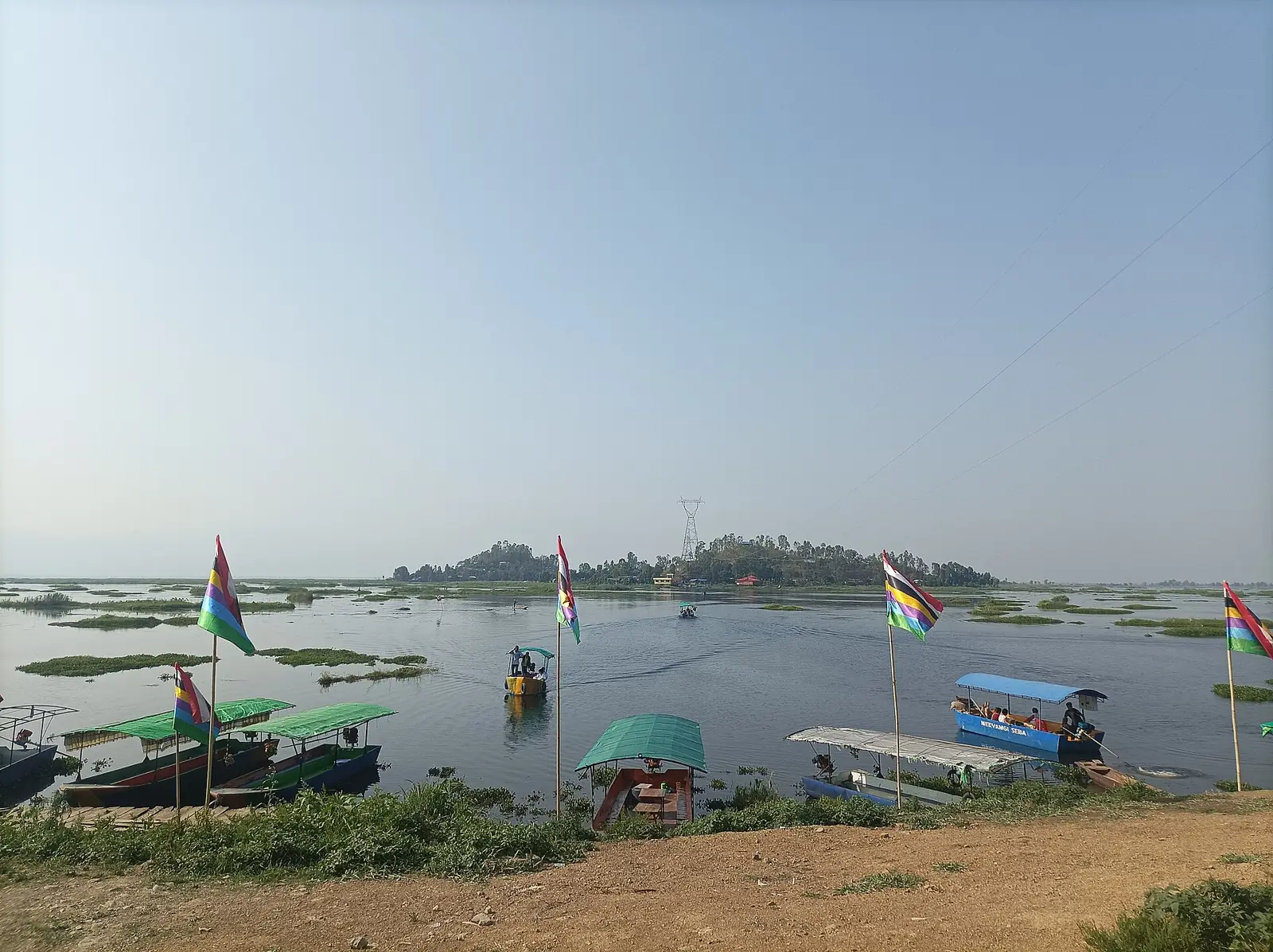
Loktak sits south of Imphal in Manipur and is the largest freshwater lake in the north east. Before you plan anything, check current travel advisories for the state, since local news there has been dominated by unrest. Everything below assumes the roads are open.
What a phumdi actually is
The Imphal Times describes phumdis as a heterogeneous mass of plants, earth and organic matter in various stages of decay. Some are thin, some are thick: the paper gives a range of 0.4 to 4.5 metres in the northern part of the lake. The largest covers about 40 sq km on the southern shore.
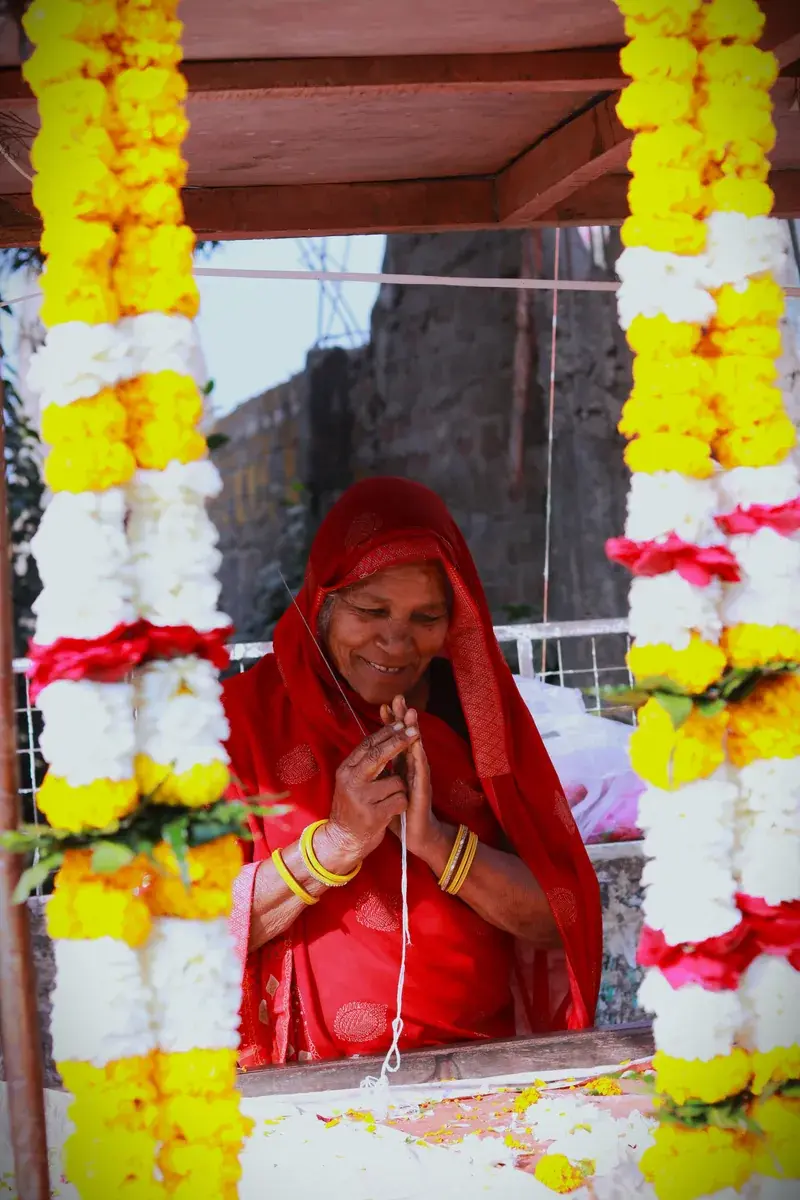
Incredible India says phumdis can be dense enough that deer, and even people, can walk on them. That is why the park on top of the big one works. Look at it from the shore and it just seems like marsh, but the ground has a bounce that tells you otherwise.
Keibul Lamjao and the Sangai
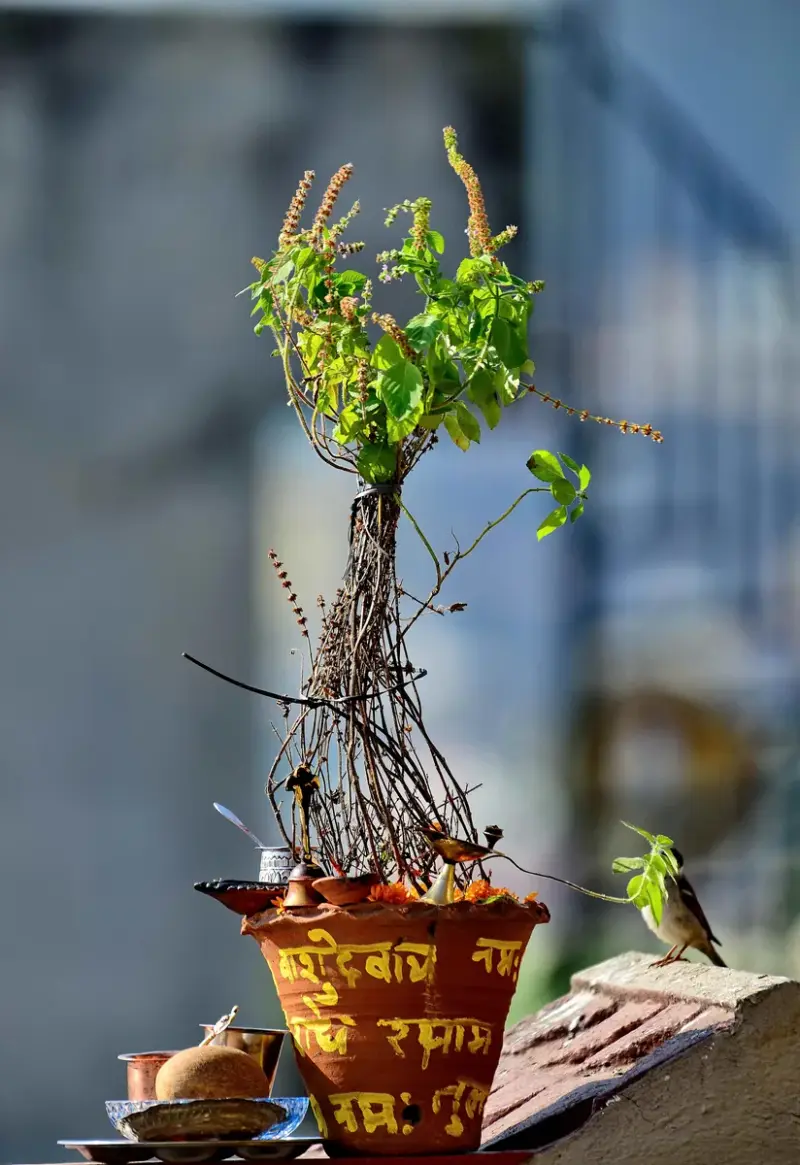
Keibul Lamjao National Park spreads across about 40 sq km of the southern phumdi and is described as the world's only floating national park. It began as a wildlife sanctuary in 1966 to protect the brow antlered deer called the Sangai, and became a national park in 1977. The Imphal Times adds that the Sangai was once thought to be extinct.
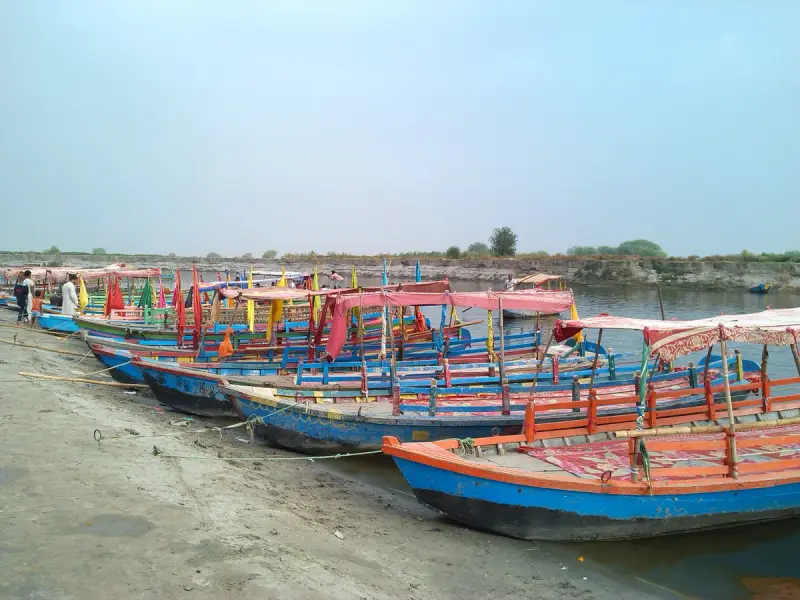
Three hills inside the park, Pabot, Toya and Chingjao, are the deer's refuge when monsoon water rises. Incredible India lists walking on the phumdi, birdwatching and guided boat trips among the things to do. Whether you see a Sangai in any given hour is luck, so go for the setting and treat the deer as a bonus.
The park is about 53 km from Imphal by the tourism page's count, a little farther than the lake's own shore at Moirang.
The lake that people live on
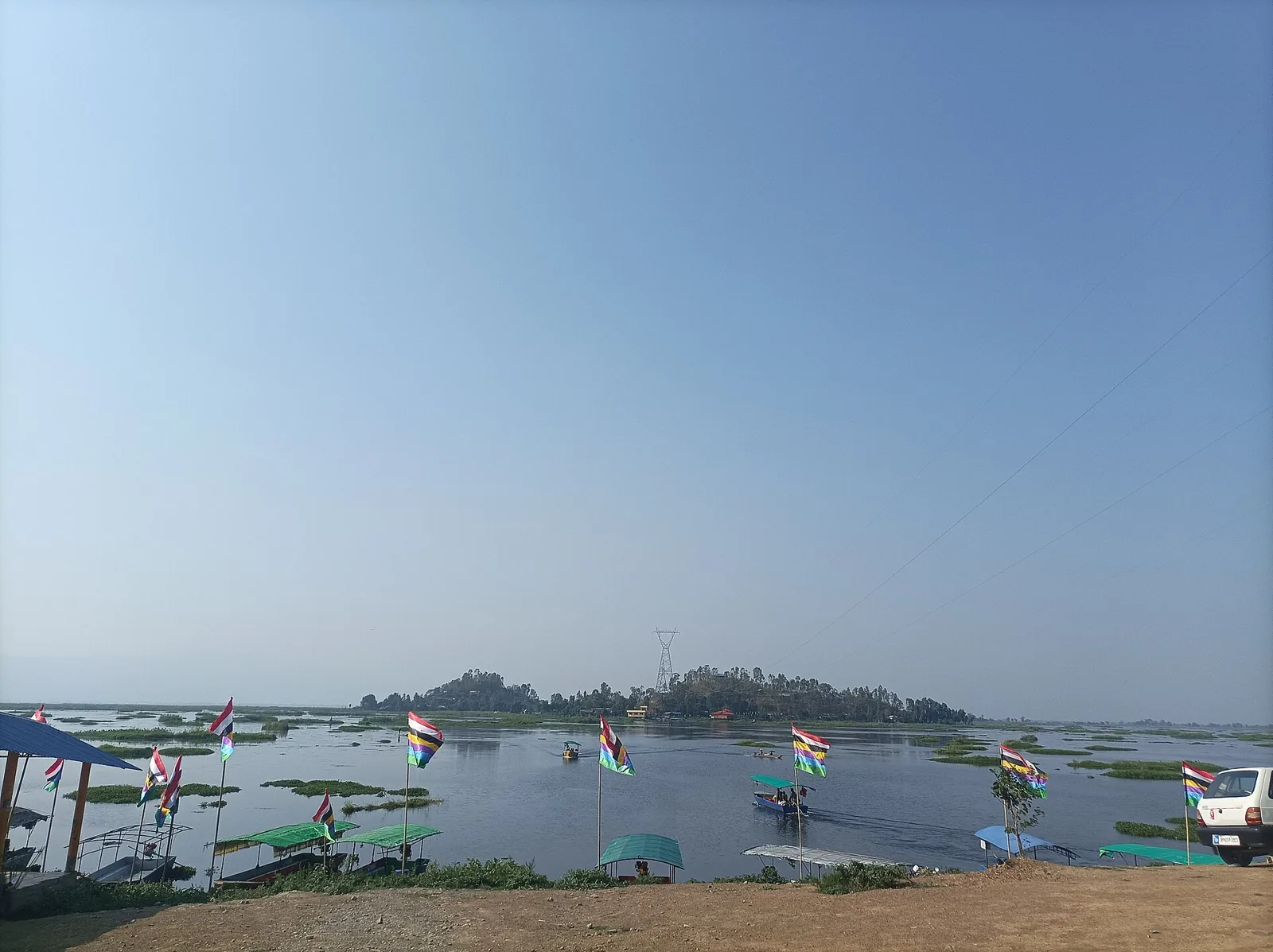
This is a working lake. The Imphal Times counts 55 hamlets around it, with roughly 100,000 people, and says fishing families live on phumdis in floating huts called phumsangs. Annual fish yield was reported at about 1,500 tonnes, partly wild catch and partly farmed.
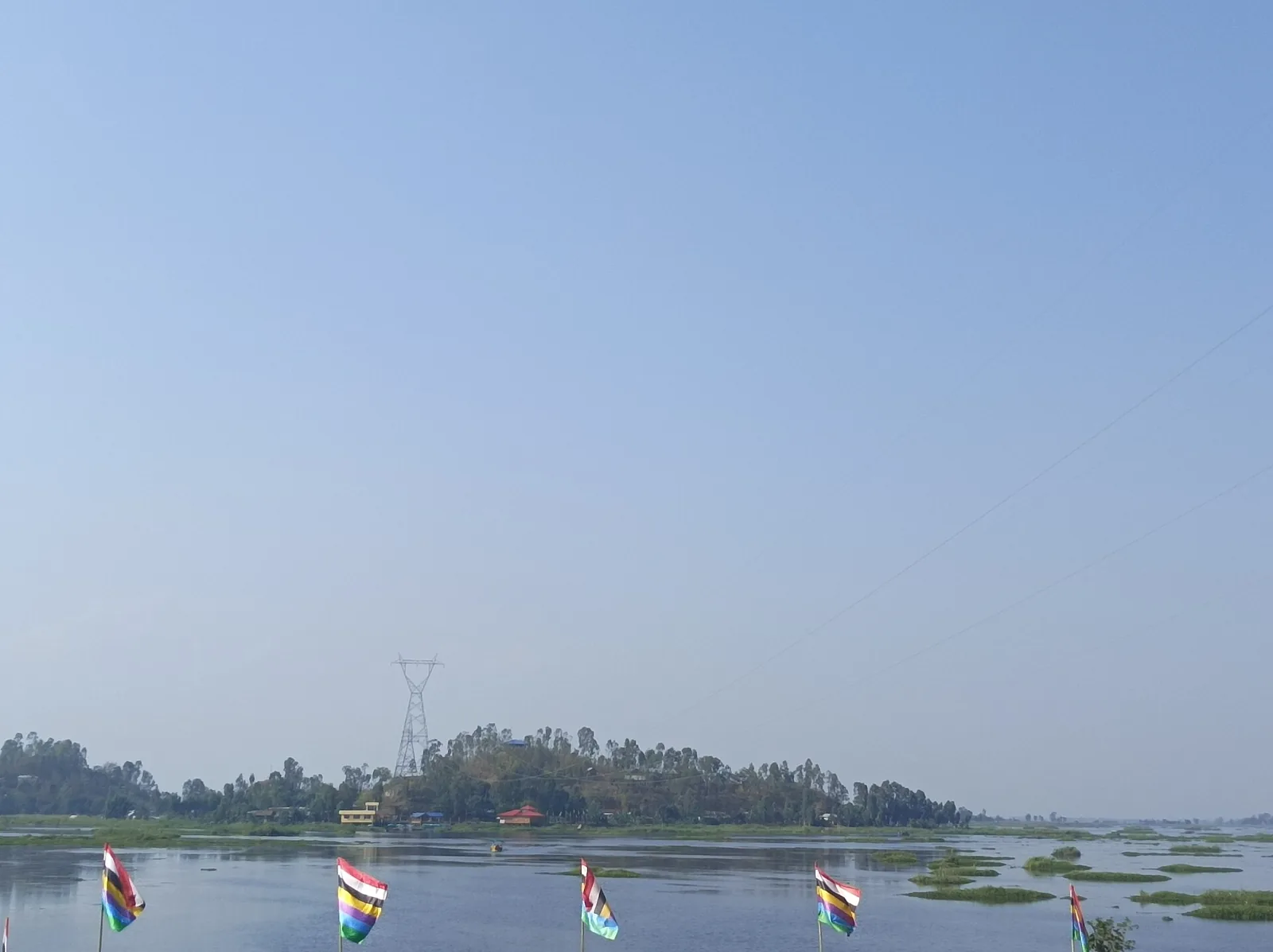
The best light is the edge of the day. Incredible India recommends watching fishermen at work early morning or around sunset. Haze can flatten midday photographs, and the water carries the colour of the sky at both ends.
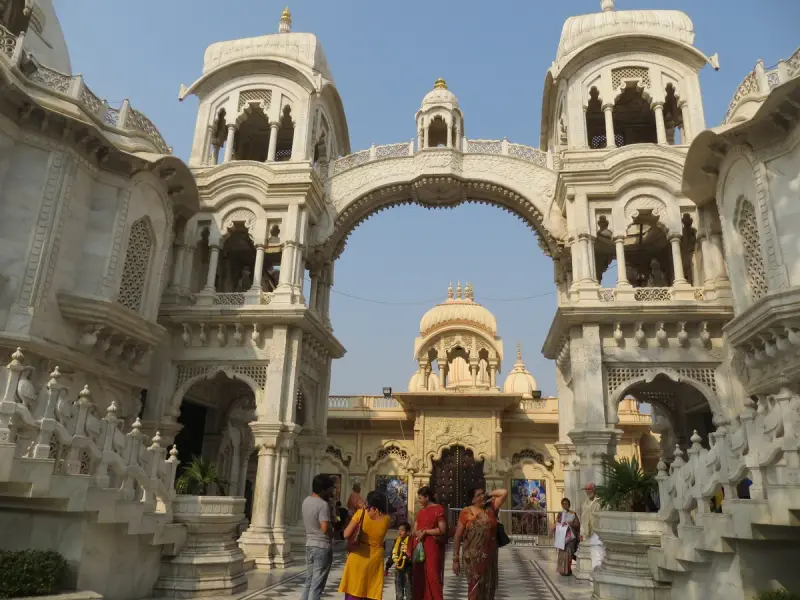
Islands, hills and the lake's real geography
In the southern part you will find Sendra, Ithing, Thanga and Karang islands, and the paper counts fourteen hills in and around the lake. Karang is a tree crowned islet you can look across the water at from the Thanga shore. The lake itself covers about 236 sq km, of which 70.3 sq km is a protected core zone with no development.
The name has a neat meaning. Lok is stream and tak is end, the place where the streams finish.
Why the lake is fragile
Loktak has been a Ramsar wetland since 23 March 1990 and has sat on the Montreux Record, the list of sites under ecological stress, since 16 June 1993. The Imphal Times blames silt (about 336,350 tonnes a year), sewage from Imphal carried in by the Nambul river, and the Ithai barrage, the lake's only outlet, built for the multipurpose power project.
It also describes athaphums, artificial phumdis built to fish, spreading across the central lake until they choke open water. Take that on board when you choose a boat: stay on marked channels, take your plastic back, and do not ask boatmen to go into the thick mats for a better picture.
Other things within reach
Incredible India points to the INA Memorial at Moirang, a short drive away, which commemorates the Indian National Army's first hoisting of the Indian flag. Back in Imphal there is Kangla Fort, the Imphal War Cemetery and Ima Keithel, the market run entirely by women.
Late November brings the Sangai Festival, usually, according to the same site. Imphal's own food is worth a stop: eromba, a boiled mash of vegetables and fermented fish, and chak-hao kheer, black rice pudding.
When to go and what to carry
Incredible India says Imphal is best from October onward. It gives November a range of 6 to 30 degrees and January 2 to 26, so mornings on the water are cold. Wear layers, a hat, sunglasses for glare, and shoes you can wet.
Carry water and snacks from Imphal rather than counting on shore stalls. Binoculars are worth more than a zoom lens here: the same paper lists 57 water bird species and 28 migratory waterfowl.
A day from Imphal
Leave Imphal early, spend the morning at Moirang and the shore, take a boat out for the light, then head to Keibul Lamjao in the afternoon. Return to the city for dinner. Imphal's airport is Bir Tikendrajit International, which is the way most Delhi visitors will arrive.
Planning it with Laladham
Laladham collects you in Delhi, at the airport, a station, your home or hotel, and plans the whole trip with a driver on the ground in Manipur. Share your dates on the [book page](/book) and ask for a quote.
Questions, answered
Is Loktak Lake really floating?
The lake is water, but phumdis, the floating mats, cover a large part of it. The biggest, about 40 sq km, carries the national park.
How far is Loktak from Imphal?
The Imphal Times puts the lake at Moirang around 40 km from Imphal, and Incredible India puts Keibul Lamjao about 53 km from the city.
Will I see the Sangai deer?
It is the park's reason for existing, but sightings are not guaranteed. The animal is endangered and was once thought extinct.
What is the best time of day for the lake?
Early morning or sunset, per Incredible India, when fishermen are out and the light is soft.
Is Loktak safe to visit now?
Check current state advisories and local news before travelling, since Manipur has seen unrest. We have not confirmed conditions for your dates.