It is said that Giriraj does not mind how small he is made. A hill the length of an arm, shaped on the floor of a courtyard, is called Govardhan, and the whole family stands around it as Braj once stood under the real one. This is the quiet side of Govardhan Puja, the part that happens in houses and not at the parikrama road.
What follows is the way the puja is usually done, step by step, with the order that the almanacs and family priests describe. Practice differs from village to village and house to house, so where your own elders do it differently, trust them.
Why a hill is made on the floor
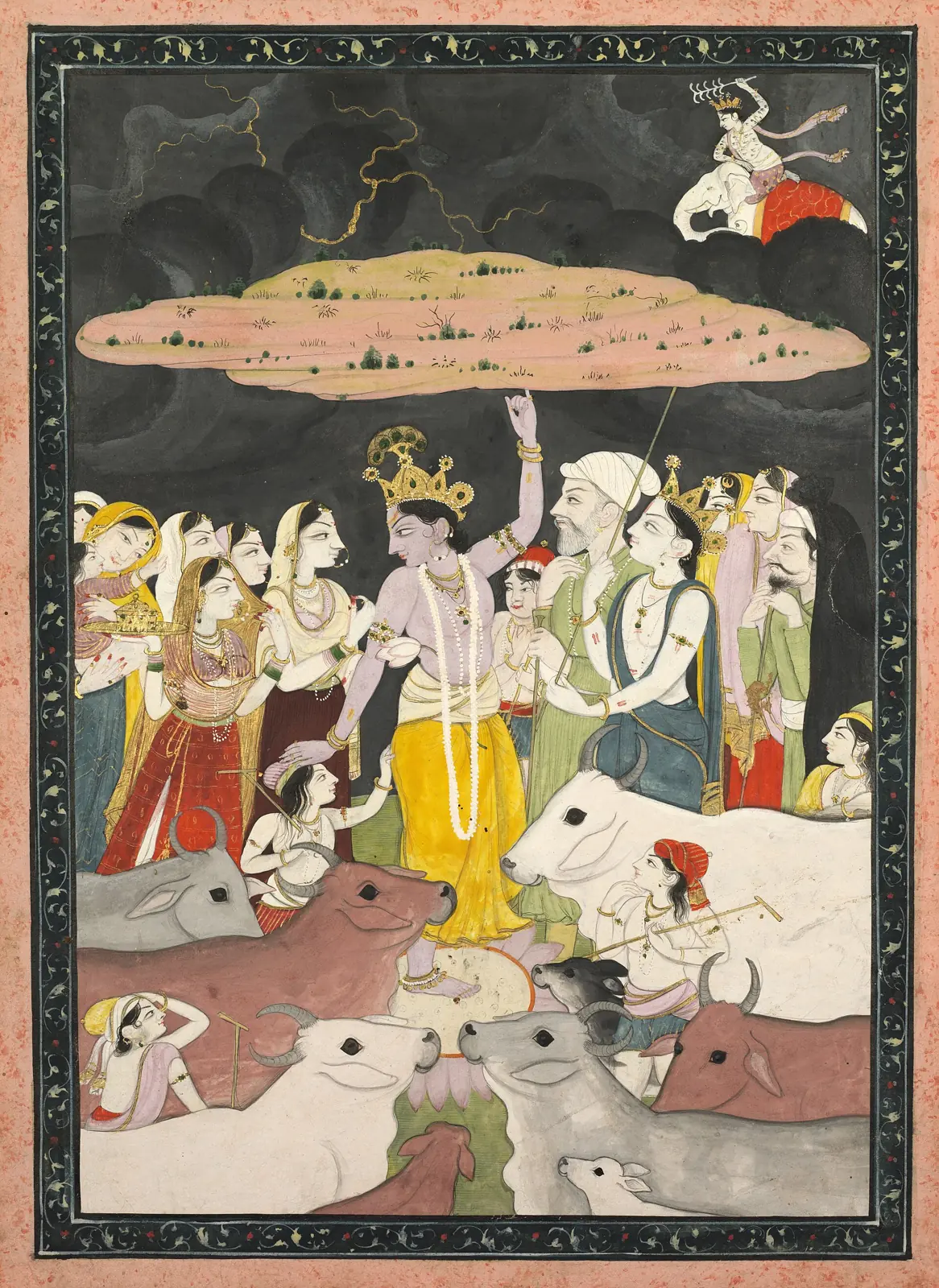
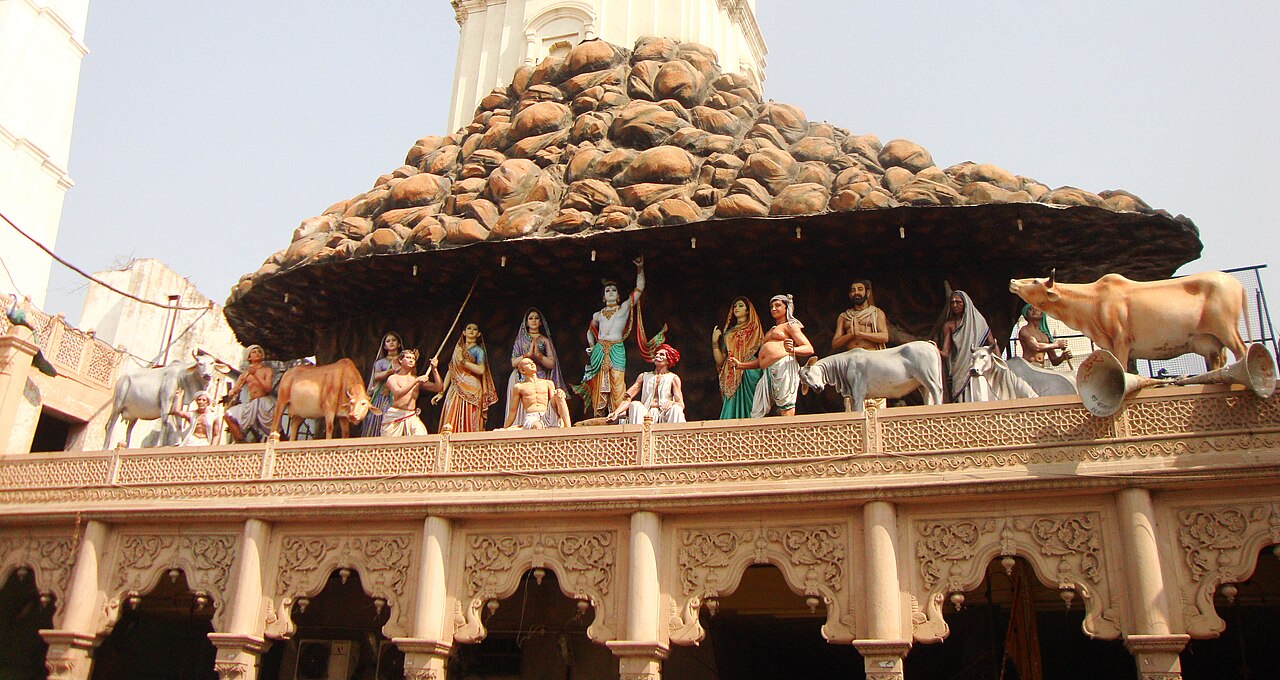
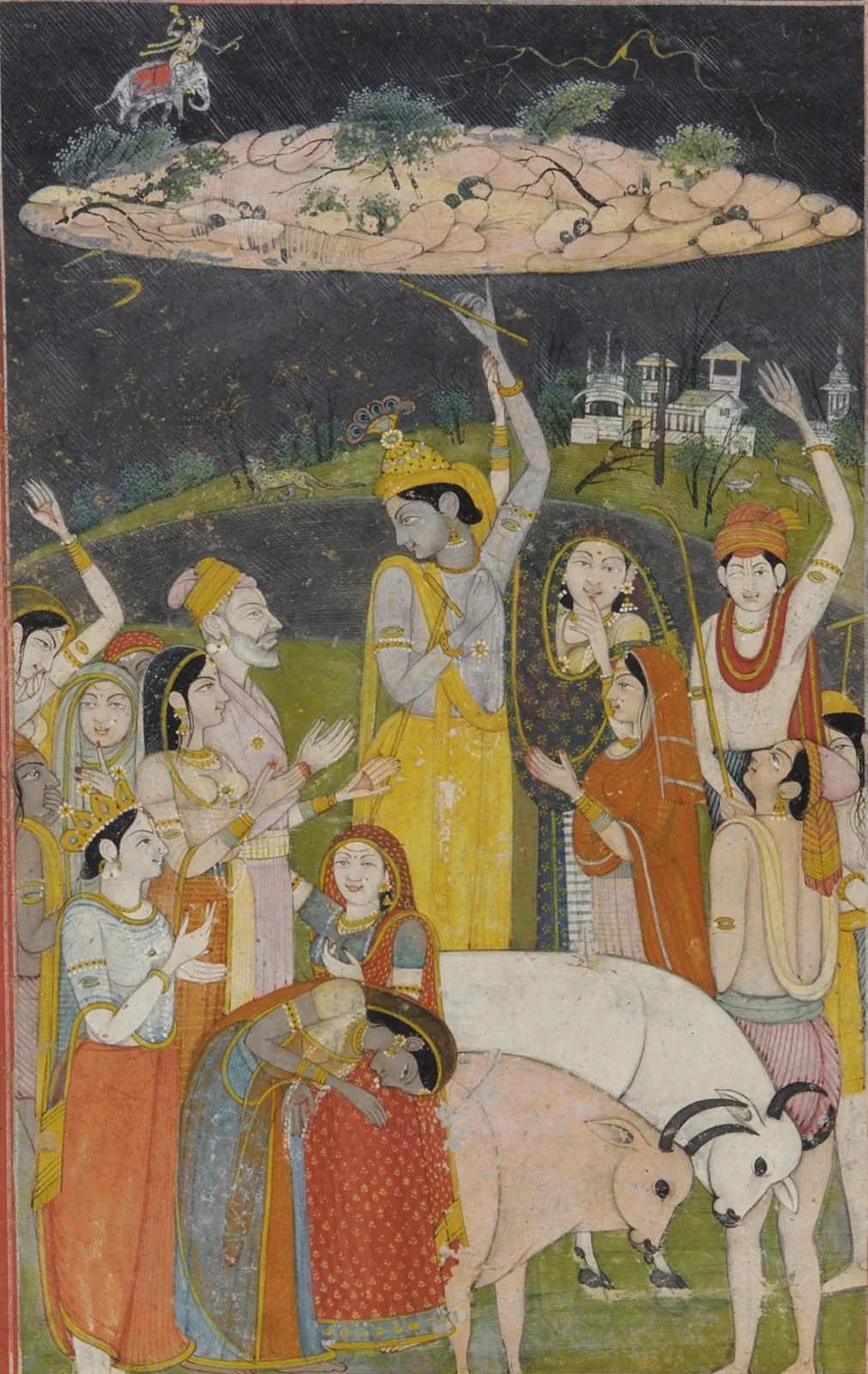
The Bhagavata tells how Nanda and the cowherds were about to offer a great sacrifice to Indra when young Krishna asked them to honour the hill that fed their cattle instead. Indra sent rain for seven days. Krishna lifted Govardhan on the little finger of his left hand and all of Braj sheltered under it.
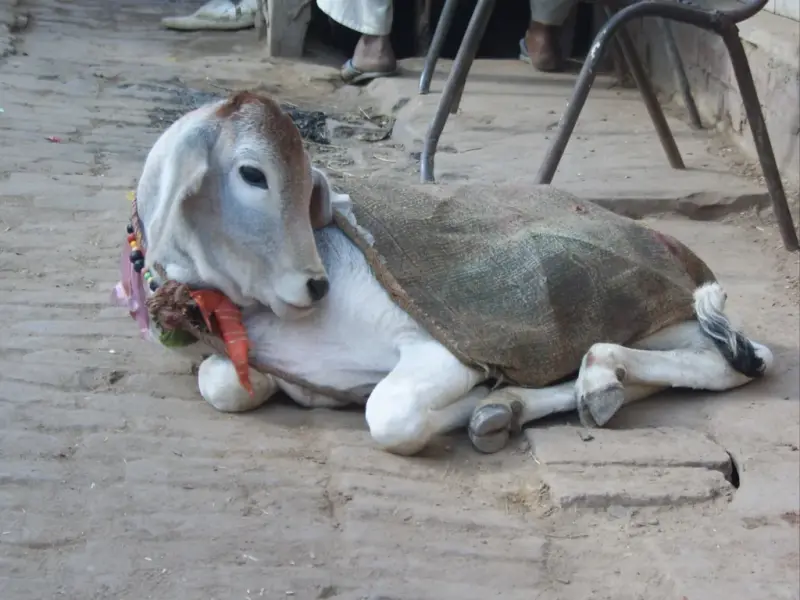
A household cannot carry a mountain to its door, so it makes one. Cow dung is used because the cow is the wealth of Braj and because, in village homes, gobar is what the floor and the hearth are already plastered with. It is considered clean for worship in this tradition, not a thing to be set aside.
Some families in towns shape the hill from clay, rice flour or even a heap of grain on a plate. Sources agree that this is accepted when dung is hard to find. The feeling of the day does not change.
Making Govardhan: the shape and what goes on it
The usual place is the courtyard or the doorstep, on a floor first washed and rubbed with a little cow dung wash. Fresh dung is heaped and patted into a broad, low mountain. Many families make it long and curved, the way Govardhan lies on the ground at Braj, and not as a tall cone.
Then the hill is peopled. Small figures of cowherd boys, cows and calves are pressed around the base, with twigs or little plants as trees on the slopes. A picture or small idol of Krishna stands at the front or at the centre. Some homes also place the sugar cane stalks of the season beside it.
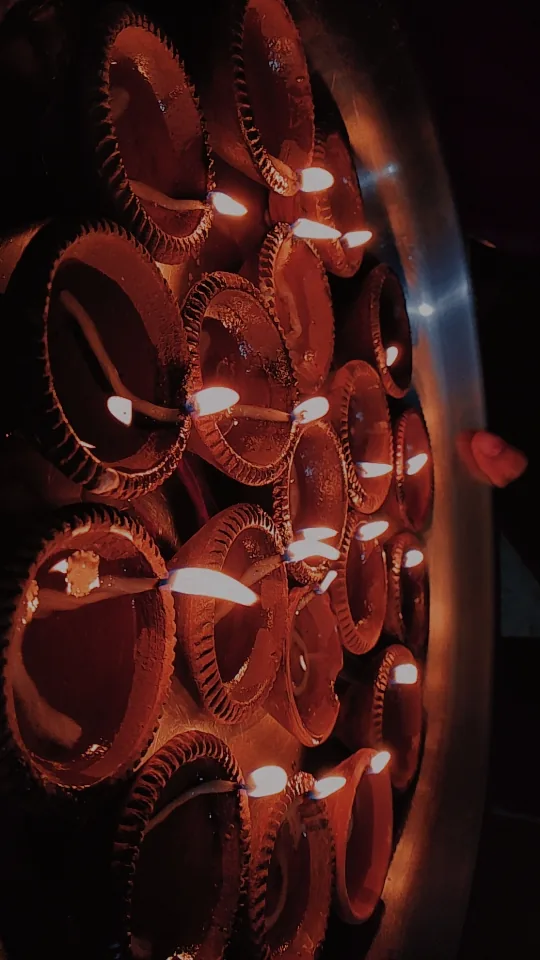
A lamp, or a small clay pot, is set at the spot that stands for the hill's belly button. This is later filled with milk, curd, honey, Gangajal and batashe, and the mixture is shared out afterwards.
The samagri list, before you go to the market
Lists differ by family, but the common items across the printed vidhis are these. Buy them the day before Diwali, because the shops thin out by evening.
Cow dung (or clay, if you must), and a cloth to wipe hands
Roli, turmeric, sandalwood paste, akshat rice and flowers
Tulsi leaves for every dish, plus durva grass if you start with Ganesha
The pot mixture: dairy, honey, river water and sweet batashe
A ghee lamp, cotton wicks, incense, camphor and an aarti plate
Seasonal fruit, sweets, kadhi and rice, puri, vegetables and whatever else your home cooks for the annakut
Fodder, jaggery and a cord of moli thread if a cow is nearby
Sugar cane, as many families place it beside the hill
The puja in order
Almanac sites give the best time as the morning of Kartik Shukla Pratipada, the first day of the bright fortnight after Diwali, from sunrise until about ten. In some homes the main puja is done in the evening, and local families know their own hour.
Begin by bathing and wearing clean clothes, many choose yellow or orange. Facing east or north, take water, akshat and a flower in the right palm for the sankalp and let them fall on a plate. A small Ganesha puja with durva and flowers opens the rite.
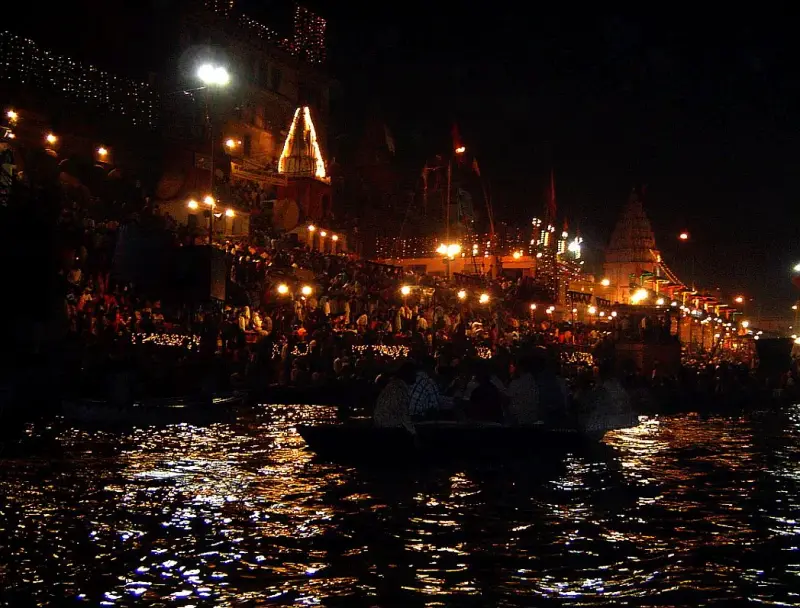
Next comes the invitation to Govardhan. Krishna as the holder of the hill is called into the dung mountain, and the sixteen small offerings follow: a sprinkle of panchamrit, a yellow cloth, sandalwood, tulsi and flowers, incense, lamp, food and a walk around. Printed guides give the line Govardhana Dharadhara Gokula Traanakarakam as a prayer to the protector of Gokul, and it is the one most families know.
After the offerings the family walks around the hill clockwise. Seven rounds is the figure you will read most often, barefoot, singing. Other sources give three, five or twenty-one, and a lot of homes simply do what their grandmothers did.
Annakut and the cow
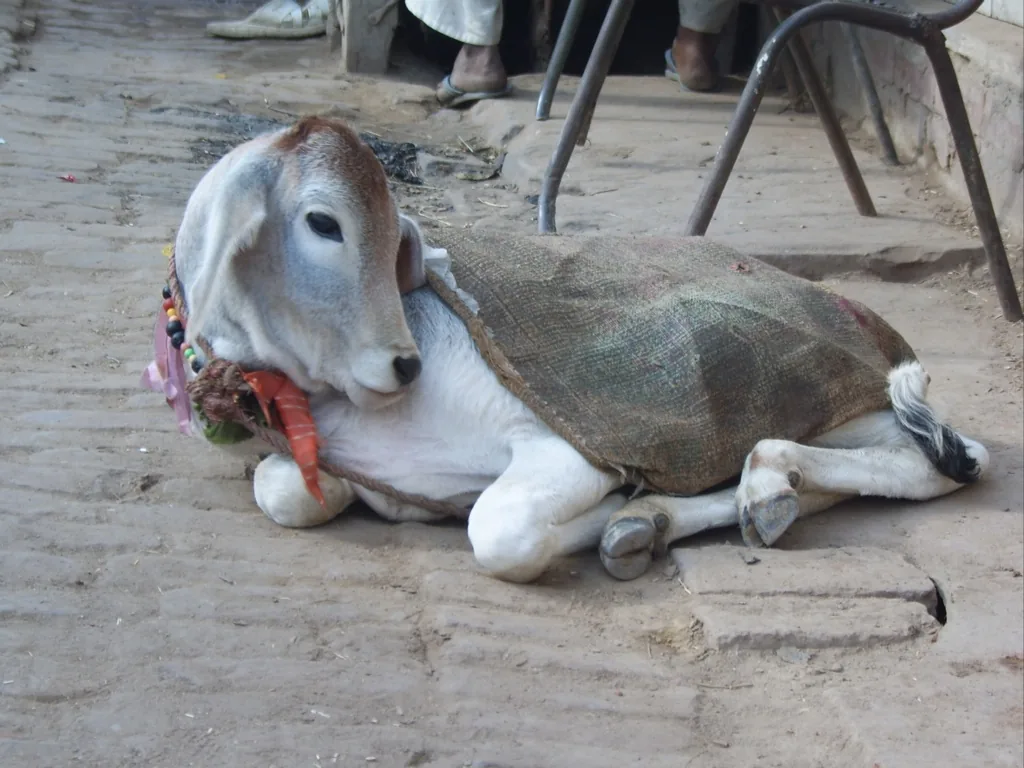
Annakut means a mountain of food. Traditionally fifty-six dishes make the chhappan bhog, but in a house the real number is whatever the kitchen could make: rice, dal, vegetables, puri, kachori, kadhi, laddoo, barfi, halwa, kheer and fruit, set in a ring around the hill. A tulsi leaf goes on every dish so Krishna accepts it.
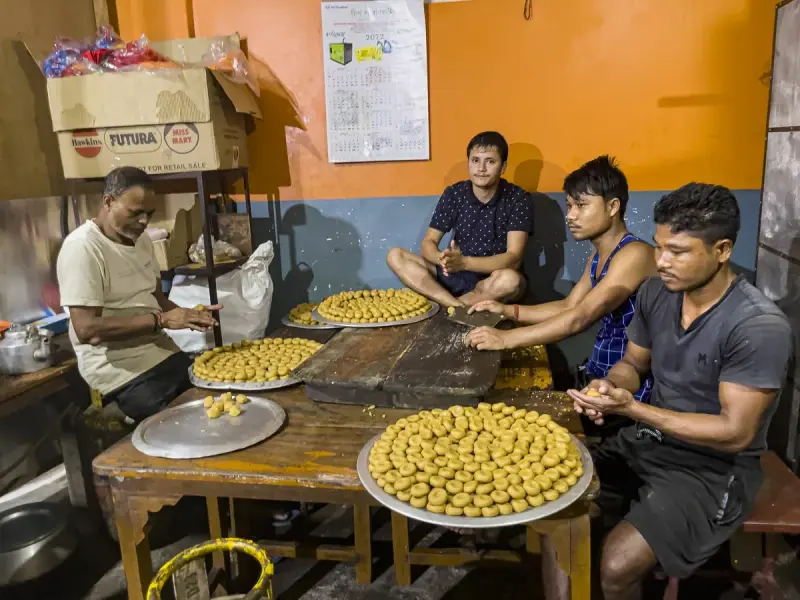
Before anyone eats, the cow gets her turn. Tilak on the forehead, a garland, fresh fodder and jaggery, a moli thread tied on the horn, and a touch of the feet. The prayer said at this moment, Lakshmi who lives in the form of the cow, is printed in many vidhis.
Then aarti is sung to Krishna and Govardhan Maharaj. Many families end with the old Kunj Bihari aarti, since it is known to everyone. The mixture from the navel pot, the annakut and the sweets are passed to family, neighbours and anyone who comes to the door. Giving food away is half of the festival.
What happens to the hill afterwards
Practice varies. In many houses the hill is left standing through the day and some families keep it until the evening aarti. When it dries, the dung is often gathered and used in the next fire or returned to the fields, and not thrown away.
The leftovers of the annakut are never wasted either. The next morning's breakfast is often the previous day's offering, shared again with relatives who come to greet each other.
If you would rather see it than make it: the plan
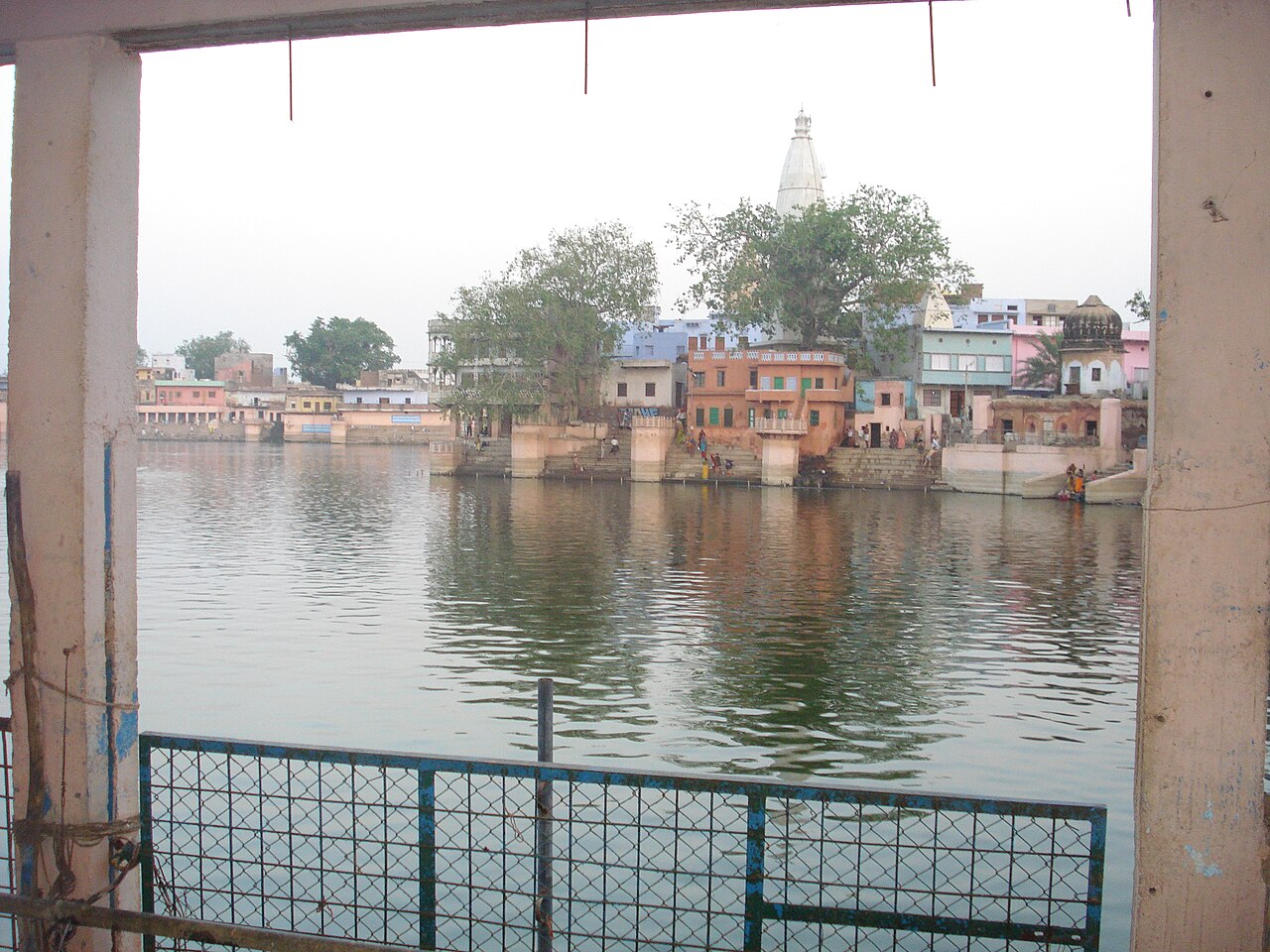
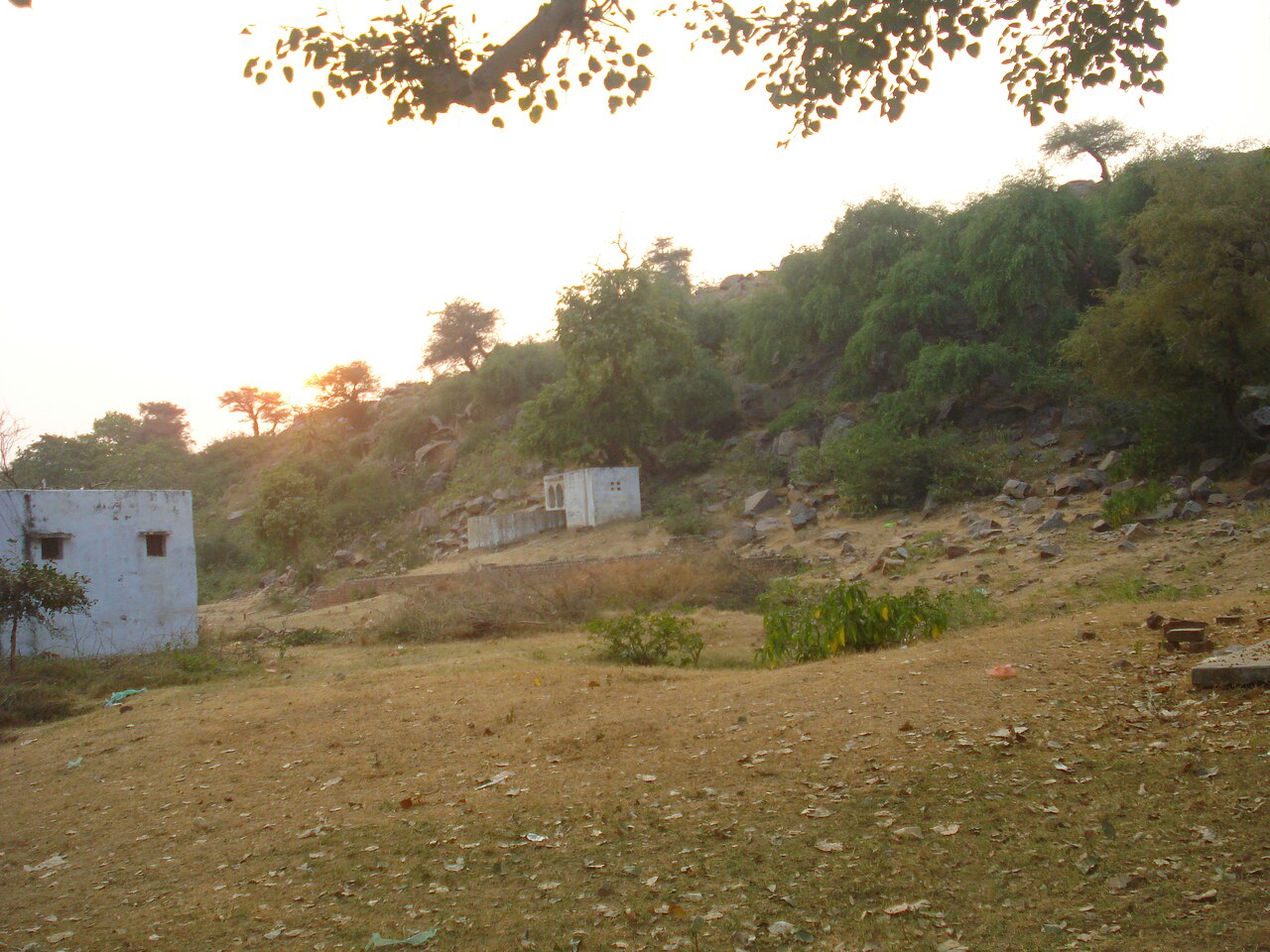
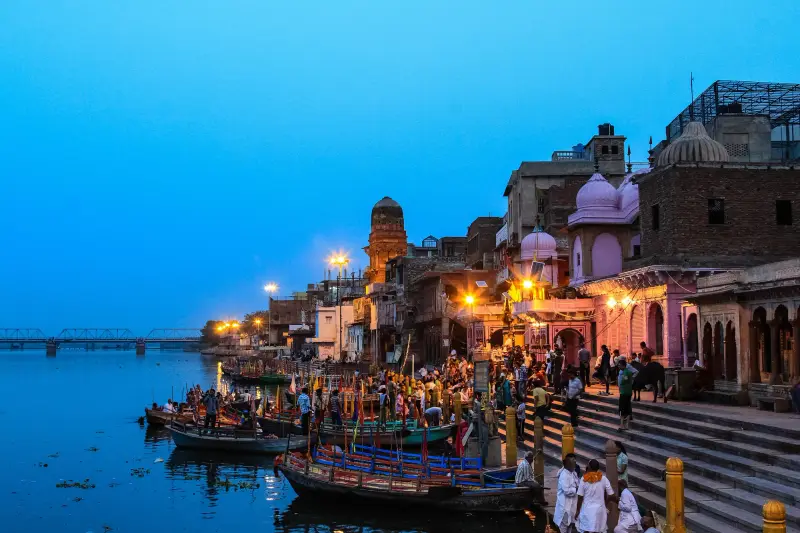
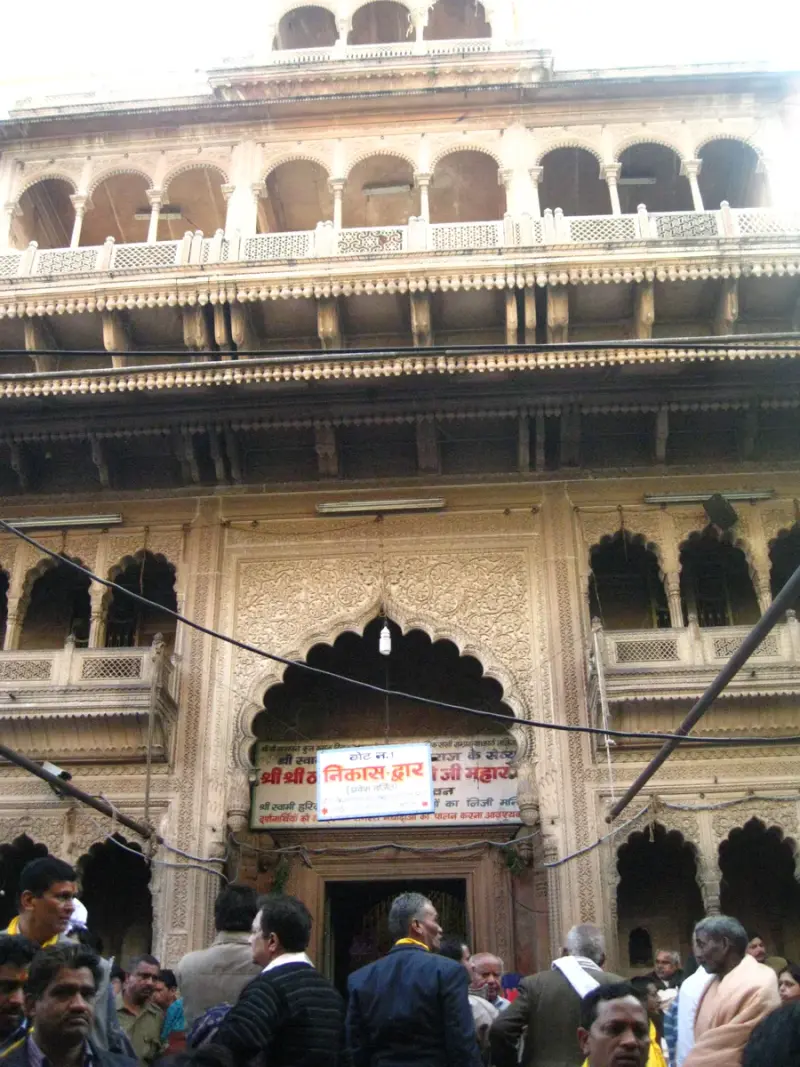
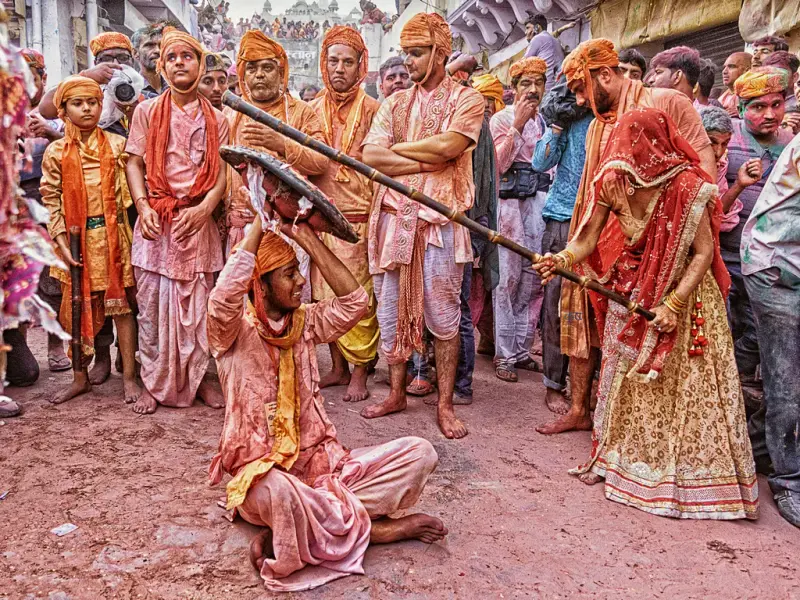
Visitors who come to Braj on this day can see the home version in village courtyards around Govardhan and the temple version at Dan Ghati, Mansi Ganga and the Giriraj parikrama road. Mathura and Govardhan are also full of families walking with plates of food, which makes it a very warm day to be among them.
Because the day is crowded, book your room and your driver early and stay close to the parikrama route. From Delhi the easiest approach is to reach Mathura Junction the night before. Roads around Govardhan close to normal vehicles in the afternoon, so ask your driver where he will drop you.
If you are in Delhi, Laladham can pick you up from your door and run the whole trip: the road to Mathura, a room near Govardhan, a driver who knows which lane is shut and the walk through the courtyards. Send us your dates on the booking page and we will write back with a quote.
Questions, answered
Can I do Govardhan Puja at home if I live in a flat?
Yes. Many families shape a small hill on a plate with clay or a heap of rice, and place a Krishna picture, a lamp and the food beside it. The sources agree the feeling and the order of offering are what matter, not the size.
How many times should one walk around the Govardhan hill made at home?
Seven rounds, barefoot, is the figure most printed guides give. Others walk fewer or more rounds. Follow your family custom if you have one.
What is offered at the navel of the hill?
A lamp or small clay pot sits at the navel and holds that sweet mixture. It is handed round as prasad later.
Is Govardhan Puja the same as Annakut?
They are two names for the same day in much of north India. Govardhan Puja is the worship of the hill, and Annakut is the heaped food offered to it.
- The Divine India: how to perform Govardhan Puja (Annakut Utsav)
- Ved Panchang: Govardhan Puja vidhi
- Srimad Bhagavatam, canto 10, the Govardhan story