It is a place for slow walking more than for photographs, and a trip here makes sense as a day from Udaipur or a halt between Jaipur and Mount Abu. For seekers of Krishna, the fort is also the land of Meera Bai.
The fort and its three sieges
The fort is one of six forts of the Rajasthan group that UNESCO lists. It was held by the rulers of Mewar and attacked three times, in 1303 by Alauddin Khilji, in 1535 by Bahadur Shah of Gujarat and in 1568 by Akbar. Each time, the story goes, the defenders rode out to fight and the women of the fort chose the fire of jauhar rather than surrender. Guides tell these stories with different details, so treat dates and numbers as living tradition, not courtroom evidence.
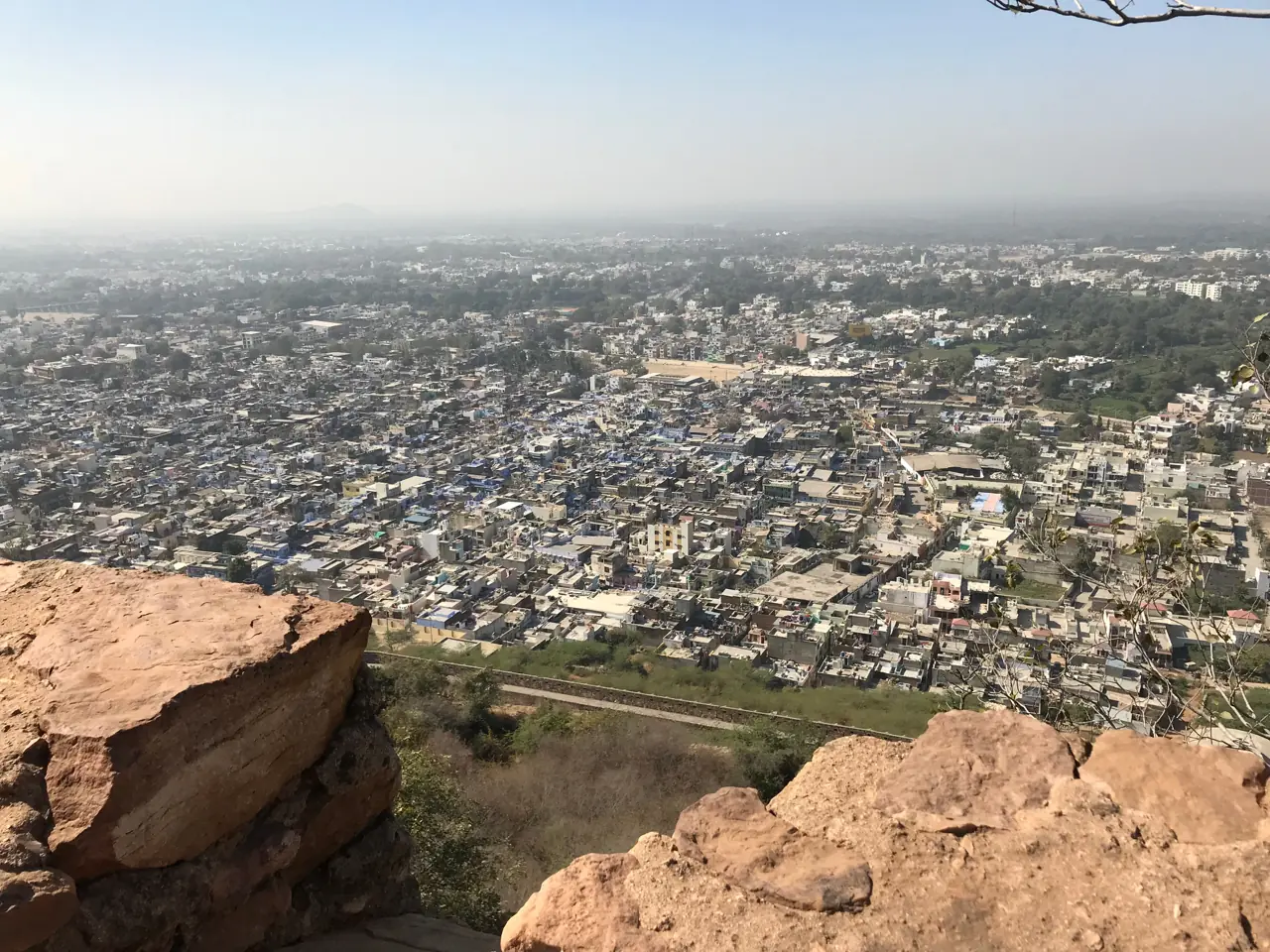
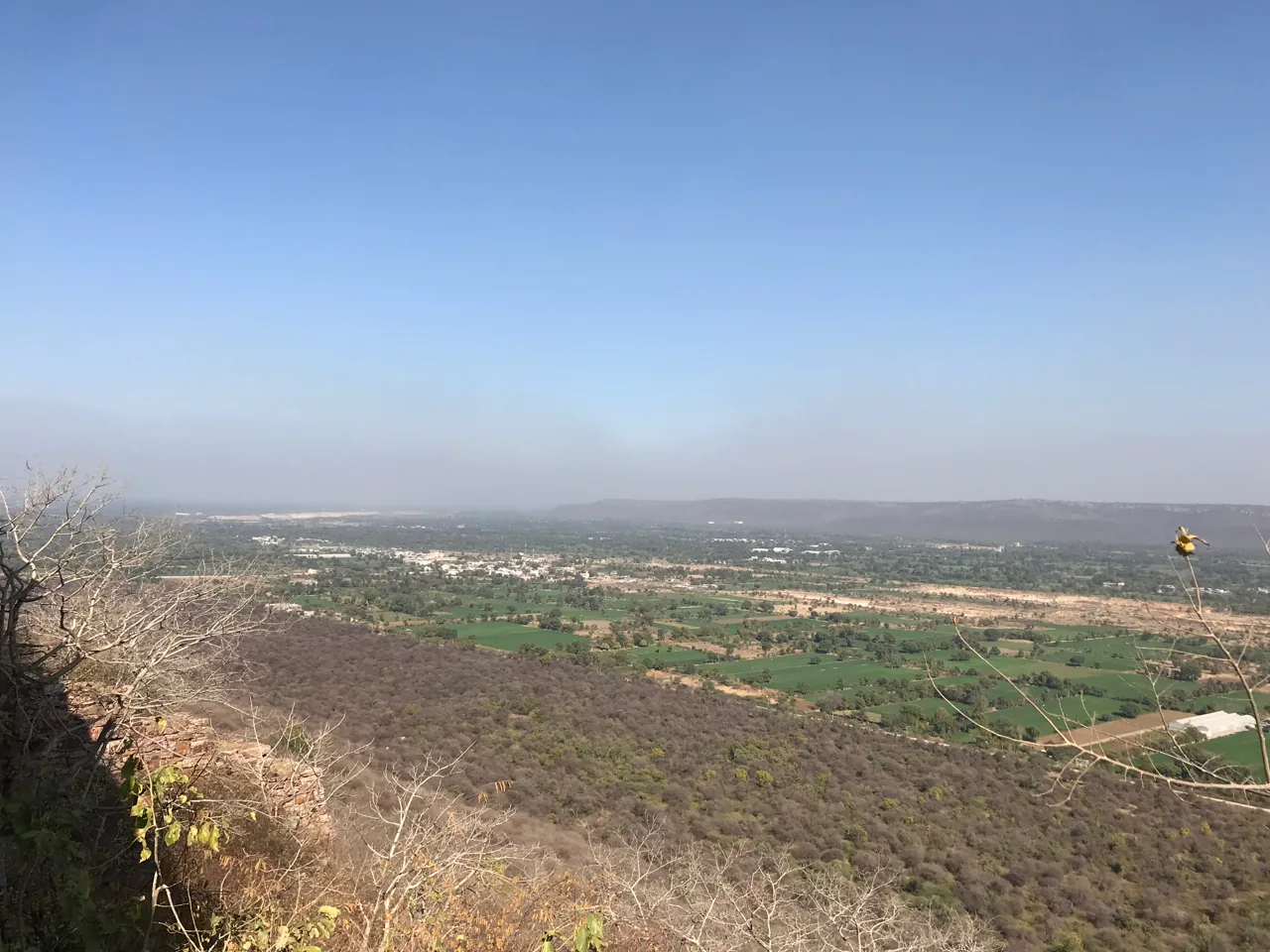
The ridge is about 5 km long, and the road winds up through seven gates. The last one, Ram Pol, opens onto the main road along the top. Drive in, because the distances between sights are long, then walk each one.
Vijay Stambh, the tower of victory
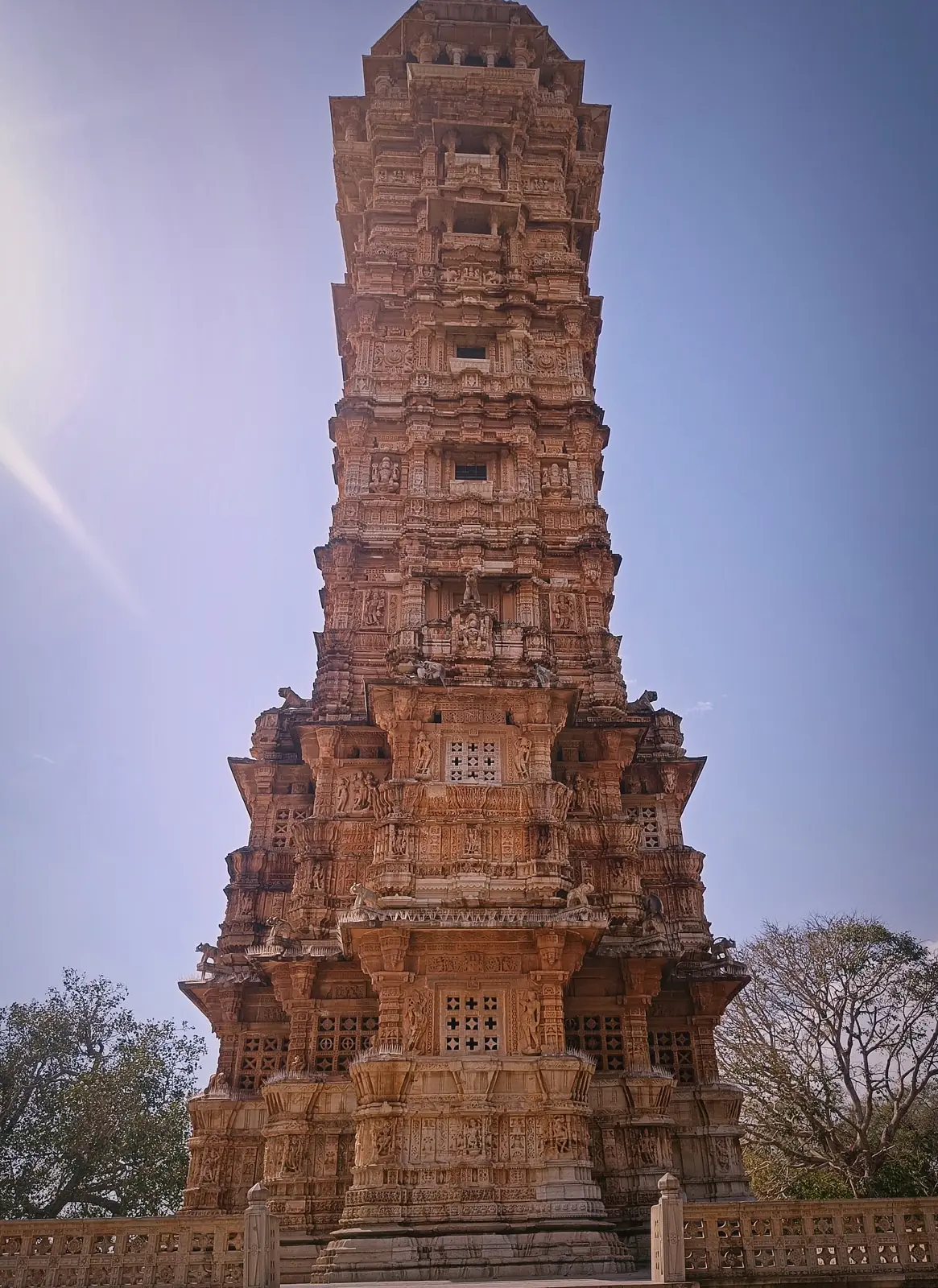
The nine storey tower stands about 37 metres high and is the emblem of the fort. It was built in the fifteenth century by Rana Kumbha, traditionally to mark his victory over the Sultan of Malwa, and sources differ on the exact year. Every storey is carved with gods, goddesses and ornament, and an inner stair climbs to a top gallery, though access is often limited, so check on the day.
Stand at the base and look up. The carving rewards patience.
Kirti Stambh and the Jain temples
Close by is the Kirti Stambh, a tower of fame, raised by a Jain merchant and dedicated to Adinath, the first Tirthankara. Its date is disputed between sources, with some giving the twelfth century and a site board quoting an inscription of 1301. It is smaller than the Vijay Stambh, but has a calm that its taller neighbour lacks.
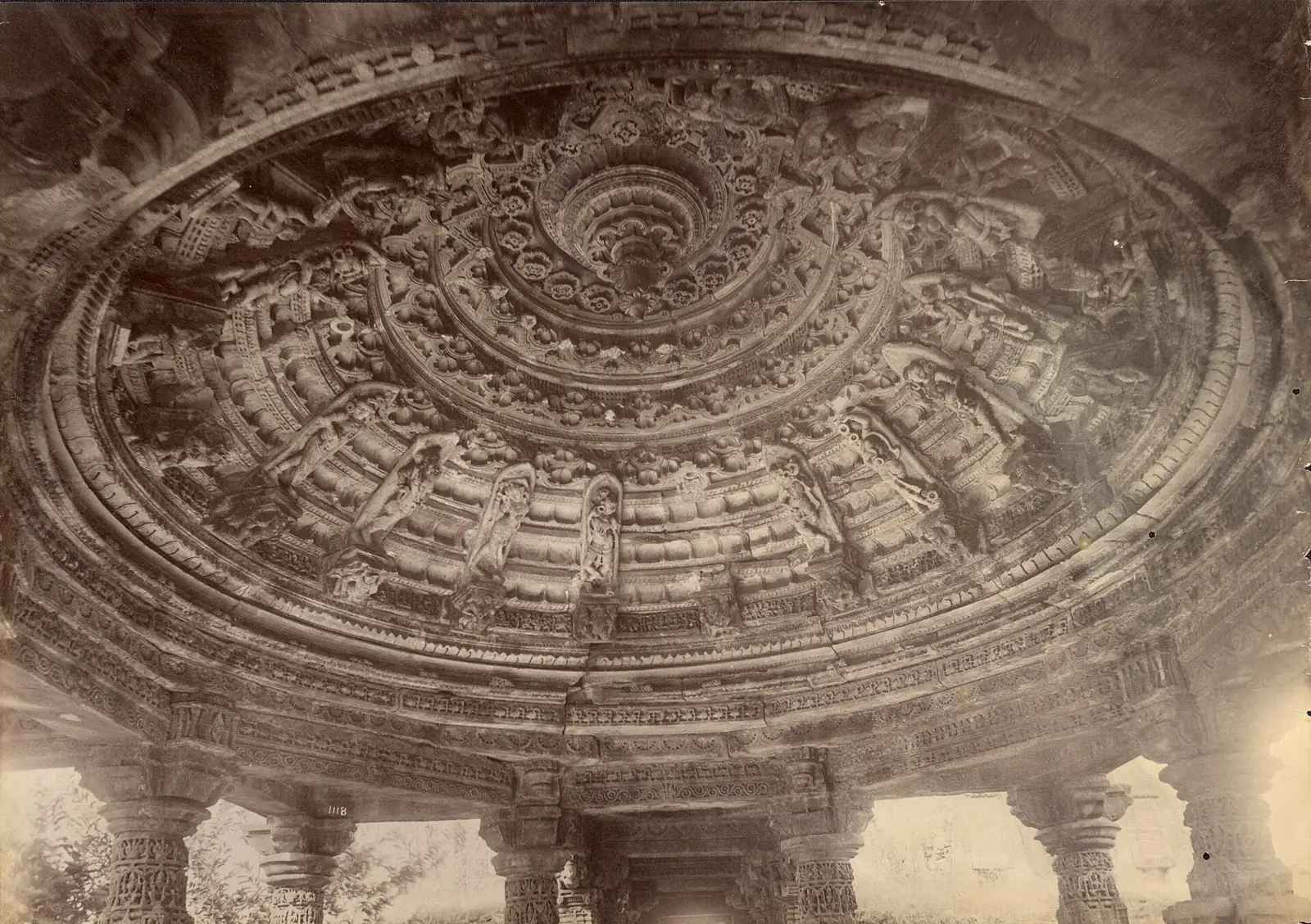
Several Jain temples cluster near it, including one with a magnificent domed ceiling. Take your time in the dim light.
Padmini's palace and the water tanks
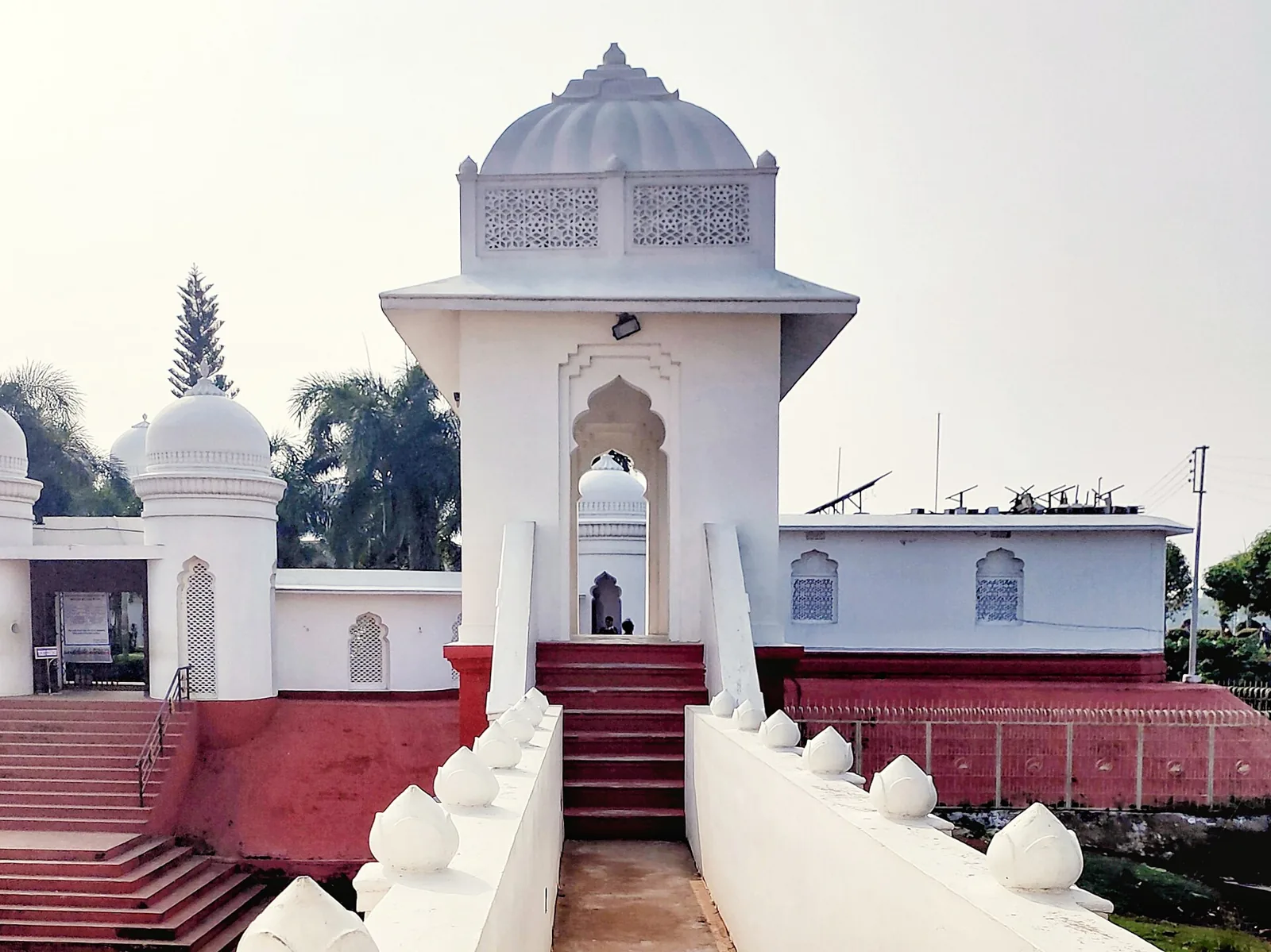
Rani Padmini's palace is a small pavilion in the middle of a pool, reached across a short path. The story of the queen who was seen only as a reflection by Alauddin Khilji is a legend, told in a long poem written more than two centuries after the siege. Whatever its truth, the pavilion on the water is one of the most photographed spots in the fort.
Around the ridge are old reservoirs, some still holding rain water through winter. They explain how a fort of this size could survive a long siege.
Meera Bai and the Krishna temples
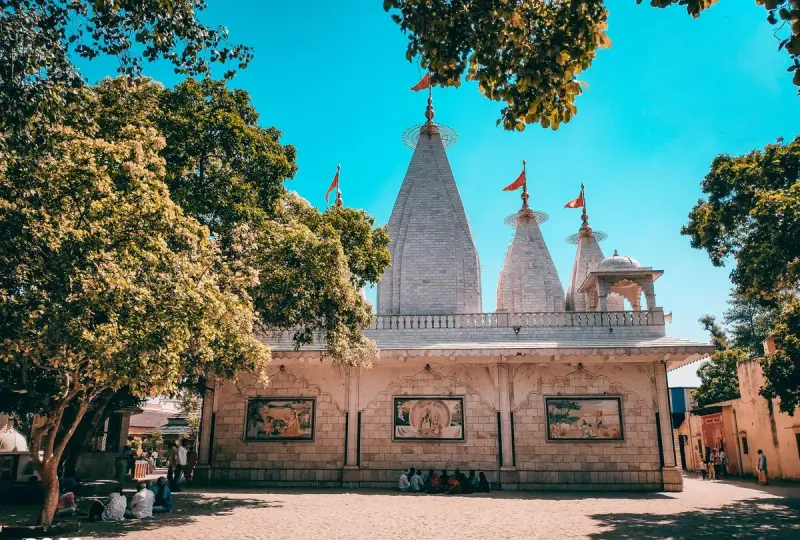
Meera Bai, the sixteenth century princess who left royal comfort to sing for Krishna, is deeply tied to this place. A temple that bears her name stands inside the fort beside the Kumbha Shyam temple, which was repaired by Rana Kumbha. Her bhajans and wandering life took her eventually to Vrindavan and Dwarka, and many seekers on a Braj trip add Chittorgarh to follow her line backwards.
Around Krishna Janmashtami the temple is especially busy. Choose a quieter day if you wish to sit and listen to the stone.
Sanwariya Seth, an hour away
Some 40 km out, on the road to Udaipur, the Sanwariya Seth temple at Mandphiya is a popular Krishna shrine, known for its crowd on Sundays and festival days. Confirm the aarti and darshan timing with your driver or the temple, and go early on a weekday for a calmer visit.
The evening: light and sound
The fort has a light and sound show in the evening, which retells the legends in the dark. Check the schedule, language and ticket on the day, as it changes with the season. If the show is not running, a quiet dinner in town after a long walk is the better choice.

How long to stay
Half a day is the minimum, a full day lets you climb, eat and sit a while. Most visitors do it on the road between Jaipur or Ajmer and Udaipur, a pause that breaks a long drive nicely.
Getting there from Delhi
Chittorgarh is roughly 550 to 600 km from Delhi by road, a long day through Jaipur and Ajmer, so break it at one of them. Udaipur lies about 115 km to the southwest, and Kota about 170 km to the east. If you prefer rail, the town has its own station on the Delhi to Udaipur line.
Book it with Laladham
We pick you up in Delhi and plan the whole Rajasthan leg: a night in Jaipur or Ajmer, a driver who knows where the fort roads are narrow, a stay that fits your budget and the Udaipur onward trip. Ask for a quote on the book page with your dates and group size.
Questions, answered
How long do I need at Chittorgarh Fort?
At least half a day, and a full day if you want to see the temples and take your time.
Is Chittorgarh Fort a UNESCO site?
Yes, it sits in the six fort UNESCO group for Rajasthan.
How far is Chittorgarh from Udaipur?
About 115 km, roughly two hours by road.
Is there a Krishna temple near Chittorgarh?
Yes. The Meera and Kumbha Shyam temples are inside the fort, and Sanwariya Seth is about 40 km away.