Ashtak · Other deities
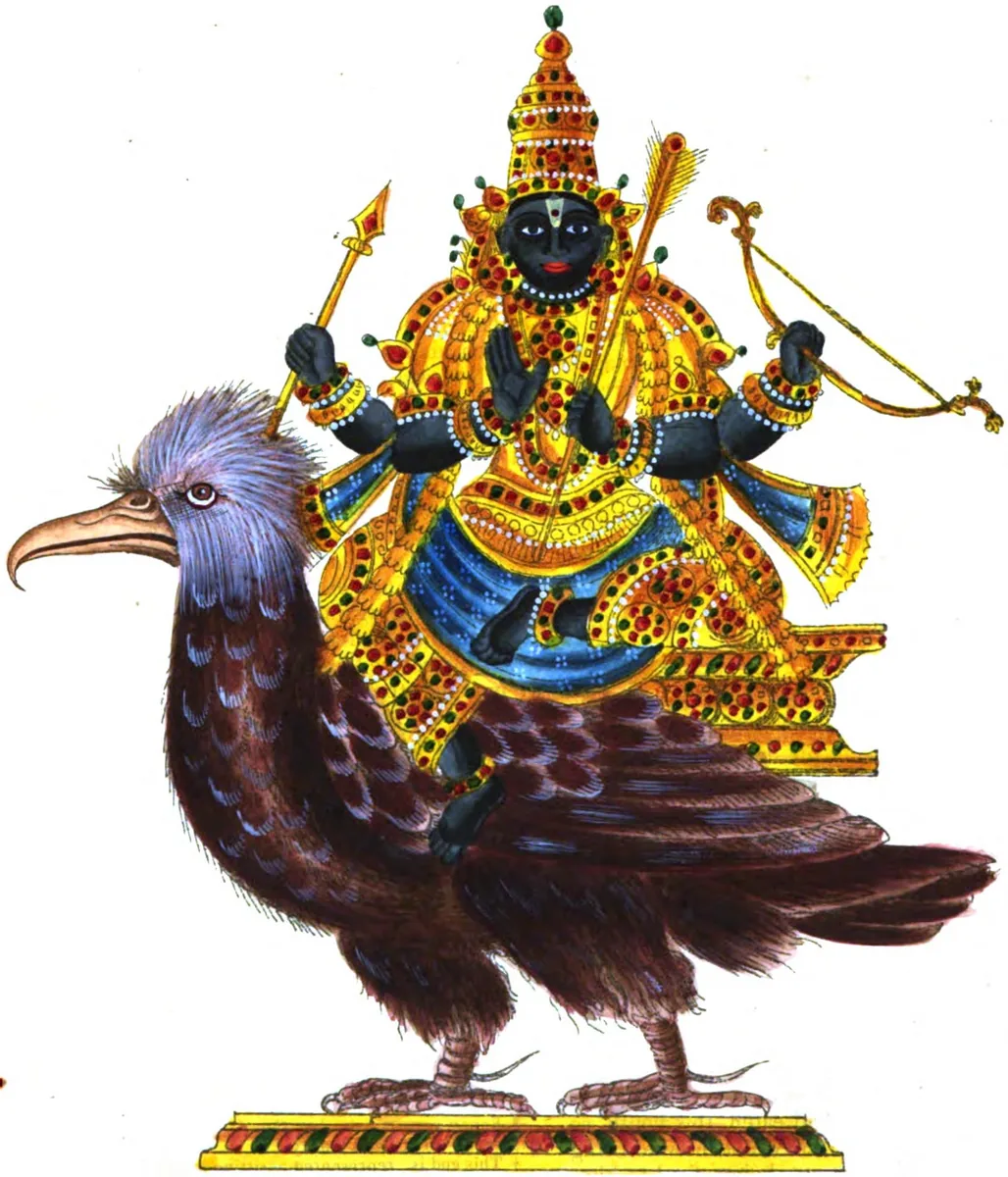
Shanaishchara Stotra, Shani Ashtak (Kono'ntako Raudra-Yamo'tha Babhruh) शनैश्चर स्तोत्र (कोणोऽन्तको रौद्रयमोऽथ बभ्रुः)
Eight verses that all end in the same bow, to the son of the Sun, and then three closing verses.
श्रीगणेशाय नमः ॥
कोणोऽन्तको रौद्रयमोऽथ बभ्रुः कृष्णः शनिः पिङ्गलमन्दसौरिः ।
नित्यं स्मृतो यो हरते च पीडां तस्मै नमः श्रीरविनन्दनाय ॥ १॥
सुरासुराः किंपुरुषोरगेन्द्रा गन्धर्वविद्याधरपन्नगाश्च ।
पीड्यन्ति सर्वे विषमस्थितेन तस्मै नमः श्रीरविनन्दनाय ॥ २॥
नरा नरेन्द्राः पशवो मृगेन्द्रा वन्याश्च ये कीटपतङ्गभृङ्गाः ।
पीड्यन्ति सर्वे विषमस्थितेन तस्मै नमः श्रीरविनन्दनाय ॥ ३॥
देशाश्च दुर्गाणि वनानि यत्र सेनानिवेशाः पुरपत्तनानि ।
पीड्यन्ति सर्वे विषमस्थितेन तस्मै नमः श्रीरविनन्दनाय ॥ ४॥
तिलैर्यवैर्माषगुडान्नदानैर्लोहेन नीलाम्बरदानतो वा ।
प्रीणाति मन्त्रैर्निजवासरे च तस्मै नमः श्रीरविनन्दनाय ॥ ५॥
प्रयागकूले यमुनातटे च सरस्वतीपुण्यजले गुहायाम् ।
यो योगिनां ध्यानगतोऽपि सूक्ष्मस्तस्मै नमः श्रीरविनन्दनाय ॥ ६॥
अन्यप्रदेशात्स्वगृहं प्रविष्टस्तदीयवारे स नरः सुखी स्यात् ।
गृहाद् गतो यो न पुनः प्रयाति तस्मै नमः श्रीरविनन्दनाय ॥ ७॥
स्रष्टा स्वयंभूर्भुवनत्रयस्य त्राता हरीशो हरते पिनाकी ।
एकस्त्रिधा ऋग्यजुःसाममूर्तिस्तस्मै नमः श्रीरविनन्दनाय ॥ ८॥
शन्यष्टकं यः प्रयतः प्रभाते नित्यं सुपुत्रैः पशुबान्धवैश्च ।
पठेत्तु सौख्यं भुवि भोगयुक्तः प्राप्नोति निर्वाणपदं तदन्ते ॥ ९॥
कोणस्थः पिङ्गलो बभ्रुः कृष्णो रौद्रोऽन्तको यमः ।
सौरिः शनैश्चरो मन्दः पिप्पलादेन संस्तुतः ॥ १०॥
एतानि दश नामानि प्रातरुत्थाय यः पठेत् ।
शनैश्चरकृता पीडा न कदाचिद्भविष्यति ॥ ११॥
॥ इति श्रीब्रह्माण्डपुराणे श्रीशनैश्चरस्तोत्रं सम्पूर्णम् ॥
What it means
Eight verses that all end in the same bow, to the son of the Sun, and then three closing verses. The first names him with ten of his titles: Kona, Antaka, Raudra, Yama, Babhru, Krishna, Shani, Pingala, Manda and Saura. After that the hymn lists who is troubled when Saturn sits in a hard position: gods and demons, kings and animals, even insects, whole countries, forests and army camps. The fifth verse says he is pleased with sesame, barley, black gram, jaggery, iron and dark cloth, given with mantras on his own day. The sixth speaks of him as subtle enough to sit in the meditation of yogis. The last verses say that whoever reads this at dawn finds comfort, and that these ten names read on waking keep Saturn's trouble away.
How it is sung
It is read at dawn or in the evening on Saturday, in a steady, almost chanting rhythm with the long closing line of each verse repeated by the group if several are present. Readers offer a lamp, and many give sesame and black cloth in charity on that day, which the fifth verse itself mentions. The ten names at the end are a short form for days when time is short.
Questions, answered
Is this the same as the Dasharatha Shani Stotra?
No. Both are said to come from the Dasharatha story, but this one has eight verses with a repeated last line, and the other is a chain of salutations beginning Namah Krishnaya Nilaya.
Which ten names does it list?
Kona, Pingala, Babhru, Krishna, Raudra, Antaka, Yama, Saura, Shanaishchara and Manda, named in the tenth verse.
Why Saturday?
Saturday is Shani's day, and the fifth verse tells the reader to please him on his own day.