Stotra · Other deities
Navagraha Stotra (Japakusuma Sankasham) नवग्रह स्तोत्र (जपाकुसुमसंकाशं)
Nine short salutes, one for each member of the group of nine heavenly bodies that Indian tradition watches: Sun, Moon, Mars, Mercury, Jupiter, Venus, Saturn, Rahu and Ketu.
जपाकुसुमसंकाशं काश्यपेयं महाद्युतिम् ।
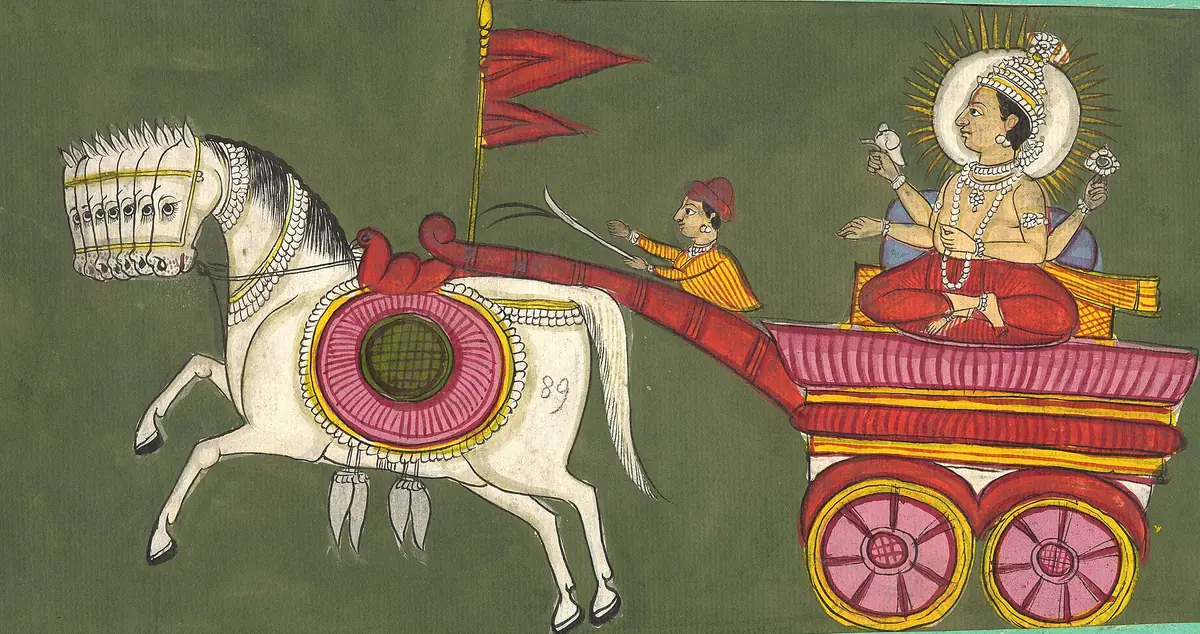
तमोऽरिं सर्वपापघ्नं प्रणतोऽस्मि दिवाकरम् ॥ १॥
दधिशङ्खतुषाराभं क्षीरोदार्णवसंभवम् ।
नमामि शशिनं सोमं शम्भोर्मुकुटभूषणम् ॥ २॥
धरणीगर्भसंभूतं विद्युत्कान्तिसमप्रभम् ।
कुमारं शक्तिहस्तं तं मङ्गलं प्रणमाम्यहम् ॥ ३॥
प्रियङ्गुकलिकाश्यामं रूपेणाप्रतिमं बुधम् ।
सौम्यं सौम्यगुणोपेतं तं बुधं प्रणमाम्यहम् ॥ ४॥
देवानां च ऋषीणां च गुरुं काञ्चनसंनिभम् ।
बुद्धिभूतं त्रिलोकेशं तं नमामि बृहस्पतिम् ॥ ५॥
हिमकुन्दमृणालाभं दैत्यानां परमं गुरुम् ।
सर्वशास्त्रप्रवक्तारं भार्गवं प्रणमाम्यहम् ॥ ६॥
नीलांजनसमाभासं रविपुत्रं यमाग्रजम् ।
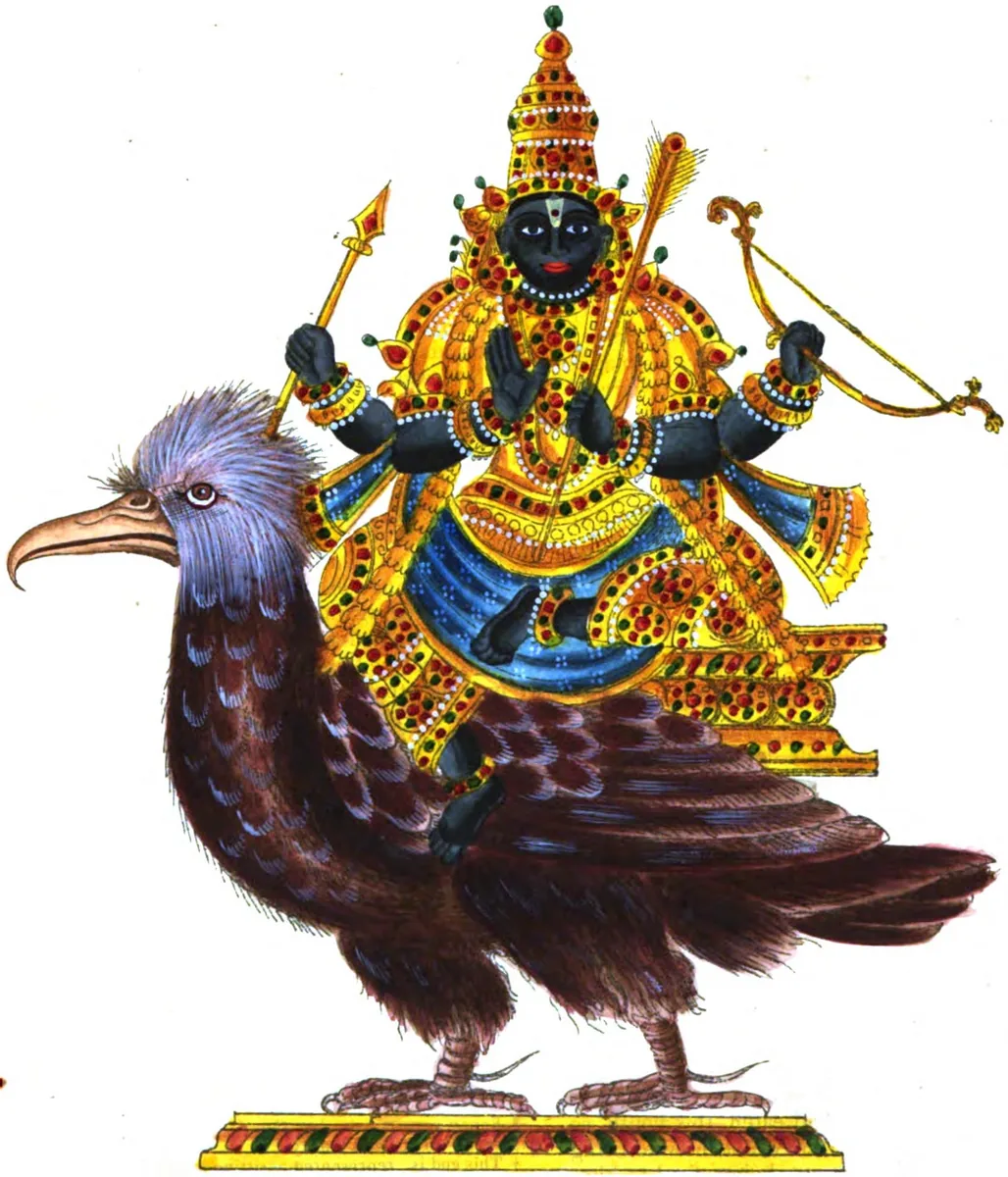
छायामार्तण्डसंभूतं तं नमामि शनैश्चरम् ॥ ७॥
अर्धकायं महावीर्यं चन्द्रादित्यविमर्दनम् ।
सिंहिकागर्भसंभूतं तं राहुं प्रणमाम्यहम् ॥ ८॥
पलाशपुष्पसंकाशं तारकाग्रहमस्तकम् ।
रौद्रं रौद्रात्मकं घोरं तं केतुं प्रणमाम्यहम् ॥ ९॥
इति व्यासमुखोद्गीतं यः पठेत्सुसमाहितः ।
दिवा वा यदि वा रात्रौ विघ्नशान्तिर्भविष्यति ॥ १०॥
नरनारीनृपाणां च भवेद्दुःस्वप्ननाशनम् ।
ऐश्वर्यमतुलं तेषामारोग्यं पुष्टिवर्धनम् ॥
ग्रहनक्षत्रजाः पीडास्तस्कराग्निसमुद्भवाः ।
ताः सर्वाः प्रशमं यान्ति व्यासो ब्रूते न संशयः ॥
॥ इति श्रीव्यासविरचितं नवग्रहस्तोत्रं सम्पूर्णम् ॥
What it means
Nine short salutes, one for each member of the group of nine heavenly bodies that Indian tradition watches: Sun, Moon, Mars, Mercury, Jupiter, Venus, Saturn, Rahu and Ketu. Each verse paints the graha in a single picture, so the Sun glows like the red japa flower, the Moon is pale as curd and conch and sits as a jewel on Shiva's head, Mars carries a spear, and Saturn is dark as soot and slow in his walk. Rahu is the half-bodied one who swallows sun and moon, and Ketu is fierce, red like the palasha blossom. The closing verses are the reward promise: troubles of the day or night settle, bad dreams fade, and health and steady wealth follow. The tradition ascribes the hymn to Vyasa, and the last line says so.
How it is sung
It is read in a steady, even Sanskrit rhythm, the nine verses in order and then the three closing verses as the finish. Because the planets follow the weekdays, a household can read all nine together or stop at the verse for the day. Families commonly keep it for a navagraha puja, for the start of something new, or when a difficult planetary period is on.
Questions, answered
Who composed the Navagraha Stotra?
The text itself names Vyasa in its closing lines, and printed collections call it Vyasa's composition. Like many old stotras it is handed down by tradition, so we credit it as traditional.
In which order are the planets named?
Sun, Moon, Mars, Mercury, Jupiter, Venus, Saturn, Rahu, Ketu. That is the order of the weekdays from Sunday, with the two shadow planets last.
Can the whole hymn be read in one sitting?
Yes. It has nine verses and three closing verses, so it takes only a few minutes at a steady pace.