Stotra · Vishnu
Narayana Stotra (Narayana Narayana Jaya Govinda Hare) नारायण स्तोत्रम् (नारायण नारायण जय गोविन्द हरे)
A string of thirty short couplets, each one a name or picture of Vishnu in his many forms, and the word Narayana comes back at the end of every one.
नारायण नारायण जय गोविन्द हरे ।
नारायण नारायण जय गोपाल हरे ॥
करुणापारावार वरुणालयगम्भीर । नारायण ॥
घननीरदसङ्काश कृतकलिकल्मषनाश । नारायण ॥
यमुनातीरविहार धृतकौस्तुभमणिहार । नारायण ॥
पीताम्बरपरिधान सुरकल्याणनिधान । नारायण ॥
मञ्जुलगुञ्जाभूष मायामानुषवेष । नारायण ॥
राधाधरमधुरसिक रजनीकरकुलतिलक । नारायण ॥
मुरलीगानविनोद वेदस्तुतभूपाद । नारायण ॥
बर्हिनिबर्हापीड नटनाटकफणिक्रीड । नारायण ॥
वारिजभूषाभरण राजीवरुक्मिणीरमण । नारायण ॥
जलरुहदलनिभनेत्र जगदारम्भकसूत्र । नारायण ॥
पातकरजनीसंहार करुणालय मामुद्धर । नारायण ॥
अघबकक्षयकंसारे केशव कृष्ण मुरारे । नारायण ॥
हाटकनिभपीताम्बर अभयं कुरु मे मावर । नारायण ॥
दशरथराजकुमार दानवमदसंहार । नारायण ॥
गोवर्धनगिरिरमण गोपीमानसहरण । नारायण ॥
शरयूतीरविहार सज्जनऋषिमन्दार । नारायण ॥
विश्वामित्रमखत्र विविधपरासुचरित्र । नारायण ॥
ध्वजवज्राङ्कुशपाद धरणीसुतसहमोद । नारायण ॥
जनकसुताप्रतिपाल जय जय संस्मृतिलील । नारायण ॥
दशरथवाग्धृतिभार दण्डकवनसञ्चार । नारायण ॥
मुष्टिकचाणूरसंहार मुनिमानसविहार । नारायण ॥
वालिविनिग्रहशौर्य वरसुग्रीवहितार्य । नारायण ॥
मां मुरलीकर धीवर पालय पालय श्रीधर । नारायण ॥
जलनिधिबन्धनधीर रावणकण्ठविदार । नारायण ॥
ताटीमददलनाढ्य नटगुणविविधधनाढ्य । नारायण ॥
गौतमपत्नीपूजन करुणाघनावलोकन । नारायण ॥
सम्भ्रमसीताहार साकेतपुरविहार । नारायण ॥
अचलोद्धृतिचञ्चत्कर भक्तानुग्रहतत्पर । नारायण ॥
नैगमगानविनोद रक्षःसुतप्रह्लाद । नारायण ॥
भारतीयतिवरशङ्कर नामामृतमखिलान्तर । नारायण ॥
। इति श्रीमच्छङ्कराचार्यविरचितं नारायणस्तोत्रं सम्पूर्णम् ।
What it means
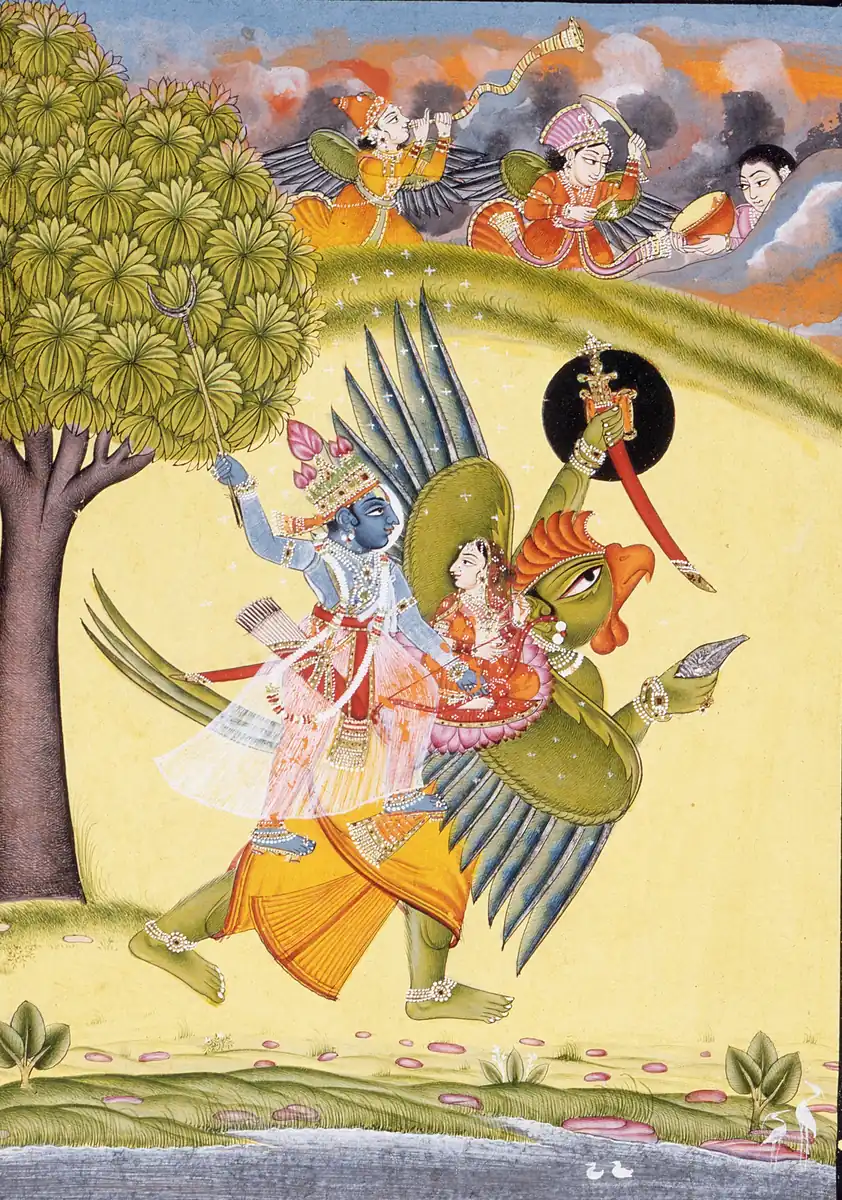
A string of thirty short couplets, each one a name or picture of Vishnu in his many forms, and the word Narayana comes back at the end of every one. It starts with the pair of lines everyone remembers: Narayana, Narayana, victory to Govinda, Hari, and then the same cry for Gopala, Hari. Then it moves from picture to picture. The ocean of mercy as deep as the sea. A body dark as a rain cloud, in yellow silk with the Kaustubha jewel on his chest, a garland of gunja seeds, the peacock feather, a flute that charms. He dances on the serpent, lifts Mount Govardhan, takes the hearts of the gopis, kills Kamsa. Then the same refrain moves to Ram: son of Dasharatha, protector of Vishwamitra's sacrifice, companion of Sita, bridge-builder across the sea, killer of Ravana. Close to the end he is the saviour of young Prahlada, and the final couplet, with a poet's name worked into it, calls the Lord's name nectar for the inner self.
How it is sung
The opening two lines work as a chorus and a group can sing them again after every couplet, which is how it is done in many kirtan circles. It suits the evening, the day of Ekadashi, and any quiet hour when a long, even song is welcome.
Questions, answered
Who composed the Narayana Stotra?
The closing colophon gives it to Adi Shankaracharya, and a poet's name is worked into the last couplet. The attribution is traditional, so it is shown here as attributed.
Is it a bhajan or a stotra?
Both. It is a Sanskrit stotra in form, but the repeated Narayana at every line ending and the opening chorus make it easy to sing as a kirtan.
How long does it take?
It runs to thirty couplets after the opening chorus. Singing the chorus again after each couplet, as many groups do, makes it longer, while reading it straight through is quicker.