Bhajan · Vishnu
Hari Tum Haro Jan Ki Bhir हरि तुम हरो जन की भीर
Meera asks Hari to lift the crowd of troubles from his servants and reminds him of what he has already done.
हरि तुम हरो जन की भीर।
द्रोपदी की लाज राखी, तुम बढायो चीर॥
भक्त कारण रूप नरहरि, धरयो आप शरीर।
हिरणकश्यपु मार दीन्हों, धरयो नाहिंन धीर॥
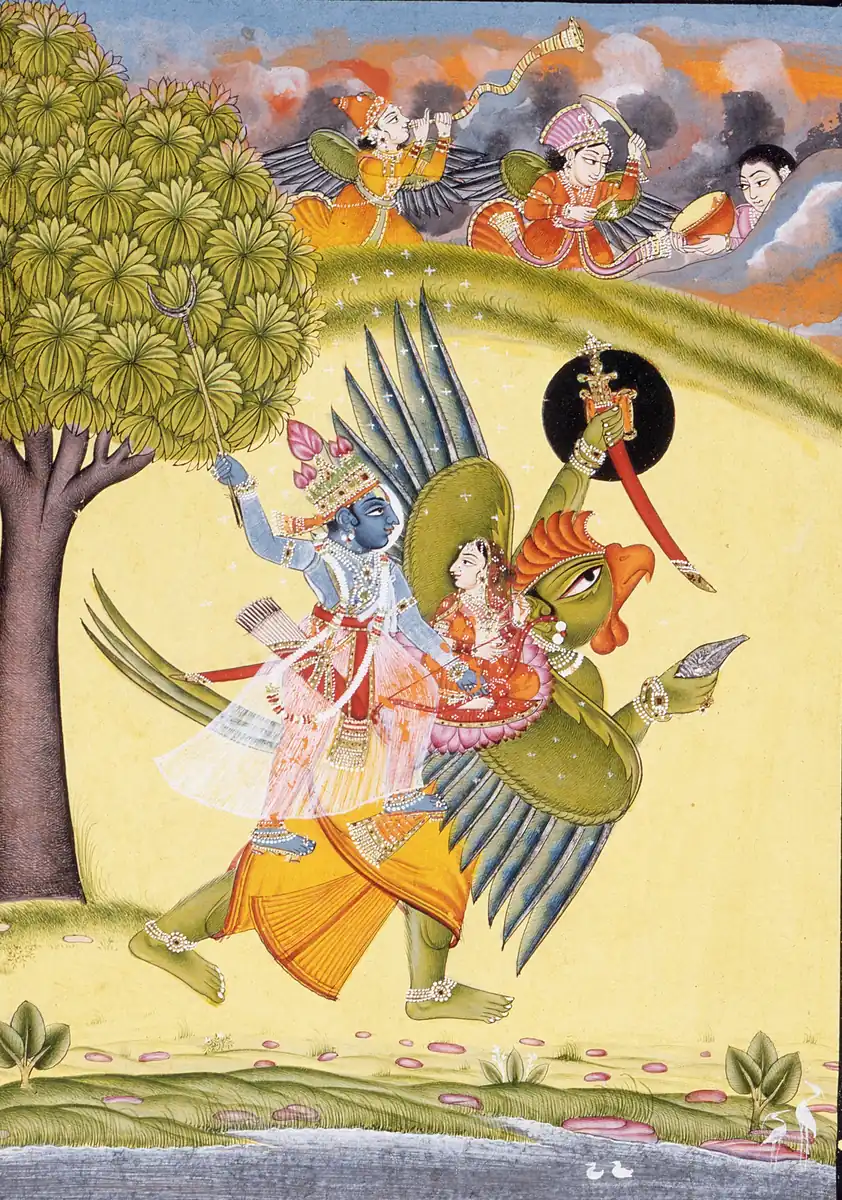
बूडते गजराज राखे, कियो बाहर नीर।
दासि 'मीरा लाल गिरिधर, दु:ख जहाँ तहँ पीर॥
What it means
Meera asks Hari to lift the crowd of troubles from his servants and reminds him of what he has already done. He kept Draupadi's honour by making her saree longer without end. For the sake of a devotee he took the form of Narhari, the man-lion, and killed Hiranyakashipu without waiting. When the elephant king was drowning, he pulled him out of the water. Then she signs herself as servant of Lal Giridhar and says pain is everywhere.
How it is sung
It is a short plea, so it is often sung as a call and answer, one voice leading each line and the group repeating it. Thursdays and Ekadashi evenings, which belong to Vishnu, are common times. The tempo is steady and the voice stays earnest, with no showing off.
Questions, answered
Which three stories does the pad mention?
Draupadi's saree, Prahlad's Narasimha avatar who killed Hiranyakashipu, and the elephant Gajendra saved from a crocodile.
Why do some texts say 'Hari aap haro'?
School books print the Rajasthani recension 'Hari aap haro jan ri bheer', while Kavitakosh prints the Hindi-leaning form. The five stories and the meaning are the same.
Who is the author?
Meerabai, the sixteenth-century devotee of Giridhar Krishna.