Aarti · Govardhan
Shri Govardhan Maharaj Ki Aarti श्री गोवर्धन महाराज आरती
A Braj folk aarti sung to the hill itself, treated as Krishna's living form.
श्री गोवर्धन महाराज, महाराज,
तेरे माथे मुकुट विराज रह्यो ।
तोपे पान चढ़े, तोपे फूल चढ़े,
तोपे चढ़े दूध की धार, हो धार,
तेरे माथे मुकुट विराज रह्यो,
श्री गोवर्धन महाराज, महाराज,
तेरे माथे मुकुट विराज रह्यो ।
तेरे कानन कुंडल साज रहे,
ठोड़ी पे हीरा लाल, हो लाल,
तेरे माथे मुकुट विराज रह्यो,
श्री गोवर्धन महाराज, महाराज,
तेरे माथे मुकुट विराज रह्यो ।
तेरे गले में कंठा सोने को,
तेरी झांकी बनी विशाल, हो विशाल,
तेरे माथे मुकुट विराज रह्यो,
श्री गोवर्धन महाराज, महाराज,
तेरे माथे मुकुट विराज रह्यो ।
तेरी सात कोस की परिक्रमा,
और चकलेश्वर विश्राम, विश्राम,
तेरे माथे मुकुट विराज रह्यो,
श्री गोवर्धन महाराज, महाराज,
तेरे माथे मुकुट विराज रह्यो ।
What it means
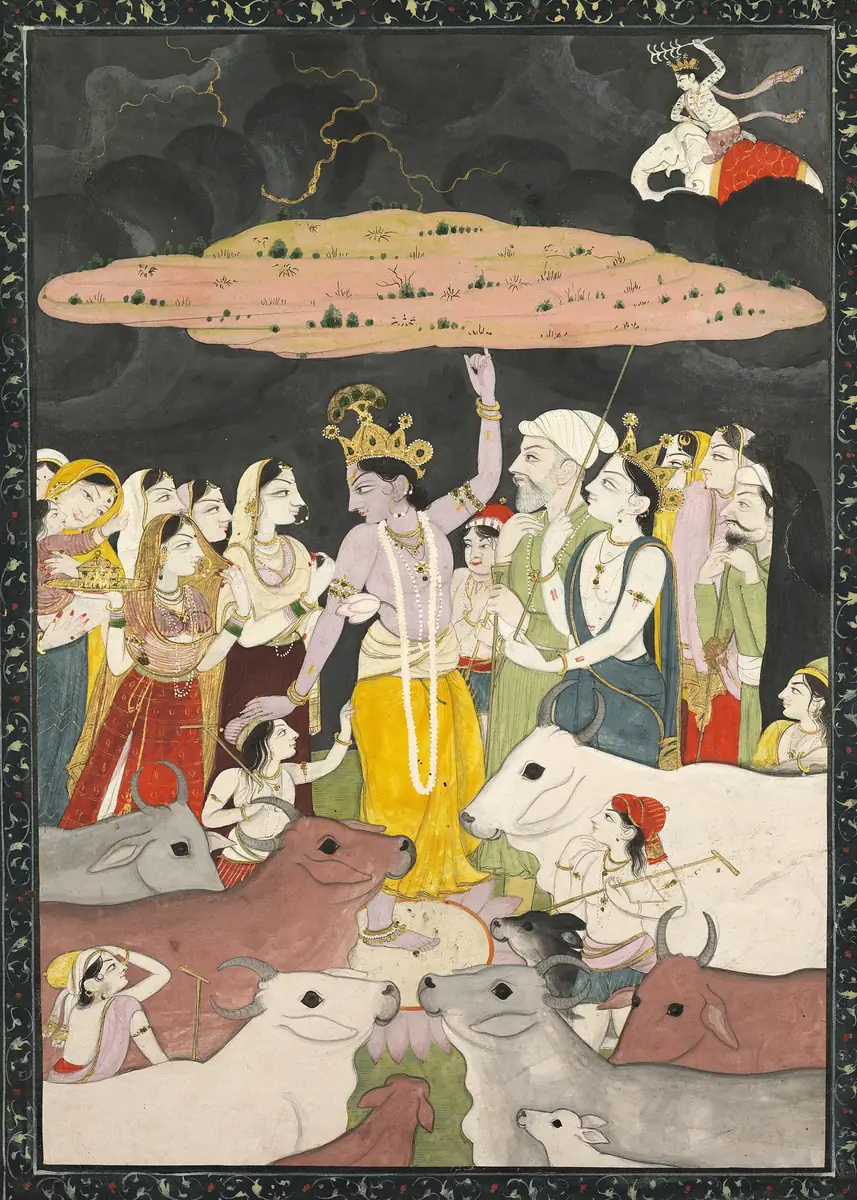
A Braj folk aarti sung to the hill itself, treated as Krishna's living form. Each verse paints the dressed Giriraj: a crown sits on his brow, betel leaves, flowers and streams of milk are offered over him, jewelled earrings glitter, a diamond sits on his chin, a golden necklace lies on his chest and the whole darshan looks grand. The fourth verse turns to the seven-kos circuit walked around the hill by seekers, with Chakleshwar as the place to rest. The answering refrain 'tere mathe mukut viraj rahyo' keeps returning, like a crowd answering a leader.
How it is sung
Sung on Govardhan Puja morning or evening, the day after Diwali, when a mound of cow dung or the hill itself is dressed and fed with Annakut. At Govardhan the singers add shouts of 'jai ho' between phrases. Let a leader take the verse and the group answer with the refrain.
Laladham can bring you from Delhi to Govardhan and time the day so you reach the hill for its aarti, before or after the parikrama. Plan the trip
Questions, answered
When is the Govardhan Maharaj aarti sung?
On Govardhan Puja, the day after Diwali, when Annakut is offered to the hill.
What is Chakleshwar?
Chakleshwar is a Shiva temple at Govardhan, close to Mansi Ganga. The aarti names it as the place to rest on the seven kos circuit.
Is there a fixed author for this aarti?
No author is named in the printed sources. It is a folk aarti of Braj, passed from singer to singer.